A Tale of Two Italians

That place is so crowded no one goes there anymore. Yogi Berra

Good restaurants are multiplying around here faster than a Catholic rabbit.

So what did I do last week?

Endured two meals that were long on calories and short on satisfaction — a cardinal sin for an experienced, conscientious carnivore catered to constantly by crave-able concupiscent comestibles.

I can make excuses for one of them (and will do so below), but the other disappointed in so may predictable ways I should’ve had my head examined for going there.

Let’s save the worst for first, shall we?

I’ve been a huge Nora’s Cuisine fan since it opened in 1992. Back then, its pizzas and pastas (like pasta con le sarde) were revolutionary for their time.

Back in the day, the whole joint was about as wide as a pizza box, had maybe six tables, and made most of its money on take-out pies. It was a tiny local treasure, known to the pasta cognoscenti as an island of authenticity amidst a sea of red sauce.

In 2004, Nora’s (named after matriarch Nora Mauro) decided to go big time. It blew out walls on both sides of the skinny pizzeria, installed a cocktail bar, upgraded its kitchen, hired a bevy of waiters, and proceeded to rake in mountains of cash. (Fun fact: Nora’s bar was the first local, off-Strip restaurant to sport a serious mixology program. When every bar in town was still pouring cosmopolitans, Nora’s was doing magical things with obscure Italian vermouths, oddball bitters and craft spirits. The drinks here are still money, with the Lemon Drop and Sicilian Mule being justifiably famous.)

The pizzas were still good after the expansion, but the food became more pitched to the endless breadsticks crowd. The something-for-everyone menu eschewed small-bore quality for dazzle factor, and subtlety on your plate became harder to find than an ectomorph at a fat farm. Some time around a decade ago, I wrote it off, not because it was terrible, but because it was too much — too much starch, too much garlic, and too much tomato.

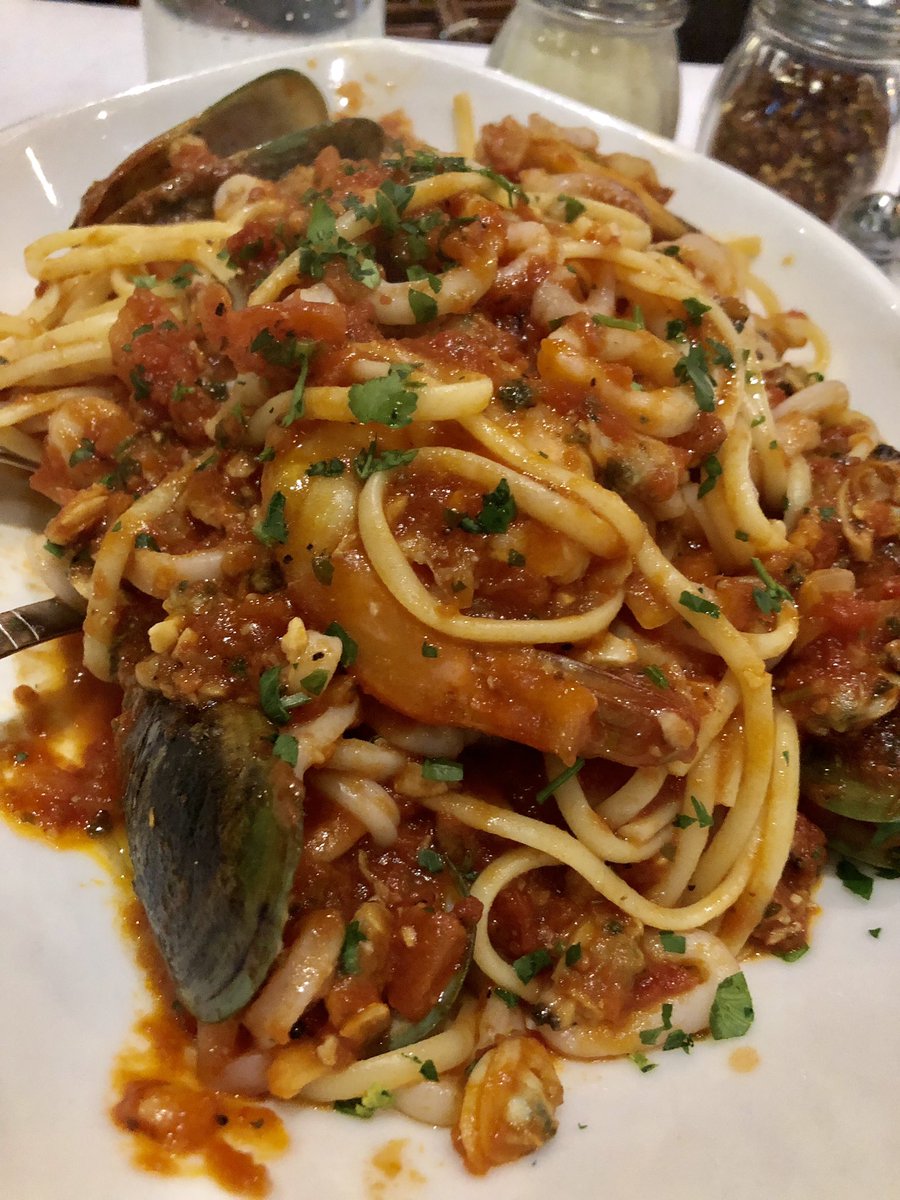
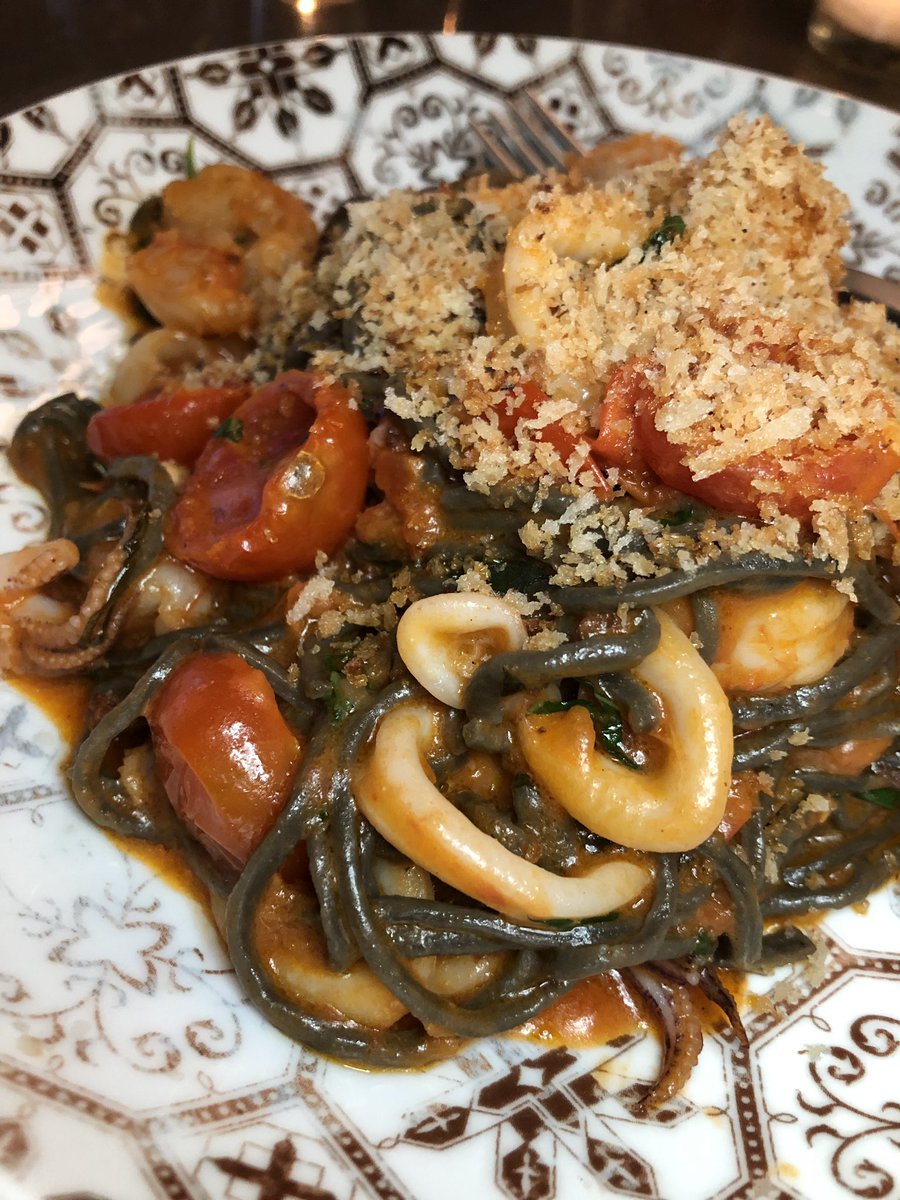
(Four pounds of fruitti di mare, or so it seemed)
So why did I go back? Especially when the excellent Pizzeria Monzú (owned by the same family) is only a block away?

Good question….and one The Food Gal® asked me continually on the ride home after we dropped $150 on two apps, two dinners, and two glasses of wine.

As I patiently mansplained to her, I went mainly to see what all the shouting is about. The shouting in this case coming from Nora’s new digs (2016) in a free-standing building only a few hundred feet from their old location. (The old location now houses the aforementioned Monzú.)

That shouting, you see, is because, the new new Nora’s is always full. Day and night, it is overflowing — with people, cars, and presumably, red sauce. Regardless of the time, there’s never a parking space to be found.  It’s so full the side streets are lined with its customers’ cars (and it has a capacious parking lot). Nora’s is so busy your average Indian restaurant could exist for a month on the patrons it turns away every day.

How do I know this? Because my in-laws live close by, and we drive by it. All. The. Time.

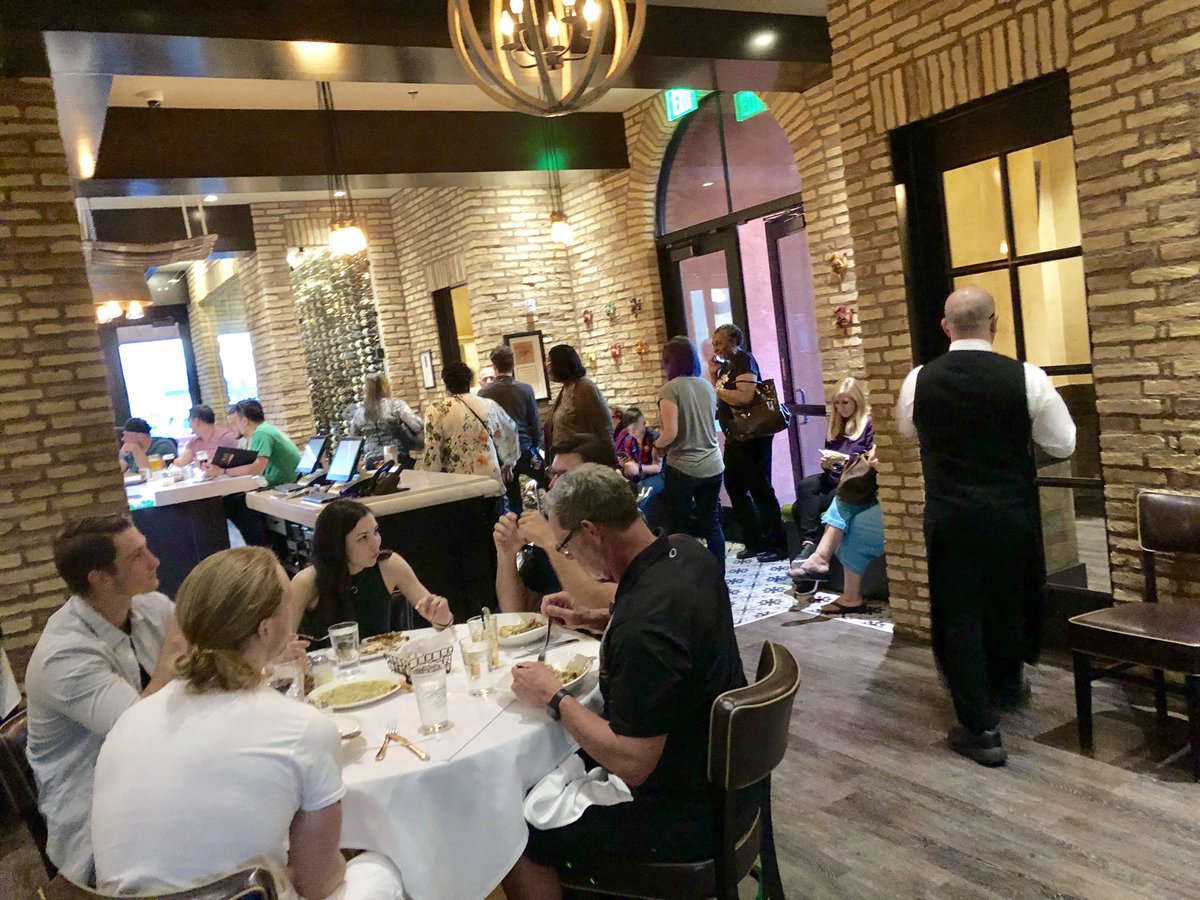
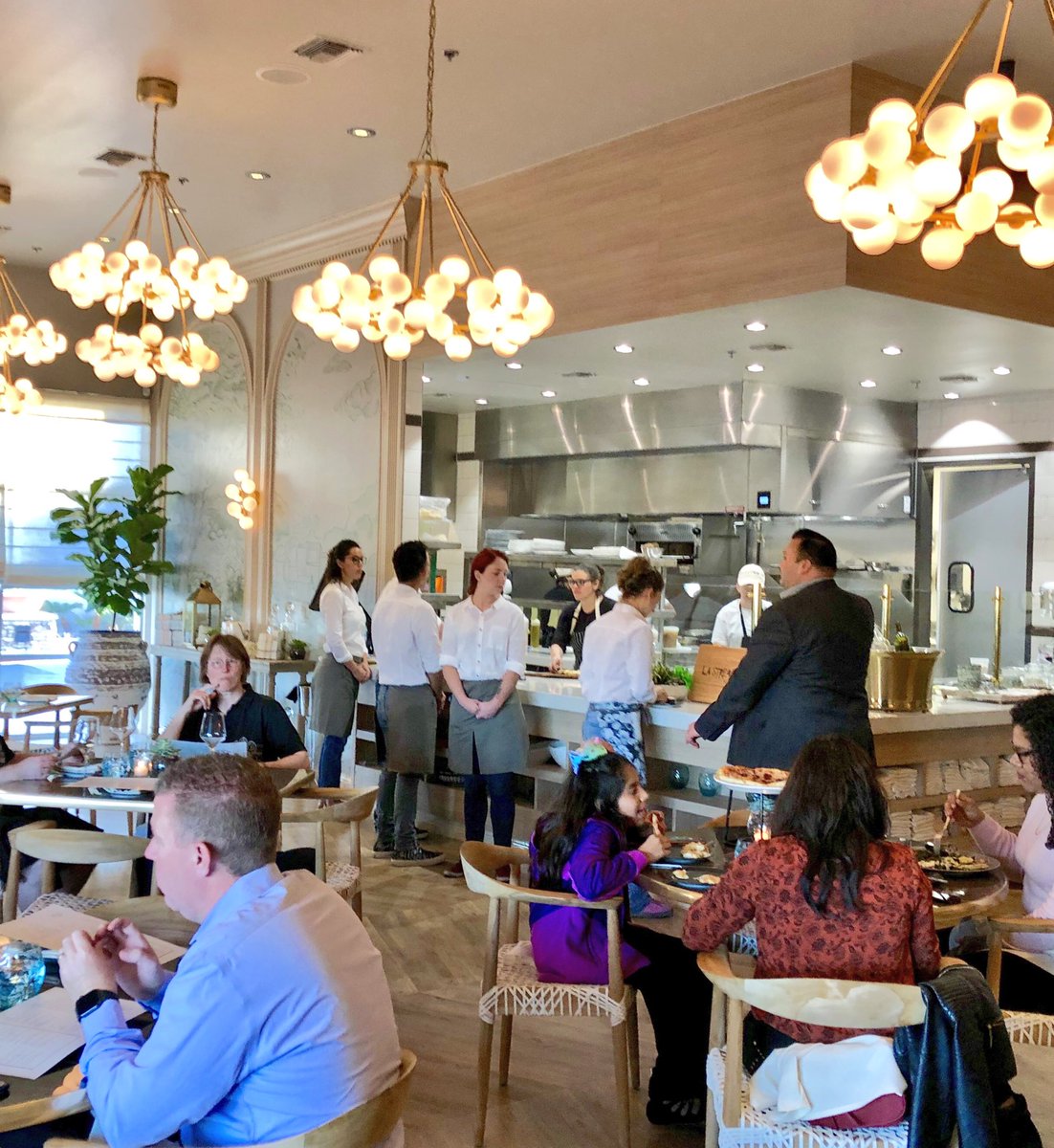
So I was curious, and took my wife along to take the plunge with me. What we found inside were three not-unattractive large rooms facing an open kitchen, with a long, comfortable bar taking up space in one of them (much as it did in the old place). As with the old Nora’s, there’s a winning wine list, excellent service, well-crafted cocktails, and serious digestivos — everything giving off a serious foodie vibe…except the food.

(Fuggidabadit)

As for that food, well, let’s just say it hasn’t gotten any better since they started serving it in a McMansion.

But I’m not blaming the owners, the managers, or the chef(s). The food has gotten worse because Nora’s has become a victim of its own success. Nora’s is too big. This new restaurant is double the size of the old one, which was triple the size of the original one. And no matter how big they get, they’re always full. And being always full, they’ve now become too successful.

Some businesses are too big to fail; Nora’s is too big to be any good.

With those physical expansions has come a menu that looks like it’s locked in a bad recipe arms race with Piero’s for who can offer the most over-the-top Eye-talian dishes to its undiscriminating diners.

“Over 70+ classic Italian dishes,” the menu boasts, and, true to its word, it offers everything from fried calamari to chicken parm to  “Crazy Alfredo” for the hungry hordes. Wings? Pork bellies? Salmon? Spinach and Farro salad? We got ’em. Just add veal for $8 more!

To put things in perspective: if you’re serving 30 different pasta dishes, dozens of pizzas (with 25 different toppings!), 20 proteins, and everything from arrabiata to mozzarella sticks, quality control is going to take a back seat to plate slinging and turning those tables.

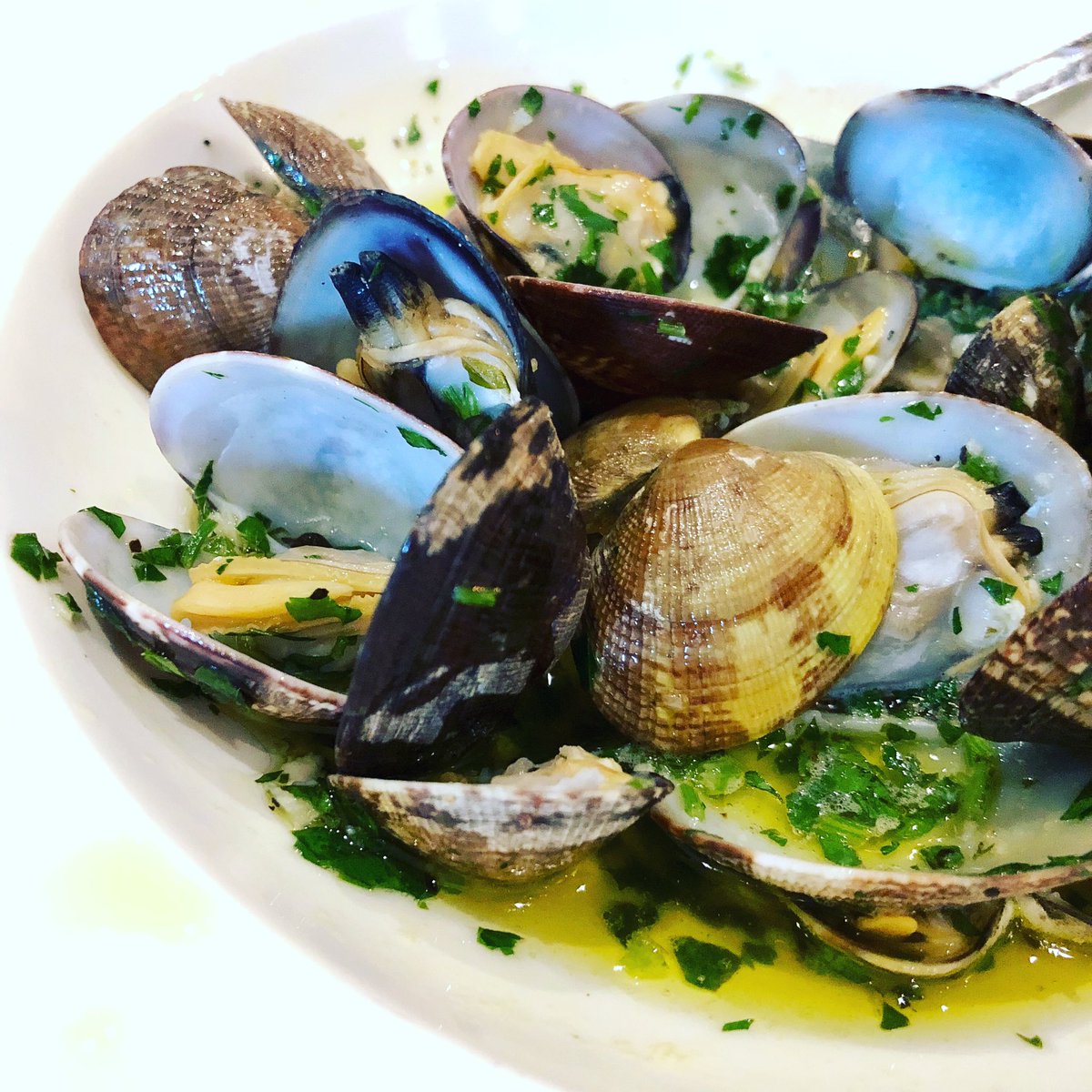
(They had me at lemon clams)

I think the chefs here deserve combat pay more than criticism, so we’ll leave you with these final words about the new new Nora’s (which really isn’t that new anymore): the garlic bread is good, the lemon clams were great, and two pounds of pasta underneath the fruitti di mare isn’t fooling anyone.

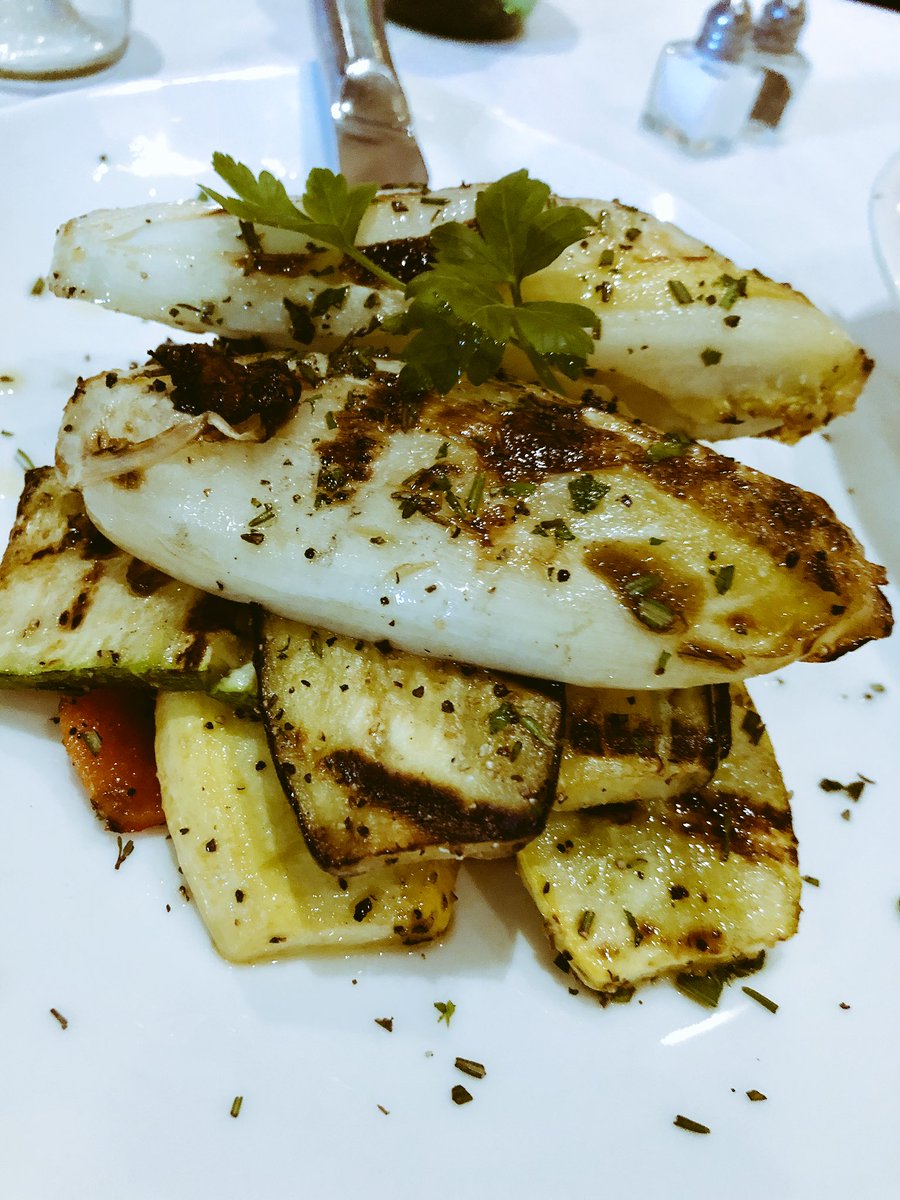
Serviceable osso buco bedecks a small mountain of mashed potatoes (that starch thing again), but the Josper-grilled veggies (pictured) were a waste of time and ten bucks.

But one can hardly fault the kitchen for not finely-tuning some grilled endive, when 300 growling stomachs are out there demanding their creamed fettuccine with chicken, sausage and shrimp.

So, as with Piero’s, we will leave Nora’s to those who love it, and resolve to eat Italian elsewhere the next time the curiosity bug bites.

At the other end of the spectrum, in terms of vibe, clients and ambition, is La Strega. Located due west and some miles from Nora’s, it aims to be new school Italian, bringing chef-driven food to those who know their polpette from their soppressata.

That chef is Gina Marinelli, and she’s a Strip veteran who knows her way around a pesto. Open barely two weeks, Marinelli is still working out the kinks, but even after a quick glance (or, in our case, a quick meal) you’ll find a lot to like about the place.

To begin with, there’s the build-out. The owners (the Fine family of local real estate fame) have taken the old Due Forni space and blown it out in all the best ways. The kitchen is now open, the bar is in the middle of the room (sounds weird, but it works), and the feel is one of a casual, food-focused room.

The space compliments the food, and the wine list compliments everything. (As we’ve mentioned here and on social media, the wine selections in off-Strip restaurants have improved 1000% over the past few years, and wine director Stephanie Torres’ list is the latest example.)

(Looked great, which is all it brought to the party)
Service was razor-sharp on a full-night not 10 days after the opening, and it was remarkable how poised everyone seemed under such pressure-packed circumstances. There are bones I could pick with some of the menu (the meatballs need to be bigger and cooked better; the frutti di mare (above) was all hat and no cattle; and the sardines need to be 86’d), but the signifiers are all there that this could be a major player on our restaurant scene — even though half the things we sampled missed their mark.

So, we’ll chalk up La Strega’s menu missteps to its infancy and give it another chance. As for Nora’s, I’ll meet you there anytime for a cocktail, as long as we can stroll over to Monzú to eat.

NORA’S ITALIAN CUISINE

5780 West Flamingo Road

Las Vegas, NV 89103

702.873.8990

http://www.norascuisine.com/www/

LA STREGA

3555 Town Center Drive Suite 105

Las Vegas, NV 89135

702.722.2099


Wine Tasting/Wine Snobbery

Image result for handmaid's tale wine

“The more you know, the more you know you don’t know.” – Aristotle

The famous 20th Century British wine writer Harry Waugh was once asked, “Have you ever mistaken a Burgundy for a Bordeaux?” “Not since lunch,” was his answer.

POMPOSITY AND PLEBES

Until it was withdrawn from the market as the worst idea since New Coke, the actual label description on the bottle of “The Handmaid’s Tale” wine read: “Completely stripped of her rights and freedom, Offred must rely on the one weapon she has left to stay in control — her feminine wiles. This French Pinot Noir is similarly seductive, its dark berry fruit and cassis aromatics so beguiling it seems almost forbidden to taste. But it’s useless to resist the wine’s smooth and appealingly earthy profile, so you may as well give in.”

And you wonder why people find wine pretentious?

It is pretentious, and at its upper levels, insufferable.

The only thing more pretentious than a person who knows a lot about wine is someone who knows a little.

Just as a little learning can be a dangerous thing, so can a modicum of wine knowledge/vocabulary turn an otherwise likeable person into the world’s biggest buffoon.

Many know this, which is why pricking oenophile pomposity is practically an indoor sport for some writers. It’s the food writing equivalent of shooting fish-faced drunks in a French oak barrel.

The easiest way to pander to the plebes is by knocking wines and wine snobbery.

“Most people prefer cheap wines to expensive ones!” the article blares. “Expensive wine is for suckers!” is always the subtext.

That’s true — in the sense that most people prefer a cheap, fast-food hamburger to a custom-made one, and any Taco Bell outsells my favorite hole-in-the-wall by 100-1 on any given day.

But the more you learn about wine (and tacos, for that matter), the more you come to appreciate the taste of an authentic, small-batch one.

A better example might be music. Everyone knows what they like, and a lot of people like really really shitty music. If all they’re doing is mindlessly enjoying some stupid pop tune, leave them to their ignorance. But once you know something about good music, your tastes expand beyond bubble gum, the enjoyment of what’s being listened to deepens.

Still, there’s no doubt that wine has brought a lot of this opprobrium on itself with its history of pretension, and all the currency it gives to arcane language, one-upmanship, and hi-falutin’ “experts” reciting laundry lists of scents and flavors.

The good news is: things have improved immeasurably over the past two decades. As new sommeliers, wine sellers and writers have entered the field, they’ve brought with them unbridled youthful enthusiasm, unencumbered by the elitist language of the past. Wine sellers (both in and out of restaurants) are eager to have you try new things, not rest on the laurels of the tried-and-true. This makes wine drinking much more fun and accessible to the average consumer.

Wine lists up and down The Strip have also become more diverse, and more consumer-friendly. Over-priced bottles of Cali cabs are still everywhere, but there seems to be a downward trend in pricing, with many new lists at places like Vetri and Cipriani sporting a sizeable number of bottles under a hundy. Not to mention places like Mordeo, EDO, Esther’s Kitchen, Partage and Lamaii — all of which are off-Strip with serious-yet-affordable wine programs. This type of competition wasn’t around a decade ago, and all of us are drinking better for it.

Things have also improved because we baby-boomers (who practically made the California wine industry) are getting too old to waste our time showing off about wine. Or maybe it’s because the interwebs have made buyers keenly aware of the real costs of the product. Nowadays, the new class of consumers (Gen-Xers and Millennials) can immediately scan a bottle (or a list) into a website that instantaneously gives you tasting notes, ratings, and the average retail price.

More informed customers make it harder to pawn off crappy $15 sauv blanc on an unsuspecting rube for $60. Yet another reason why sommeliers now take pride in great, unsung bottles at reasonable prices.

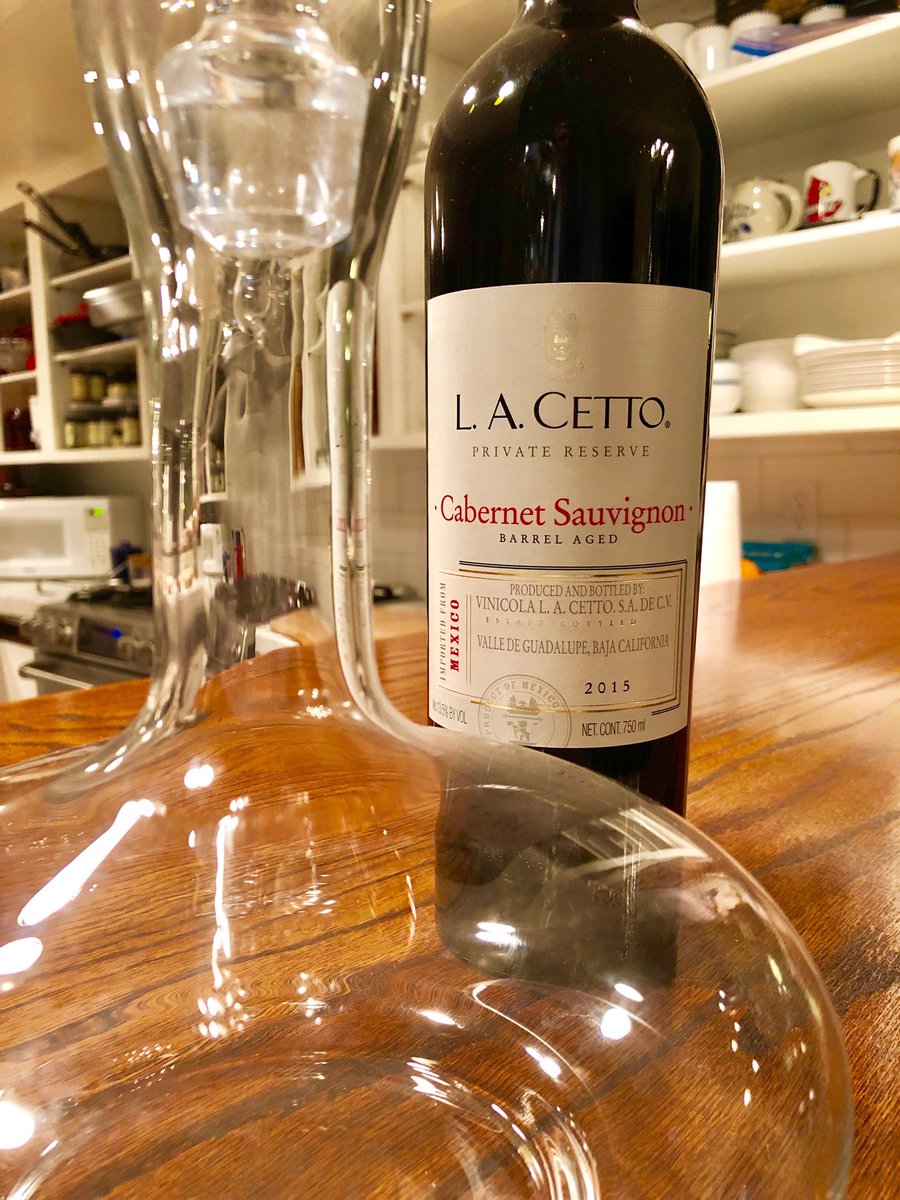
(Mexican wine: dusty and dark, needs food)

THE ABSURDITY OF SPECIFICITY

Yes, learning about wine is hard, but everything worthwhile is difficult when you first try it.

The thing about wine is how much fun the learning curve can be….as opposed to things like golf, needlepoint, or mountain climbing.

But once you climb even a small wine hill, you’ll find that the journey was worth it….even if bottles costing hundreds of dollars rarely are.

So it is with wine. You can drink cheap hooch to get drunk, or you can learn to appreciate the way good wine is made and all the factors that go into it.

The problem is: the people who know these things like to lord it over you like some imperious professor pooh poohing your term paper.

I find the whole “I’m getting peach pits, Meyer lemon zest, wet tobacco, gun-flint, hedgerow fruits and forest floor on the nose” nonsense to be a particular affliction affecting (mainly) insecure American sommeliers and head-up-their-ass wine writers. (This disease can be cured, but it takes years of deprogramming to get them out of their snooty little brains.)

“Hedgerow fruits”? Really?

And while we’re at it, how many people do you know who are familiar with 18th Century musketry?

Europeans, by and large, have a much healthier attitude towards wine. To begin with, they dispense with all the “peach pits, lemon zest, sour green apples” folderol, and use more emotional terms when describing a wine. To a Frenchman (or Englishman or Italian), wines may be feminine or masculine. Big and bold or soft and pleasant.

Aromatics might be “earthy” or “spicy” but no laundry list is necessary beyond that. Wine to them is an expression of fruit, and they generally avoid “blackcurrants, blackberries, ripe cherries, spearmint and cocoa powder” conversations…except when they’re talking to Americans.

I hear less lengthy recitals these days, and many more to-the-point descriptors like “grape-y,” “earthy,” “juicy,’ or “dense,” The whole point of those extravagant “smells like” recitations were always more for the professional tasters anyway, not for amateur enthusiasts. A wine tastes like itself, no matter what else it may resemble. Who gives a shit if you detect “hints of new mown hay,” “baking spices” (?), or “dessicated underbrush”?

Using a bunch of hyper-specific identifiers to describe a wine is like trying to describe a finished dish by listing the recipe ingredients.

All those descriptions are just metaphors. You might sense a whiff of strawberries, I might say “red fruits.” No one on earth really knows the difference between “dusty strawberries,” “wild strawberries,” and just plain “strawberries,” but that doesn’t keep those terms from being applied all the time….mainly to impress the listener (and the speaker with themselves).

So forget all that malarkey, and while you’re at it,  throw your tasting wheel in the trash.

Image result for wine tasting wheel

TASTING NOTATIONS

What I like to do is suggest to novice wine drinkers is that they develop their own vocabulary. Look for things you like in wine (like the fresh fruitiness of Gamay Beaujolais, for example), and use that as a benchmark to evaluate other reds. You’ll soon find that Cabernet Sauvignon has a muscularity that Gamay can’t match, and that those two wines hit the palate in a whole different (and darker) way than Pinot Noir does.

Once you learn a little about wine, drinking it becomes a lot more fun. Even if all you know is the difference between an oaked v. un-oaked Chardonnay, once you can make the distinction, your enjoyment is enhanced in the same way it is if an art historian explains Degas v. Henri de Toulouse-Lautrec to you.

Keep certain things in mind:

  1. Wine tasting is the opposite of drinking wine.
  2. Drinking wine is about overall aromatic impact; tasting wine is about breaking down its components.
  3. Wine has a greater variety of styles than any other agricultural product.
  4. All you’re looking to do is decode a few essential elements of the wine.
  5. There is no right or wrong, there is only the tastes and aromas you are experiencing. The fact that you can’t immediately put a label on those sensations is of no consequence.
  6. Tasting wine is about sharpening your senses, and about finding words that convey the heightened information you are receiving
  7. It is perfectly possible to enjoy all wine – from the cheapest swill to the rarest bottles – without knowing or caring how to describe the sensations you experience.
  8. There are no right answers, and no matter how good you get, you will get things wrong. All. The. Time. (See Harry Waugh quote above.)
(The Wine Snob: hard at work at Bottega del Vino in Verona, Italy)

HOW I TASTE

Rather than tell you how to taste, I’ll tell you what I do. I’m no wine expert, even though I write about it, and have been reading, studying and drinking wine seriously for forty years. The experts are the wine makers and the professional tasters. To equate my talents with a sport: If wine tasting/appreciation were golf, I’d carry a low handicap, but there’s no way I could compete at the Masters.

First, look at the color – Bright? Dull? Sparkly? Dark red? Deeply colored, like blackberry juice? Squid ink? Or lighter, like raspberries? Some white wines are as yellow as the sun; others can resemble a crystal clear mountain stream. German Rieslings almost appear grey in the glass sometimes, Chablis gives hints of green.  Color isn’t something you can taste, but the range of hues of red, white and pink wines are so vivid, and so beautiful, you should never ignore them.

Then, swirl and stick that schnoz of yours deep into the glass – exception: sparkling wines – never swirl a bubbler.

(Remember: when you’re tasting wine, what you’re really doing is smelling it. Mouthfeel, bitterness, sweetness, grip on the side of your mouth (tannins) all play a role, but the nuances of grapes come through much more in their bouquet than in how they lie on your tongue. The previous sentence can be true, or completely false. Some wines taste like they smell, and some do not. Others emit wonderful aromas and go flat in the mouth. Like I said, there are no hard and fast rules, just individual sensations.)

Finally, take a small sip and hold it in your mouth and breath through your nose whilst sucking in a little air through your pursed lips.

Think to yourself: Is it strong? Weak? Intense? Flabby? Does it linger in the mouth? Pucker your tongue (that tannin thing again)? Does the flavor remain all the way to the back of your tongue? Or does it disappear quickly? A great Chardonnay (e.g., cru Burgundies) have a finish that lasts until next Tuesday. Great Rieslings literally sparkle on your tongue from their face-slapping acidity.

Don’t search for highly particular descriptive similes! Just think about what is pleasant or not so about it. Does it remind you a fruit pie? Of licking a wet rock? Do you like its sweetness? Is it too tart? (You may not like it at all. Wine is, in essence, spoiled, soured grape juice — preserved through fermentation — and not everyone’s cup of tea.)

Is there something unappealing about it? This may or may not be a flaw. I love German and Alsatian Rieslings, but they can give off strong whiffs of petrol or kerosene. Cabernet Franc can smell like green bell pepper? Some folks like New Zealand Sauvignon Blancs and their cat pee aromas: I find them ridiculous. Some Central Coast Pinot Noirs give off a slightly smokey nose. I love them; my wife (the long-suffering Food Gal®), does not.

Now comes the fun part, the most important part: Does your first sip make you want to keep drinking it? The priciest wine in the world isn’t worth it if you don’t want to have another glass. Some white wines have fruit so elusive you’d think the winemaker infused his water with iron ore. (These are some of the most expensive ones, BTW.) Huge Cali cabs can wear your palate out after a few sips. It’s all very personal. Go with your gut….or actually, your mouth.

Compare, compare, compare. Grab a glass of Central Coast chard, then make your next one a Chablis. Tasting them side by side will teach you a lot, even if you know nothing about how the wines are made.

Think about what you’re drinking. Is it in balance? Do fruit, bitterness, acid all knit together into a seamless whole? Or does one of these predominate?

The point is: Don’t try to dissect it; just try to identify what you like (or don’t like) about it.

TWO ESSENTIAL WINE WORDS

Use either of these the next time you want to watch the room empty after you take a sip of wine:

Organoleptic – aka “mouthfeel” – as in, “The organoleptics of this 1976 Fritz Blitzkreigmeinkampf Guttenjingleheimerschmitdtz Trockenbeerenauselese do not match those of the Layer Cake chard I polished off last night.”

Sapidity: defined in the dictionary as deliciousness, but used by (mostly Italian, some Spanish) winemakers to denote certain saline-mineral notes in a wine, such as, “Only a sap wouldn’t notice that the sapidity of this wine resembles licking an oyster shell dipped in potato chips.”

Finally, try to ignore the  super-annoying voice of the narrator and you’ll find some useful information in this video:


Enough Already 2018

It’s that time of the year, food fans: when the winter solstice descends and our mood grows dark and our prophesies portend.

When our thoughts turn not to festive merriment or seasonal meetings, but to over-baked puddings and gristly greetings.

Yes, it is when we are duty-bound to scream to the heavens,  for the world to hear, no matter how it  might frighten some timid reindeer.

These are the trends we hope soon to end…so that the New Year we pray…can finally make amends.

So without further ado, although some are not new, I hereby say to you:

ENOUGH ALREADY…

Smoked anything

Unless your name is Sonny and you’re tending a hickory pit, lose the smoke. Please.

Wood-fired everything

Yeah yeah yeah….you saw that dude on that Netflix series and he looked like some kind of god chopping his own wood and cooking everything but his profiteroles over it…but the whole idea only works if you’re, you know, like living out in the fucking forest or something. You’re not Paul Bunyan and most of that smoke gets sucked out the oven (thanks, health department!) before it even comes close to flavoring the vittles.

Craft IPAs

We get it: IPAs are cooler than lagers and you can hop them higher than a smack addict in the South Bronx (circa1971), but that doesn’t mean they taste good.

Sour beers

Leave them to the Belgians, please

Steakflation

The aged strip steak at Bavette’s was priced at a whopping $73 when it opened over the summer. Within three months they raised the price to $78. The original price was about 10% higher than the cost of the same steak in Chicago. The new price bumped that to a 20% premium. In Vegas, which is a much smaller town than Chicago, with (supposedly) a much cheaper cost of living (and labor force). Don’t let anyone ever tell you that Las Vegas isn’t the most expensive restaurant town in the country. It is also not a place to chow down on giant steaks anymore, unless you like taking your serious steaks where the sun don’t shine.

Pizza fetishization

With apologies to good friends John Arena, Mike Vakeen, Scott Wiener, Vincent Rotolo, Gio Mauro, Chris Decker, and a dozen others…the whole artisanal pizza thing has jumped the shark. As Steve Cuozzo says in the New York Post, the humble pie has been warped by the whole ‘”authenticity” thing…or cruel mutation.

Brussels sprouts and Beets

Chefs: we know you are duty bound to put edible plants out there, but can’t you find something else to round out your proteins?

Crazily-flavored ice creams

(This is what ice cream is supposed to look like)

Was the world begging for broccoli ice cream? Were orphans crying out for tuna fish gelato? What began as a novelty 4-5 years ago is now a tsunami of bad taste. Only the Instagram generation could ruin something as un-ruin-able as ice cream.

Caviar on everything

Caviar used to be a luxury food. Now it’s more ubiquitous than a Kardashian ass. There’s a reason chefs put it on things: to give the illusion of grandeur….when all they’re really doing is spooning some not-very-expensive farmed fish eggs from China, Brazil, Spain, etc. onto some dish that, 80% of the time, would be better without it. Duping the credulous hordes? You bet! Padding the bill? Absolutely! Worth it? Hardly ever. If I want fish eggs, I’ll eat them off a mother of pearl spoon all by themselves.

Liquor/Food matches

It’s gotten beyond ridiculous: Come to our four-course dinner paired with….Johnny Walker Scotch! Have you ever tried aged rum with rigatoni? Brandy with sea bass? Here we are, a restaurant on a slow night (usually a Tuesday), and some liquor distributor has talked our chef into preparing a wonderful multi-course extravaganza all based around….MEZCAL! Trying to drum up enthusiasm for a high-proof spirit by (ill) matching it with food is the worst idea since the canned cheeseburger.

Short ribs/beef cheeks

Both are the cupcakes of the savory world. Victims of endless permutations that rarely make sense, and so filling they rarely inspire a second bite. Beef cheek ravioli is the ultimate belt-and-suspenders combination that does an injustice to both.

Things in bowls

Here’s the short list of things you should eat in a ginormous bowl: Vietnamese pho, Chinese noodles, and weird Korean soups.

Eating in the dark

I actually liked the two meals I had at Bavette’s. I couldn’t see them, but I liked them.

Eating when you can’t hear

I know, I know: you want your restaurant to have a “party” vibe. Because everyone knows adults go out to eat not to put finely-cooked food in their mouths, but rather to “party”….just like the kids do…at Chuck E. Cheese. Everyone knows the drill now: you’ve got the restaurant pumped to ear-splitting levels to turn tables and sell more booze. You’re not fooling anyone anymore. Let’s all grow up a bit, shall we? It’s 2019, not 2010.

Chefs’ groovy “playlists”

If there’s been one benefit to the downfall of Mario Batali, it’s been that a chef imposing his musical tastes on his guests has finally lost whatever “cool” factor it once had.

900 bottles of booze on the wall

I love what they did to Scotch 80 Prime. I really like that gorgeous wall of 1,000 bottles behind the bar. I love the same thing at Sage and the hundreds of terrific tequilas at La Comida. But we’ve gotten into an arms race here both with the makers of strong booze and the restaurants that sell them. And it’s ridiculous. The world doesn’t need a thousand brands of tequila, and it got along just fine with a hundred quality scotches and a few dozen good bourbons. I don’t know what’s worse: the hyper-specificity (“aged in 37 year old fino sherry casks, consisting of re-toasted Andalusian birch bark bathed in the sweat of Rob Roy’s old peat marsh and only released by the light of a full moon in August”), or the con job promoted by the makers of “extremely rare” whiskys. I’d bet dollars to doughnuts that grown men (some of whom may be reading these words), couldn’t tell Pappy Van Winkle 20 year old from a dozen other premium brands. Hell, I bet the distiller himself couldn’t tell. That doesn’t keep them from perpetuating the myth of its “special-ness” when all it is is another fucking aged 90 proof whisky. Double yeesh.

Cannabis in your comestibles

If I want to get stoned, I’ll smoke a joint, thank you.

__________________________________________________________________________

A curmudgeon we may be, but a light we yonder see.

Some good things have returned, and for these we must no longer yearn.

And lest we be thought of as too persnickety, by jove we’re all excited about each of these most lickity.

Welcome back:

Grown-up dining

NoMad, Cipriani, Partage, and Vetri (above) are places for people with worldly palates, or aspirations to same. They are not for the party-as-a-verb crowd. Eataly is for those who either know about real Italian food, or want to learn about it. Uncomfortable chairs and small plates are not part of these equations.

Reasonable, thoughtful wine lists

As I’ve said before: the Las Vegas Strip is no place to find wine bargains, but the newbies on the block —   NoMad, Cipriani, and Vetri — all boast lists with plenty of drinkable bottles for under a hundy.  Mordeo, Partage, Sparrow + Wolf, and most of all, Esther’s Kitchen , all have bottles galore that are priced to sell, not show off.

Simple, elegant cocktails

Thank you, Jammyland, and continued thanks to the simple, elegant cocktails at NoMad, Scotch 80 Prime, Esther’s Kitchen and Vetri for continuing to stress simple sophistication over the complex and contrived..

Guéridons

Because who doesn’t love a rolling cart full of tasty delights?

Tableside pyrotechnics

Because who doesn’t love a performance with their food?

Dessert carts

Partage!!

Dressed up waiters

Cipriani!!

Real Italian food

(Casoncelli alla bergamasca at Vetri)

Has come roaring back into town. (see above)

Roast Chicken

Merci beaucoup, Daniel Humm.

Cheese

Molto grazie, Marc Vetri for including a cheese course with your nonpareil cuisine.

Good Barbecue

Sin City Smokers (above) sets the standard in the ‘burbs, Mabel’s brings a slice of authentic Austin to the Strip. Smoked meats are back with a vengeance. Everything else in town isn’t worth your time or the heartburn.

(Platter at Mabel’s)
HAPPY NEW YEAR from the staff at Being John Curtas:
Image result for Top hat and tails