“Thoughts and Prayers,” Hashtags and Hand-Wringing Aren’t Enough

The world is no better than its places. Its places at last
are no better than their people while their people
continue in them. When the people make
dark the light within them, the world darkens.
–Wendell Berry, “A Poem On Hope”

ELV note: There will be no food reviews or pithy commentary this week. Below are two posts about the recent Las Vegas massacre, one from me and one from my son, Hugh Alexander Curtas. My thoughts are more about a co-worker who was murdered; my son’s is a more measured, political/philosophical take on the tragedy. I hope you take the time to read them both and pass this on to others who might be interested.

Five minutes after my wife and I drove past Mandalay Bay Hotel and Casino two nights ago, the worst mass murder in modern American history took place. If the windows had been down in our car, we probably would’ve heard the gun shots. As it was, we drove home from the airport and went to bed, oblivious to what had occurred behind us. The next morning, as I was walking to work, my secretary texted me that Cameron Robinson, a management analyst in the City Attorneys office, had been killed. Cameron was shot in the neck, right beside his partner, as they were watching the concert. Bleeding profusely and screaming for help, somehow he was gotten to an ambulance, but it was too late. He died on the way to the hospital.

Cameron was only twenty-eight, but he looked like he was sixteen. He was short, fit, and funny, and worried about his weight even though I don’t think he weighed 120 pounds soaking wet. He had a sly, shy sense of humor, and needless to say, everyone in the office loved him. I didn’t know him as well as most, but his office was right across from mine, and I could see him in there everyday, diligently working away, or, when he wasn’t doing that, keeping the secretaries in stitches. I used to steal M&Ms from him all the time, and he pretended not to notice. Once or twice I brought him something sweet as a partial payback, but my side of the candy ledger was always permanently in the red.

There is nothing that can be done for Cameron Robinson. He was killed by a demented maniac utilizing weapons designed solely for the purpose of killing human beings. That these weapons are legal and (barely) regulated is to the everlasting shame of the American body politic. I won’t go on a polemic about guns or gun control (although I could), except to say that, in my lifetime, the idiotic, psycho-sexual attraction to firearms has trumped common sense at every turn when it comes to regulating what is, in essence, the most dangerous consumer product of them all.

None of this matters to Cameron. He died bleeding and screaming in an ambulance — shot by a spray of automatic weapons fire from hundreds of yards away — a sweet, generous, hard-working young man who was just beginning to grow into himself. Just last week I thought I should bring him in a huge bag of M&Ms after Halloween, just to balance the books. Thanks to American gun laws, this is one debt I will never have to repay. – John Curtas

Image may contain: 1 person, smiling, closeup

www.gofundme.com/you-will-be-missed-cameron-robinson

I went to bed Sunday thinking two people had been shot in my hometown of Las Vegas, Nevada. I didn’t give it much thought – active shooter situations are an almost daily occurrence in the U.S. In fact, 273 people have been killed in mass shootings in the U.S. in just the past 280 days, according to the Gun Violence Archive.

I woke up yesterday to the aftermath of the unthinkable. As I write, almost 60 souls are known to have perished, with an almost inconceivable 515 additional people wounded. My city was massacred.

I feel an excruciating sadness for the murdered. Friends-of-friends and acquaintances are among the dead – living, breathing human beings who will never again have an aspiration or a dream and will never again know the beauty and love of this world. My city is hung heavy with a pain it has never known.

Make no mistake: This tragedy is the fault of the cowardly, ignoble excuse for a human being that pulled the triggers of those automatic weapons just as much as it is the fault of craven politicians and their gun-lobby overlords who have created the circumstances for a society that devalues human life by allowing weapons of mass destruction to be bought and sold with almost no regulation whatsoever.

I’m a liberal, but I have no problem with guns. I was born and raised in the West. I respect that our Constitution provides an established legal right to own firearms. No person, politician, or organization will ever strip American citizens of the right to own guns – to think otherwise is rank ignorance. No one is coming for your guns.

My problem is ultra-extended magazines, easy access to automatic weapons, lax oversight of the gun industry, spineless politicians, and a refusal to acknowledge gun violence as a scourge on our citizenry that could be greatly reduced with modest legal alterations.

You should have no right to unlimited, unrestricted access to weapons of mass destruction, just as you have no right to unlimited free speech – when the public good outweighs the personal right, the public good prevails.

Yes, I’m politicizing this issue. We must politicize this issue – the dead deserve no less. More specifically, we have not politicized this issue enough. More specifically still, we have failed to match the politicization of gun violence in our communities like the gun violence advocates have.

No one wants innocent people to die, but when you stand in the way of protections for innocent Americans, the blood drips from your hands. We’re in this situation because of a large-scale, ultra-moneyed, decades-long lobbying effort by well-connected gun advocates (the NRA and their paid-for politicians). Their efforts have been strategic and effective and have stymied progress on gun violence prevention at every turn. Mass shootings are now an American pastime.

Guns are tools. Without human intervention, they are harmless. But, in the same way the agency of the murderer turns an inanimate object into a killing machine, the methodical strategy of gun violence proponents prioritizing unlimited ownership of weapons and ammunition over the safety of our citizenry turns them from ambivalent bystanders into accomplices in these horrible crimes.

It’s our government’s job to protect its citizens from danger and harm. Yes, there is room for debate about the efficacy of mental health services and how poverty and lack of opportunity makes normal people do insane things – violence is a complex issue with many intervening factors. But the paramount factor is our easy access to weapons of war. Vegas’ dead would still be alive if that lunatic couldn’t access multiple automatic weapons and unlimited ammunition. This massacre was preventable.

We must mourn and move on. But we must not let the darkness of cowardice and violence perpetuated by gunmen and well-connected lobbyists alike dissuade us from the hard road of modest public safety protections. Don’t pray, make policy change. – Hugh Alexander Curtas

The Evolution of a Critic

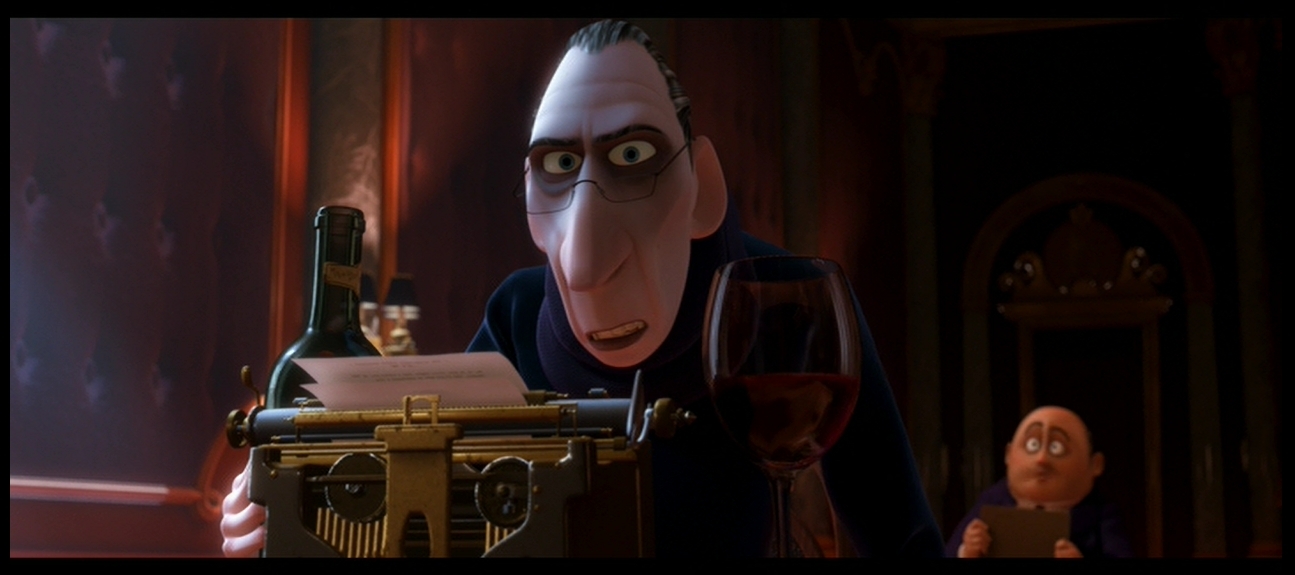
http://images2.fanpop.com/image/photos/14400000/Ego-anton-ego-14471062-1295-575.jpg

(Ed. note: People are always asking me” “How did you become a food critic?” Here is the answer.)

Food writer John Mariani once said there are 3 kinds of restaurant critics: “The slobs, the snobs and the oh goodie goodies.”

The slobs are professional writers who either get thrown into, or decide to write about food sometime in mid-career. Being writers by trade, their qualifications for the gig (when they start out) usually consists of being able to write a cogent paragraph and knowing what they like to eat. Ask any editor and they will tell you they prefer a real writer who wants to become a food critic, to a passionate foodie who wants to (try to) become a writer. Getting real writers to write about real restaurants is usually a lot easier than getting them into a collared shirt.

Mariani properly pegged me as a “oh goodie goodie” type of critic years ago. For the longest time, I ate everything in sight and was pleased as punch that Las Vegas was taking its place on the world’s gastronomic stage. Somewhere over the past decade, I shed my omnivorous obsessions and replaced them with unabashed epicurean snobbery, and therein lies the tale.

John Anthony Curtas was practically raised in American restaurants. As a preteen in the 1960s, I circumnavigated the United States with my family, eating in the best restaurants in town from Miami to Seattle, New York to New Orleans. My  parents were hardly “to the menu born,” but both had a healthy appreciation for good food, and wanted their children (me, two sisters and a brother) to experience the best of eating out. Neither parent was a gourmet; we never had wine or liquor in our house, and seafood was as foreign to our table as chopsticks. But what Mom and Dad loved was going out to a restaurant — dressing us all up and making a night of it. To them, dining out was about the experience of leaving the confines of home and seeking the thrill of being served good food in a fabulous place where they waited on you hand and foot. Wherever we traveled, they always sought out the best restaurant in town and the best table in the house —  the better to experience the theater of great dining.

As a young adult I started cooking more out of poverty than choice. My older sister gave me a subscription to Bon Appetit magazine in 1978 that I ate up, literally and figuratively. An early girlfriend and the second Mrs. John A. Curtas were both foodies before there was such a term, and they indulged my then passion for Chinese food. By 1980 I had pretty much cooked my way through The Chinese Menu Cookbook, (Joanne Hush and Peter Wong, Holt Rinehart Winston, 1976), and was seduced by the Szechuan food craze that was all the rage by then. (Yes, there was a Szechuan food craze in those prehistoric times, and I have the cookbooks to prove it.)

My ex-wife was even so kind as to compile a list of Chinese grocery stores for me, when we first moved to Vegas in 1981, so I could continue working my way through the various regional cuisines. Until around 1990, if you had asked me what my favorite food in the world was, I would’ve answered the strong, salty, sour and hot foods of the Sichuan and Hunan provinces of China. (Then and now, the textural nuances of Cantonese cooking, and the folderol of  Mandarin banquets, remain more of a curiosity than a keen pursuit.)

Wedged into all of this was a move back east in the mid-1980s — where I lived mere 50 miles from mid-town Manhattan. It was a seminal time for American food, and I consumed the New York restaurant scene wholesale, as Danny Meyer, Drew Nieporent, Larry Forgione, et al developed a food-centric, wine-friendly, customer-casual template that put baby-boomers at ease with sophistication without pretense.

In 1990, after five years of eating in places like Odeon, the Coach House, Four Seasons, Peter Luger, and the Union Square Cafe (not to mention enjoying the best seafood in America every summer on Nantucket), I moved back to Las Vegas and surveyed the edible landscape. It was not a pretty sight. The best restaurants in town were two chain steakhouses: Ruth’s Chris and Morton’s. Every hotel had five eateries: a coffee shop, a buffet, a steakhouse, and Italian, and a (not-very) “gourmet room” serving “continental cuisine” from some unnamed continent. All of them facing the keno pit, or so it seemed. Marcel Taylor — the Caesars Palace dealer who brought Ruth’s Chris to town in 1989 — told me the philosophy of every hotel back then was to capture the casino customer and never let them out the front door. As he put it, “…they figured we have every place anyone could ever want to eat in right here, what more could they (the tourists) want?”

But want they did, and when Ruth’s Chris realized its Vegas outpost was outselling all its other franchises, the word quickly spread to upscale chains and chefs everywhere that Las Vegas was the place to be. Late 1992 brought the opening of Spago, and soon thereafter, Mark Miller, Charlie Trotter and Emeril Lagasse planted their flags in the MGM. Suddenly, we had a real restaurant scene.

The only thing lacking was a serious critic to write about it. Hard to believe 23 years later, but in 1994, the only person covering restaurants in Las Vegas was the mother-in-law of a certain newspaper owner. She belonged to the “My friend Mabel had the chicken soup and she thought it was a bit salty” school of food writing, and was avidly followed every week by what few society matrons there were in town.

So, I stepped into the breach. It took a year of hounding media outlets, but finally, in October, 1995,  I got a shot at being the Nevada Public Radio food critic — a position I pretty much invented for myself and a gig that lasted until 2011. Did I know anything about radio? Absolutely not. But I knew a helluva lot about food, and could put two sentences together, and looked great in a button-down shirt. As I like to say: In the land of the blind, the one-eyed man is king. For five years I was the only game in town when it came to critiquing serious restaurants in a serious way. It would not be until 2001 that our main newspaper hired a full-time food writer, and in keeping with tradition, they made sure she was of the “My friend Edna had the steak and she thought it was a little chewy” school of food writing.

The Nineties brought multiple trips to France and Italy, and writing for all sorts of magazines and guidebooks. It was then that I honed both my palate and my writing. It took a decade plus, but only after all those meals, travel and reviews did I begin to appreciate my subject matter and my relationship to it. Food is the most intimate relationship we will ever have, and allowing strangers to cook it for us is an oddly perverse ritual which many struggle to understand. (It’s the reason so many people have a chip on their shoulder when they eat out.) Giving over our bodies, our health, and our mouths to persons unknown, and paying them for the privilege of feeding all three, is surrendering an inordinate amount of power to a stranger — and paying them money for the privilege of taking advantage of you. It is this curious dynamic that continues to fascinate me, as much as anything that I shove in my piehole.

As for the food, then and now the ingredient-driven Italians and technique-driven French have always fascinated my palate. French food — more than any other on earth — is driven by the extraction, concentration and layering of flavors. Italian cuisine — in all of its regional glories — celebrates the simplicity of the raw material, while a Frenchman tries to make it taste even more like itself. The yin and yang of these philosophies still hold me in their thrall, and, of course, they both make the best wine on the planet (sorry Spain and California).

Enter Japan. Japanese food is about the quest for perfection, and in many ways, eating Japanese food in America and Japan has refined my tastes even further and eliminated my helter-skelter insatiability. No longer am I a galloping gourmand, happily ingesting everything in sight. Now, in my sixties, I seek the unobtainable grail of the quintessential. Like a Japanese chef, I take interest in the details of the divine.  A wasted meal, or even an ingredient, puts me in a bad mood. I have eaten so much of everything that I now simply want the best of anything — be it in a street taco, a glass of wine, or a piece of fish.

I am no longer an “oh, goodie goodie,” and I am certainly not a slob. It is said that to become a gourmet, like becoming a first class horseman, you have to start young. I am an epicure and I started very young. But there are many more steps before me, and it is this mountain that I continue to climb.

Food is life itself, the rest is parsley. – Alan Richman


2007-2017: A Decade of Restaurants

http://endoedibles.com/wp-content/uploads/2013/11/IMG_5022.jpg

2007-2017: IT WAS THE BEST OF TIMES, IT WAS THE WORST OF TIMES…

Ten years is a long time. In restaurant years it’s practically a lifetime. Restaurants age in dog years, and those who make it to a decade are approaching retirement, especially in Las Vegas. With luck, they may continue to glide along deep into old age like those fortunate souls lucky enough to be alive and kicking into their nineties. More likely, the grim reaper will come for them soon enough.

2007 seems like an eternity ago to many of us. If you remember, it was the last “boom year” before the big bust of 2008. Ten years ago, social media wasn’t a ‘thing,” Facebook and Twitter were just gaining traction with grown-ups, and Instagram was years away from becoming the app that launched a trillion food pics. In 2007, no restaurant had its own Facebook page, no one knew what Yelp was, and if you wanted to know what your meal might look like at a Strip hotel, you had to buy a guidebook, or find a review in a magazine or newspaper. If you were lucky, that review might include a single shot of the interior and perhaps a couple of photos of featured dishes.

In 2007 there were only a few people in America taking pictures of their food, and a lot of people watching us do it, (including my then 83-now-93 year-old mother) thought we were nuts.

A decade ago, two of the best restaurants in town were ALEX and Bartolotta Ristorante di Mare in the Wynn Hotel. Rosemary’s was firmly ensconced as our most popular off-Strip eatery, and Bradley Ogden (the man and the restaurant) and Valentino were still basking in the glow of their James Beard awards from 2002 and 2004. Boulud Brasserie (also in the Wynn) was as fabulously French as you could get, Circo rang all of our Tuscan chimes at the Bellagio, and Hubert Keller was wowing us with his Alsatian-California cuisine at Fleur de Lys in the Mandalay Bay — at the time perhaps the prettiest dining room in town.

There was no downtown dining scene in 2007; there was barely a downtown drinking scene. No one knew what xiao long bao (Chinese soup dumplings) were, and high-toned Japanese cooking (like Raku, Yui, Kabuto, Yuzu Kaiseki among others) was unheard of. Food trucks were still called “roach coaches,” and were looked upon with disdain by anyone with a taste bud in their head (or more than $5 in their wallet).  Everyone was living high off the hog ten years ago, employment was full, the restaurants were even fuller, and the whole world wanted a slice of the Vegas food and beverage pie.

https://www.reviewjournal.com/wp-content/uploads/2011/07/5830044-1-4.jpg(Michael and Wendy Jordan were the best chefs in the ‘burbs, until the recession did them in)

REALITY BITES

Then, reality set in. Faster than you could say “credit default swaps” people stopped coming. Restaurants cut back hours, high rollers and conventioneers stopped blowing a house payment on dinner, and lay-offs were everywhere. Out-of-work chefs either left town or started food trucks; big hotels like Wynn started unloading high-priced talent; and by 2013 all of those restaurants mentioned above had closed their doors. For the next five years (2009-2013), it was the serious doldrums.

There were some stalwarts who stemmed the tide, to be sure. Even the Great Recession couldn’t blunt the enthusiasm for CUT and Carnevino (both of which opened in 2008). and their success in the most dire of times proved the axiom that every restaurant in Las Vegas secretly wishes it was a steakhouse. The support of a big hotels helped the Aria (December, 2009) and The Cosmopolitan (December, 2010) lineups to remain afloat, but a mom-and-pop operation like Rosemary’s (which saw its gross revenues cut in half from 2008-2011), was a dead man sinking from the moment Bear Stearns drowned itself in debt.

Through it all, some places prevailed. Marche Bacchus actually grew in popularity after 2007, thanks to new owners (Rhonda and Jeff Wyatt) and its lakeside venue providing a welcome respite from all the financial gloom and doom hanging over the suburbs. The aforementioned Raku opened in January 2008, and immediately tapped into the smaller-is-better zeitgeist of the times. In the process, it kick-started a Chinatown renaissance that has continued unabated for the past nine years.

https://desdemialacena.files.wordpress.com/2011/01/chinatown-las-vegas.jpeg(Chinatown Plaza opened in 1995)

The Chinatown as we know it has been around since 1995, but it wasn’t until people started pinching their pennies that they discovered the glories of izakaya eating, ramen noodles, and obscure Asian soups. Even with the economic upturn of the past few years, this enthusiasm continues to grow — now expanding to upscale sushi (Yui Edomae Sushi, Kabuto, Hiroyoshi, Yuzu Kaiseki), as well as the glories of lamian (hand-pulled Chinese noodles at Shang Artisan Noodle), high-quality Korean bbq (8oz, Hobak, Magal, Goong), and even inventive Thai (Chada Thai) and Vietnamese (District One, Le Pho). Downtown’s revival has proceeded in fits and starts, but there’s no denying that Carson Kitchen and EAT (two early pioneers now celebrating their third and fifth birthdays, respectively) are here to stay.

Some suburbs, however, have remained problematical. In the past ten years, Henderson/Green Valley has turned its back on Bread & Butter, David Clawson, and Standard & Pour (three excellent, chef-driven restaurants) and a non-franchised meal in those parts is harder to find than a pork chop at VegeNation.

As a counterweight, look to the explosion of good food in the southwest. Rainbow south of the I-215 has become its own mini-Chinatown, Andre’s and Elia Authentic Greek Taverna have both opened to great acclaim in the last year, and Other Mama, Japaneiro, Cafe Breizh, Delices Gourmands French Bakery and Cafe, Sparrow+Wolf, and Rosallie Le French Cafe,  continue to draw passionate foodies in search of the good stuff.

On the Strip, some venerable joints (Le Cirque, Twist, Picasso, Guy Savoy, L’Atelier de Joël Robuchon) just keep getting better, while newcomers like Libertine Social, re-boots like the new Blue Ribbon, and the extraordinary food at Bazaar Meat, give us hope for Vegas’s dining out future. Thankfully, the small plates thing is subsiding, as are celebrity chefs. Caesar’s Entertainment wants you to get excited about whatever licensing deal it has struck with Gordon Ramsay, Giada and Guy Fieri, but most serious foodies look at these craven exercises in marketing with a big yawn. Real food cooked by chefs who are in their restaurants is what creates a buzz these days — witness the success of Harvest by Roy Ellamar — not some branding deal that has all the authenticity of a gordita.

All of which raises the question: What keeps some places alive, through thick and thin, while other, equally worthy businesses fold their tents? Rosemary’s went under, but Grape Street Cafe kept itself afloat (and is now thriving in a new location). Circo and Valentino bit the dust but Ferraro’s and Carbone (a relative newcomer) are both flying high. Standard & Pour didn’t make it a year in Green Valley; Carson Kitchen downtown (with a similar menu) is packed day and night. Glutton closes; EAT across the street thrives. What gives?

http://thedivinedish.com/wp-content/uploads/2009/09/2alexstrattaphotobyalexkarvounis.jpg(Alex Stratta had the goods…and a great restaurant)

THE PRICE OF FAILURE

I have two theories on this, one food-related, one not. The less sexy one involves real estate, contracts, and accounting — three of the most boring subjects on earth. The Strip is a numbers game pure and simple. The big hotels are dominated by a need to maximize the profitability of every inch of their real estate. Wall Street demands it; investors demand it; and the food and beverage honchos think of little else. Restaurants to them aren’t amenities like swimming pools, they’re more like fancy, big-box retail stores — something to be looked at through the prism of a cold green eye-shade.

When the lease is up (a la Valentino, Bradley Ogden, Circo et al), the focus shifts from how nice a place is to which tenant can move the most numbers through the space with the highest cover average. Sappy, romantic notions of soft dappled lights in an architecturally-perfect, Adam Tihany-designed room where you fall in love over a subtle Tuscan fish stew and Mama Egi’s ravioli with brown butter sauce means nothing to the bean counters. Exit the Maccionis, enter Lago: a restaurant with all the charm of a bus station. But it’s a crowded bus station (slinging pizzas and pastas to the nightclub crowd) and that’s all that matters. When the recession hit, that’s really all that mattered. ALEX, Circo, Fleur de Lys, Valentino, and Bradley Ogden never had a chance.

THE FOOD ABIDES

Theory number two concerns food. Specifically what sells and what doesn’t. Off the Strip, you need a hook — something to make people remember you. At Marche Bacchus it’s the outdoor dining, the wine shop, and never-fail French bistro food. (That’s three hooks. Four if you include the cheesiest, gooiest  onion soup in town.) Daniel Krohmer’s Other Mama has been a hit since its doors opened a couple of years ago, in no small part due to his Strip-quality oysters, straight-from-the-Pacific seafood, and fusion concoctions (like French toast caviar) that get your attention.

Ferraro’s has patriarch Gino at the door (and its 30-year-famous osso buco and a world-class wine list), and Raku became instantly known for its house-made tofu and tender, glazed yakitori skewers that taste like they came straight from a Shinjuku alleyway. Glutton’s only hook was its terrible name and logo. One hundred feet away, one bite of EAT’s yeasty pancakes (or dense corned beef hash), and it becomes everyone’s favorite breakfast spot.

Even on the Strip, it seems more and more like it’s the food that’s getting the attention, not the absentee chefs. Many of the celebrities that made our food famous have seen their brands diminish over the past ten years, and the big splash these days are made by the over-the-top showiness of Mr. Chow’s Peking Duck, and the table-side ministrations of Carbone.

Big and showy fits Las Vegas like a Wayne Newton leisure suit, but the places that last another decade are going to be all about what’s on the plate, not whose name is on the marquee. That’s the way it should be, and that’s where we were headed ten years ago, before the recession derailed our restaurant renaissance. Now, the downsizing is over and it’s time to get cooking.

FINAL THOUGHTS/EPILOGUE FOR A DECADE

http://www.eatinglv.com/wordpress/wp-content/gallery/last-night-at-bradley-ogden/last-night-at-bradley-ogden-044-large.jpg(These guys were da bomb. Their replacement is a wet firecracker.)

3 favorites that bit the dust too early and why.

Circo (1998-2013) – The licensing/management deal with the Maccioni family expired after fifteen years, and with it went our only authentic Tuscan cuisine. I also think the family had had enough of Vegas. New York is their home and that’s where they all want to be, and who can blame them?

Bartolotta Ristorante di Mare (2005-2013) – Paul Bartolotta’s masterpiece was expensive to create and maintain, and fell victim to the Wynn going all-in on nightclubs and bottle service. The restaurant that took its place is but a pale imitation of what was once the best Italian seafood restaurant in America.

Bradley Ogden (2002-2012) – Caesars had a choice to make: continue with a sleek, stylish place with a world class chef and his ground-breaking American cuisine, or slap a TV star’s name (Gordon Ramsay) on a sad, huge, downmarket facsimile of an English pub. Guess which concept won?

If you loved….

If you loved Circo, try Ferraro’s Italian Restaurant and Wine Bar.

If you loved Rosemary’s, try Marche Bacchus.

If you loved Bartolotta, try Estiatorio Milos.

If you loved Andre’s (either downtown Las Vegas, or in the Monte Carlo) try Andre’s Bistro & Bar or Sparrow + Wolf.