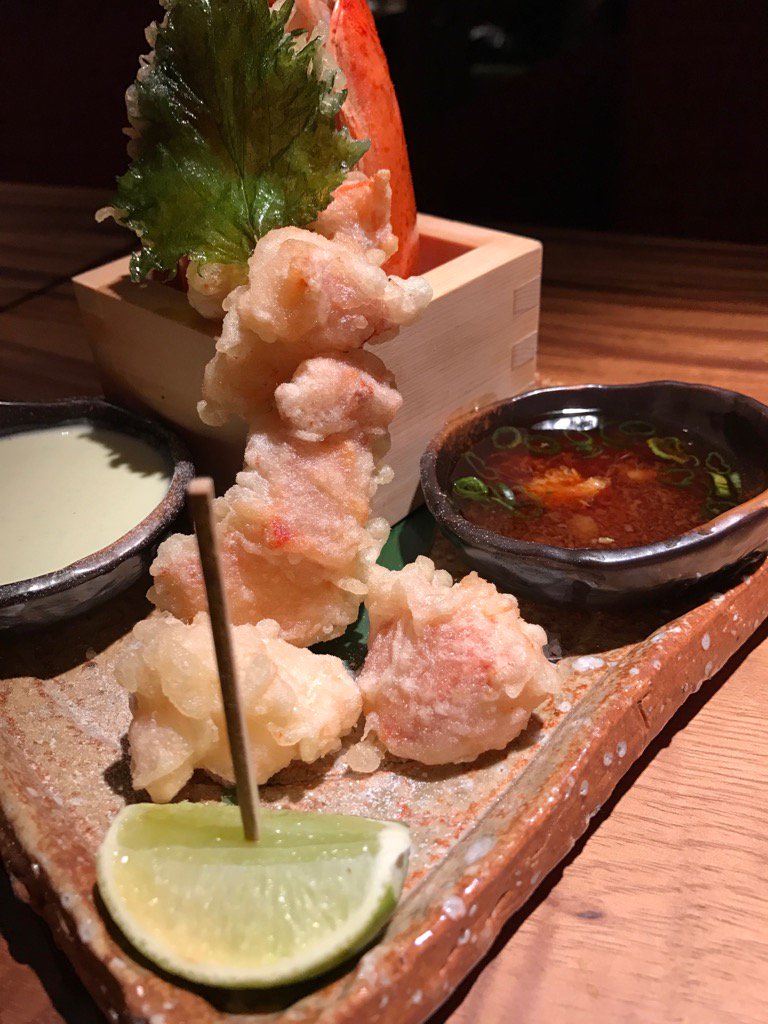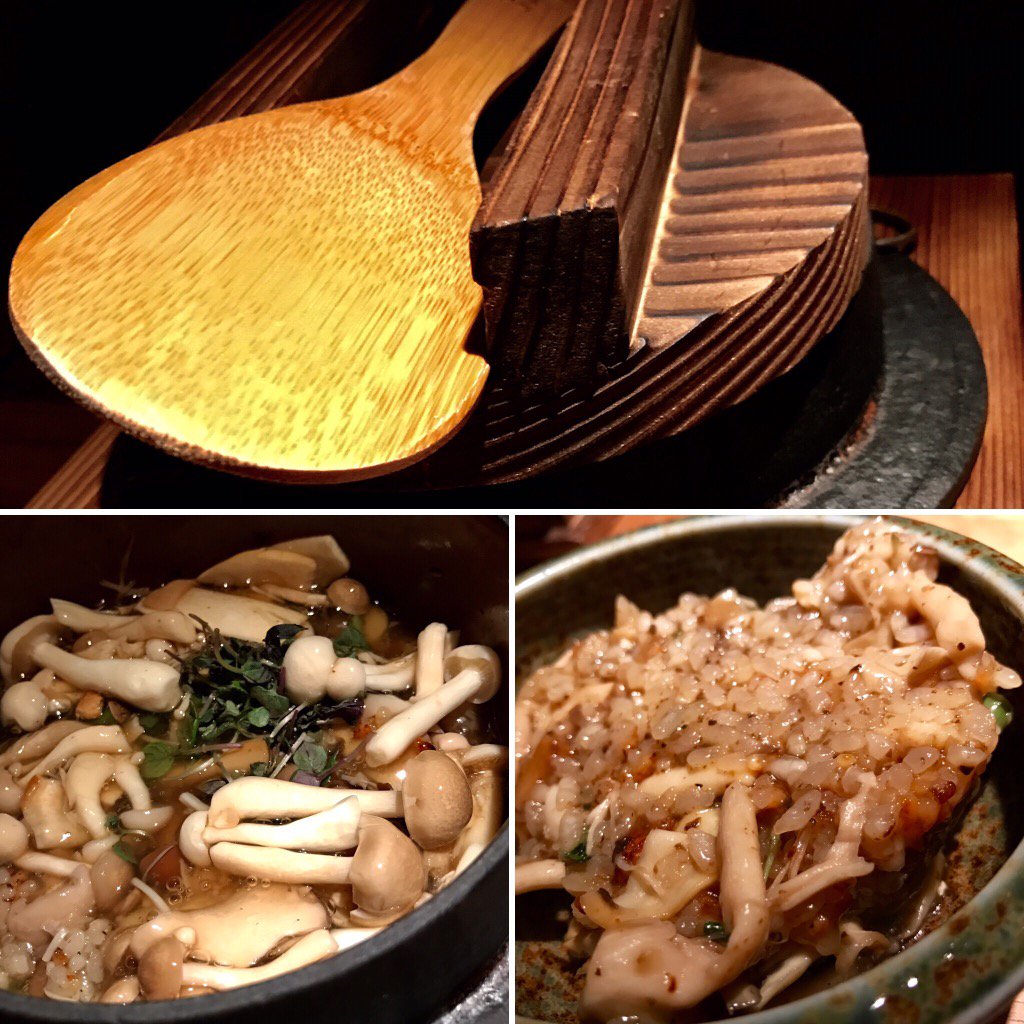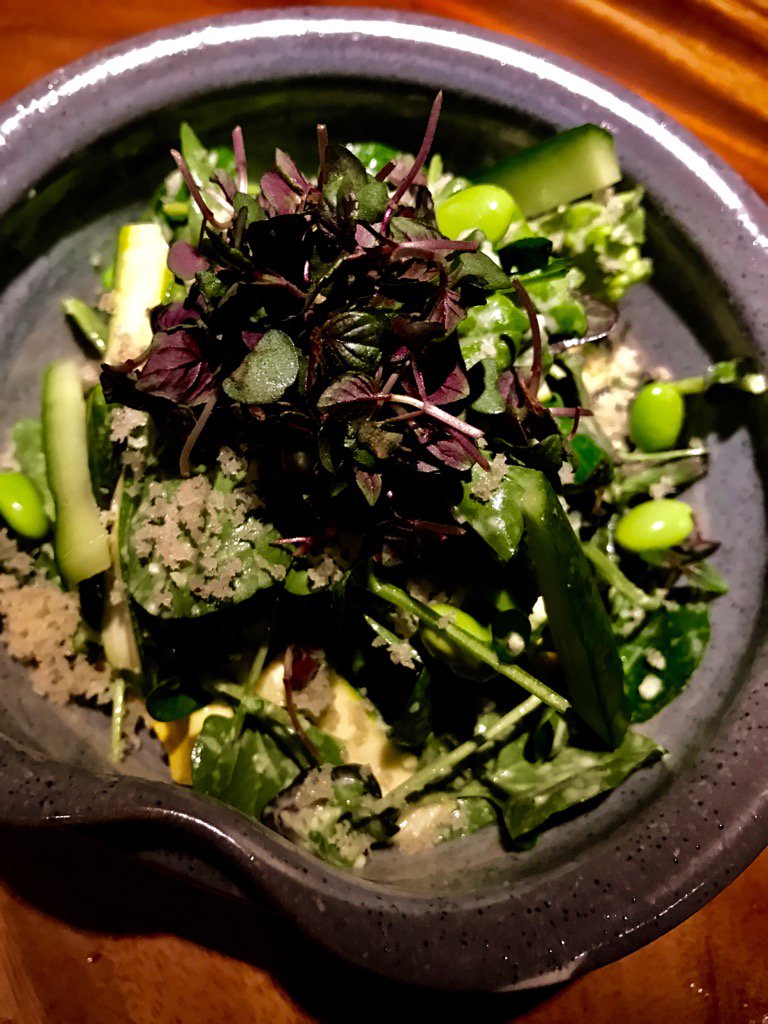
ZUMA-nating About Sushi

 It’s hard to get excited about big box Strip Japanese restaurants anymore.

It’s hard because they’re all clones of each other.

What Nobu started back in the late 90s has spawned copycat after copycat, until these days it’s tough to tell your Hakkasan from your Yellowtail.

Morimoto, Nobu, and Mizumi are essentially the same restaurant. Remember Social House? That’s okay, no one else does, either. Kan’t rekall Koi? You’re not alone. Everyone of them follows the same blueprint. You’ve got your bar, your sushi bar, and your fancy steaks and your edamame. Then there’s the Japanese veggies, extravagant sushi and your robatayaki this and your yakitori  that. The only thing that’s different is whatever flourishes the chef want to add to their garnishes and presentation platters.

We ascribe this phenomenon to the improbable/ecologically indefensible rise of sushi as the protein of choice for a world looking to “eat healthier.” Ever since sushi became a “thing” around fifteen years ago, our insatiable hunger for what is, in essence, a pretty bland fish (tuna), has become the go-to ingredient for those looking to satisfy the hunger of the elite and the hoi polloi. Other fish (some of them actually tastier) are thrown into the mix, and by the time you’ve downed them, a few skewers and a “creative cocktail” or two, you’ll leave fat and happy and about $200 lighter. Which is just what the hotels want.

But here’s a dirty little secret: there isn’t a whole lot of creative cooking going on in any of them. This is formulaic food pure and simple. Putting ponzu and jalapenos on some sashimi is nothing new. In fact, it’s soooo 1996. Virtually everything else being dished up in these “modern Japanese” places is some repackaged idea the chefs learned from a Nobu Matsuhisa or Roy Yamaguchi cookbook, or from someone’s recent trip to Japan, where the chefs have been serving their minimalist food with a flourish for centuries.

(Cooking-cutter, faux creativity also being what the hotels want, the better to impress the rubes — just like they do with all those Cirque du Soleil shows. Each one assaults you with the same, idiotic acrobatics, only in different costumes; each served with different, annoying music.)

In this way have big box Japanese restaurants become the steakhouses of the 21st Century. Everyone’s doing the same thing. Everyone gets their fish from the same place; everyone’s using the same Sriracha. Only the window dressing is different.

Which brings us to Zuma. The brainchild(?) of one Rainer Becker…someone who sounds as Japanese as Fabio Trabbochi.

But we ate in his restaurant — the eleventh location, just opened in The Cosmopolitan* — and had a very good meal there.

Which is another thing about “modern Japanese” restaurants: like steakhouses, it’s pretty hard to have a bad experience in any of them. The formula is now so pat, and the techniques so well-taught, that whatever comes to your table is usually pretty tasty.

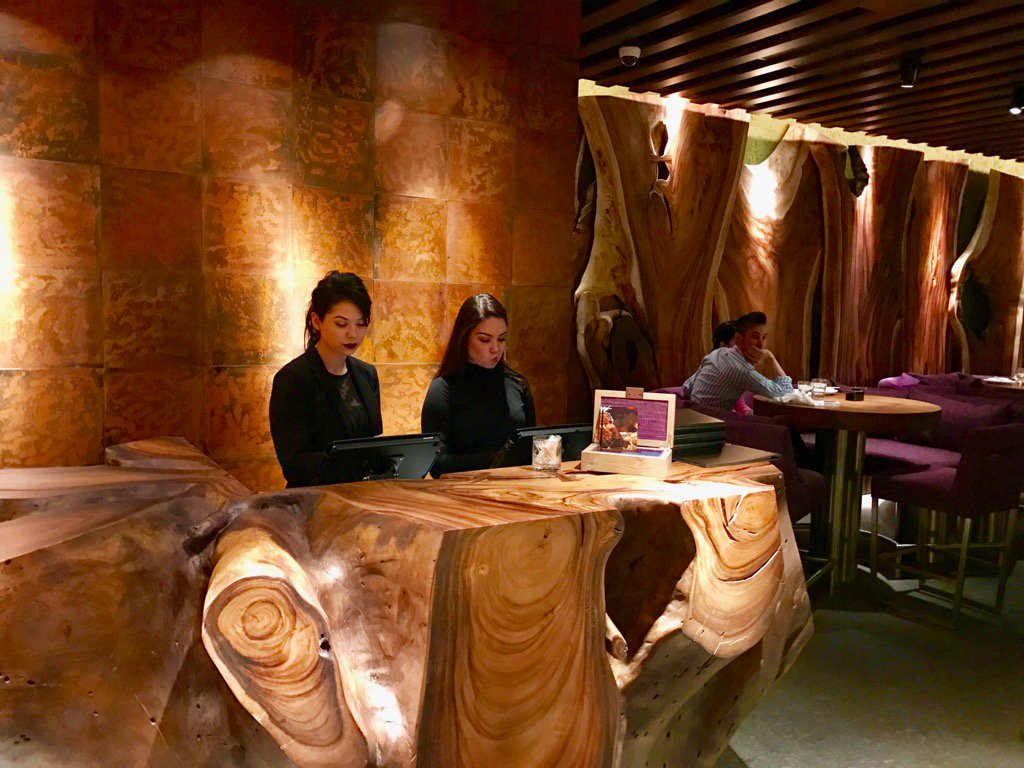
The first thing you notice about Zuma is the wood. There is lots of wood. Wooden hostess desk, wooden tables, wooden bars, wooden everything. We’re talking whole trees here, not some namby-pamby sliced logs:
ZUMA

The Cosmopolitan Hotel and Casino

3708 Las Vegas Blvd. South

Las Vegas, NV 89109

702.698.2199

https://www.cosmopolitanlasvegas.com/restaurants/zuma

* Which (we guess) makes Zuma the Ruth’s Chris to Nobu’s Palm, with Morimoto making himself the Morton’s of the bunch. Or something.
A Tale of Two Noodles

 It is the best of noodle times, it is a long way from the worst of noodle times. It is the season of shoyu; it is the winter of our udon contentment. In other words, if you love Asian noodles in all their forms, you should be in hog heaven these days.
As recently as seven years ago, no one in Las Vegas knew a soba from a shiso. These days, you’ll find Asians, Asian-Americans, and haolies of all stripes hunched over steaming bowls of long hand-pulled noodles, and debating the merits of mentaiko versus mian.

With the opening of Monta seven years ago, informal, Japanese eating took a giant leap forward and has never looked back. But one thing has always been missing: an udon parlor to call our own.  Thankfully, yet another Southern California import — Muragame Monzo Udon — has now planted its flag here, allowing our Chinatown to take yet another small step towards ubiquitous deliciousness.

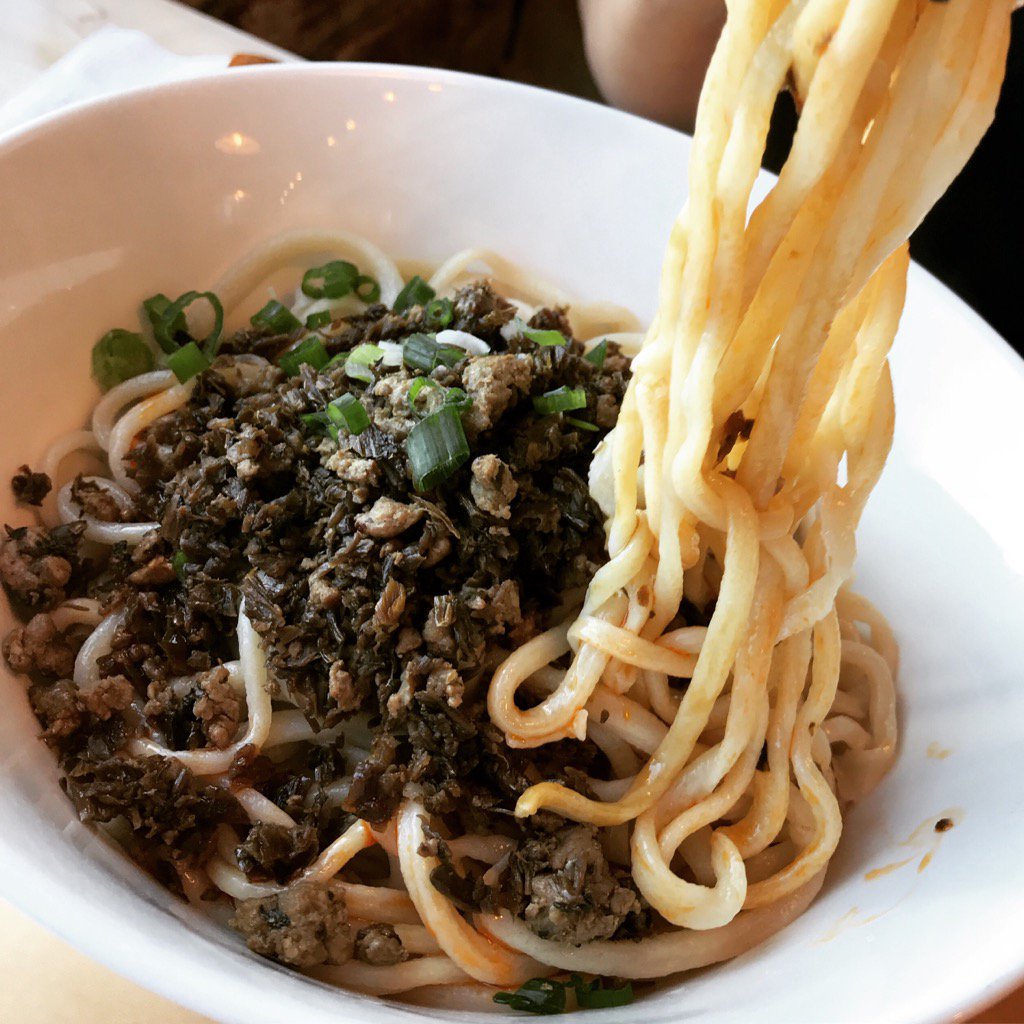
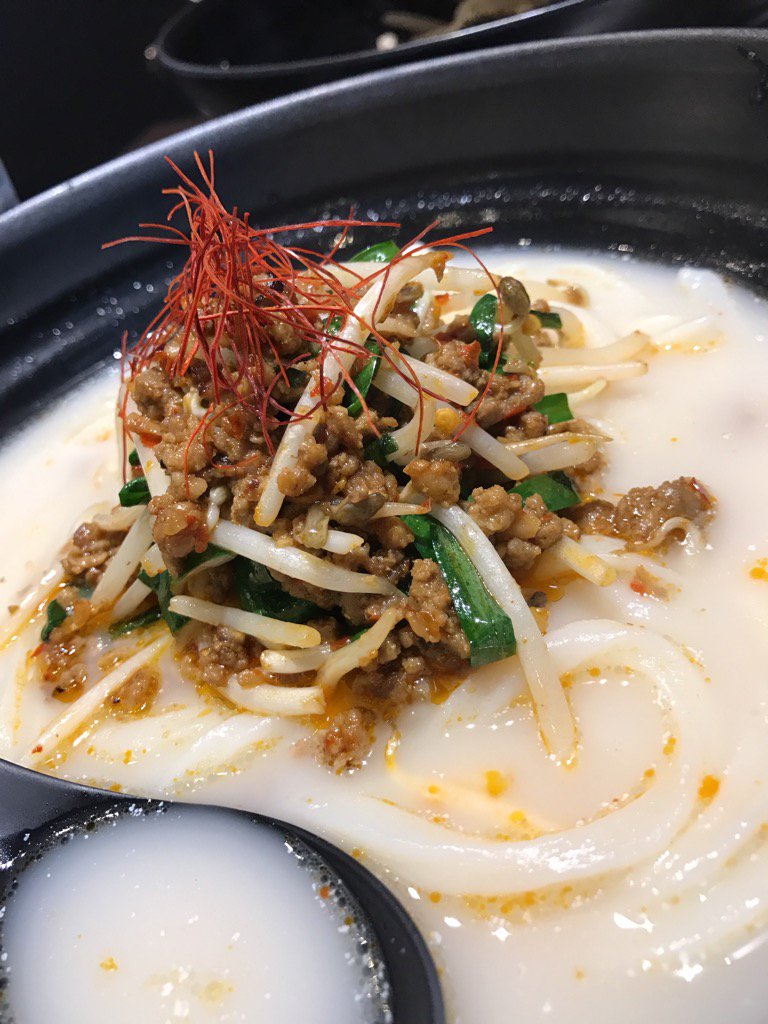
For the uninitiated, udon are thick, white, long strands of wheat starch. These are not noodles to be contemplated; these are carriers for a variety of sauces and toppings, adornments that Monzo delivers in spades. To taste them in their purest form, try them cold (bukkake* style) doused with a clear, intense broth. Of the “signature udon” that we tried, the Food Gal® is partial to the Mentai Squid Butter (flecked with crunchy fish roe and bits of squid), while I found no fault with the Hot Dragon Udon (pictured above) — it being dressed with lots of spicy ground pork and Chinese chives. Some people are fond of the Miso Carbonara and Sea Urchin Cream versions featured here, but to my mind, these overwhelm the chewy, wheat-i-ness of the noodle, and thereby miss the point.

Image may contain: 1 person, indoor

Not to be outdone, Shang Artisan Noodle (pictured above) brings a Chinese spin (and that wonderful, hand-tossed lamian) to west Flamingo Road. I’ve always considered the way they can pull and toss and stretch a huge wad of dough into individual strands of noodles to be an ancient form of Chinese magic. There’s also something magical about the dense, beefy broth that accompanies the Shang Beef Noodle, or the dry, spicy kick of their dan dan mian:

….  or the over-the-top chewiness of the Beef Pancake — it being more like a large, juicy, xiao long bao stuffed with a steamed, onion-flecked hamburger:

Image may contain: food

I don’t wish to start an international incident, but it’s now a dead heat as to who makes the best thick Asian noodles on earth.

MURAGAME MONZO UDON

3889 Spring Mountain Road

Las Vegas, NV 89102

702.202.1177

https://www.facebook.com/marugamemonzolv/

SHANG ARTISAN NOODLE

4983 W. Flamingo Road Ste B

Las Vegas, NV 89103

702.888.3292

https://www.facebook.com/ShangArtisanNoodle/?ref=py_c

* Do not, under any circumstances, look this up.

YUZU Kaiseki Excellence


It took me two years to make it to Yuzu Japanese Kitchen.

Two years.

Sounds incredible even to me, since I pride myself in seeking out the best Japanese food in town, as soon as it arrives in town.

But I have an excuse. (It’s a lame one, but I’m stickin’ with it.)

And that excuse is: Yuzu is located on Silverado Ranch Boulevard. Yeah, that Silverado Ranch Blvd. — the one located way southeast of the Strip; the one littered with poker bars and fast food franchises. The street that considers the South Coast Hotel and Casino a fun time anchor tenant. A restaurant wasteland so vast it makes Henderson seem like Napa Valley.

You normally couldn’t get me on Silverado Ranch with a shotgun in my mouth and promise of free foie gras, but my buddy Martin Koleff told me I had to try Chef Kaoru Azeuchi’s cuisine, so off we were — twice in two weeks — to see for ourselves.

Martin and Rie Koleff, you may recall, are something of a Japanese restaurant power couple in Las Vegas. They both are long time veterans of our hotel F&B scene, and Martin was instrumental in first putting Raku on the national map. These days they are both involved in bringing the Joy of Sake event to Las Vegas, and if there’s such a thing as a Japanese restaurant mafia in town, the Koleffs are the capo di tutti capi to numerous chefs and restaurateurs, many of whom are not as fluent in English as they are.

When Martin or Rie tells us we have to try someone’s food, we listen. Usually. Unless it’s on friggin’ Silverado Ranch Boulevard, where, truth be told, we thought Azeuchi-san’s chances of survival were slim. But survive he has, prospered even, in his almost-hidden haunt behind a car parts store.

He’s done it by doing what so many non-Japanese chefs are afraid or unwilling to do: food his way, writ small, night after night, until he his audience slowly finds him. (Chefs are always telling me how they just want to open a little place and serve their favorite dishes. Yeah right, I always think to myself. With a few exceptions, the only people with the guts to go small and be patient are Asians in general and Japanese cooks in particular.)

Yuzu may be small, but what it’s doing is a very big deal, indeed. It’s not strictly a sushi bar (although there is a small one), and it’s not an izakaya in the Raku or Izakaya Go mold. What it is is our most Japanese of restaurants. A place that could be right at home in a Shinjuku alleyway; a place serving food so true to the rhythms and tastes of Japan that it’s almost shocking when a gaijin walks through the door.

There are many reasons to go here, the passion of the chef and quality of the ingredients being first and foremost among them. The Food Gal® tells us the noodle and teriyaki bowls at lunch are first class, but if you really want to see Kaoru-san strut his stuff, you need to reserve in advance for one of his kaiseki meals.

For the uninitiated, kaiseki refers to a very specific form of Japanese dining. It is the haute cuisine of Japanese cooking — seasonal eating taken to the nth degree — a multi-course meal that combines the artistry of the chef with a myriad of ingredients, presentations and techniques. Everything (and we mean everything) from the garnishes to the plating is thought through and presented in a way to enhance every sense — visual, aromatic, taste, tactile — that goes into your enjoyment of the meal. Many of the elaborate garnishes are symbolic, and all of the recipes try to achieve a zen-like state of communion between the diner and the food.

In other words, it doesn’t get much more complicated or serene than a kaiseki meal, but in the right hands, it is a transporting experience — creating an almost blissful connection between chef, raw material and consumer. There is nothing like it in Western dining, although the elaborate tasting menus of Keller, Achatz, Humm and others pay homage to kaiseki, none of them achieve the transcendence of  the Japanese chefs, who have been at it centuries longer. (Americans are too busy doing cartwheels in the kitchen and padding your bill.) Azeuchi trained for 16 years as a kaiseki chef in Japan, even getting the honor of serving the Emperor, so, needless to say, you’re in good hands.

What you will get will always depend upon the season and the chef’s inspiration, but whatever path is chosen by the chef, it will no doubt be the most delicious Japanese food you’ve ever had.

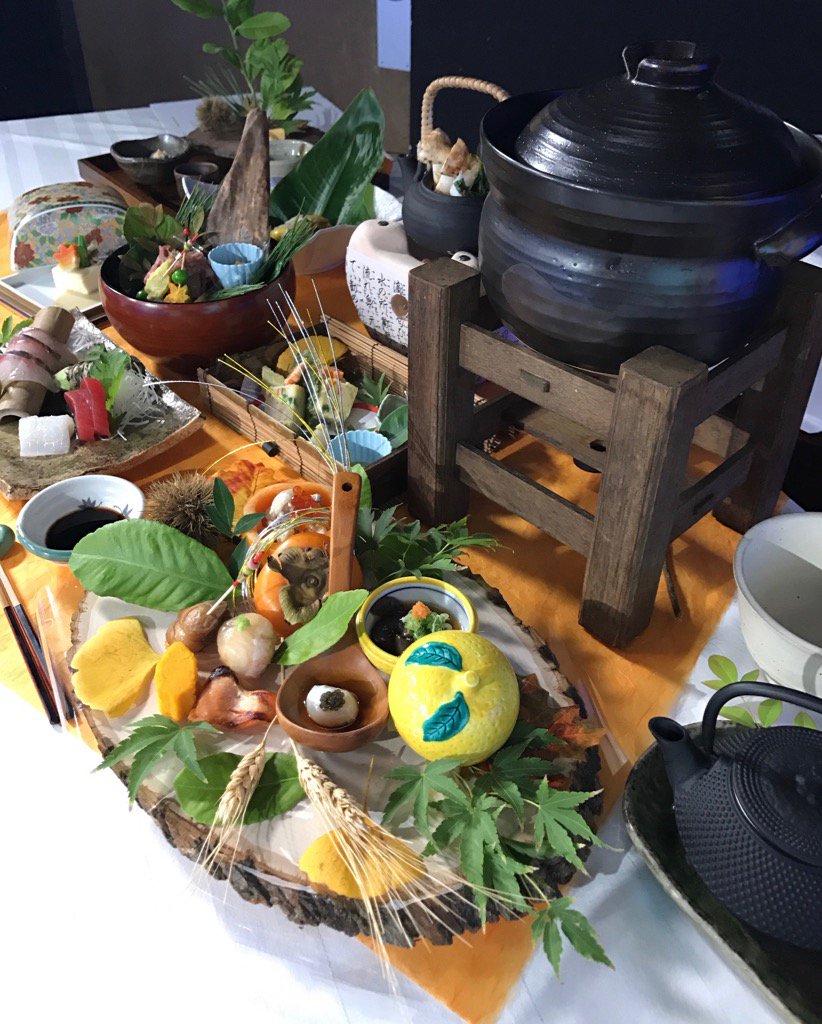
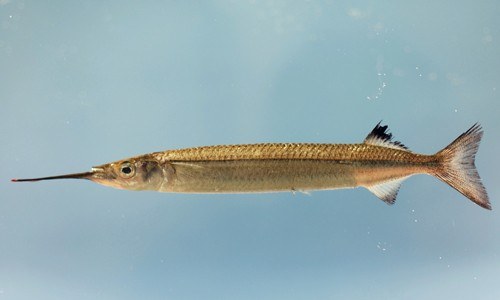
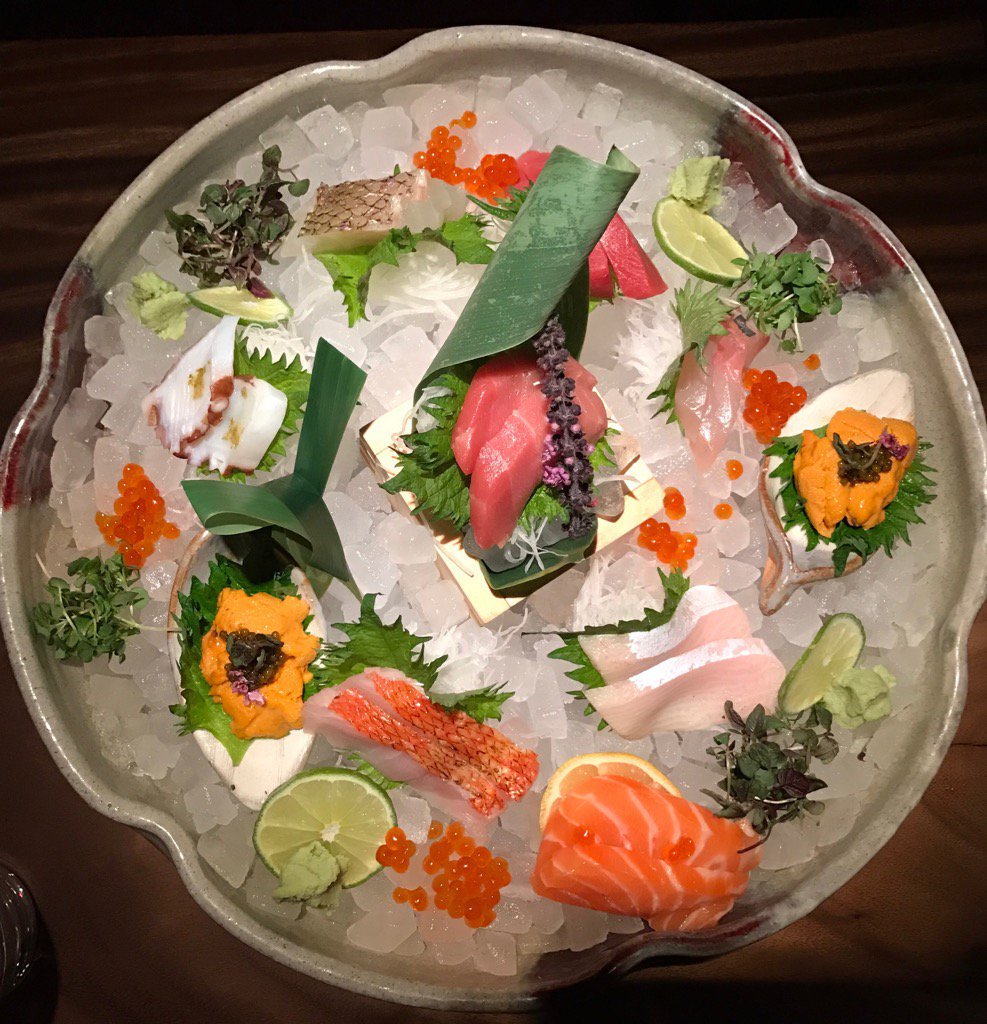
Our dinner started with the appetizer platter above, containing everything from an ethereal poached egg with caviar to grilled barracuda to uni rice topped with red snapper. From there, we proceeded to a sashimi platter of lobster, striped jack and halfbeak that was the equal of anything you’ll find at Kabuto and Yui:


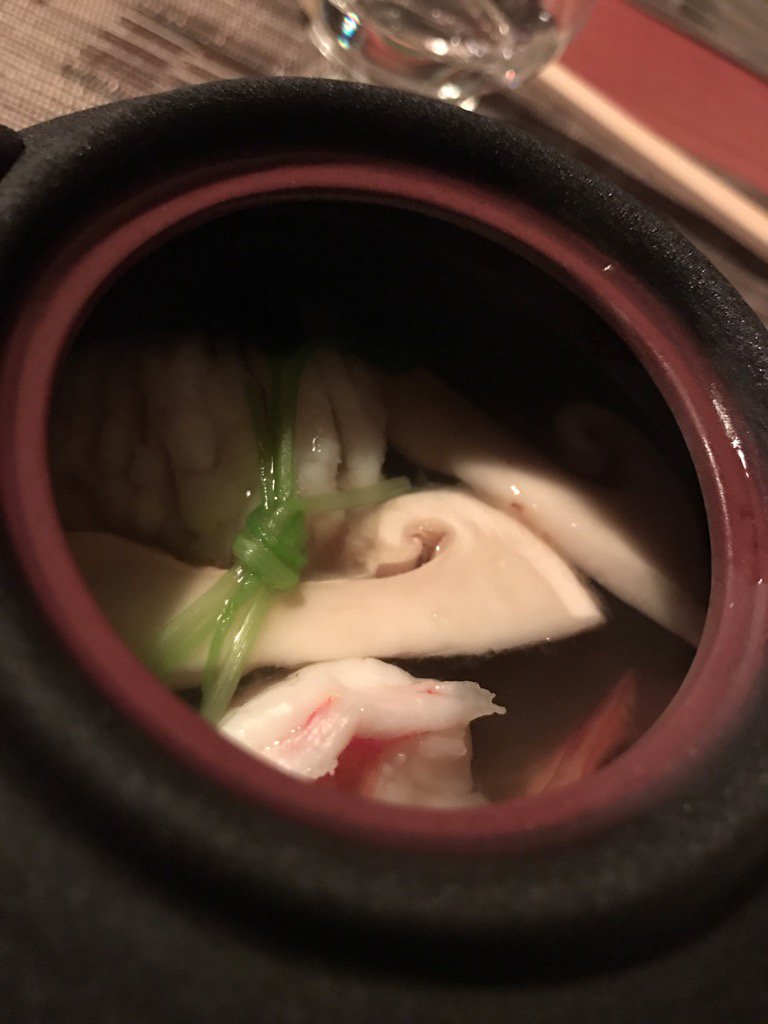
Then came the queen of all mushroom soups: a dobin-mushi matsutake broth containing pike conger, cabbage and shrimp:

It was a soup so startling in its deceptive, smoky simplicity that everyone at our table was shaking their heads in appreciation.

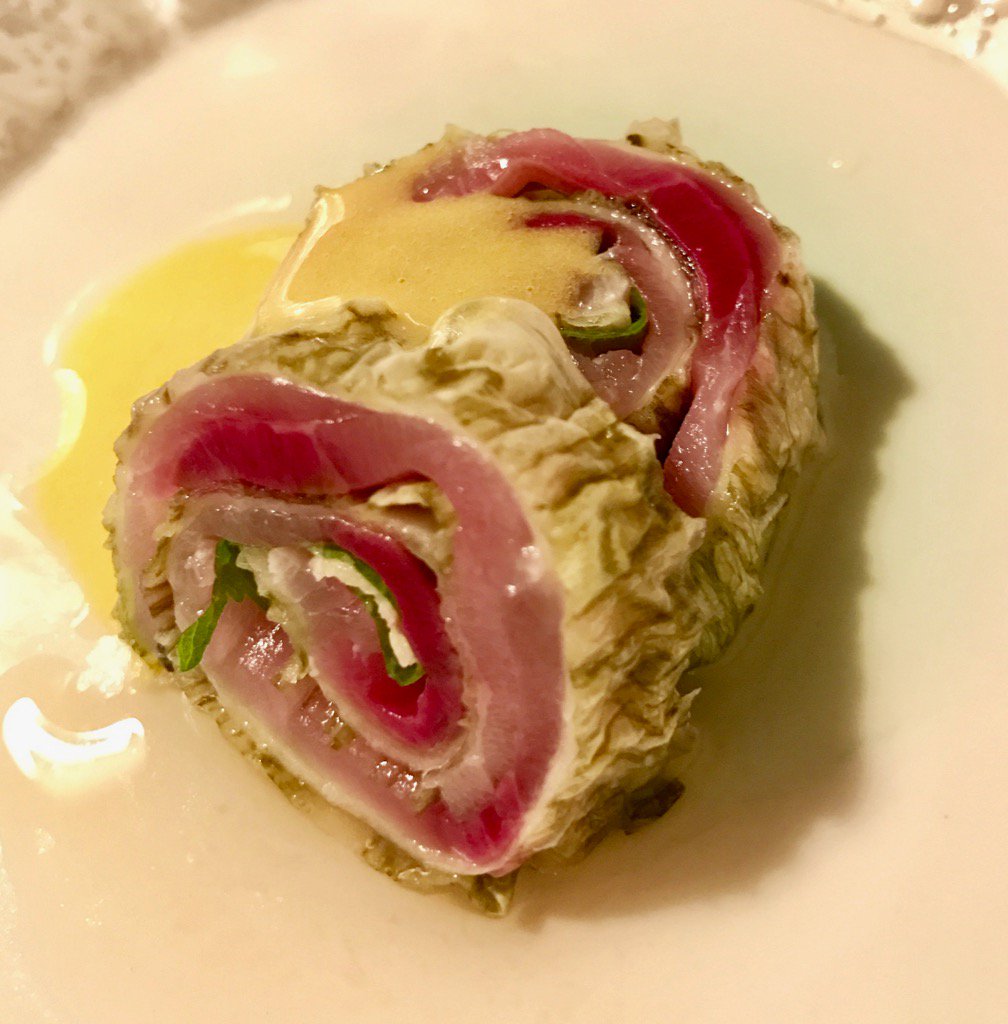
From there we progressed through six more courses, ranging from grilled ribbons of A-5 Miyazaki wagyu (wrapped around more ‘shrooms and wasabi), to a steamed dish (steamed scallop cake draped with a latticework of wheat gluten), to eel tempura, to a “vinegar dish” of seared mackerel that was a bracing combination of tart and smooth:

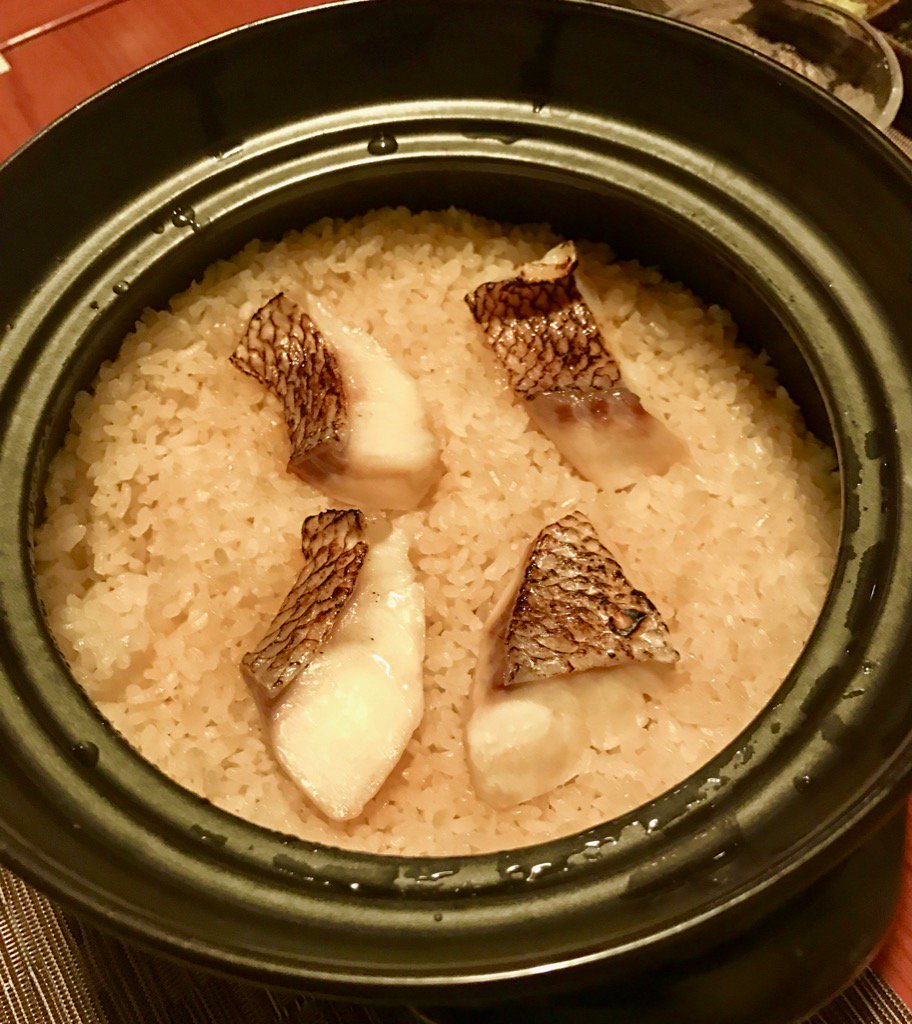
Each dish was a model of precision, and each left you hungry for more. A big deal is made of the rice dish, for good reason. Rie Koleff (who acted as our personal sake sommelier throughout the meal*) explained that rice always signifies the ending of the meal Japan. This dish was, like much Japanese food, subtle to the point of invisibility:

….but like much Japanese food, once you stop looking for in-your-face flavor, and start appreciating the nuances, you quickly find that you can’t stop eating it. I don’t think a simple bowl of rice and fish can taste any finer, or be found anywhere in Las Vegas.

Those nuances are the key to Japanese eating. I call it deceptive simplicity because you are always getting much more than meets the eye. Especially in a kaiseki meal. Here, you are treated to an education in the centuries-old traditions in the Land of the Rising Sun: the reverence for seafood, the harmony of vegetables and the keen awareness of the seasons. In a nutshell, everything that Las Vegas is not. This is eating as a form of secular religion, and if you’re open to the experience, you will be transported in a way that no other Western meal can match.

The kaiseki at Yuzu is not a formal affair. (You are on the outskirts of Hendertucky after all.)  Because Kaoru-san flies in many ingredients from Japan, it is necessary to book at least three days in advance. The price you want to spend determines how elaborate it’s going to get. The ten-course, sixteen dish affair we had runs about $175/pp, but for $50/pp you can get a fine introduction into one of the greatest dinners in all of Las Vegas. ELV’s meal was comped.

YUZU JAPANESE KITCHEN

1310 East Silverado Ranch Blvd.

Las Vegas, NV 89183

702.778.8889

http://www.yuzujapanesekitchen.com/


* There is a nice selection of sakes on hand but you will probably not get your own sake sommelier. Sometimes, it’s good to be king. ;-)