Roman (Wine) Holiday

Image may contain: cloud, sky, outdoor and nature
 Twenty years ago, back when dead tree journalism was still thriving, I attended a convocation of food writers in Napa Valley. For a few days, bigwigs from the New York Times, Saveur, and Bon Appetit rubbed shoulders with food writers from around the country. Among the cookbook scribes, Marcella Hazan was the biggest draw – commanding the main stage for her Italian cooking demonstration. Her husband Victor did the same as he lectured passionately and pedantically about the glories of Italian wine. After his talk (where he was introduced as America’s preeminent authority on the subject), I asked him if there were any books or guides to help me gain a better understanding of Italian wine (or any understanding of it for that matter). His responded that he didn’t think so. Apparently, to learn anything about Italian wine in America, in 1997, you had to know Victor Hazan.

My how things have changed. Thanks to the tireless promotion of  Piero Selvaggio, John Mariani, Joe Bastianich and others (and America’s food revolution and the internet), learning about Italian wines is much easier than it used to be. But it’s still a very dense and difficult subject, even for the most ardent oenophile. When you consider that Italy has twenty different wine growing regions, producing wines from hundreds of different grapes (over 350 authorized varieties at last count), the task is daunting indeed. (By way of comparison, France uses around 50 different grapes for its storied wines.)

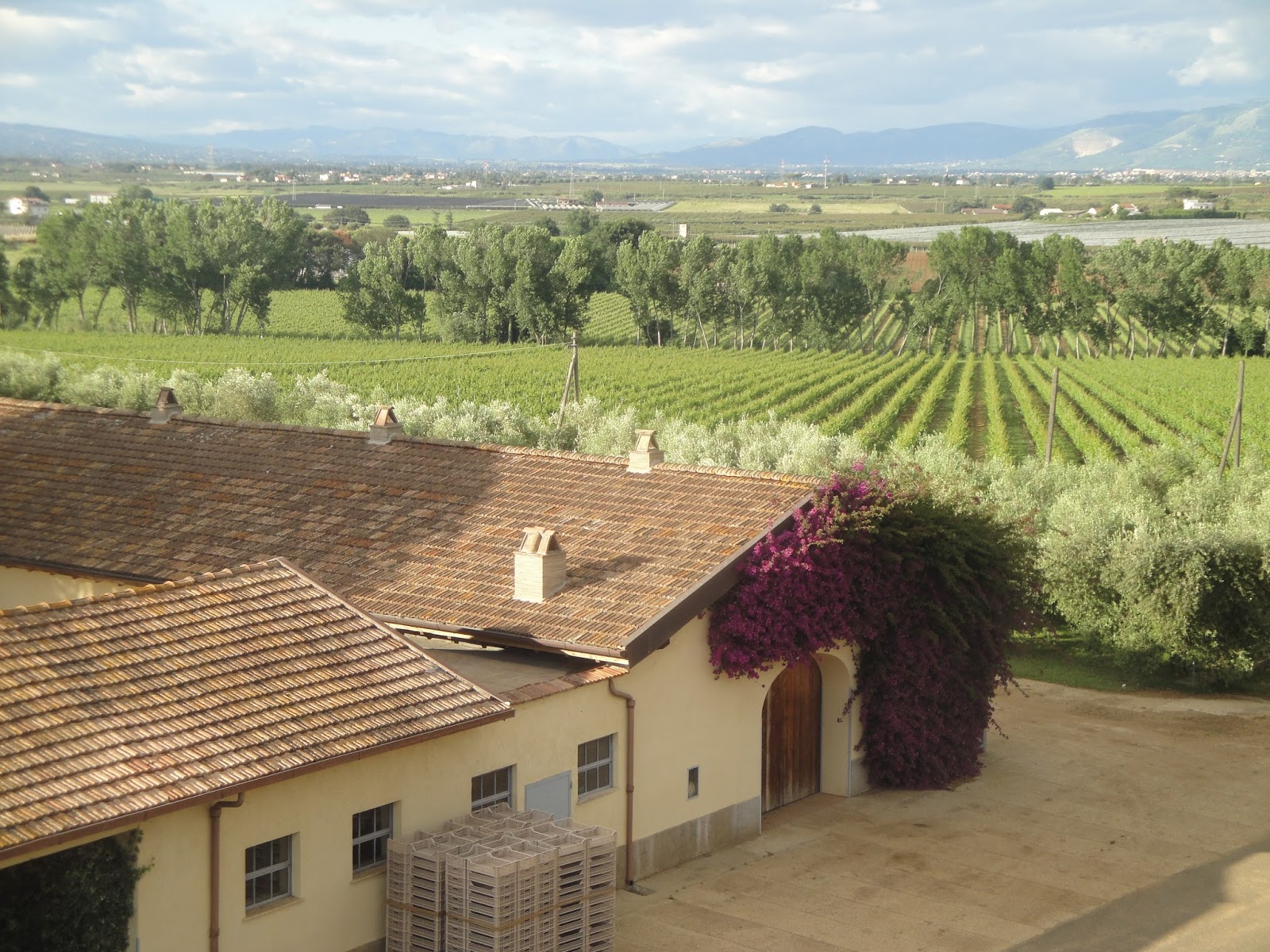
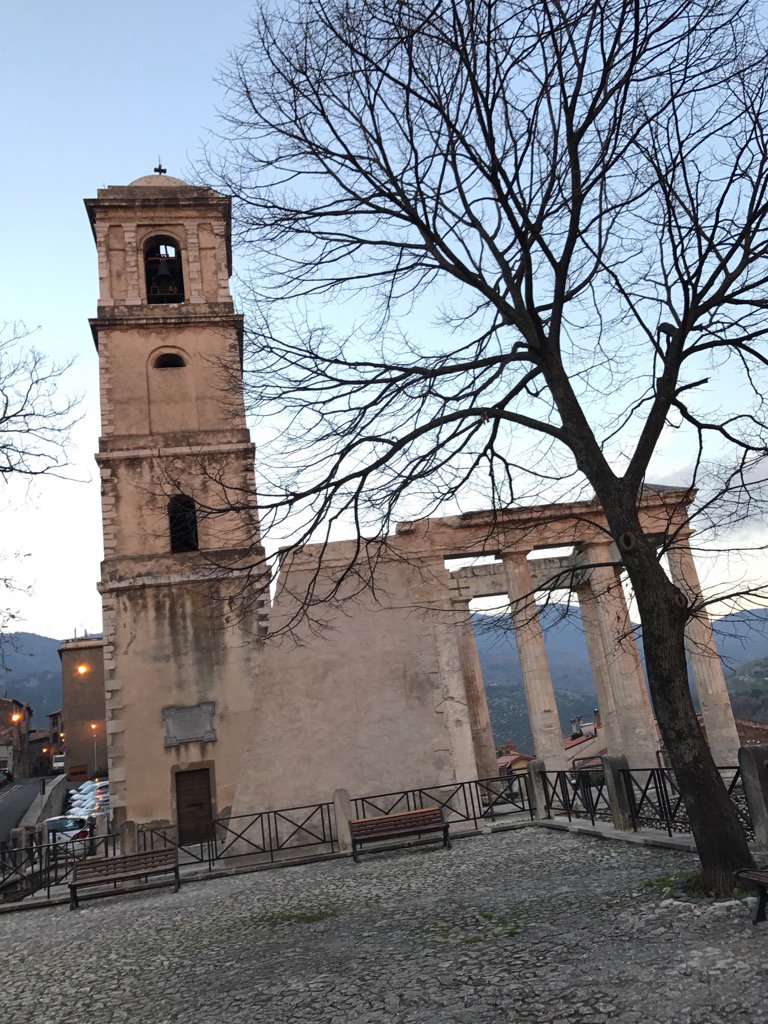
As my Italian wine IQ grew (helped along by multiple visits there), one thing always puzzled me: For a country so rich in wine, no one ever talks about Roman wines.  While Roman food may be renowned, its wines are rarely mentioned in the same breath. Perhaps they have suffered from an excess of Est!! Est!! Est!! (“The dullest white wine with the strangest name in the world.” – Jancis Robinson) and the oceans of cheap Frascati that fuel the trattorias of the Eternal City. Between a reputation for cheap, uninteresting wine, and America’s taste for the killer “B’s” — Barolo, Barbaresco, and Brunello di Montalcino — the flavorful and affordable wines being made south of Rome have had an uphill climb to gain the audience they deserve. But climb that hill you should, and climb it I did (to the town of Cori pictured above), to taste some well-crafted, intense and fruit-forward juice that may finally put Roman wines on the map.

http://www.atasteofitaly.ie/wp-content/uploads/2016/08/agricola-biologica-marco-carpineti_01.jpg

Marco Carpineti (seen above with son Paolo), comes from generations of winemakers, and since 1994 has been making his own wines organically, and bio-dynamically, using no herbicides, chemical fertilizers or synthetic products. His winery is set into a mountain cliff on the road to Cori, just south of Rome, which itself sits almost 4oo meters above sea level. His vineyards are located on the hills and fields below the mountain, and from these sites he crafts a number of bewitching wines, many of which are made with grapes you’ve never heard of.

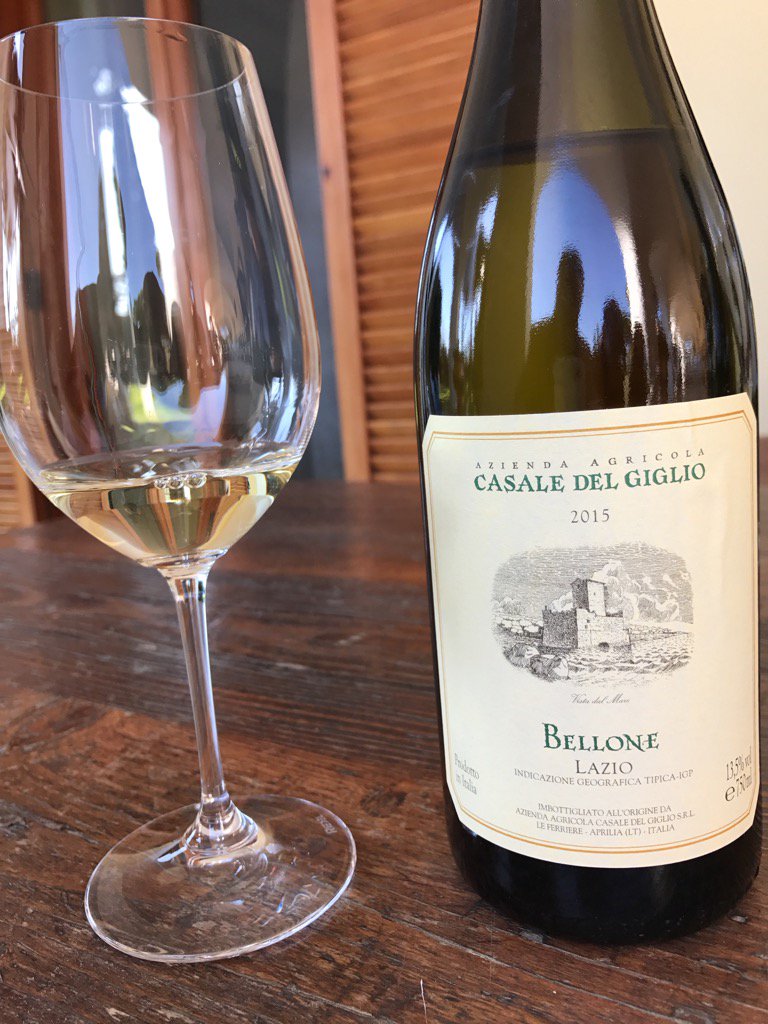
Bellone (BAY-lon-AY) is one such grape. A native vine that hints at the herbaceousness of a good sauvignon blanc, with a nice, round mouthfeel and lemony finish that makes it perfect for seafood and oysters. If Carpineti and other Lazio producers have their way, it is a white wine that might challenge the ubiquitous (and often boring) pinot grigio for Italian white wine supremacy.

https://www.wineatwine.com/media/k2/items/cache/69b5f85da08d181d48515c6d41e3e0a5_XL.jpg

Whether it does that or not, it certainly makes a very firm and fresh sparkler — that Carpineti calls Kius — a bubbler that is every bit the equal of many a prosecco. A step up in depth takes you to their Kius Extra Brut — made exclusively with Nero Buono di Cori grapes — well-balanced with a hint of fragiolini (small strawberries) and brioche on the nose, and a long, medium dry finish.  It starts slightly sweet and floral on the tongue and ends dry, and practically begs to be drunk with a variety of summer foods and mild cheeses.

The Bellone grape makes another appearance in their Capolemone white — a wine that seeks to harness the soil and scents of this native grape. The light straw appearance is deceptive as the wine is uncommonly round and full in mouth. It finishes with hints of lemon, making it a perfect accompaniment to grilled fish or fresh oysters. Just as compelling was their Moro — a blend of white “Greco” grapes — that yield a softer, fruitier wine with hints of ripe fruit, perhaps due to 30% of the grapes being fermented in “refined oak barrels.” Were I tplanning a meal around these two wines, I’d offer the Moro as an aperitif with the antipasti, and serve the Capolemone with some cioppino.

img_2133


While the sparklers and white wines impressed us the most at Carpineti, their Tufaliccio red blend — of Montelpuciano and Cesanese grapes — won the award for the hardest to pronounce, easiest to drink wine of the day. This is a soft, mellow, easy to gulp red that would go beautifully with a variety of foods — sort of like a cru Beaujolais, only earthier and without the latter’s high-toned fruit.

Paolo Carpineti couldn’t have been a more gracious host, and to cap off our day of tasting, he drove us to the top of the town of Cori, where the Temple of Hercules stands — built 300 years before the founding of Rome.

If you time your visit right, as Paolo did for us, you will wind your way to the top of this ancient town right at the end of the day, where one of the most fabulous sunsets in Italy awaits you.

Italian wines, by their nature, are not wines for dissection and introspection. They are as indispensable part to the enjoyment of an Italian meal, as any pasta or protein. Italians view wine as a food, and as something to be enjoyed with food. This was the lesson of Cincinnato, a cooperative wine maker a little down the hill from Carpineti.

http://q-ec.bstatic.com/images/hotel/840x460/279/27945006.jpg
Cincinnato is a winery, as well as an agriturismo, which means you can spend the night, sip, sup and stay to your hearts content (as long as you book one of their modern, comfortable rooms in advance). It is named after the famous Lucius Quinctius Cincinnatus, a 5th Century BC Roman politician who, rather than consolidating his power and lording it over the country, instead went back to his farm in the Cori countryside — as depicted by the logo:

The Bellone grapes for the above wine are cultivated in the lava hills around the Cori. Bellone has often been thought of as a “simple” or blending wine. It may not have the structure of more exalted grapes, but in Cincinnato’s Castore bottling, there is nice acidity to go with its silvery color and tart, faintly lemon peel-like finish. In all, quite a mouthful for less than $15 retail.

img_2095

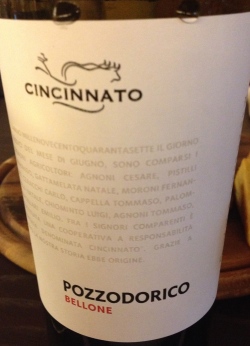
From there, wine writer Charles Scicolone and I worked our way through the entire catalogue. (Wine tasting tip: If you’re going to tour Italian wineries, always be sure to bring your very own Italian wine expert with you.) Both of us liked the Castore, but we were more enamored of the Pozzodorico Bellone, perhaps because it is fermented and aged in wood for six months, giving it more body and complexity and length than its stainless steel cousin.

We then sampled a fruit-forward blend of 50% Bellone, 30% Malvasia del Lazio, and 20% Greco — called Illirio Cori Bianco — and a Pantaleo, made with 100% Greco grapes. Giovanna Trisorio — our wine guide at the winery — described the Greco grape as an ancient, indigenous variety that produces a soft, yet full-bodied wine. I liked the Illirio’s minerality, but found it lighter, tighter and tarter in the mouth than the much fuller Panteleo. That both wines pack so much lip smacking complexity in bottles costing around $10 is something to behold.


img_2096

Of the reds we tasted, the Polluce (Poll-U-cha) was the clear cut winner.  Made with 100% Nero Buono grapes, this was a fresh, smooth, easy-to-drink red. It was dark purple in the glass and a touch smoky — more redolent of black fruit than red — and just the sort of vino rosso you’d want with some beef cheek ravioli.

“All of these wines need food,” said Scicolone, and the winery obliged, filling us with a variety of local salumi, meats, cheeses and breads to accompany our serious sipping, all accompanied by their gorgeous, fresh, peppery olive oil.


img_2093

Cincinnato represents over 130 families, farmers and grape grower in the Cori region. It has brought its wines into the 21st Century with a sleek and stylish label that announces some very approachable wines at incredibly soft prices. Most of its catalogue sells in America in the $10-$20 range, and for that price you’re getting some serious wine making. The wines are named metaphorically (Castore and Polluce are characters in a famous Italian opera; Illirio means “hill”), but they make it easy for you by identifying the main grape variety right on the front of the label. These varieties deserve to be drunk more than they are on this side of the pond, and after a few sips of Bellone, you may never go back to pinot grigio again.

This is Part One of a two-part article.


Hot Hostessing 101 – Just Grab Them By The Pussy

Let’s face it: There’s no reason to go to a restaurant unless you want to bang one of the hostesses.

Who gives a shit about the food? Who cares a fuck if the chef is busting his or her ass?

We want skin, baby!!

ELV (the man, the myth, the inveterate horndog) is often asked, “ELV, do you sleep with ALL the hot hostesses you feature on this site?”

To which we must modestly admit, “No, just most of them.”

Why do you think we started this blog NINE YEARS AGO TODAY? For the free food? (Well yes, that WAS a reason, but mainly it was for all the free trim we knew would be getting.)

And you know what? It was more fun (and easier) than shooting monkeys in a barrel.

Because here’s a little secret…shhhhh…don’t tell anyone….but the young women of the world are hopelessly, helplessly, devotedly IN LOVE WITH THEMSELVES, and with the slightest provocation (or a promise to put their picture on your website), they immediately start doing something like this:

IT’S TRUE! Based upon scientific evidence that is yet to be discovered, all it takes is a posted picture (and a promise that she’ll be famous) to get a young woman hotter than a greased pig in July.

Of course, we didn’t know these things on April 1, 2008. But it didn’t take us long to figure it out. (If nothing else, ELV is a very fast learner when it comes to separating women from their clothes.)

It also helps to be a very well-known local celebrity (like ELV is) so you can buffalo these gals into all sorts of things based merely upon the promise that they might appear on this website.

Turns out Donald Trump was right: when you’re famous, pussy grabbing is easier than beating Michael J. Fox at jenga.

But let’s get back to basics, shall we?

Just what is an essential quality of hot hostessing?

Well, it helps to always be hot….and thirsty:

Then of course, liking to hang out with horny, rotund older men is also a prerequisite.

A love of ginormous, oversized jewelry helps:

…as does an affection for small, furry creatures:

…and fur in all its forms:

It’s also essential to show your cleavage at all times, even if you don’t have any:

…and to eat as few carbs as possible, even if that means finding other means of sustenance to get you through the day:

Finally, above all, Remember, when applying for a hot hostess position (or trying to keep your job as one), that the two operative rules are “no fat chicks,” and “tight butts drive me nuts.”

One final caveat: Young ladies you must, at all times, pretend to like food:

…even if you don’t know what it is, and you end up smelling like fish.

All you budding hot hostesses out there can thank me later.

We know you’ll figure out how.


Indian Uprising

The average Italian restaurant gets more customers in one night than a good Indian restaurant gets in a month. – Calvin Trillin

When it comes to restaurant food, I have the attention span of a housefly. I can be awash in wonderful Italian and find myself dreaming about French. Knee deep in delicious dim sum can’t dissuade me from dreaming about Dijon, and when I’m tucked into a tiramisu, I tremble at the thought of terrific tom yum.

And when I’m supping on seafood, I sigh about steak. And vice versa.

Yes, I’m an inveterate food slut, jumping promiscuously from cuisine to cuisine, and chef to chef, always looking for something elusive and delectable and just out of reach. A true gourmet is always a bit unhappy; always unsure of whether he has found the perfection that he seeks, invariably restless to fall in love with whatever he’s not having that very minute.

Any great restaurant town — New York, Chicago, Tokyo, Las Vegas, etc. — is like an orgy to an epicure. Lying before him are endless pleasures of the flesh: ripe, nubile, willing morsels there for the taking. But as anyone who’s ever been to an orgy knows, they can be exhausting and overwhelming…or so I’ve been told.

Yes, there is such a thing as too much great Italian food, an overflow of fine French, or a surfeit of steak. I can even overdose occasionally on superior sushi. When a confluence of these things occurs, there’s only one cuisine that helps me re-calibrate my desires — Indian.

Maybe it’s the breads, maybe it’s the vegetables. Most assuredly it is the heady mix of spices that infuse this cooking. Indian food overwhelms the senses. Subtlety is not its strong suit.  Kaleidoscopic flavors, intense aromas, and powerful punches to the palate are what defines it. There is also a depth and richness to its soups and stews that is deeply soul-stirring. The Japanese may have defined umami, but Indian culture imbues its cuisine with almost mystical levels of savory complexity. Just like it does its religion.

It always amuses me to wonder what an Indian chef or cook must think of a simple, French tarragon chicken, or spaghetti and meatballs. “My god,” they must think, “what kind of simple-minded baby food is this? It only has a few ingredients and hasn’t been absorbing fifteen different ground spices all day.”

Spices being the raison d’etre of Indian food. Not spicy in the sense of extreme heat and concentrated capsicum (although some Indian food can be as fiery as any foods) but spicy in that every dish contains a plethora of pronounced piquancy, presented by a panoply of palate-pleasing presentations.

http://2.wlimg.com/product_images/bc-full/dir_95/2821723/spices-1300271.jpg

When you consider the dozens of spices, and hundreds of combinations that can be made with these ingredients, a mastery of this cuisine seems almost unobtainable:

https://s-media-cache-ak0.pinimg.com/564x/c0/91/8a/c0918a07c507e10100098915b6be4bad.jpg

And these are just the basic ones. Did you know that both green and black cardamom is used in the Indian kitchen? Or that cumin should be freshly roasted? Or that un-ground nutmeg lasts forever?

The point is toasting and roasting of these seeds is essential to good Indian cooking, and it is the mastery of these things that distinguishes a good Indian chef from a poor one.

I’m not going to sit here and tell you I can tell whether an Indian chef is a whiz at re-creating this cuisine 8,000 miles from his homeland. I can however, say that we are experiencing an upgrade among our Indians, brought forth by chefs who seem to be putting a lot more effort into their dishes, and trying to take tepid tikka masala and lame lamb rogan josh from the doldrums of the dreaded all-you-can-eat Indian buffet, and bring them into the 21st Century. And our two best are only a half mile apart from each other on Paradise Road:

ORIGIN INDIA

Part of the reason Indian food has such a dreadful reputation is that the dishes lend themselves to constant reheating — the thick, stew-like concoctions fairly begging to be put in a steamer tray buffet. Unfortunately, this re-serving of yesterday’s (and the day-before-yesterday’s) dishes results in a flattening out of the piquancy that distinguishes the great, spice-infused concoctions of the sub-continent.

Origin India has always aimed to be our best Indian restaurant, and by and large it has always succeeded. It’s definitely the most upscale, with a nice bar, wine list and decor that stresses comfort over quick and easy convenience.

What the menu now stresses, under the new hand of Chef Jeyakumar Jeevamurali  (call him Murali for short) is the bright, powerful flavors of southern India. I’ve eaten at Origin many times in the past, but this is the first time I noticed the dense, unique layering of flavors in each of the dishes. Indian food is as tough to photograph as the names of its chefs are difficult to pronounce, so you won’t get a deluge of food porn close-ups like we might with other cuisines.

Suffice it to say that each of Origin’s dishes at the top of the page — chutney chicken, lamb nihari, goat pepper fry, et al — may look similar from afar, but each punch you in the palate with their own flavor profile. The chili paneer (batter-fried cheese in a tomato-pepper sauce) was sweet and slightly spicy, just as it should be, while the ground lamb chapli fairly explodes with fresh herbs and green chilies. Only the slightly dry tandoori chicken seemed a bit careless, but as most customers want chicken cooked until the last drop of juiciness is  wrung from its tender striations into a cinder of meat (the same way Greeks overcook everything into a briquet), it’s probably just a concession to the public.

Better by far are those stewed proteins — each one different in spice and texture. What we look for in Indian food is distinctiveness between its dishes, and Jeevamurali provides it in spades. A touch of sweetness distinguishes the chutney chicken (along with some bright vinegar notes), while the lamb is deep, soulful richness in a dark gravy. His signature dish is the goat pepper fry: it being a study in drier, stir-fried meat-meets-heat. The Peshwari nan coming out of this tandoor is the best you’ll find this side of Harvest by Roy Ellamar.

URBAN TURBAN

A relative newcomer (only two years old), Urban Turban occupies the space of a former cigar bar on Paradise Road.

Small bites and more creative plating than in your average Indian joint are what separates it from the pack, and the meal we recently had felt more refined and polished than the stew and soup-centric stuff you usually get.

Credit for this goes to Chef Tarun Kapoor, who brings a more modern sensibility to this menu, without sacrificing the multi-dimensional ka-pow that distinguishes this cuisine. The butter chicken royale (pictured above) employs cream cheese to take this ground nut, butter-cashew sauce to a different level, and his clay oven roasted fruits (bottom left above) are a thing of subtle beauty.

(Tarun Kapoor emphatically instructs on his intense, indigenous Indian eats)

Speaking of soups and stews, you won’t find a more life-changing one than Kapoor’s take on black lentil dal:

….it being surpassingly complex for something that looks so simple. Kapoor tells us that it takes long, long cooking to get the lentils, spices and milk to blend into a buttery mass of vegetarian decadence. One bite in and you’ll be willing to forswear meat altogether.

Equally good is his parda biryani (bread-covered rice):

…a satisfying  marriage of two ingredients not usually made for each other. But unlike most nuptials between two starched souls, no friction ensued. Instead, you’ll find yourself reflexively dipping into the rice with your bread, and then dipping the both of them into the cool raita, or the nice, warm tomato sauce.

As we said at the top, there is a depth to this food that few Western cuisines can match. Between the long, slow cooking, the raft of spices, and the liberal use of legumes, you will find yourself hardly missing meat at all. Which is sometimes just what your palate and your body needs.

Both of ELV’s meals were comped.

ORIGIN INDIA

4480 Paradise Road

Las Vegas, NV 89169

702.734.6342

http://www.originindiarestaurant.com/

URBAN TURBAN

3900 Paradise Road

Las Vegas, NV 89169

702.826.3217

http://www.urbanturbanusa.com/


Image may contain: 1 person, smiling, outdoor

ELV postscript: We dearly, direly, desperately wanted to include Turmeric Flavors of India in this round-up, but after four meals there (each one worse than the last) we simply cannot recommend it. Our love of this cuisine is such that we will probably give it a fifth try, sometime in the near future, before writing it off altogether.