Desert Companion Restaurant Awards 2019

Image(Restaurant of the Year)

Big deal dining is back! Big box Chinese makes a splash, Asian eats remain awesome, and some classics never go out of style.

That’s how we’d characterize the DESERT COMPANION RESTAURANT AWARDS 2019.

Or as we like to refer to them: “the only restaurant awards that count.”

They’re small in number, but they also mean something — representing sustained excellence that enhances not just their customer’s palates, but the Vegas food/restaurant scene as a whole.
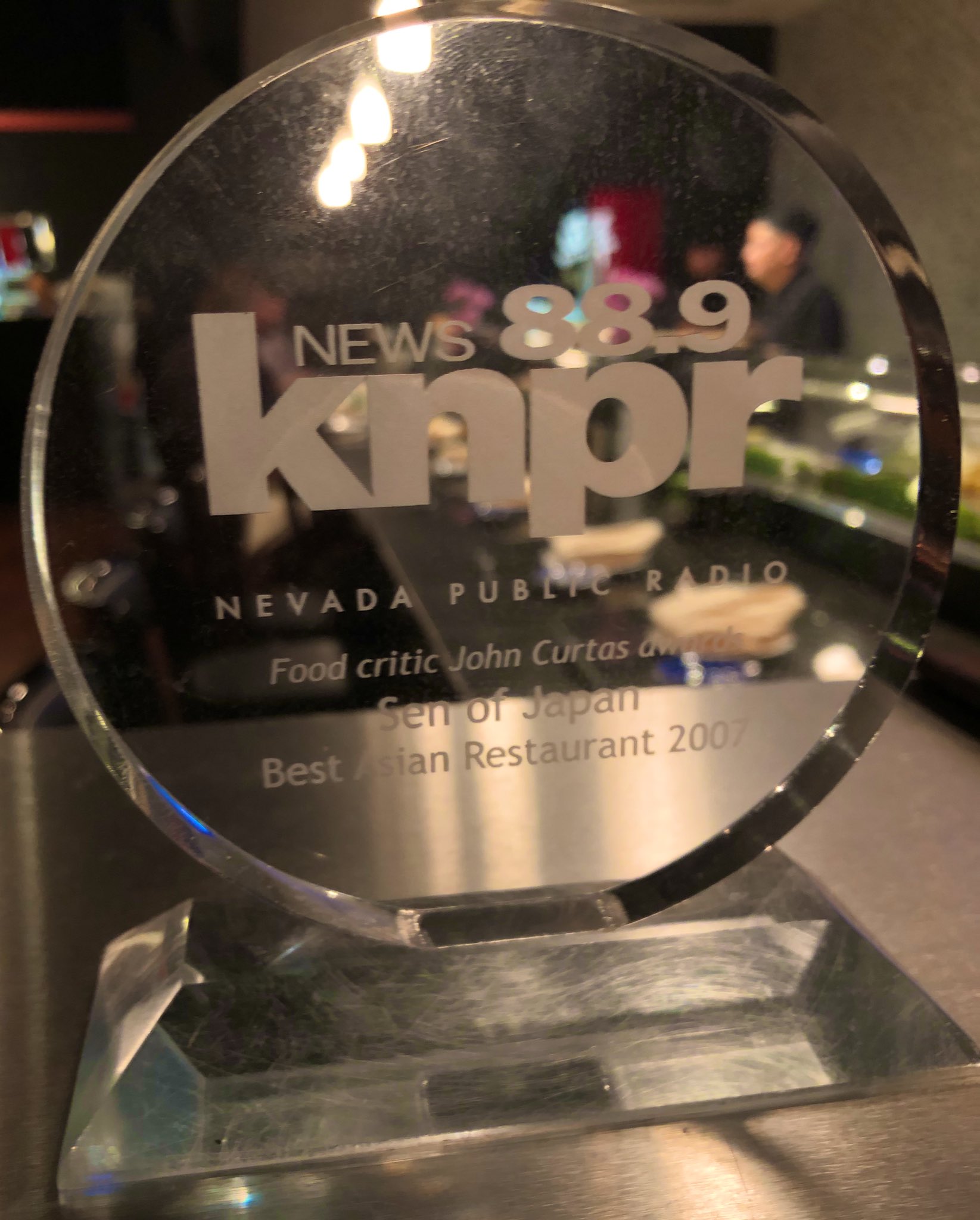
Image(2007 aka The Stone Age)

The text below represents the awards written by yours truly (as I’ve been doing for over 20 years). In the beginning, I was a committee of one (see the ancient artifact above). Now, they are orchestrated by Editor-in-Chief Andrew Kiraly and my fellow writers, and year in and year out, they stand for the best Las Vegas has to offer.

(Ed. note: We’d like to take credit for all of the stunning photography below, but most of it has been brazenly lifted/plagiarized/stolen from the brilliant photographer Sabin Orr and Desert Companion magazine.)

HALL OF FAME – Picasso

Veal Chop(Look no further for the world’s best veal chop)

There are very few restaurants in the world that truly can be called unique, and Las Vegas — spiritual home of the absentee celebrity chef — is not the first place you’d expect to find one-of-a-kind dining.

Picasso gave the lie to this reputation from the beginning. It wasn’t an offshoot of anything, and from the moment it swung open its doors at Bellagio in 1998, it offered something no other eatery in the world could match: a gallery of masterworks from Pablo himself hanging on the walls and filling the spaces — a mini-museum, if you will, where the art matched the food and vice versa. Those paintings and sculptures proved to be the perfect backdrop for Julian Serrano’s cuisine, and night after night the room is filled with knowledgeable patrons dividing their time between gazing at the art or becoming absorbed in the beauty on their plates.

Serrano has always been the antithesis of the gallivanting media star, and his Spanish-inflected Mediterranean menu is as eye-catching as the cubism on display. Whatever alchemy brought him and those paintings together was sheer wizardry, and for 21 years it’s given Las Vegas a restaurant experience unlike any other, anywhere.

EXCELLENCE IN SERVICE AND MANAGEMENT – Michael Mina

Michael Mina(The Big 3 at MM)

Great service should be not too fast, not too friendly and almost invisible. Think of it as the inverse of pornography – you know it when you don’t see it.

A great restaurant operates with the concealed efficiency of a fine-tuned watch, every joint, mechanism and movement dependent upon the other, coiling and uncoiling every second, seamlessly sweeping you through the time spent enjoying your meal. Time spent at Michael Mina has always been a good investment, and one of the reasons is unfailingly great service.

Since 1998 it has held down its corner of the Bellagio as a bastion of seafood and San Francisco-inspired elegance. The food and the decor have always been stars in their own right, but the unsung heroes at work every night are the management and staff, who seat the customers, mix drinks, pour the wines and toss the tartares. Holding them all together is General Manager Jorge Pagani (pictured above with Executive Chef Nick Dugan and Sommelier Kayla Krause), a maestro who performs in the lowest key, quietly charming a steady stream of customers while keeping his troops in shape.

Chefs and sommeliers have come and gone over the years, but Pagani, has been a constant. From the moment you approach the hostess stand until you pay your bill, you sense the quiet hum of a restaurant that is doing everything right. Watching the staff shift from table to table, filleting fish, unveiling pot pies, and carving and mixing is a symphony without music. Michael Mina makes you feel as cosseted and cared for as any restaurant in Las Vegas, and like all real pros, they make it look easy. In fact, you almost don’t see it at all.

PASTRY CHEF OF THE YEAR – Pierre Gatel

Pierre Gatel

You might be excused for wondering what all the shouting is about when you roll up on Café Breizh for the first time. It sits towards the far end of one of those generic strip malls that are as Las Vegas as slot machines in a grocery store.

But do not be deterred by the surroundings, for once inside you will find the best French pastries in town. The selection is small but the craftsmanship, artistry and intense flavors will grab you from the first bite. There is no better croissant in Vegas, on or off the Strip; the chocolate éclair is so packed with custard it threatens to burst its pastry case, and the picture-perfect tarts do that tri-level taste thing (crusty, creamy, and fruity) that the French perfected around the time the musketeers were buckling their swashes.

Pierre Gatel is the chef, owner and hand-maker of each of these, and from the day he opened three years ago (after a stint at the Wynn), Francophiles, Napoleon nabobs and Danish devotees have made a beeline here for his creations. He also does a limited number of baguettes every day which sell like hotcakes, so go early if you want to grab a loaf and feel like les Français on your way home.

Las Vegas is blessed with a wealth of pastry talent, but most of it stays in the hotels. Now we have one of them staging his magic right on south Fort Apache, in a spot that feels like a slice of Paris, and the alchemy he performs daily with butter, flour, cream and sugar is something to behold.

 NEW RESTAURANT OF THE YEAR – Vetri

Vetri(Vetri got our goat)

Vetri, if you let it, will take your breath away. The qualifier is important because, magnificent as it is, Vetri isn’t for everyone. Crowd-pleasing isn’t in its vocabulary, and pizzas and chicken parm are nowhere to be found. This is sophisticated Italian fare, the kind well-heeled northern Italians eat.  All of it served in a nonpareil setting — 56 floors up, without a doubt the most spectacular of any Italian restaurant in the country — a location that puts to lie the old adage that the higher you get off the ground the worse the food gets.

Marc Vetri made his name in Philadelphia, running what many consider the best Italian restaurant in America. With this offshoot he has bestowed upon Las Vegas a jewel box of restaurant loaded with Piemonte gems foreign to most people’s Italian vocabulary — casoncelli, tonnarelli cacio e pepe, Swiss chard gnocchi, not to mention smoked roasted goat — all of it unique to Las Vegas and every bite a revelation.

No restaurant enhanced Vegas’s foodie cred more than it did in the past year, and at a time when everyone is announcing the death knell of fine dining, The Palms brought a dose of big city sass to our scene. You don’t have to dress to the nines to go there, but the food on your plate (and that view) will make you feel like a million bucks. Quite a splash for something residing so high in the sky.

CHEF OF THE YEAR – Matthew Hurley

Matthew Hurley(You can’t beat this man’s meat)

In the past few years, it’s become deliciously obvious to us that Wolfgang Puck’s CUT ought to be re-named Matthew Hurley’s CUT. We’re kidding of course, because it is Puck’s gastronomic gravitas that enables Las Vegas to have one of the world’s greatest steakhouses in our backyard.

But calling CUT just another celebrity beef boutique would be a grave injustice, because by flexing his own culinary muscles, Hurley has taken CUT to a level few meat emporiums could ever dream of.  No doubt his creations are highly vetted by his corporate masters, but they give him more than a little latitude to play with his food, and what he has done with his freedom, and all the top shelf ingredients at his disposal, is stunning.

Hurley uses CUT like a painter uses a palette — toggling back and forth between the raw and the cooked like no steakhouse you’ve ever seen. It’s not easy to pull off a cheese cart, a raw bar, world-beating steaks, and gorgeous pasta, and never miss a beat. The elegant fish cookery alone would be right at home in some hoity-toity French joint, and he and his minions are equally adept at slicing high-grade sashimi and various Italian carpaccios.

If those aren’t enough, and you’ve got a hankering for Yukhoe (Korean steak tartare) or some maple-glazed pork belly, well, he’s got you covered there, too. It would be all too easy for a  CIA graduate like Hurley  (who has been at the restaurant since its opening in 2008) to sit back, go through the motions, and rake in the dough. Instead, his restless spirit has transformed CUT Las Vegas into one of the best restaurants in America.

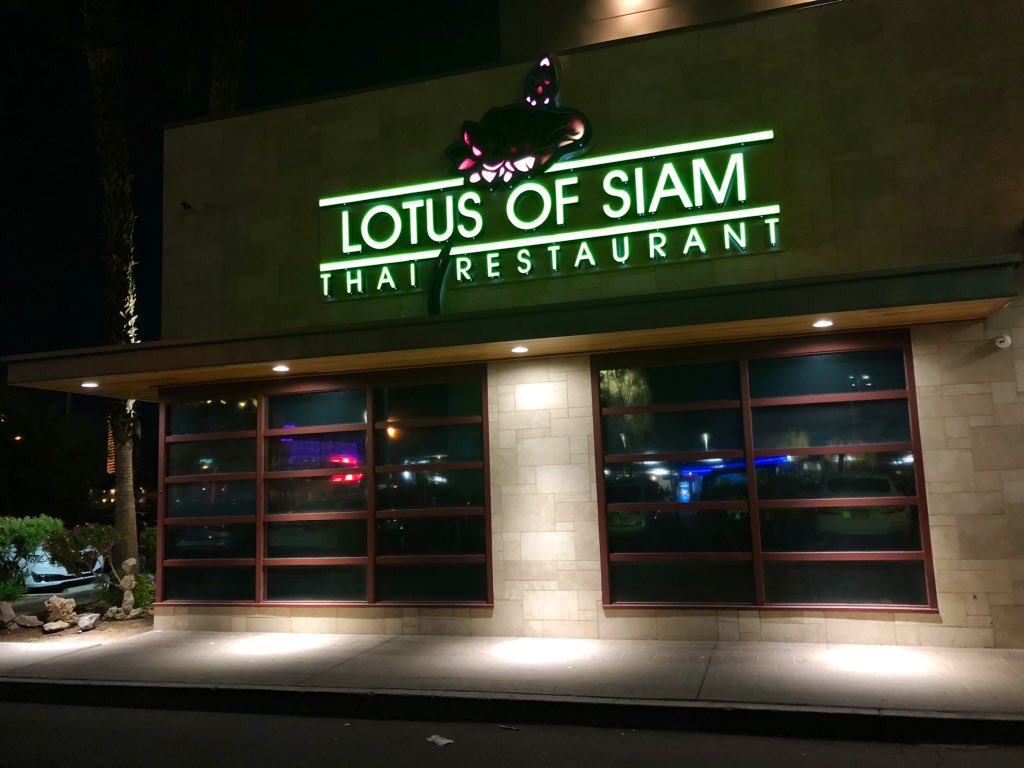
RESTAURANT OF THE YEAR – Lotus of Siam
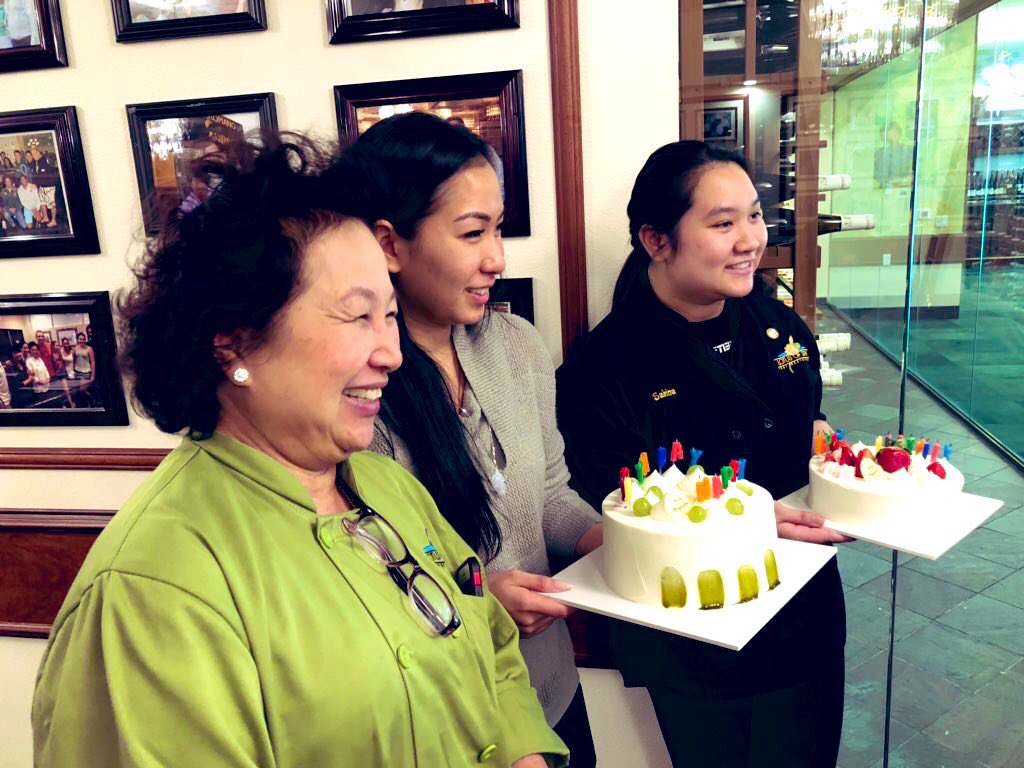
Image(Girl power is Lotus’s secret weapon)

When the roof literally caved in on Lotus of Siam two years ago (after a deluge), many feared it would be the death knell for Las Vegas’s most famous restaurant.

The previous seventeen years had seen the Chutima family (Saipin, Penny, and Sabrina above) build an obscure Thai kitchen in a run-down shopping center into a Las Vegas institution. It had already been called “The Best Thai Restaurant in America” for over a decade when Saipin Chutima won her James Beard award in 2011, and once the recession subsided, it was the restaurant on every foodie’s lips the minute they landed at McCarran.

Instead of throwing in the towel after that flood, the family quickly found a new location on East Flamingo, and faster than you can say koong char num plar, what had been a hole-in-the-wall was transformed into a sleek, modern restaurant that was suddenly as on-fire as one of Chutima’s nam prik noom. Instead of being a set-back, the move created a boom. Being closer to the heart of the Strip brought in a flood of new customers and the new digs provided a more fitting backdrop for this award-wining cuisine.

What distinguishes Lotus from its competitors are its refined northern Thai dishes that retain the soulful authenticity (and pungent, pulsating electricity) that more Americanized Thai places sacrifice to please the American palate. Be it khao soi or koi soi these recipes crackle with the energy (and chilies) Siamese food is known for. (It is a crime to order anything here below “medium spicy.”) This grander stage seems to have caused the whole operation to snap to attention and also befits the elegance of one of America’s greatest white wine lists.

Maybe it was the flood, or the inspiration from a new home, but everything from the service to the spicing seems crisper and more consistent these days. Sometimes it takes a disaster to bring out the best in us. Because of one, Saipin Chutima finally found a space to match her transformative, one-of-a-kind cooking. It was the late, great Jonathan Gold who first bestowed “the best” accolades upon Lotus of Siam, and now, finally, it looks the part.

Click on this link to read about the rest of these worthy recipients from Jim Begley, Mitchell Wilburn, Lissa Townsend Rogers and Greg Thilmont:
Image

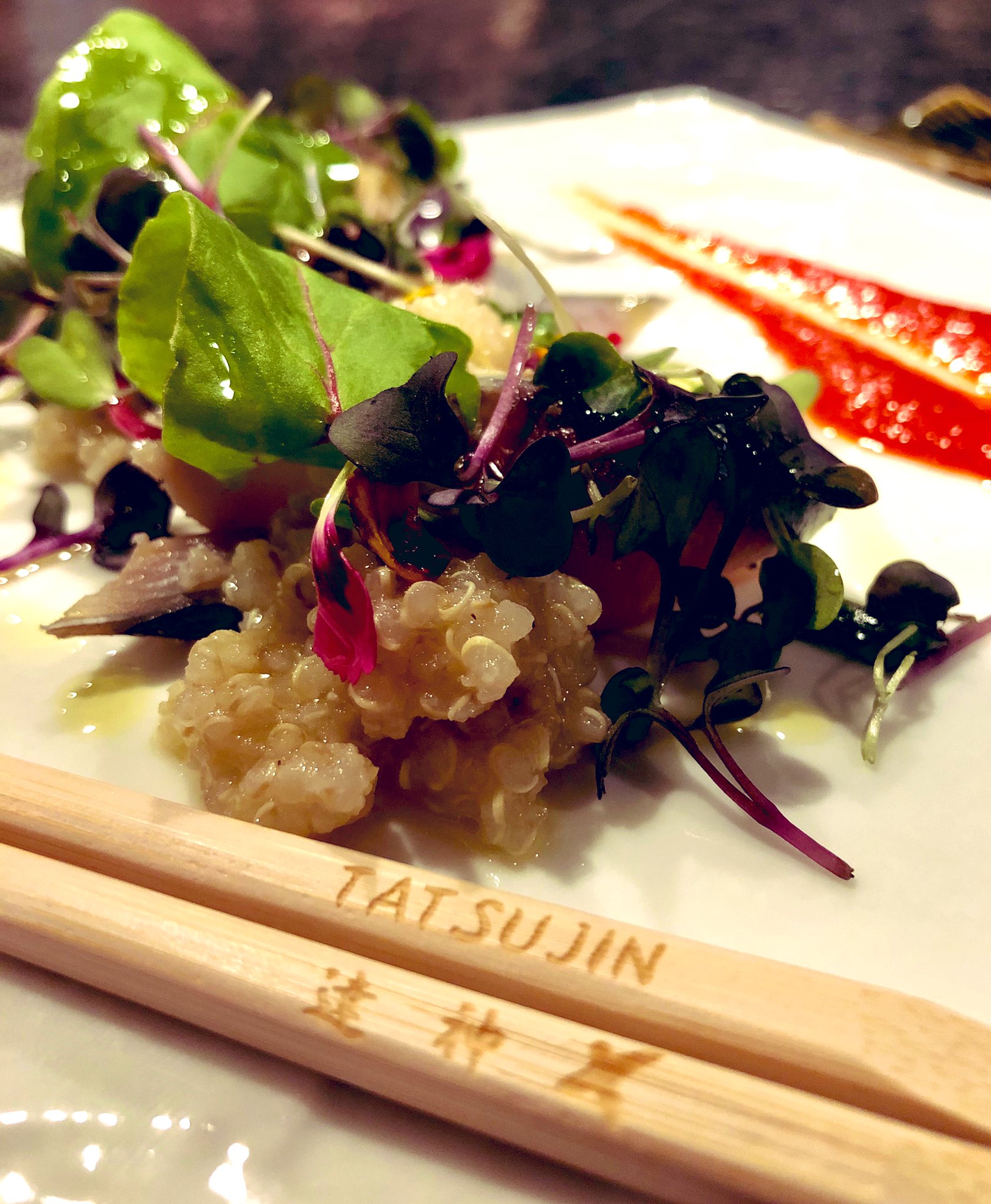
ASIAN RESTAURANT OF THE YEAR – Tatsujin X

COCKTAIL BAR OF THE YEAR – The Sand Dollar Lounge

HIDDEN GEMS OF THE YEAR – Hardway 8 and Trés Cazuelas
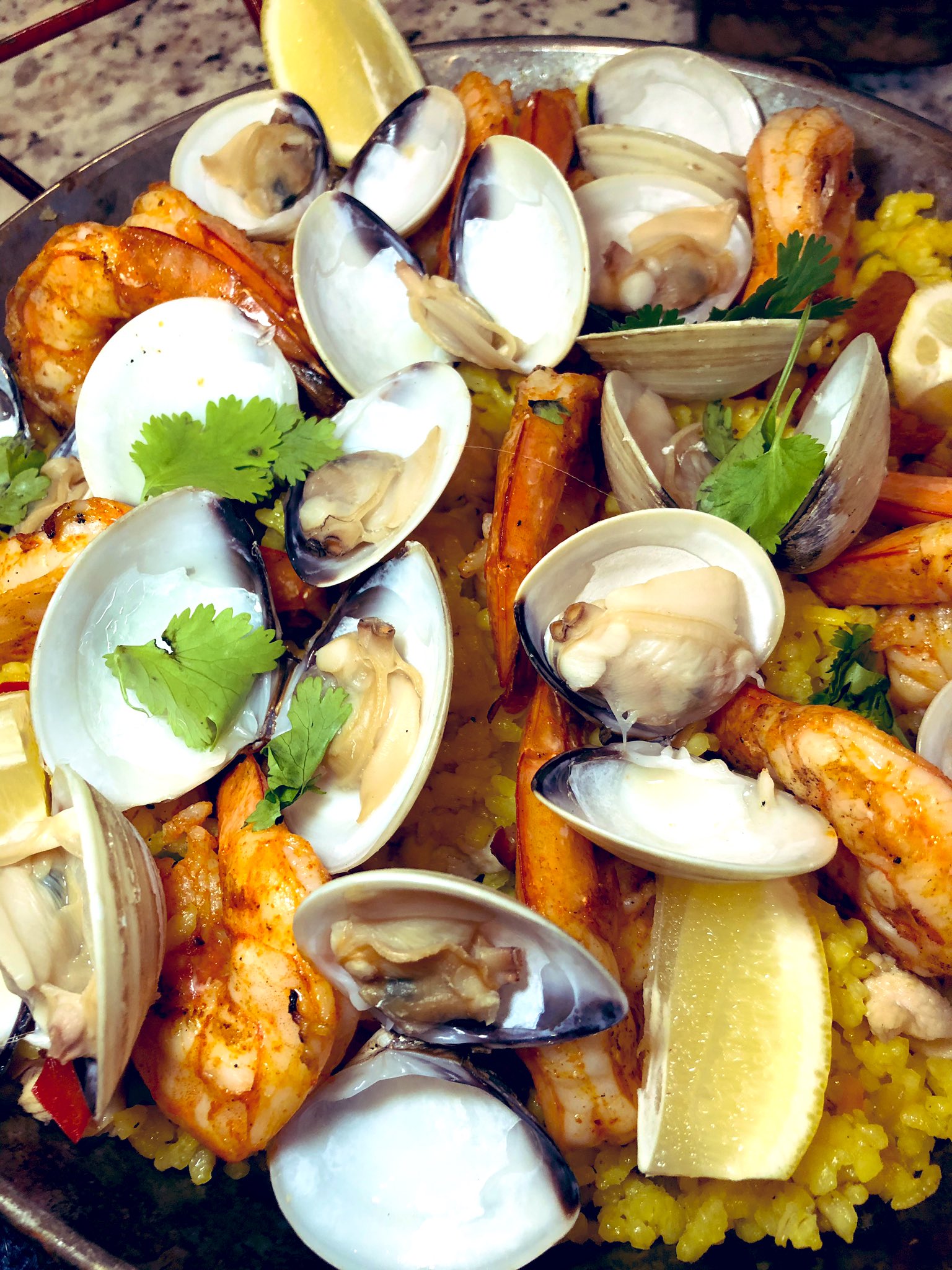
Image(Paella at Très Cazuelas)

STRIP RESTAURANT OF THE YEAR – Mott 32
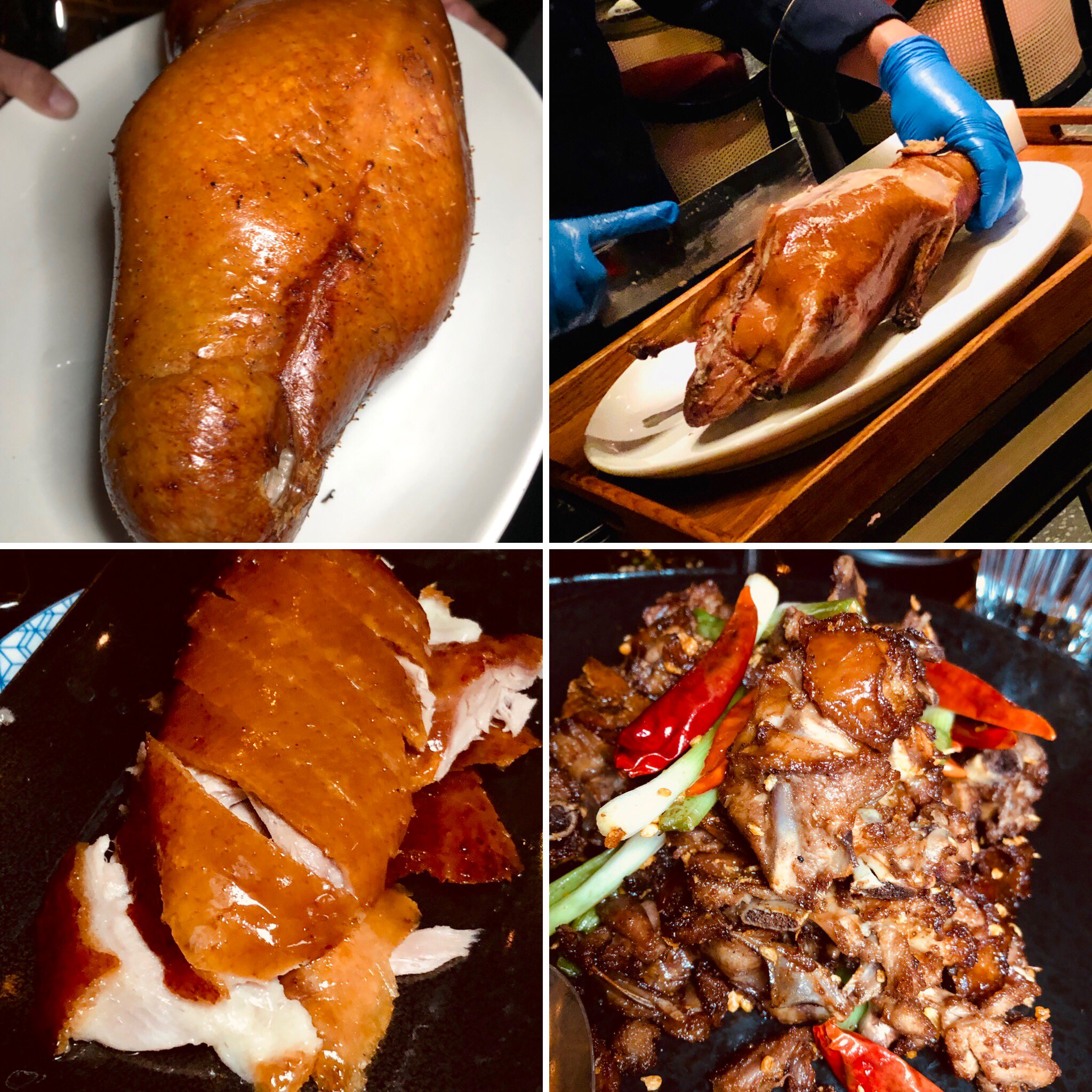
Image(Peking duck at Mott 32)

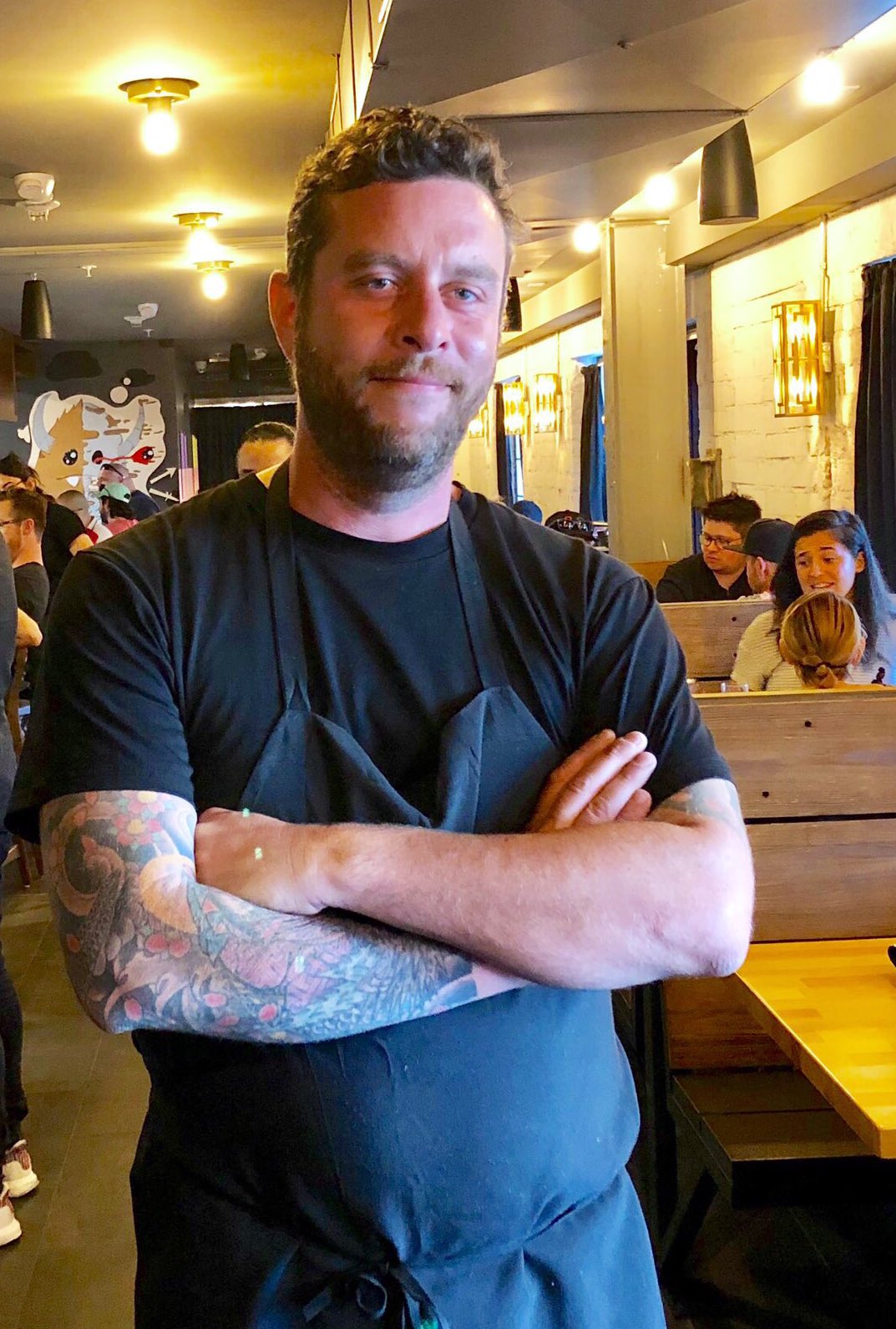
RESTAURATEUR OF THE YEAR – Dan Krohmer (Other Mama, Hatsumi, La Monjá)
Image


A Moveable Feast – How to Eat and Drink in France and Italy

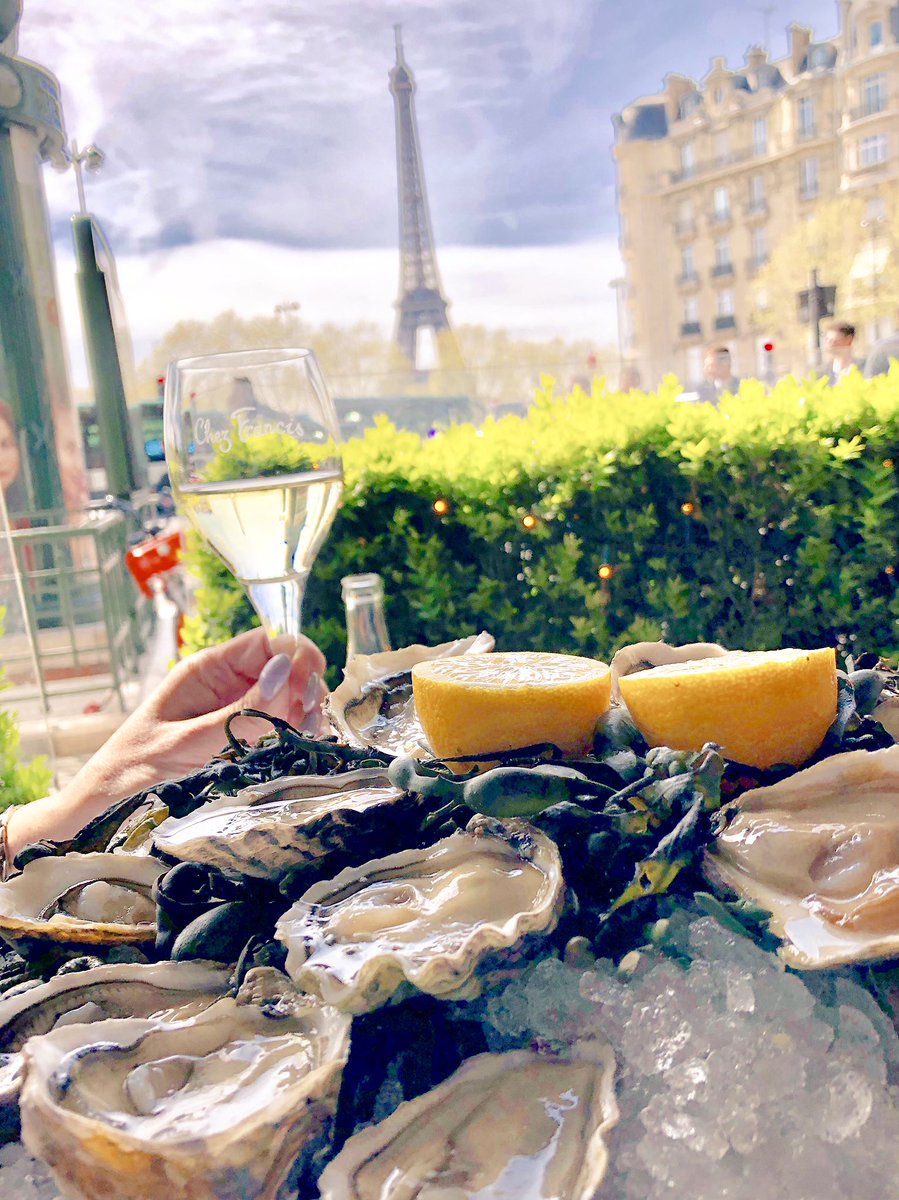
Good food is everywhere in Europe, at all price points these days, so there’s no excuse for not eating well when you’re over there.

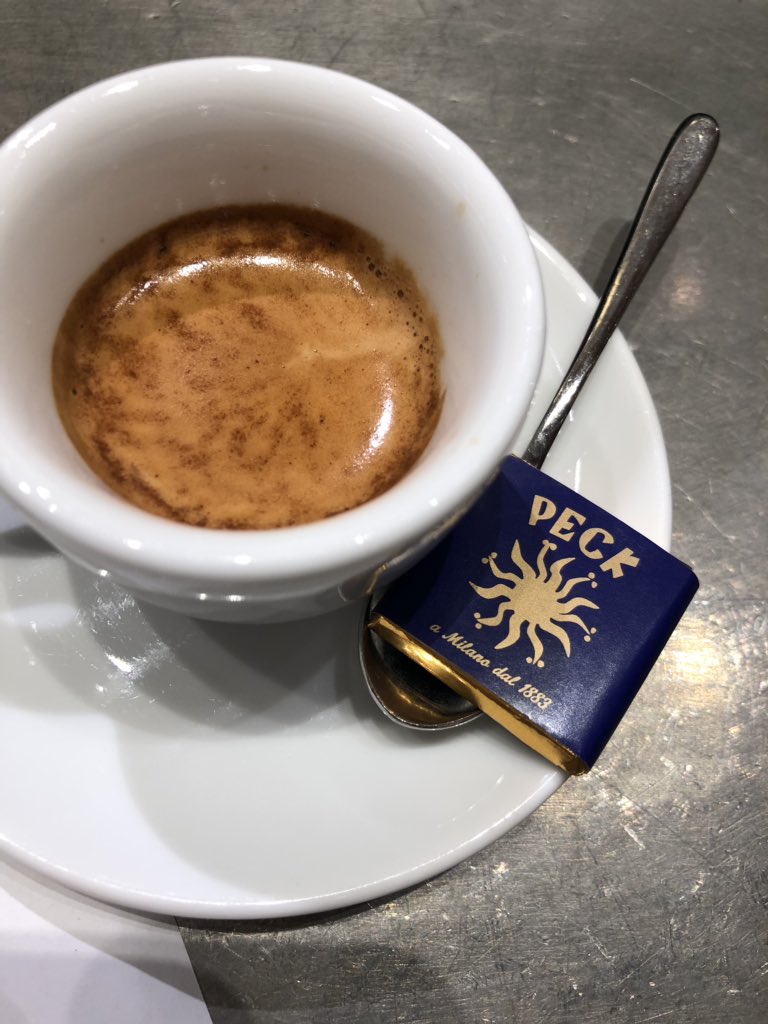
The three countries I visit most (Italy, France, Germany) have serious coffee cultures, so a good cup of joe is always within reach. Those ubiquitous cafes and coffee bars also stock plenty of other juices, teas, and alcohol….so if you’d like some Jack Daniels or Amaretto in your cup at 8 am, they’ll oblige.

I’m not going to get into all the fine points of Euro coffee cups, but the  big difference between their coffee cultures and ours has to do with volume, strength, and frequency. Euros take their coffee in small, strong doses, and do shots of it throughout the day as caffeinated fuel. If you can’t handle the high octane stuff (aka espresso), ask for yours au lait (“with milk”) or café crème (France) or con crema (Italy). Crème and crema both mean “with cream”, although it’s really more like whole milk.

Confused? Don’t be. Just do what I do: either order a cappuccino or just say olé!

My routine is: find a cafe close to your hotel, adopt it as your hangout for how many days you’ll be in town. By day two or three the proprietor/barista will treat you like an old friend when you walk in. Unless you’re in Germany. In Germany, they don’t even treat old friends like old friends.

For the record, here’s my 12 Step Program for eating in France and Italy:

  1. Wake up.
  2. Shower, shave, take care of business while trying not to twist, strain, or break anything in the process (see previous article).
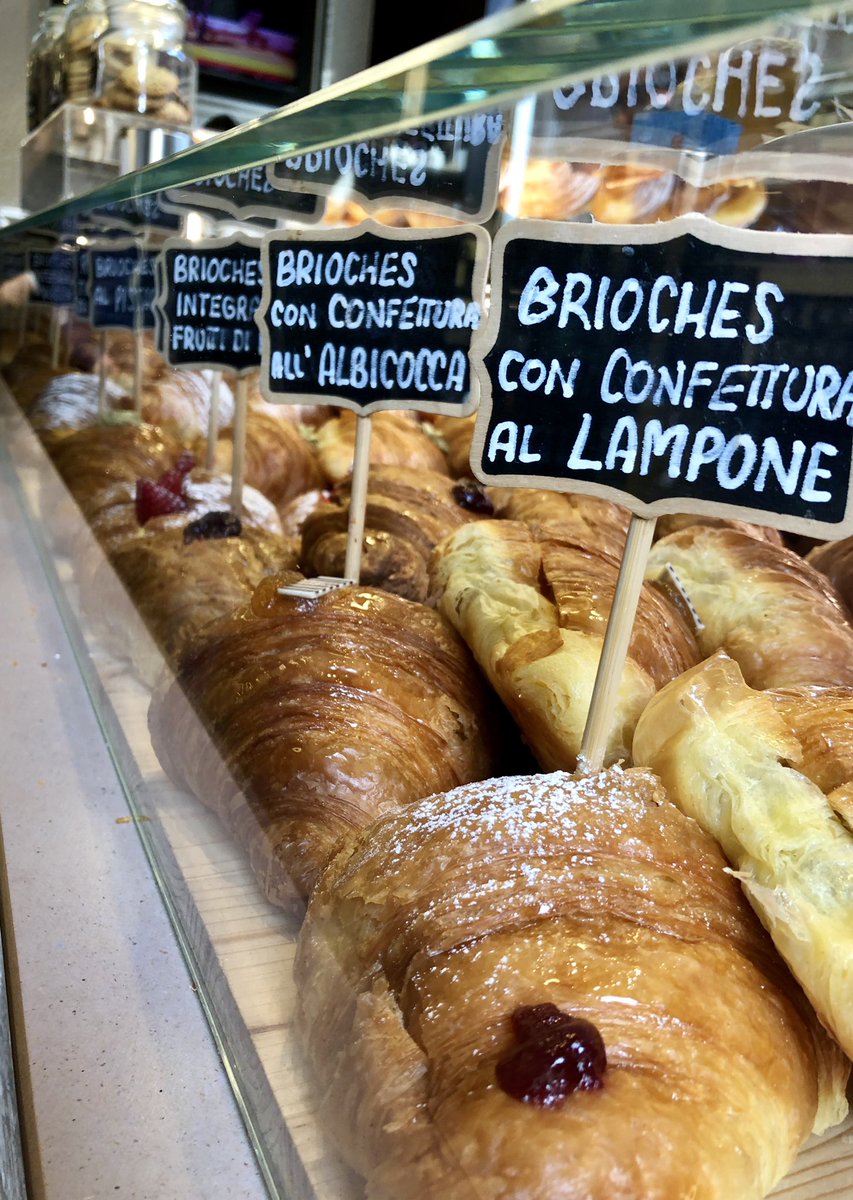
  3. Go to your regular cafe and get a cafe au lait with a croissant (France), or a cappuccino with a brioche (Italy). Gently caress the pastry in one hand as you dunk it into the soothing brown liquid, then eat it while sipping and holding your cup in your other hand. Perfect this art and you’ll feel like a native in no time. Perfect it whilst standing up and affecting a vague air of insouciance about world affairs, and the women will flock to you like you’re Marcello Mastroianni in 1962.
  4. Remember, in France and Italy, breakfast is good for only one thing: thinking about lunch.
  5. Start thinking about lunch
  6. Eat lunch (see below).
  7. Towards the end of lunch, start discussing your dinner plans.
  8. Rest up for dinner.
  9. Have dinner.
  10. Walk off dinner for an hour or so, promising your wife you’ll take her shopping or sightseeing in the morning (which you both know is a lie).
  11. Return to hotel.
  12. Sleep, then repeat steps 1-12 the next day.

Lunch

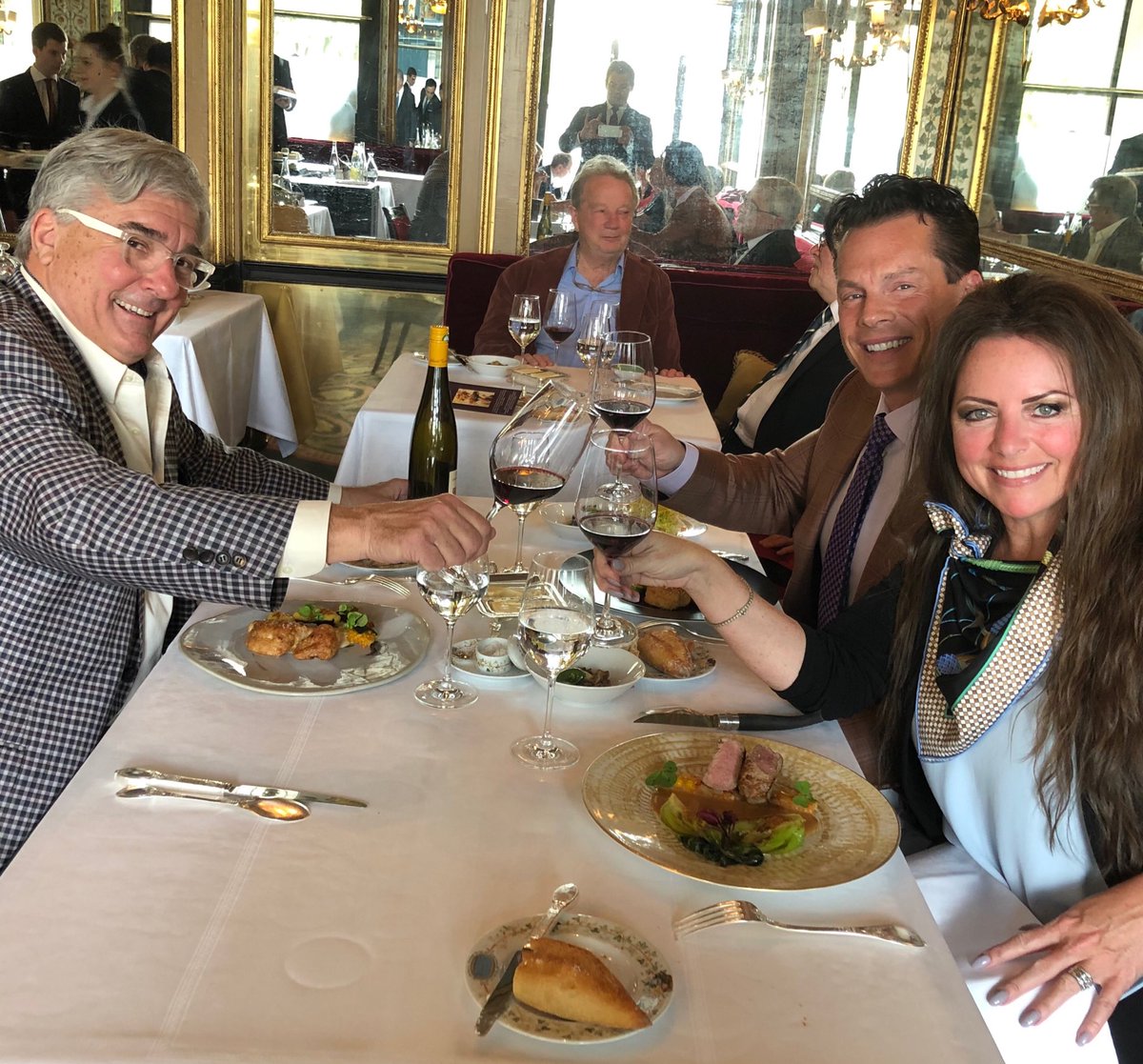
(Dejeuner at Le Grand Véfour)

The older I get, the more I like to eat and drink myself silly at lunch rather than dinner — it gives you more time to digest things and walk off the calories.

Americans aren’t used to intensive care service at high noon, but it’s the best way to enjoy a big deal meal at a destination restaurant. There’s usually a “lunch special” of a few courses for a set price that’s a relative bargain, and the difference between the food at lunch and dinner is nil. In fact, to my observation, lunch is when most the local gourmets come out to play in the big cities. Dinnertime seems to be for businessmen and tourists.

Lunch takes one of three forms: either a formal affair in a restaurant (France) or ristorante (Italy), or a more casual, but still coursed-out meal in a bistro or trattoria, or a quick bite in one of those cafes where you grab your coffee (all of them usually serve some kinds of pizzas, salads, and sandwiches).

The Rick Steves of the world (and many tourists) prefer the quick casual lunch because it leaves them more time for sightseeing. In my world, the food is the sight to see, so I prefer the bistros of Paris, or a local trattoria which serves the traditional cuisine of the area. Regardless of your mood, there’s always fascinating sustenance to find.

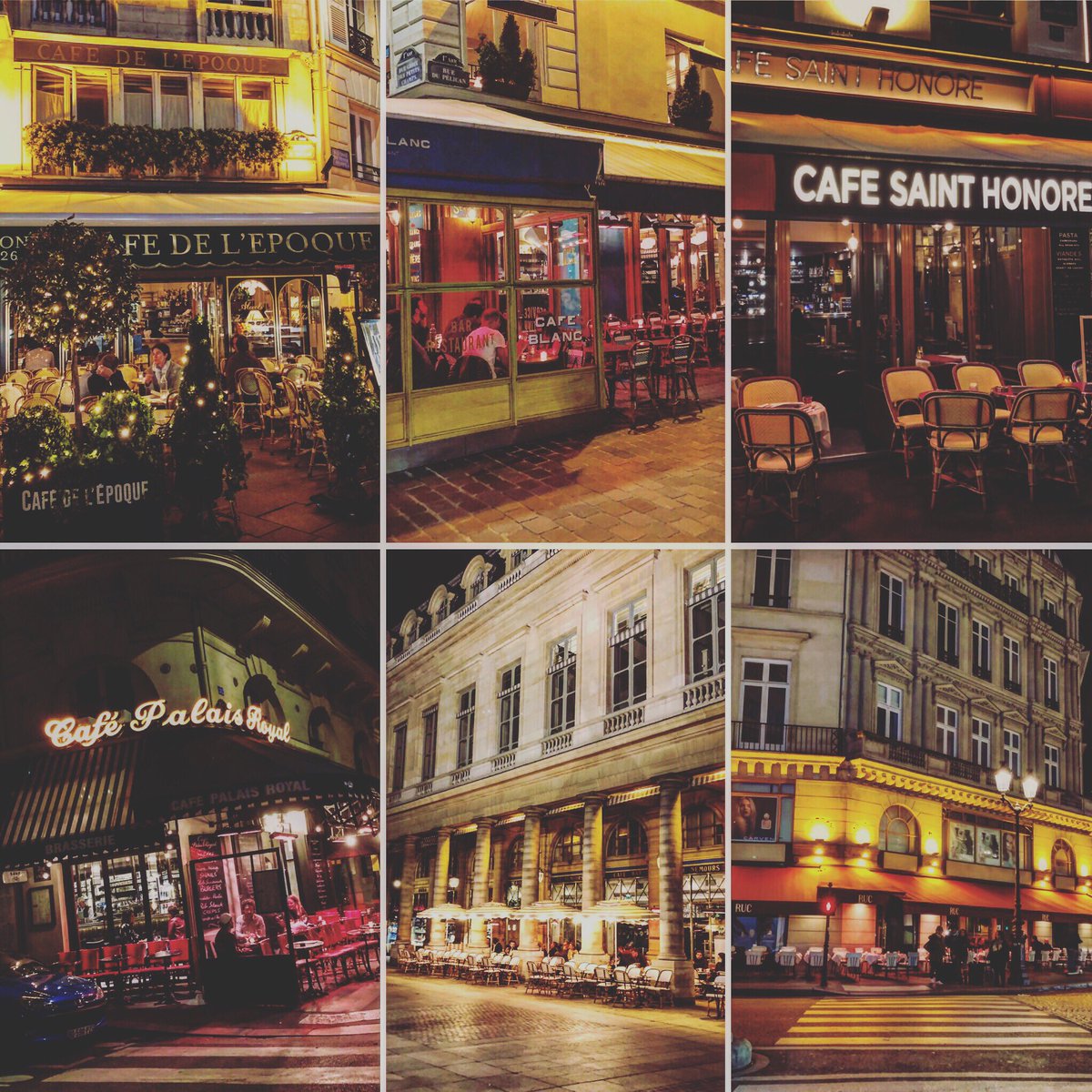
Cafes are everywhere in Paris (I counted nine in a five block walk to my hotel, above), and Rome, Milan, Venice, Verona, Bardolino (not to mention Lyon and smaller French towns like Beaune, and the entirety of Alsace) are chock full of places to eat. You may get an indifferent meal in some of them, but even average Italian or French food over there is a lot better than what we’re subjected to over here.

Dinner

Dinner should be the opposite of lunch. If you stuff yourself silly at midday, find a cafe or casual spot and while away the evening over one or two courses while pondering where to eat the next day. Wine bars are also great for small snacks and light meals.

Know, however, that more formal restaurants have fairly strict and limited service hours. Lunch is usually served from 12:30-2:30, and dinner from 7-9. Restaurants that take reservations usually have one seating only, and the table is yours until they close up shop.

Cafes, bistros, brasseries and trattorias are much more flexible and generally have non-stop service throughout the day….although the only people you’ll see chowing down on a pizza or choucroute garni at 5:00 pm are usually jet-lagged tourists. A good rule of thumb is: the more limited a place’s hours, the more serious it is about its food. Speaking of which…

Rules of Thumb

No photo description available.

Get the specials. If there’s a chalk board (and in France, there’s always a chalk board), order off it. That’s where the good stuff is.

Get out of your comfort zone AKA take the stick out of your ass. You didn’t come to Europe to eat a burger anymore than you would come to America to view ancient ruins. European menus are full of wonders, but you have to bring an adventuresome spirit to the table.

Europeans are closer to their food than we are. Literally. They eat and drink products that are grown or manufactured where they live, not a thousand miles away. And you can taste the difference. Plus, all of the dishes we take for granted over here (pizza, Béarnaise sauce, oeufs Romagna avec sauce Espagnole a pigeoneaux Romanoff jubilee) had their origins over there, and tasting the real enchilada where it was invented cannot be overstated as an epicurean experience.

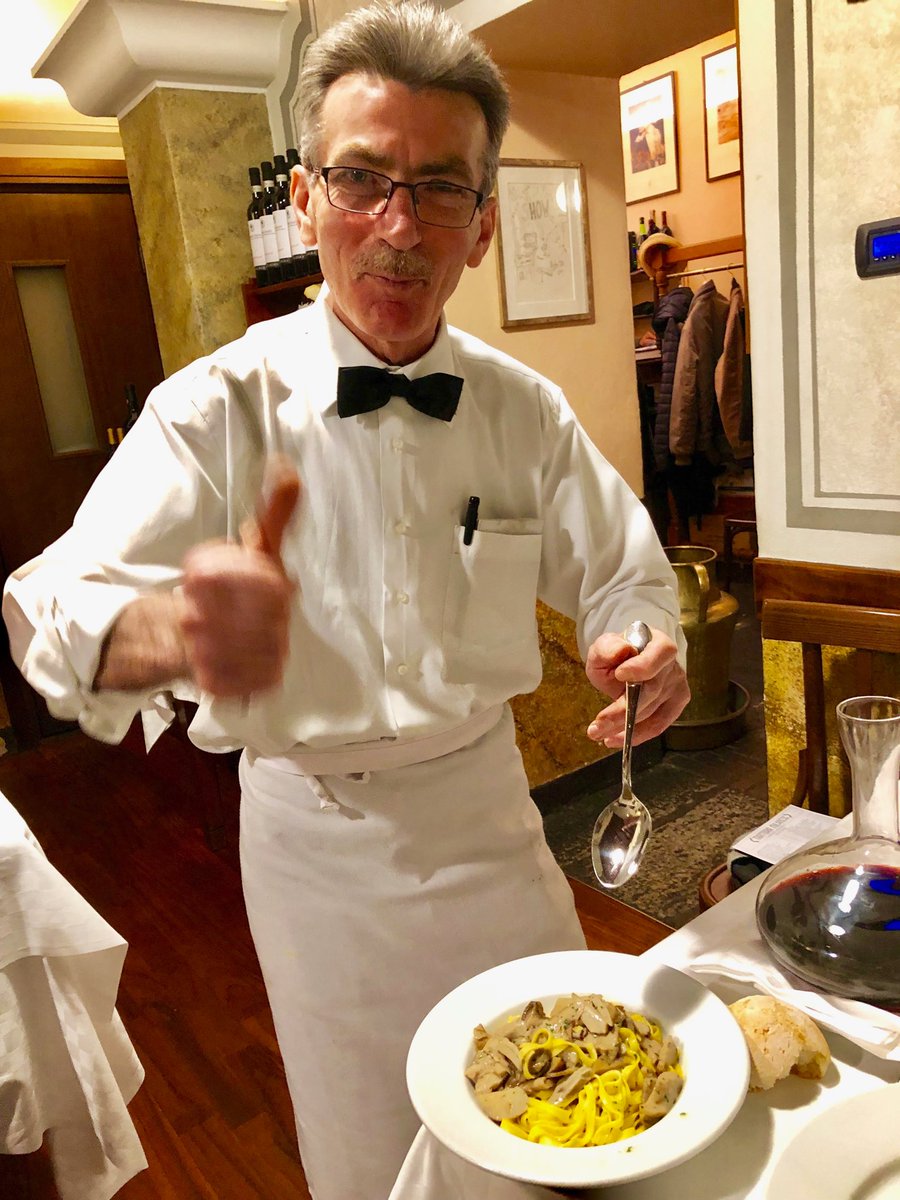
Don’t be intimidated. English is spoken all over Europe these days — it’s a mandatory subject for schoolchildren — and between the English language menus and helpful waiters, you’ll rarely be at a loss for words, or some tasty morsel. The spry fellow we had at Trattoria Milanese (above) spoke better English than my Greek popou, and the waiter we had at our best bistro meal in Paris (at La Bourse et la Vie) was a bi-lingual chap from New Jersey.

Forget about cocktails. With a few exceptions (e.g. The Jerry Thomas Project in Rome, gin and tonics in Spain) cocktails are not a thing in Europe. They’ll pour you a vodka soda or expensive scotch in upscale hotels and bars (and at the corner cafe), but hard booze is to grape-centric Europe what digestivos are to the new world: not indigenous to the culture and something they struggle to understand.

Image may contain: 5 people

If you don’t know anything about wine, get the house wine by the glass or carafe. Societies steeped in wine culture don’t wallow in cheap, disgusting wine. (They blend, bottle and bequeath their plonk to us.)   Even the worst tourist traps in Rome and Paris serve decent stuff. All you have to know are the words for red (rouge or rosso), white (blanc or bianco) or pink (rosé) to drink fairly well.

If you know a little or a lot about wine, grab the list and go nuts. Bottles that go for hundreds over here can be had for 50 euros over there. My budget is usually in the 80-100 euro range, and invariably, a waiter or somm will look at my selection, and then point me to something just as good for half the price. On my recent trip, this happened on five consecutive days in Milan (Trattoria Milanese), Paris (Willi’s Wine Bar, Le Grand Véfour, Les Climats), and Verona (Pane e Vino).

Plan, plan, plan or just wing it. There are two ways to eat and drink your way around France and Italy: book everything in advance, or just walk around and see what looks good. I’ve done both and rarely been disappointed.

A compromise procedure involves doing your homework and making a list of addresses that sound interesting….and then cruising by to check them out. Only at the hoity-est of the toity will turn you away without a reservation.

Youngsters like to book everything through mobile app services (Michelin, La Fourchette, etc.), but many charming, out-of-the-way joints don’t subscribe to reservation services, and you’ll miss a lot of local flavor if you keep you nose in your phone and rely on your apps for everything.

I could go on and on. It’s been said that traveling is living intensified (actually, I think Rick Steves said that), and if it’s true, then traveling is eating intensified times ten. When you’re in a strange place known for its gastronomy, the flavors come into focus, aromas are sharper, textures linger, and the sensations are more vivid. Not for nothing do people fall in love over a bottle of wine on the Amalfi Coast, or re-evaluate the world’s beauty from their perch in a Parisian cafe. To paraphrase Hemingway: Europe is a moveable feast, and if you’re lucky enough to travel there, it will stay with you for the rest of your life.


A Tale of Two Italians

That place is so crowded no one goes there anymore. – Yogi Berra

Good restaurants are multiplying around here faster than a Catholic rabbit.

So what did I do last week?

Endured two meals that were long on calories and short on satisfaction — a cardinal sin for an experienced, conscientious carnivore catered to constantly by crave-able concupiscent comestibles.

I can make excuses for one of them (and will do so below), but the other disappointed in so may predictable ways I should’ve had my head examined for going there.

Let’s save the worst for first, shall we?

I’ve been a huge Nora’s Cuisine fan since it opened in 1992. Back then, its pizzas and pastas (like pasta con le sarde) were revolutionary for their time.

Back in the day, the whole joint was about as wide as a pizza box, had maybe six tables, and made most of its money on take-out pies. It was a tiny local treasure, known to the pasta cognoscenti as an island of authenticity amidst a sea of red sauce.

In 2004, Nora’s (named after matriarch Nora Mauro) decided to go big time. It blew out walls on both sides of the skinny pizzeria, installed a cocktail bar, upgraded its kitchen, hired a bevy of waiters, and proceeded to rake in mountains of cash. (Fun fact: Nora’s bar was the first local, off-Strip restaurant to sport a serious mixology program. When every bar in town was still pouring cosmopolitans, Nora’s was doing magical things with obscure Italian vermouths, oddball bitters and craft spirits. The drinks here are still money, with the Lemon Drop and Sicilian Mule being justifiably famous.)

The pizzas were still good after the expansion, but the food became more pitched to the endless breadsticks crowd. The something-for-everyone menu eschewed small-bore quality for dazzle factor, and subtlety on your plate became harder to find than an ectomorph at a fat farm. Some time around a decade ago, I wrote it off, not because it was terrible, but because it was too much — too much starch, too much garlic, and too much tomato.

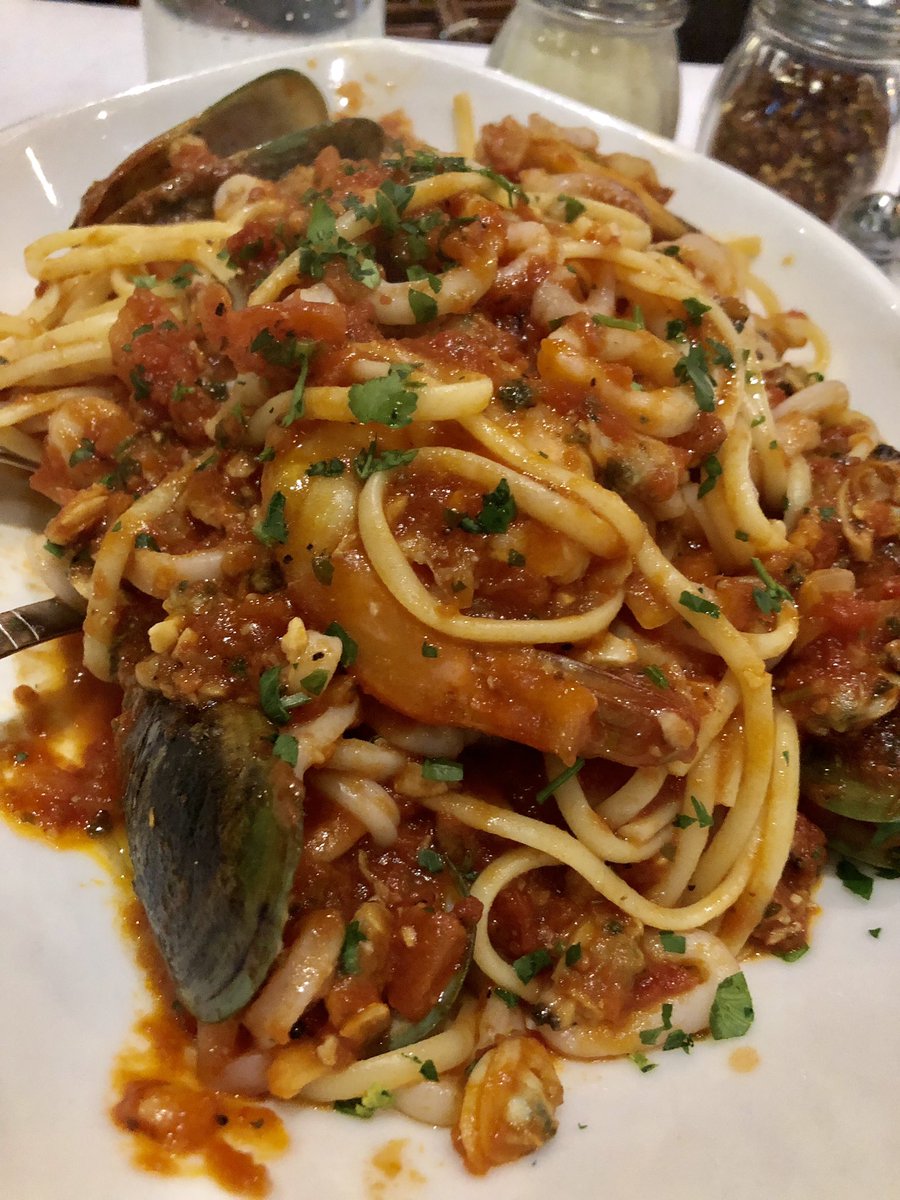
(Four pounds of fruitti di mare, or so it seemed)
So why did I go back? Especially when the excellent Pizzeria Monzú (owned by the same family) is only a block away?

Good question….and one The Food Gal® asked me continually on the ride home after we dropped $150 on two apps, two dinners, and two glasses of wine.

As I patiently mansplained to her, I went mainly to see what all the shouting is about. The shouting in this case coming from Nora’s new digs (2016) in a free-standing building only a few hundred feet from their old location. (The old location now houses the aforementioned Monzú.)

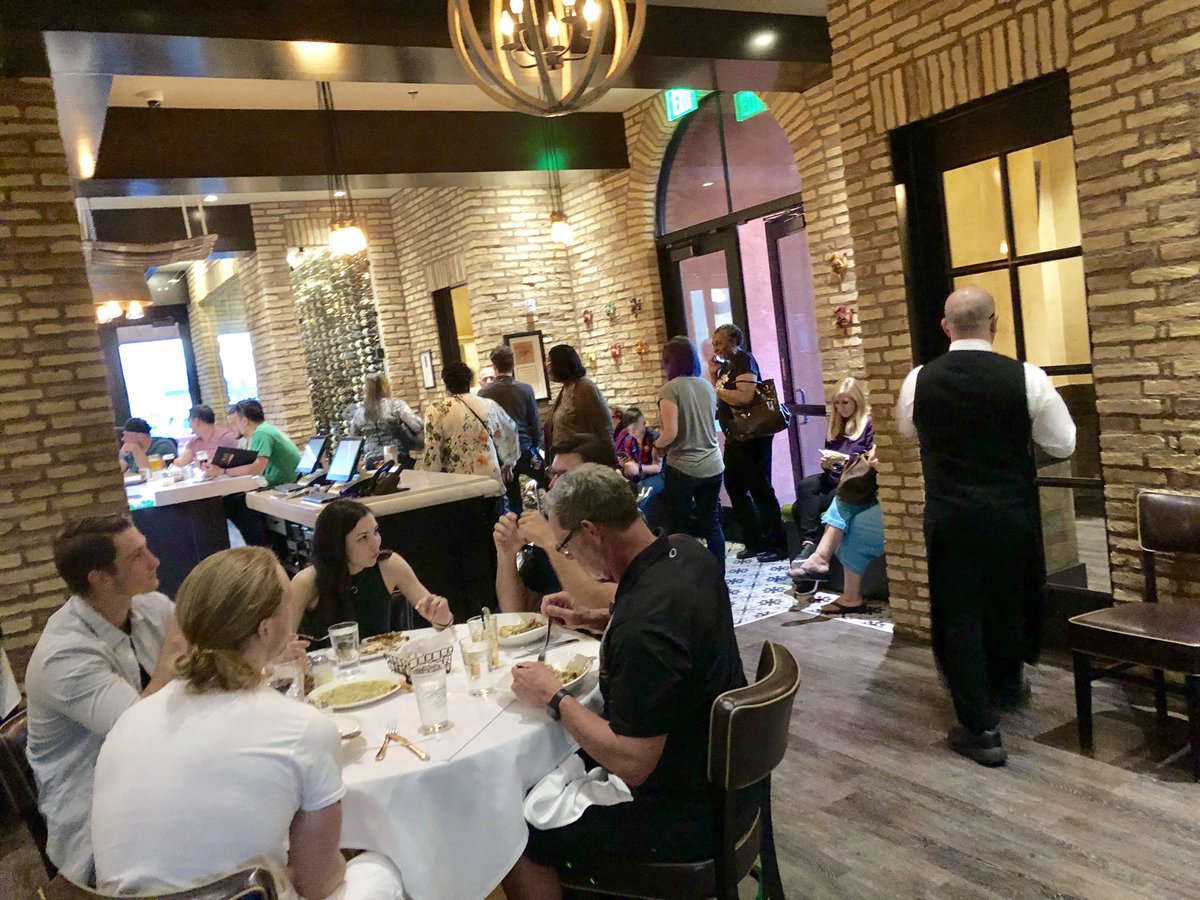
That shouting, you see, is because, the new new Nora’s is always full. Day and night, it is overflowing — with people, cars, and presumably, red sauce. Regardless of the time, there’s never a parking space to be found.  It’s so full the side streets are lined with its customers’ cars (and it has a capacious parking lot). Nora’s is so busy your average Indian restaurant could exist for a month on the patrons it turns away every day.

How do I know this? Because my in-laws live close by, and we drive by it. All. The. Time.

So I was curious, and took my wife along to take the plunge with me. What we found inside were three not-unattractive large rooms facing an open kitchen, with a long, comfortable bar taking up space in one of them (much as it did in the old place). As with the old Nora’s, there’s a winning wine list, excellent service, well-crafted cocktails, and serious digestivos — everything giving off a serious foodie vibe…except the food.

(Fuggidabadit)

As for that food, well, let’s just say it hasn’t gotten any better since they started serving it in a McMansion.

But I’m not blaming the owners, the managers, or the chef(s). The food has gotten worse because Nora’s has become a victim of its own success. Nora’s is too big. This new restaurant is double the size of the old one, which was triple the size of the original one. And no matter how big they get, they’re always full. And being always full, they’ve now become too successful.

Some businesses are too big to fail; Nora’s is too big to be any good.

With those physical expansions has come a menu that looks like it’s locked in a bad recipe arms race with Piero’s for who can offer the most over-the-top Eye-talian dishes to its undiscriminating diners.

“Over 70+ classic Italian dishes,” the menu boasts, and, true to its word, it offers everything from fried calamari to chicken parm to  “Crazy Alfredo” for the hungry hordes. Wings? Pork bellies? Salmon? Spinach and Farro salad? We got ’em. Just add veal for $8 more!

To put things in perspective: if you’re serving 30 different pasta dishes, dozens of pizzas (with 25 different toppings!), 20 proteins, and everything from arrabiata to mozzarella sticks, quality control is going to take a back seat to plate slinging and turning those tables.

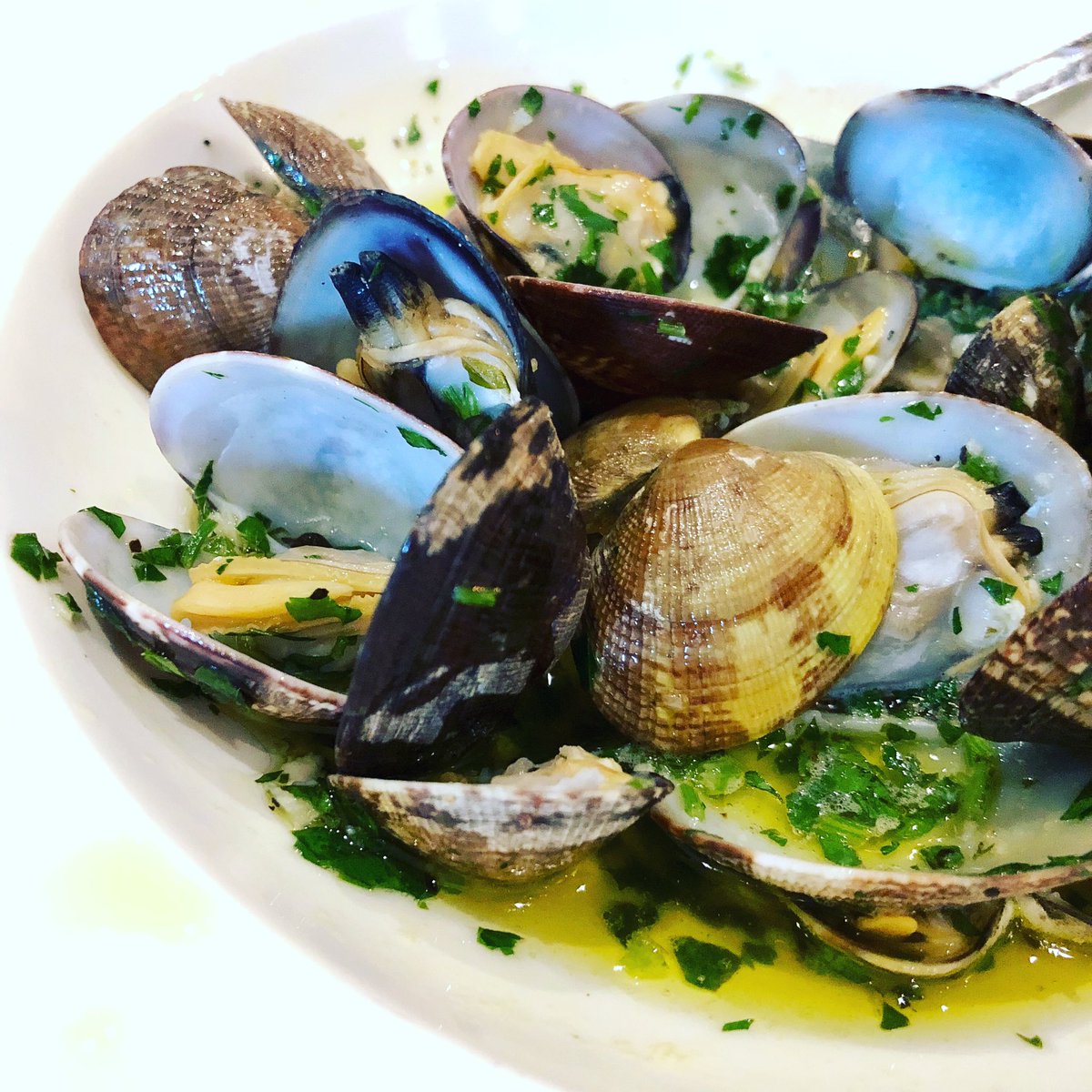
(They had me at lemon clams)

I think the chefs here deserve combat pay more than criticism, so we’ll leave you with these final words about the new new Nora’s (which really isn’t that new anymore): the garlic bread is good, the lemon clams were great, and two pounds of pasta underneath the fruitti di mare isn’t fooling anyone.

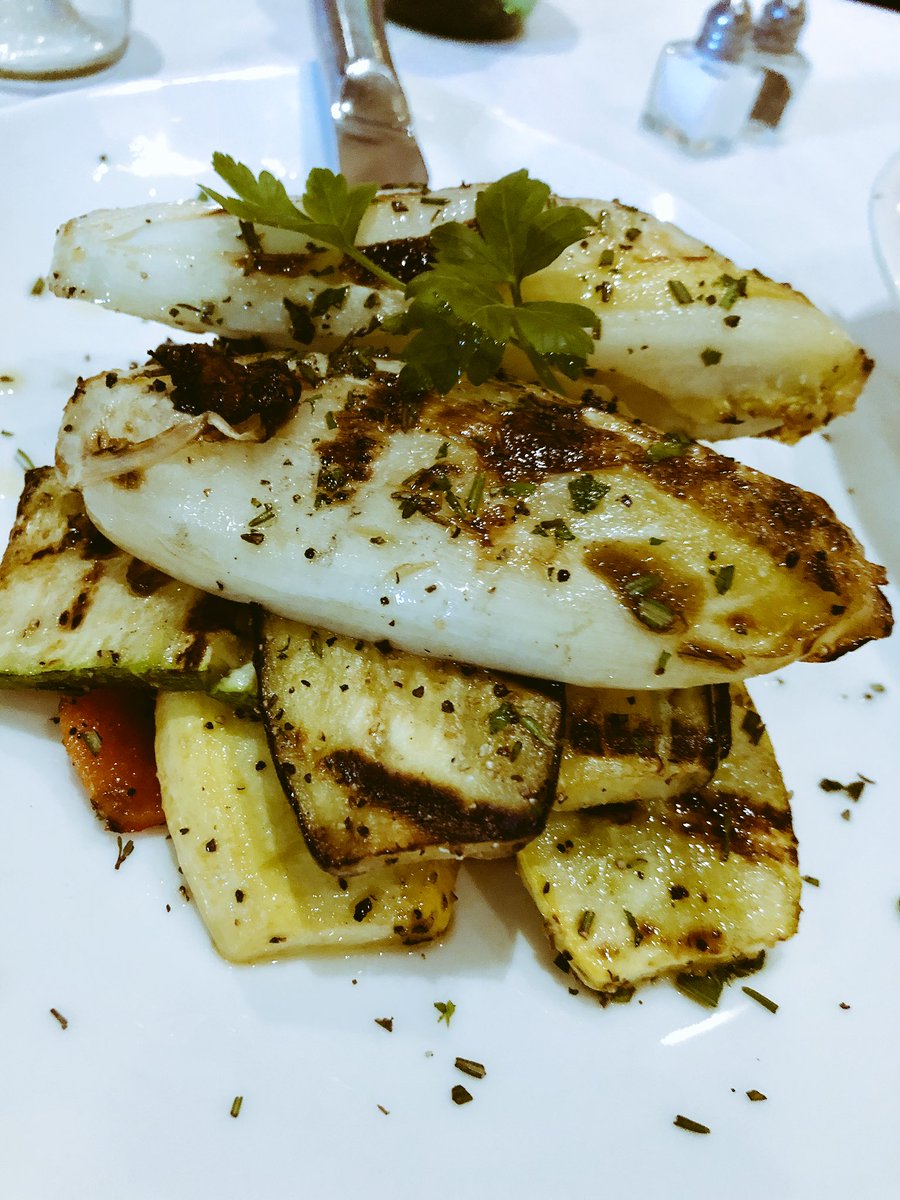
Serviceable osso buco bedecks a small mountain of mashed potatoes (that starch thing again), but the Josper-grilled veggies (pictured) were a waste of time and ten bucks.

But one can hardly fault the kitchen for not finely-tuning some grilled endive, when 300 growling stomachs are out there demanding their creamed fettuccine with chicken, sausage and shrimp.

So, as with Piero’s, we will leave Nora’s to those who love it, and resolve to eat Italian elsewhere the next time the curiosity bug bites.

At the other end of the spectrum, in terms of vibe, clients and ambition, is La Strega. Located due west and some miles from Nora’s, it aims to be new school Italian, bringing chef-driven food to those who know their polpette from their soppressata.

That chef is Gina Marinelli, and she’s a Strip veteran who knows her way around a pesto. Open barely two weeks, Marinelli is still working out the kinks, but even after a quick glance (or, in our case, a quick meal) you’ll find a lot to like about the place.

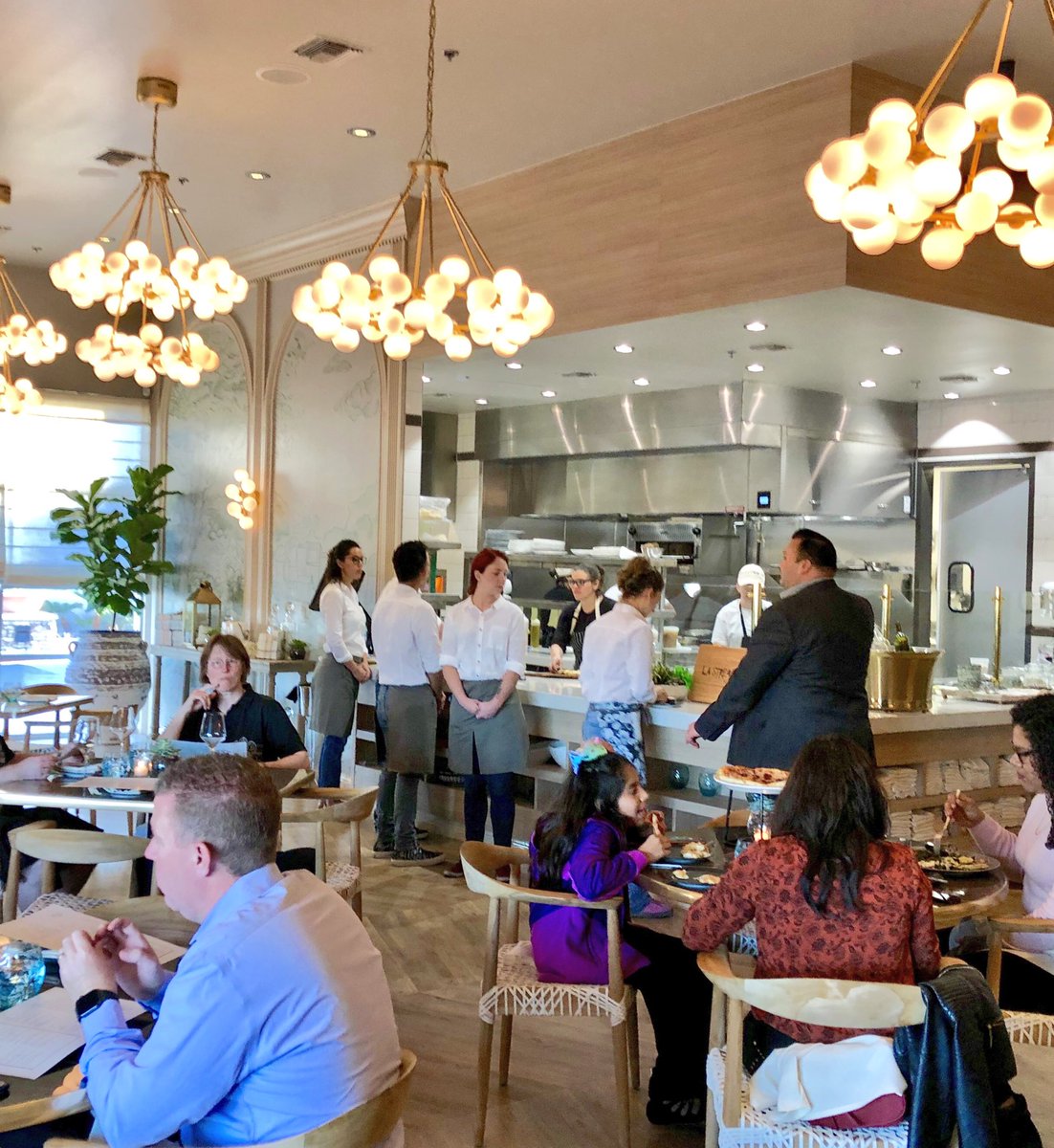
To begin with, there’s the build-out. The owners (the Fine family of local real estate fame) have taken the old Due Forni space and blown it out in all the best ways. The kitchen is now open, the bar is in the middle of the room (sounds weird, but it works), and the feel is one of a casual, food-focused room.

The space compliments the food, and the wine list compliments everything. (As we’ve mentioned here and on social media, the wine selections in off-Strip restaurants have improved 1000% over the past few years, and wine director Stephanie Torres’ list is the latest example.)

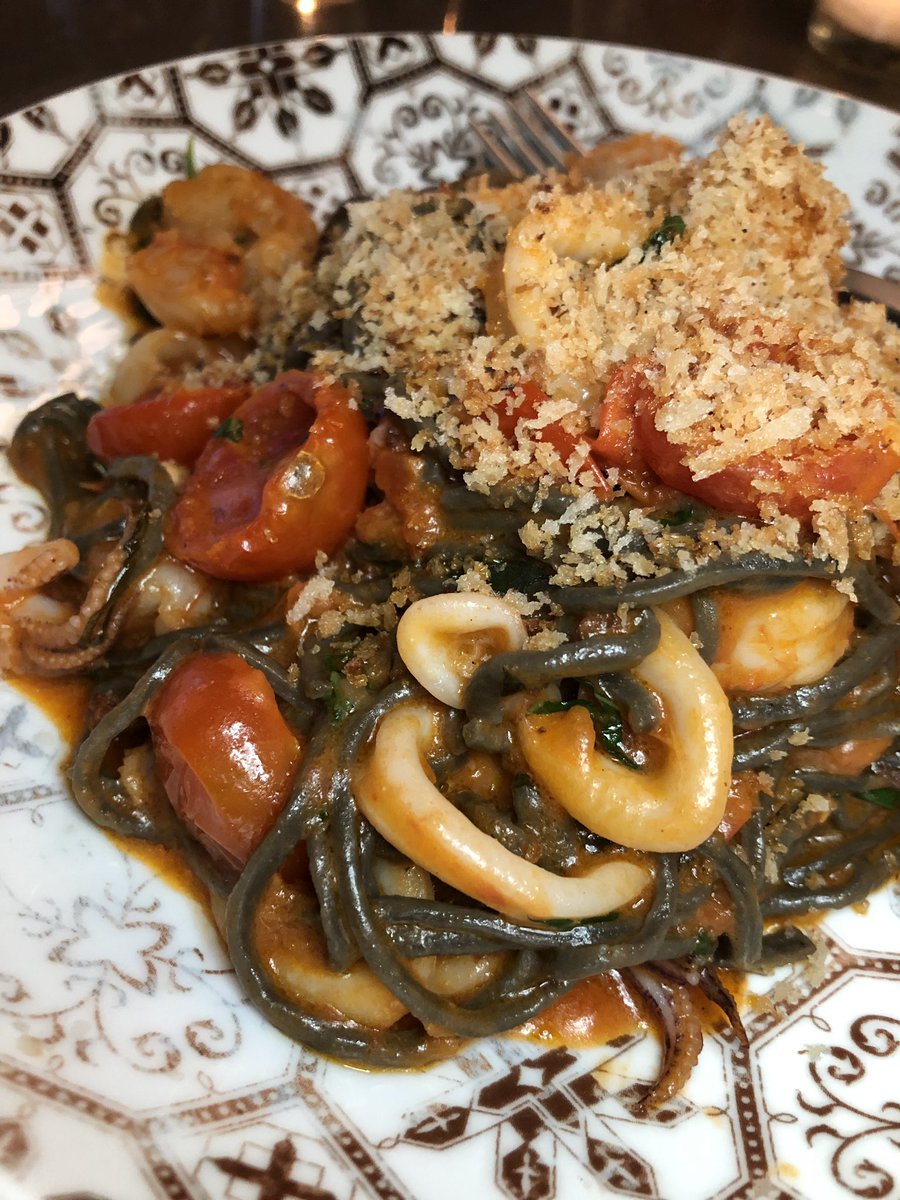
(Looked great, which is all it brought to the party)

Service was razor-sharp on a full-night not 10 days after the opening, and it was remarkable how poised everyone seemed under such pressure-packed circumstances. There are bones I could pick with some of the menu (the meatballs need to be bigger and cooked better; the frutti di mare (above) was all hat and no cattle; and the sardines need to be 86’d), but the signifiers are all there that this could be a major player on our restaurant scene — even though half the things we sampled missed their mark.

So, we’ll chalk up La Strega’s menu missteps to its infancy and give it another chance. As for Nora’s, I’ll meet you there anytime for a cocktail, as long as we can stroll over to Monzú to eat.

NORA’S ITALIAN CUISINE

5780 West Flamingo Road

Las Vegas, NV 89103

702.873.8990

http://www.norascuisine.com/www/

LA STREGA

3555 Town Center Drive Suite 105

Las Vegas, NV 89135

702.722.2099