Letter of the Week – How to Eat Like a Pro

Image result for Mr. Creosote

Troy asks:

I have often wondered how you score so many beautiful and interesting dishes…

What do you say when you visit a restaurant to get the spectrum of great dishes? Also, what’s your approach with an unfamiliar cuisine (if you have one)?

I assume [many places] know who you are, so they will oblige a sampling of their best dishes? I’d like to know what to say, not being famous, and who I need to say it to (waiter, maitre’d  etc) so I can get a spread like that. Or do you just order a bunch of stuff off the menu, creating your own spread?

Do you just ask what’s good then let the restaurant serve their best? Or do you pick random things on the menu? I ask because I don’t know what I don’t know. I’ve eaten all over the world, feel food adventurous, maybe even could be a division A foodie, but am always learning/seeing things in your posts/blogs that look delicious yet unfamiliar. I’m sure a great deal is just experimenting and eating your way to familiarity, but even you must come across dishes you’ve never heard of… I guess that’s a part of your talent as a critic, is having a nose for finding hidden gems.

Dear Troy,

There’s a lot to unpack here, so we’ll break down your questions into different areas and try to give you some insider tips and a glimpse inside our mind (you wouldn’t want more than a glimpse) to let you see how we approach things in various scenarios.

Scenario #1 – The Familiar Restaurant

The familiar restaurant is one we’ve eaten in many times. It’s one where they know me and I know them. Either I’ve even seen the place through multiple incarnations (e.g. Ferraro’s, Spago), or multiple chefs (Michael Mina, Le Cirque, Twist, Guy Savoy, et al), or maybe I just love it and have eaten there more times than I can count (CUTMarche Bacchus…). In these places, the management and chefs know I’m not interested in trying 10 different things, nor do I want a tasting menu (I almost never want a tasting menu these days, even when it’s the only thing they serve). Most of the time they know I’m not coming in for a full meal. It’s almost understood that I’m there to try new things on the menu, or seasonal offerings (pretty much the same thing), or to sample just enough to tell me the place is still on its game.

A typical exchange will go something like this:

GM: “What are you in the mood for, Mr. Curtas? Would you like me to have the chef send out a few things or would you rather look at the menu?”

Me: “Let me take a peek at the menu, and then we’ll see what sounds good.”

Two minutes later, the chef appears before I’ve had a chance to read anything or even unfold my napkin.

Chef: “What are you in the mood for, Mister C. ? Would you like me to send out a few things or would you rather look at the menu?”

Me: “Thanks. Give me a minute with this great looking new menu ….but what I was really thinking about was maybe an appetizer — boy, those pastas sure look good — then maybe that wild Tasmanian borage and Antarctic duck tongue okonomiyaki risotto with Manchurian pickled leeks and purslane gastrique (TASTY!)….then perhaps splitting a main course with The Food Gal®….I don’t know….”

Chef: “Okay. Sounds good. I’ll check back with you in a few minutes.”

Four minutes later, nine appetizers appear on the table.

Before we’ve even lifted a fork, the manager then reappears.

GM: “Are you ready for those pastas now, Mr. Curtas?”

And so it goes…

What I’m trying to say is I’m always trying to create my own (large or small) spread, but what I want often gets supplemented by what the chef wants me to taste. It is beyond flattering that restaurants want me to try their best stuff, but it is a constant battle (waged with smiles and gratitude) to keep the amount of food on the table manageable. The places that know me best (and there’s over a hundred of them in Vegas by now), will honor my wishes to keep (my meal) to a few things only if I firmly insist from the moment I approach the hostess stand. Even then, they’ll sneak in few “specials” in on me….for which I am always grateful because the specials are usually the best thing on any menu.

Pro Tip: Always eat seasonally. Look for the specials and newest things on the menu — they’re the ones the chefs are most interested in you trying, and the ones they’re taking the most care in cooking.

Pro Tip: After you’ve looked at the menu, ask a question or two about a dish. Try to make this question intelligent and not obnoxious. Asking your free range chicken’s name and whether he was fed non-GMO organic feed makes you look like a picayune little putz. Asking your waiter whether the chicken or the fish is more popular makes you sound like someone who’s looking for the best the kitchen has to offer. Asking the waiter what he/she prefers turns them into an ally. Once you get a meaningful (albeit brief) conversation going with your waiter, you’re halfway to maximizing your meal.

Scenario #2: The Brand New Restaurant

Image may contain: food

Let’s take NoMad for instance. I am not that acquainted with NoMad and have made a conscious effort not to do too much research into the restaurant’s vibe or reputation before I go there. (I did the same thing when Carbone and Mr. Chow opened.) I don’t want to have a lot of preconceived notions before I try the food. The main restaurant doesn’t open for another ten days, but I have been to the NoMad Bar twice just to get a feel for what they’re doing.

The Bar’s menu lists six large dishes and ten small ones. It’s full of boring standards like blistered peppers, tacos, salmon and ceviche, so I see it as being either 1) an incredibly boring restaurant; or 2) trying to tweak these old hat items into sublimity.  So what do I order?  The hot dog (named after the chef – always a smart move), a mozz salad, the dry-aged burger, tacos, ceviche, hummus (which I generally hate), and fried chicken. Why do I order such boring things? To see if the superstar chef Daniel Humm can (figuratively) give me a hummer with such standard list of dishes. Does he succeed? Yes with half of them, especially the burger and hot dog. (I still hate all hummus….even if someone named Humm is dishing it up.)

Pro Tip: When you see a boring menu crafted by a top-ranked chef, stick with the standards, and ALWAYS skip the salmon and heave the hummus. Not even Joël Robuchon (god rest his soul), could make hummus interesting.

Scenario #3: I Know You/You Don’t Know Me

There are many in Las Vegas restaurants where I’ve dined multiple times, sometimes anonymously, sometimes not (e.g. Strip House, Cleo, SW Steakhouse, Kabuto, Border Grill, Rao’s, Carson Kitchen and a host of others… ). When I’m there, I’m looking for either a tried and true favorite (the goose fat potatoes at Strip House; lemon chicken at Rao’s; Kerry Simon’s cheeseburger at CK), or to see if things have gone up or down since my last visit. Here I look for changes in the menu and go with them (if they exist). If they don’t, I stick with the basics and see how the execution is going. Restaurants like these run on pretty firm templates (if it ain’t broke, don’t fix it), so you rarely see a lot of creativity in the menus.

Pro Tip: Most restaurants tell you right up front what they’re good at. If you see a letterbox anywhere on the menu that says: “Try our world famous fried chicken,” don’t get the lasagna fer chrissakes. If mariachi music is in the air, it’s a fair bet the tacos are better than the linguine con vongole. In more sophisticated joints, the things at the top of any menu list (appetizers, mains, desserts) are usually the biggest sellers, so judge accordingly.  (This isn’t always true, but it’s a good rule of thumb.)

Pro Tip: In restaurants that have doing the same thing for a long time (steakhouses, Italian, French bistros, diners, etc.) always ask if there’s something on or off the menu that you “just shouldn’t miss.” It’s really the easiest question of all and can be asked anywhere from a Taco Bell to a Joël Robuchon.

Scenario #4: Asian Restaurants

And by “Asian Restaurants” I mean any eatery where you’re completely, or almost completely, flummoxed by the food. Here, things get more challenging.

The better the Asian restaurant is (and by “better” I mean more authentic), the more likely they are to look at you as some round-eyed interloper who’s going to be more trouble than you’re worth. That’s why you’re likely to get the gringo treatment and asked if you’d like the sweet and sour pork. As challenging as it may be, try to let the staff know you’re there for their specialties, not to eat like a white person. Korean joints (and increasingly more Chinese/Vietnamese/Japanese ones), make things easy by having picture menus. This makes things painless….right up until you point to a big steaming bowl of yukegaejang only to be told “you no like.”

I really don’t think they’re afraid of you not liking it as much as they are of you not paying for it. (Understandable!) Nevertheless….persevere! RESIST MIGHTILY! Rub your stomach! Lick your chops! Tell them you love it even if you don’t know what the fuck it is. Then, when it shows up, eat the goddam thing with a smile on your face. (Okay, if you hate it, eat a few slurps and then ask for it to be packaged to-go because you’re in a rush. The Food Gal and I have used this dodge dozens of times. (IT WORKS!)  They smile, you smile, everyone smiles! You pay the bill with a grin and then toss the offending stew in the nearest trash can. Then you make plans to return in a week or so to try something else that you may or may not like.

Believe me, this is the only way to learn about exotic cuisines. You have to be strong; you have to be adventuresome; you have to be willing to hate something and pay for it anyway.

Pro Tip:  Become a regular. Go to the same place multiple times in relatively brief period of time — be it a sushi bar or a pho parlor. On your first visit, they may look at you sideways when you go off the reservation and start asking for the skewered chicken hearts, but the second time they see you, they’ll be happy as a clam in jogaetang you’re back again. By visit #3 you will start gaining their trust. That’s when the friendly owner might come by and suggest something you’ve never heard of and couldn’t pronounce if your life depended on it. If you like it, great! Add it to your repertoire. And if you hate it, refer to the previous paragraph.

Scenario #5: Practice

Okay, Troy. Now that you’ve seen the inner workings of a critic’s mind, ordering-wise. let’s get practical. Look at the following menu and tell me what you see:
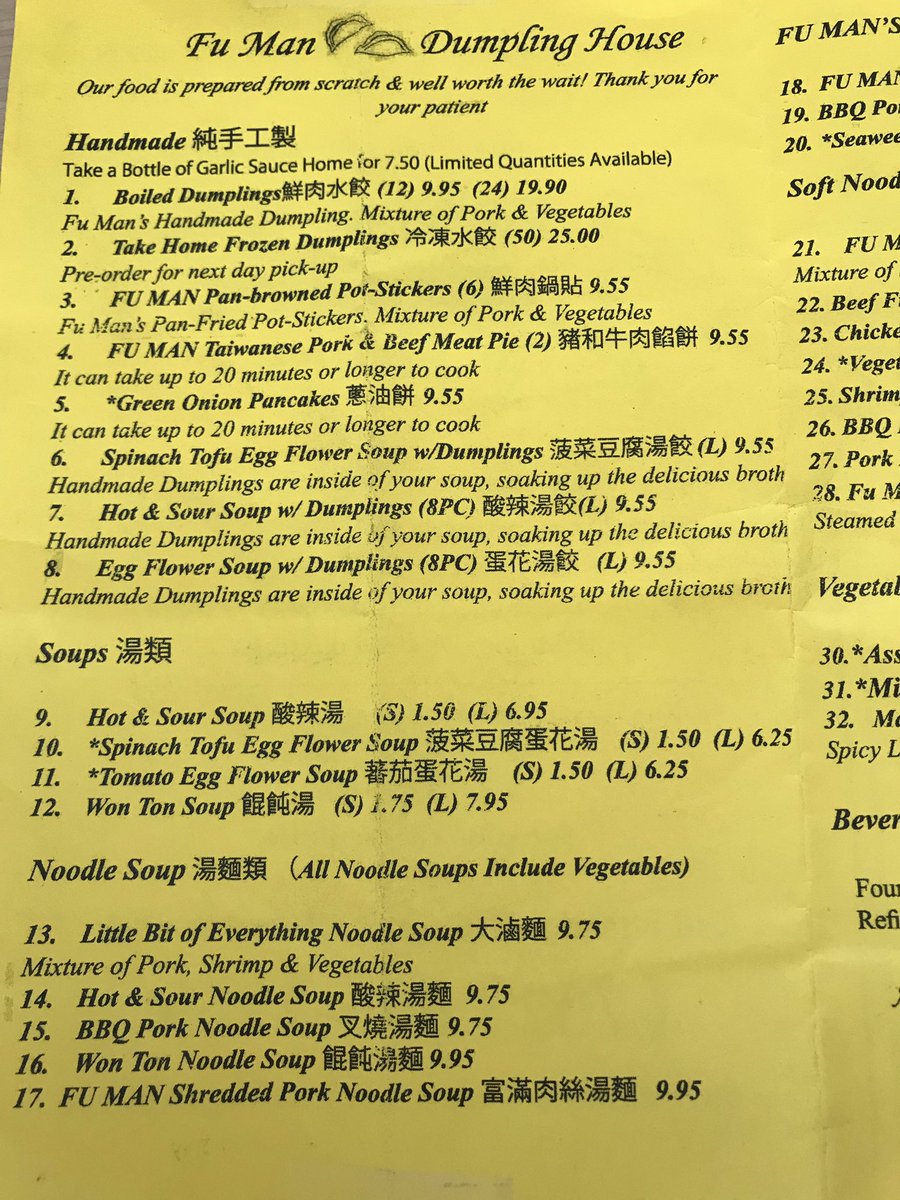
  1. The name of the place is Fu Man Dumpling House. Gee, I wonder what kind of food they cook best? (If you guessed “dumplings” you get a tangerine!)
  2. The next thing you notice is they’re selling their “handmade garlic sauce.” They’re obviously pretty darn proud of their garlic sauce so you can suspect it might be pretty darn good (it is).
  3. What’s the first thing on the menu? Boiled dumplings! I’m guessin’ they want you to order the dumplings.
  4. What’s the next thing on the menu after the dumplings? Two (2!) items that have the name of the restaurant attached to them! (Final Pro Tip: When the NAME of the restaurant is attached to a menu item, you should order it.)
  5. Soups – here’s where ordering gets tricky and my rules get honored in the breach. The hot and sour soup (listed first) is obviously the best in the house (IT IS!), but the eponymous Fu Man Shredded Pork Noodle Soup comes up last. Solution: order both! And forget everything in between. (I’m talking out my ass here as I haven’t had all the soups. But that’s what I would do.)
  6. The other side of the menu (not pictured) has all kinds of fried rice and chow mein stuff on it. It even has a “Fu Man” rice dish, but I WOULD NOT GET THEM! No sirree. Why? BECAUSE IT’S A FRIGGIN’ DUMPLING HOUSE! that’s why. (Why do I have to keep telling you these things, Troy?) Who in the hell cares about the Ma Po Tofu in a dumpling house? I care more about Ben Affleck’s drinking problem than I do about a mixed vegetable stir-fry in a dumpling house.

Got it? Now go get it, Troy. Those dumplings I mean.

You’re welcome.

Image may contain: food


Alimentary, My Dear Asian

Do you remember that scene in Ratatouille where Anton Ego takes one bite of Remy’s ratatouille and is transported back to the tastes of his childhood?

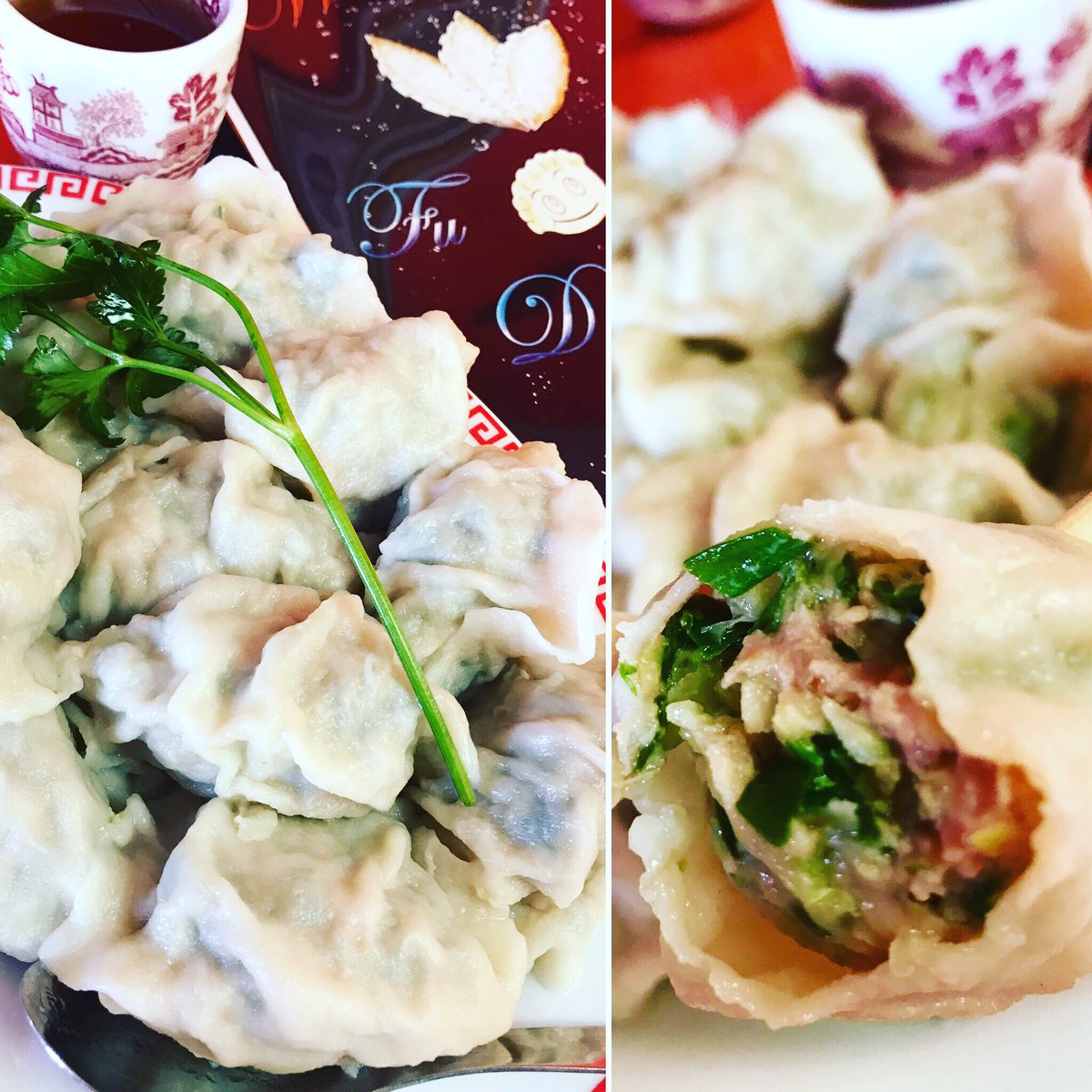
That’s what it felt like to me after my first bite of the steamed dumplings at Fu Man Dumpling House — although in this case, the memories weren’t of my Taiwanese childhood (HEY! IT COULD’VE HAPPENED!),  but of a trip I took to Hong Kong a dozen years ago just to eat dumplings.

You heard me right: I once flew 15 hours across the Pacific Ocean just to gorge on Chinese dumplings in the place that made them famous.

One bite of these beauties and I was back there: in a little cafe off of Hollywood Road that specialized in the tasty little pillows filled with all sorts of meat and vegetable combinations. The Food Gal® and I timed our visit to be there when it opened (not hard to do when you’re waking up at 3 am every morning), and as I recall they came 12 to a platter and we polished off two of them (platters not dumplings). (She also loves to remind me about watching some of the raw dumplings falling on the floor before they could be dropped into their bubbling bath and the cook casually picking them up and tossing them in. Oh, those Chinese.)

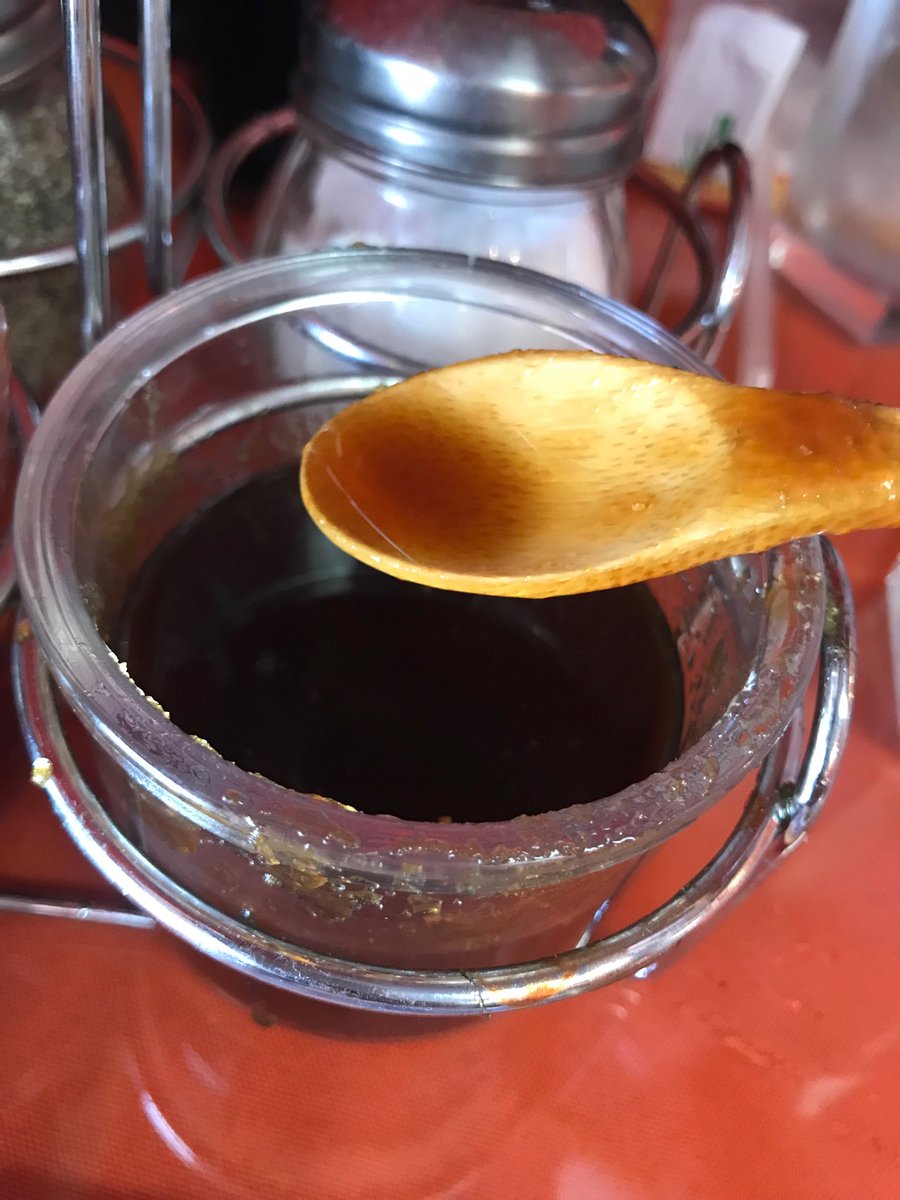
The soft packets of pleasure awaiting you at Fu Man are larger than what you find in China (stuffed that way for us big-eatin’ ‘Muricans I’d guess), but they are no less tasty. They are made to order and filled with gently poached ground pork and green onions that beg for bite after bite. The dumpling wrappers are necessarily thick (to stand up to the filling and the boiling) but somehow neither starchy nor filling. Polishing off ten of them is a lot easier than you think. Especially when dipped in the hauntingly sweet, and pungent garlic sauce they make here…the spikiness of raw garlic being muted by whatever they do in cooking it, but still sweetly floating through your senses for hours afterwards:
Honest to Christ, I could take a bath in the stuff; it’s that good.

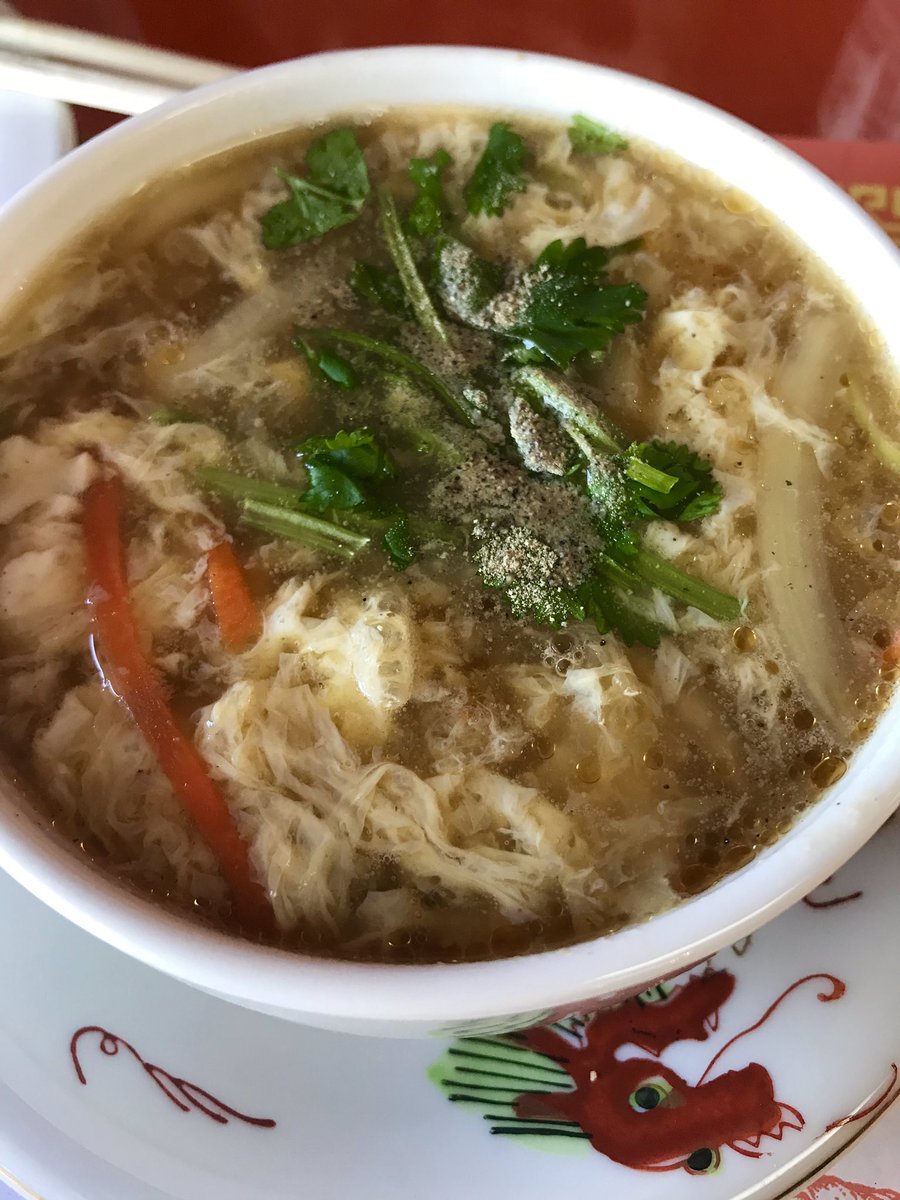
Don’t miss the hot and sour soup, either — it being exactly what this old standby soup is supposed to be: plenty sour, and intensely hot from a shower of white pepper. It’s the best version I’ve had in Las Vegas.

About the only thing not to like about Fu Man is the location: in a forlorn little shopping center on Smoke Ranch Road. I don’t know why they located something so authentically Chinese ten miles from Chinatown, but people in the northwest part of Vegas should be thanking their lucky stars.

Image may contain: 2 people, outdoor

Another unlikely place to find authentic Asian eats is in a teeny tiny, 14-seat storefront tucked away in the Arts District downtown. Open just 6 months, D E Thai Kitchen took over from an in-authentically awful pasta place and has made the space sing with a small-but-mighty menu of blow-your-socks-off Thai dishes.

On both visits, even an old Thailand hand like yours truly was taken aback by the intensity of the cooking in dishes like larb, Khao soi, and even the simple grilled pork. But what really rang our chimes were two dishes you don’t see a lot of in Thai restaurants: the Kua Gling, an incendiary, dry curry:

Image may contain: food

….and soft shell crab with garlic pepper sauce:

Image may contain: food

That crab is a fairly tame beast (by Thai standards), but the stir-fried minced pork in the Kua Gling will light you up — the heat seeming almost mellow at first, then coming in waves of fire that roll through your palate and crash around your tongue and the inside of your lips. Best to have a mango slushie or Thai iced tea close by to quell the flames….although the heat will linger for many many minutes. Lovers of chicken wings will love these — they’re carefully spiced, fried and sticky, and even the Thai curry puffs (filled with potato) are made with an extra level of attention that this starchy standard usually doesn’t get.

There is a lot of competition among Thai restaurants these days, and lovers of Siamese sweet/hot/savory/pungent flavors have plenty of options (even downtown where there are now four Thai restaurants within a couple of miles of each other). But D E Thai (named after chef/owner Jompon Chotikamars’ two children) is a worthy newcomer that can stand pepper to pepper with the best of them.

Our plethora of pan-Pacific table pleasures is one of the greatest things about living in Las Vegas. The Food Gal® and I often discuss leaving Las Vegas to conquer another city in America, but we both agree that walking away from all of the great Chinese/Thai/Korean/Japanese/Vietnamese food we have here would be difficult.

It’s obvious, after all, that our Asian allies in alimentation ever afford us awesome,amazing eats — and that would be tough to walk away from, alimentary-wise.

 A dumpling meal for two with a small soup at Fu Man will run you $12….for two. Great food doesn’t get any cheaper. A big lunch or dinner (for two) with 3-4 dishes at D E should be around $30-$40. Like I said: great food doesn’t come any less expensive.

FU MAN DUMPLING HOUSE

6679 Smoke Ranch Road

Las Vegas, NV 89108

702.646.2969

https://twitter.com/fumandumplinglv?lang=en

D E THAI KITCHEN

1108 South 3rd Street

Las Vegas, NV 89104

702.979.9121

https://www.dethaikitchen.com/

MICHAEL MINA Returns to the Sea

I almost sued Michael Mina once. More accurately, Michael Mina’s partners tried to hire me to sue him.

My law firm wanted me to take the case, but I demurred because….well….simply because I liked his restaurant so much.

The underpinnings of that suit had to do with the divorce that was then underway between the Bellagio and the Aqua Group — the company (and restaurant) that launched Mina’s career in San Francisco in the mid-1990s. By 1997, Aqua had become Frisco’s most famous seafood restaurant, and Steve Wynn (who had already lured Julian Serrano here from there), needed a seafood star to complete his murderer’s row of chefs at the Bellagio.

Aqua Las Vegas opened to great acclaim in 1998 (as did all of Bellagio’s stars), and for 7 years it was the unchallenged cooking champion of all things from the sea. As its eighth birthday approached, deals were coming to an end and leases needed re-negotiating. Mina apparently wasn’t in step with whatever his partners wanted, and that’s when both sides started lawyering up and I got the call.

I don’t know anything else about the dispute except that within a matter of months, Aqua was out and Michael Mina (the chef and the restaurant) was in.

Smartest move me and the Bellagio ever made.

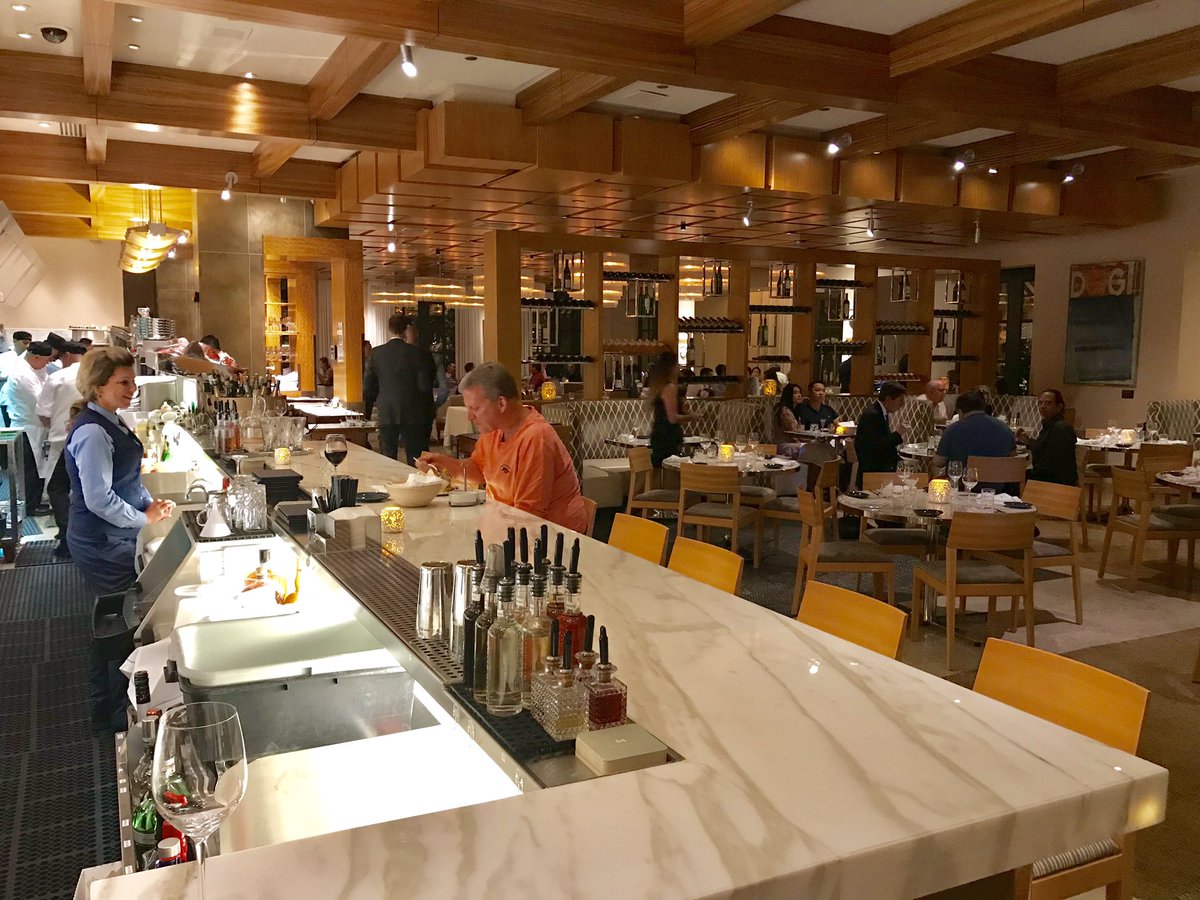
Aside from a drift away from the seafood that made him famous, not a lot has changed at Michael Mina over the years. It’s always been one of the prettiest restaurants in Vegas (you can thank designer Tony Chi for that) with lighting that flatters both the customers and the food. The one design flaw was the bar to the left as you enter. Originally designed as a sushi bar, it was small and awkward and not conducive to cocktails (or a pre-prandial glass of vino) — with the drinks (formerly) being handed down over a high ledge in front of the seats. As you can see above, this is no longer a problem.

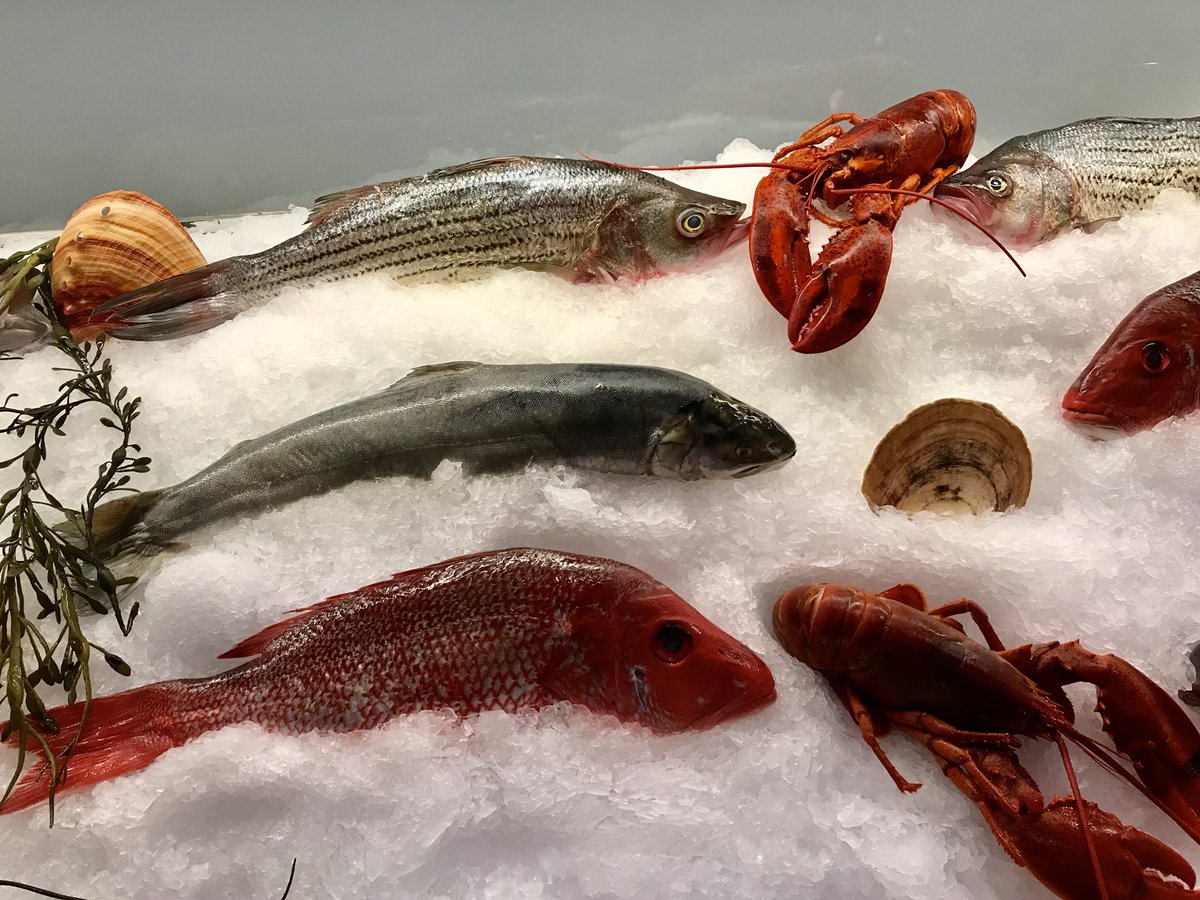
Neither is the menu re-vamp, which returns Michael Mina (the restaurant) to its roots. With this re-boot, the fish-friendly MM of yore is now alive and swimming in the Bellagio Conservatory. Taking a clue from Estiatorio Milos, a seafood display tempts as you are led past the bar, and if looking at whole branzino, John Dory, striped bass, Hawaiian kampachi and Arctic char doesn’t put you in the mood for a fish fry, nothing will.

Mina made his name as a seafood chef. His early fame came from treating big hunks of pristine fish like land-locked proteins. He popularized pairing pinot noir wine sauce with salmon, and pairing tuna with foie gras. Even now, he and his crew see marine proteins as umami-rich sea meat, rather than delicate flowers to be barely trifled with.  Where the Italians and Greeks barely dress their seafood with anything more than a squeeze of lemon, and the French nap theirs with the barest of butter, Mina looks at a fish as something to be assaulted (in a good way) with sauces. Thus does lobster come bathed in brandy and cream (in his ethereal pot pie), while fresh-off-the-boat John Dory gets a dressing of intense, fermented black beans and bok choy. In keeping with the times, things have lightened up a bit — the only French sauce offered is the mustard beurre blanc with the phyllow-crusted sole, but he can’t resisted coating a strongly-smoked trout with a river of Meyer lemon-caviar cream,  His chefs will grill one those whole fish (or a half for 1-2 diners) and adorn it with grilled peppers and preserved oranges, or accent it with Thai green-coconut curry after deep-frying it Asian-style.

When it comes to fish, yours truly is something of a seafood snob (imagine that?). My rules of thumb when ordering a whole fish are simple:

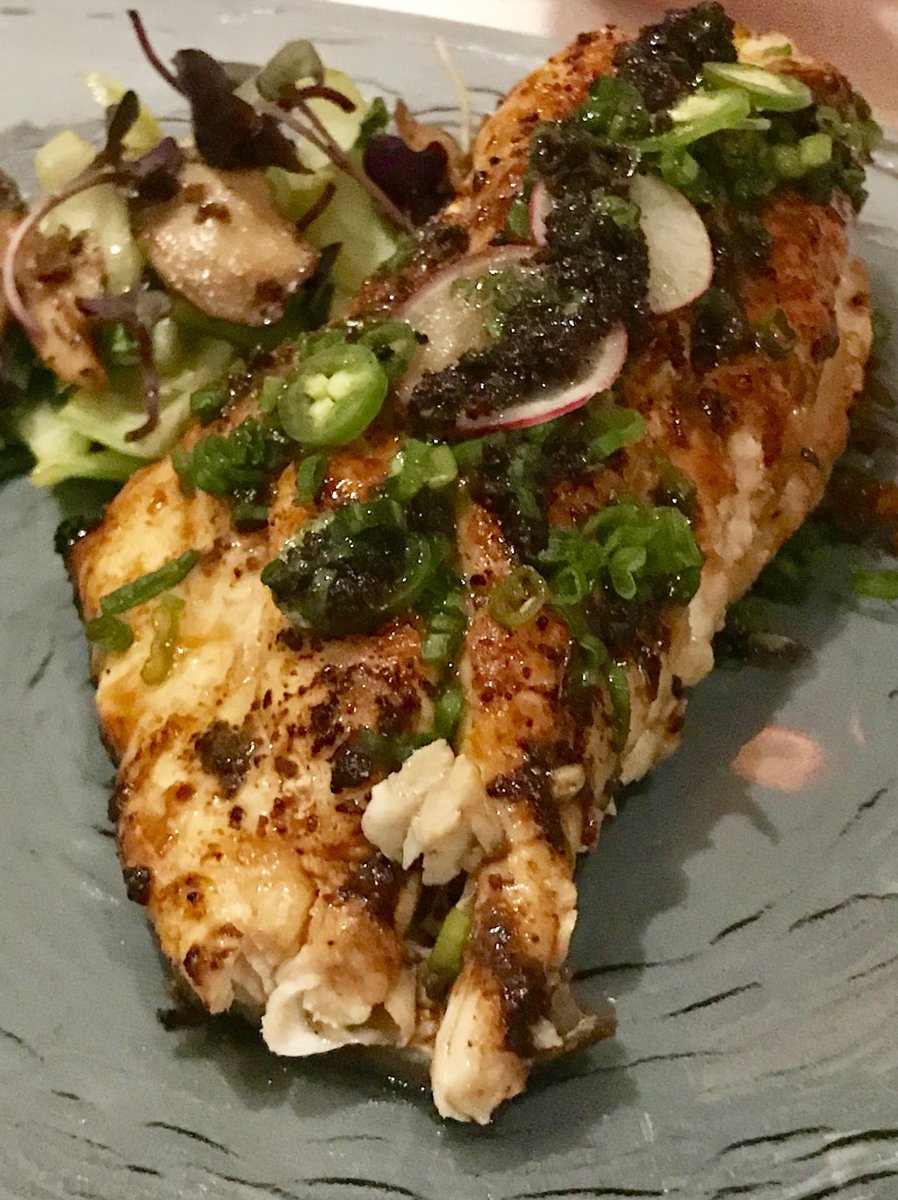
Rule #1: If John Dory (aka San Pierre, aka San Pietro) is on the menu, get it.

https://upload.wikimedia.org/wikipedia/commons/3/35/MacGillivray%2C_William_John_Dory.jpg

The John Dory is an exquisite fish – thick and meaty, but also delicate, not-too fatty and finely-grained. There is a firmness to the meat which will stand up to all sorts of preparations, but a soft sweetness to it that demands a careful hand. It goes well with a variety of sauces, and will stand up to strong accents — like the scallions, Serrano peppers and fermented black bean treatment it gets here. When properly cooked, it takes a rightful place in my pantheon of perfect pisces, along with wild turbot, fresh-caught Pomapno, and true Dover sole.

Rule #2 is: Only eat fish in a fish restaurant.

Rule #3: In a fish restaurant as good as this one, either close your eyes, point and pick, or ask the knowledgeable staff about the variations in species and how they are complimented by the cooking styles.

That last one is crucial, because on any given night, 6-8 whole fish are laid out before you, each begging to be grilled/smoked over applewood, broiled and beaned, or deep-fried with coconut-green curry. The lighter-fleshed fish (snapper, sea and striped bass) do well with this spicy coating and sauce, while the denser Dory, kampachi and char demand to be basically broiled.

Before you get to them, however, you’ll have to navigate the shellfish waters, which are teeming with terrific options. Executive Chef Nicholas Sharpe pointed us to the “petite charcoal-grilled platter” ($130) which is more than enough for four. Nothing against the brisk and briny oysters and cold lobster you find all over town, but this time of year calls for warmth, and grilling the scallops, oysters and Maine lobster with a miso-garlic-yuzu glaze is just the ticket on a brisk fall evening:

Image may contain: food

The only problem with the new menu is there are too many great choices. Sharpe and g.m. Jorge Pagani (who’s been with the operation for 17 years) suggest toggling back and forth between the Mina classics (caviar parfait, tuna tartare, hamachi crudo), with these new (“Market Light”) items to build your best meal, and that sounded like a sound plan to me.

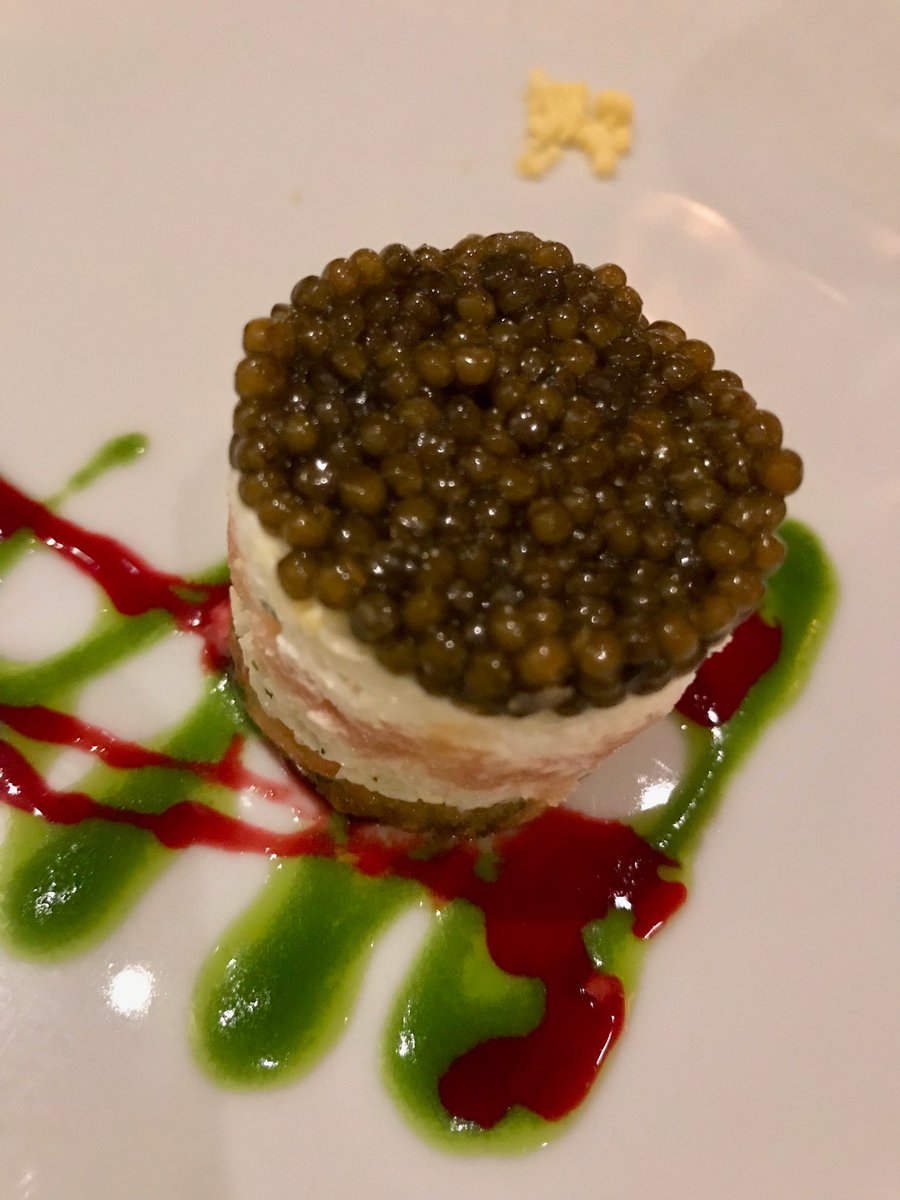
Speaking of classics, most of them are still there. (Pagani told me there’d be a revolt among some regular customers if the tartare, parfait, pot pie, or phyllo-wrapped sole were taken off the menu.) And why should they be? They’re classics for a reason. There may be no better starting course on earth than Mina’s caviar parfait:

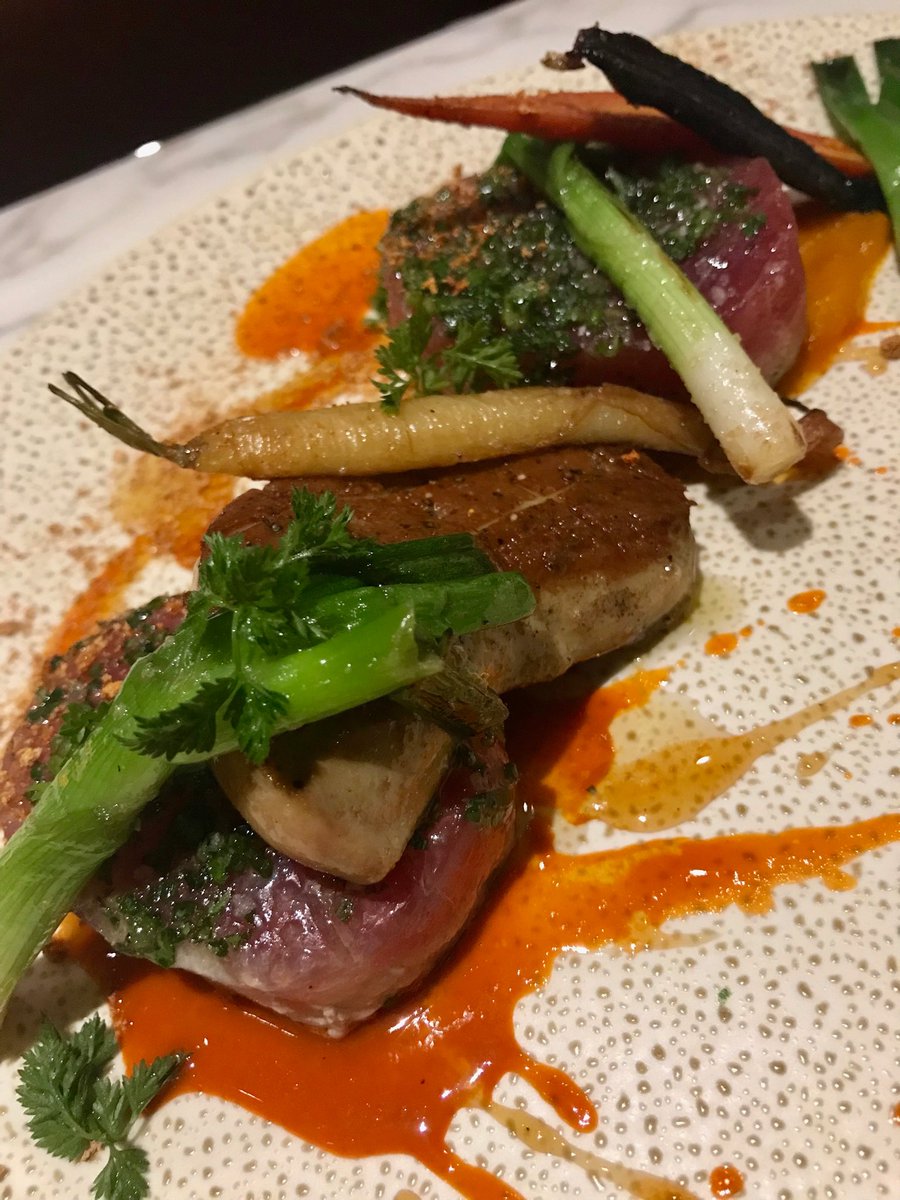
….and even his steak Rossini is justifiably famous,. But for my money, the real show-stopper (a blend of Mina’s oeuvre, old and new) is his seared tuna and foie gras starter:

Mina has always known fatty liver like a Korean knows cabbage, and three forkfuls will prove it to you. Take a bite of the tuna, then take a bite of the foie, then take a bite of them both together. No meat-meets-fish dish ever became greater than the sum of its two (magnificent) parts than this beauty. It’s expensive ($57), but it’s more than enough for two and almost a complete meal in itself for one.

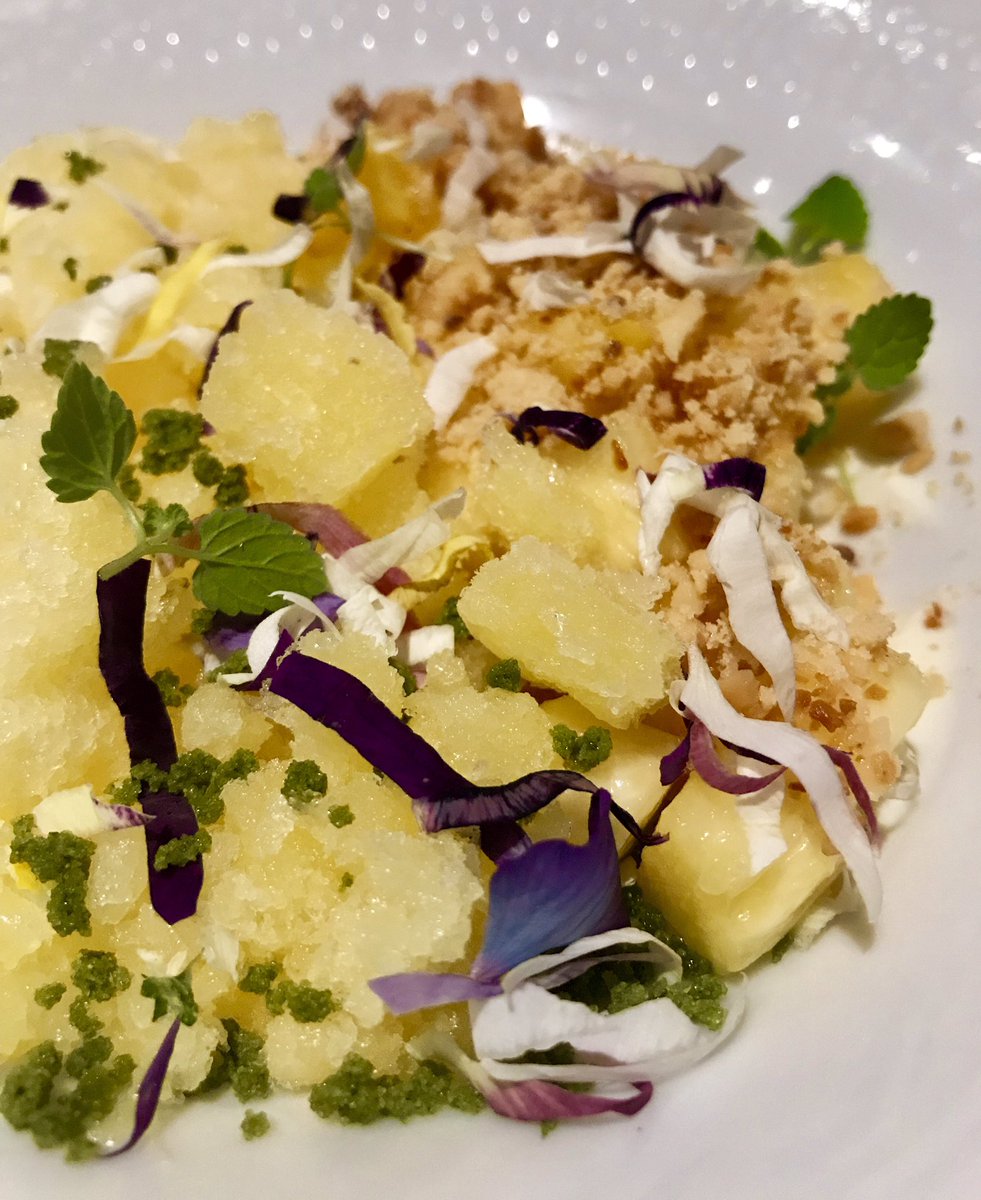
If you have room after all that seafood-y goodness, don’t miss the classic chocolate bar with salted caramel mousse, or the Egyptian rice pudding (almost as good as Greek!), or the pineapple granita with vanilla panna cotta and Sicilian pistachios (below). Desserts here have been wonderful for as long as I can remember (which is all the way back to 1998), and as with the fish, whatever you point to will be worth it.

A word about wine. No one goes to the Bellagio looking for wine bargains, but this list is well-chosen with lots of white wines at (for the Strip at least) reasonable prices that match well with the food. My sweet spot when looking at Strip wine lists is the $60-$120 range, and if you root around, you’ll find a few German Rieslings that fit the bill — like Müller-Catoir Kabinett for $80. The bright acidity of drier German whites compliments Mina’s love of bold, rich flavors, as do the more mineral-rich Chablis and less-complex (read: cheaper) white Burgundies — which you’ll find more than a few bottles of that don’t break the bank. Anyone who orders a Cali cab with this food ought to be taken out and shot (figuratively speaking).

The half-fish here run around $60-$75, which is a (relative) bargain. Most of the whole fish (that easily feed four) are double that. If you split some appetizers and go this route, you can get out of here for around $100/pp. Tasting menus are $138 and $188, respectively, and are more than worth it if you’re the “go big or go home” type. The last time I paid for a meal at MM, Bill Clinton was president.

MICHAEL MINA

Bellagio Hotel and Casino

3600 Las Vegas Blvd. South

Las Vegas, NV 89109

866.259.7111

https://www.bellagio.com/en/restaurants/michael-mina.h