Eating Los Angeles – From Top to Tacos

The Beverly Hills Hotel Sign(Gimme gimme)

Los Angeles is a city, a county, a tangle of towns and a state of mind. It begins in the San Gabriel Valley just west of the El Cajon Pass, and ends at the beach cities along the Pacific Coast Highway. In between are almost 5,000 square miles of municipalities (88 in all), along with the biggest spaghetti bowl of freeways in America. Hidden among them are all sorts of good things to eat.  Getting to them, however, will always be a challenge, in more ways than one.

If you’re driving from Las Vegas, the gravitational pull of L.A. is palpable. Once you’ve crossed that mountain pass, it is downhill all the way until you hit the terminus of the Original Route 66 underneath the Santa Monica Pier. Driving is the only way to see LA, by the way, it having sold its soul to the cult of the car before anyone reading these words was even alive. (There are walk-able areas among its many towns, but they are laughably small, and you’d better know the territory before beginning any trek, unless you enjoy hobnobbing with the homeless.)

But up to the challenge we were, so drive there we did (courtesy of friends with sweet, oversized rides befitting the landscape), to check out the food scene. This time, though, we weren’t in search of the best new places. This time we were big game hunting — bagging the ultimate elusive prey like Hemingway on a bender, led by a local food guide, and armed with credit cards instead of shotguns.

It was epic eating of a particular SoCal sort, punctuated by meals both highbrow and low, from the absurd to the sublime. We covered a lot of territory in four days…and here is the tale:

Image

Polo Lounge

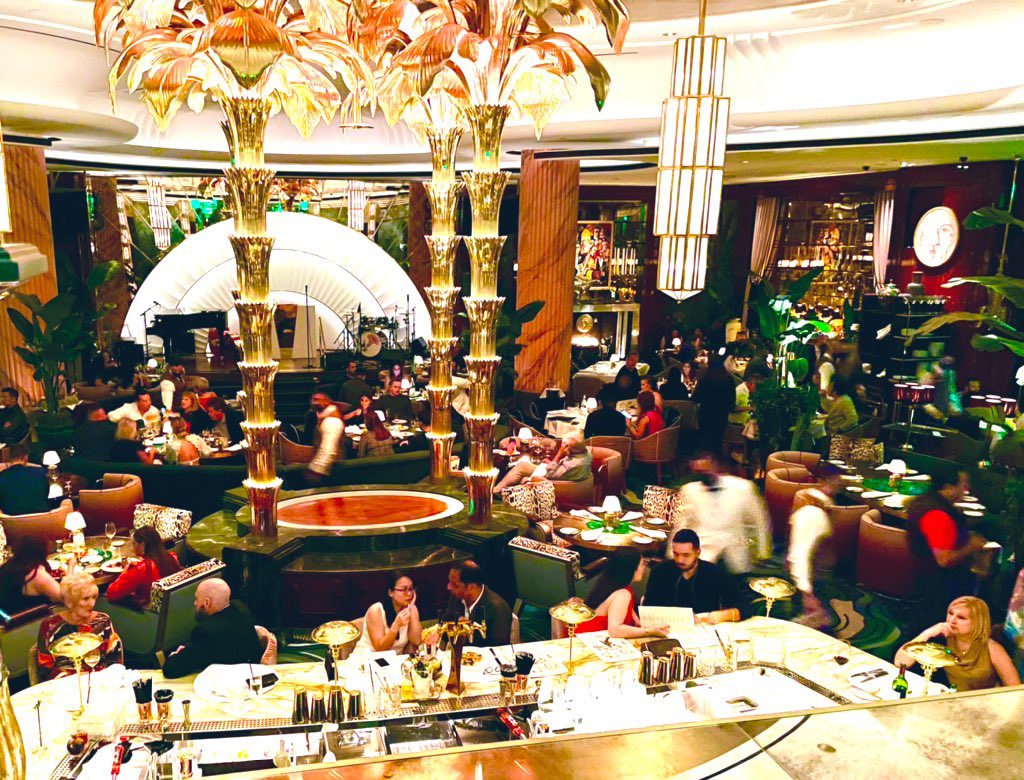
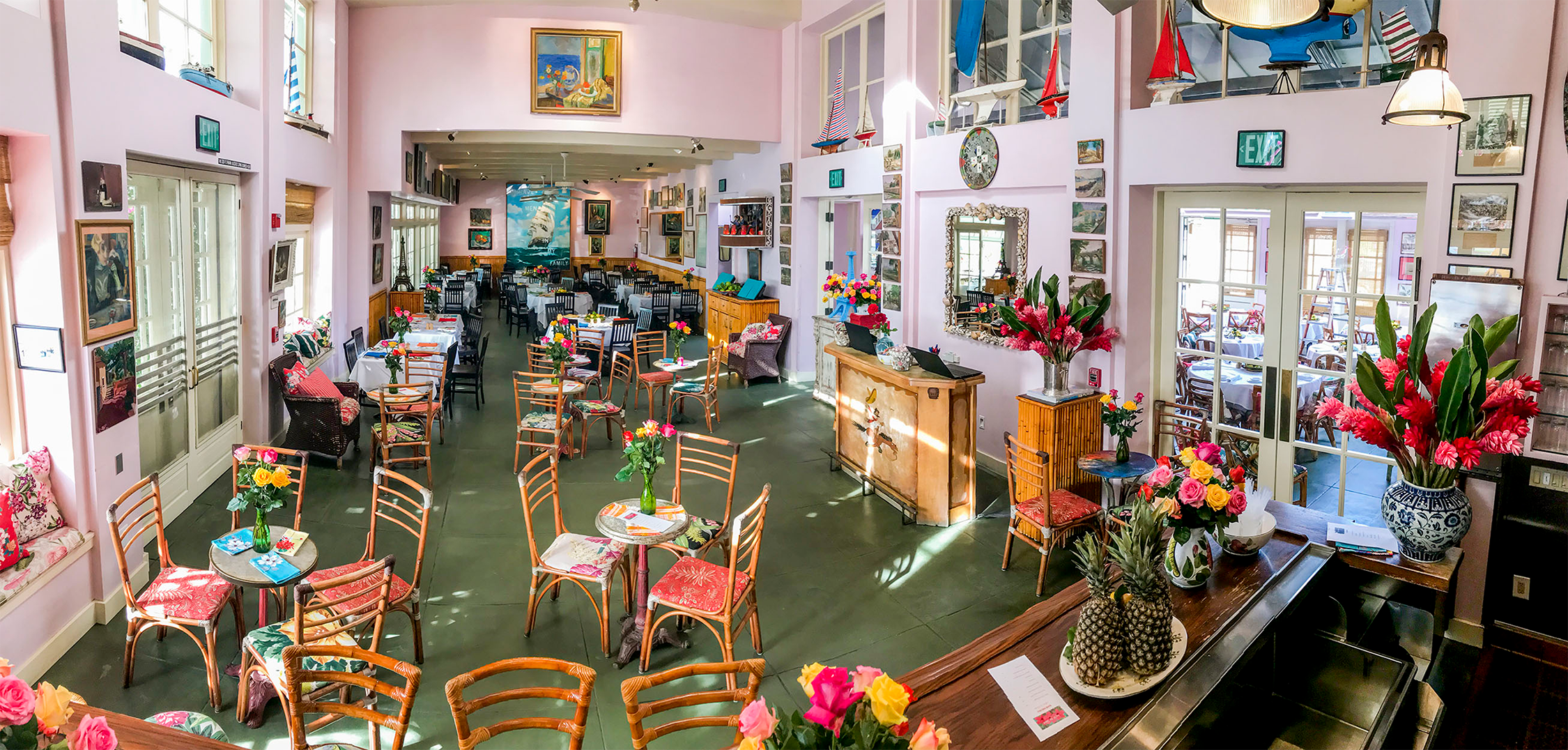
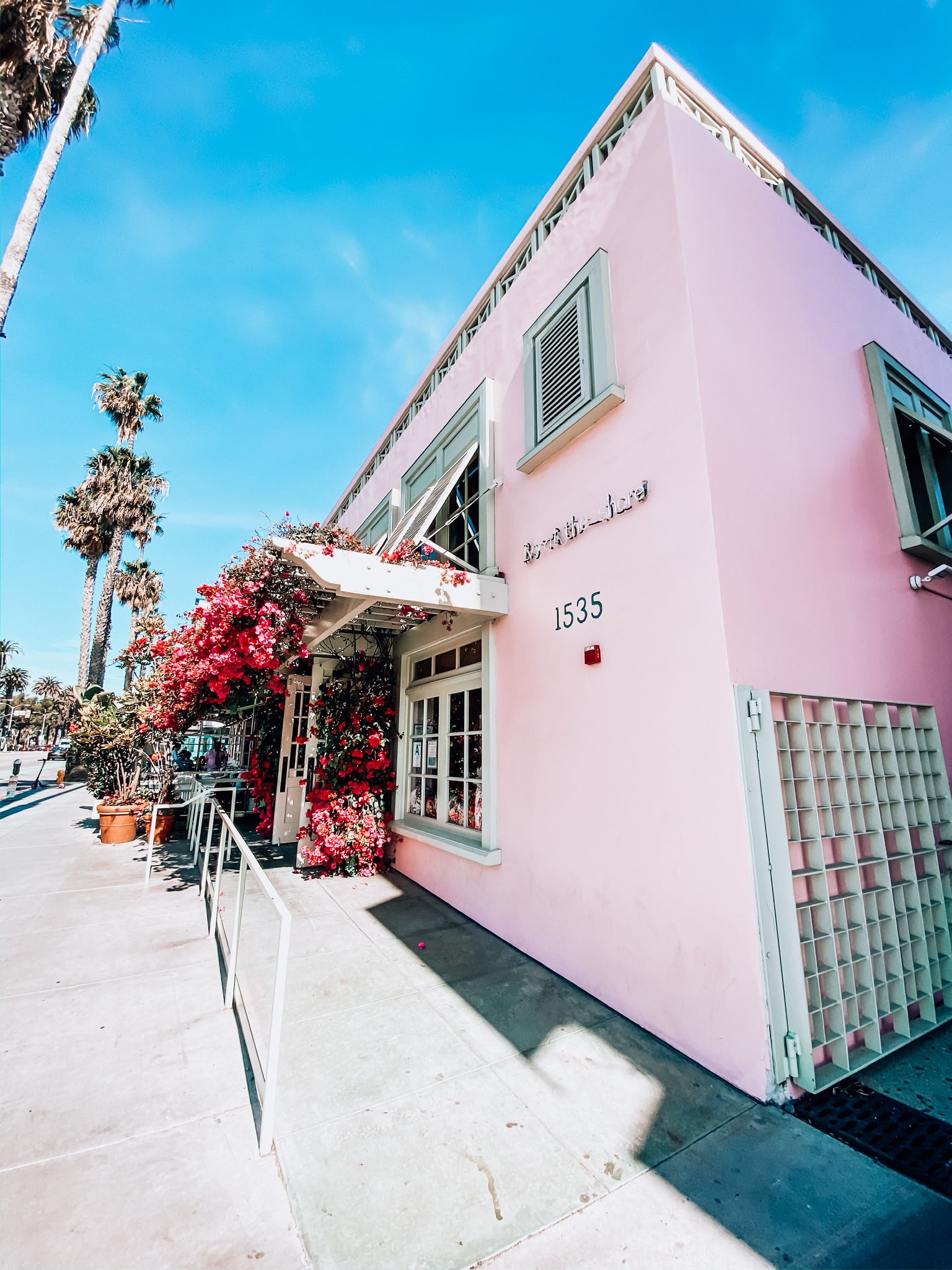
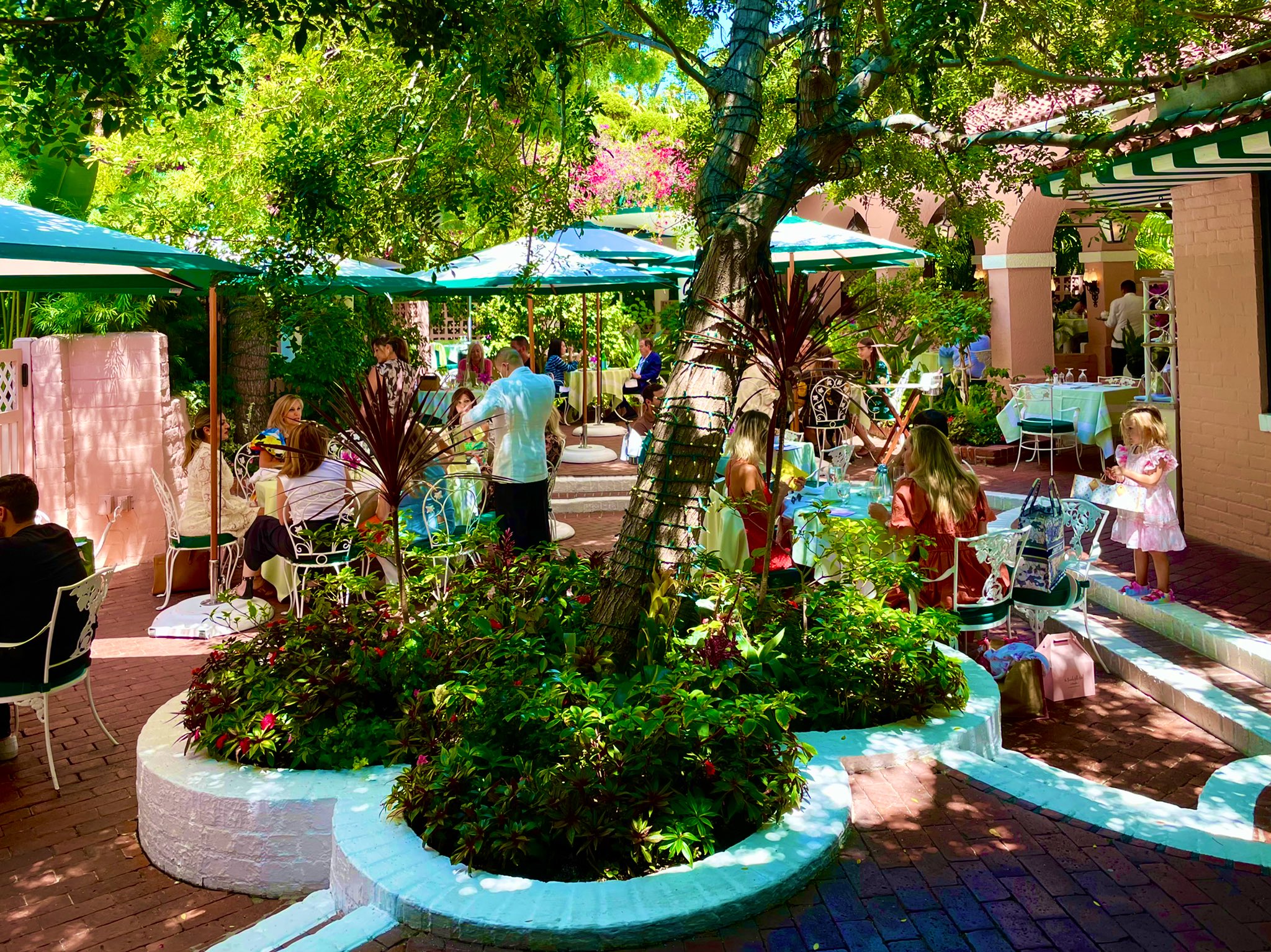
It doesn’t get more old school than The Beverly Hills Hotel — perched on a hill above Sunset Boulevard, looming over swimming pools and movie stars like an edifice of pink excess. The BHH has been in more movies and dreams than one can count, and its Polo Lounge serves as a de facto commissary for big shots of the movie producer ilk. (These days, you’re more likely to be rubbing shoulders with FOMO Instagrammers and bachelorette parties than Jerry Bruckheimer, but such is the century we live in.)

While it is still possible to be seduced by the prospect of running into B-list actors and eurotrash here, we came for the food…and maybe a little of the glamour that this place still wears like a faded fur on Norma Desmond.

What we found was a lot more spruced up than we remember from 20 years ago. Now a part of the Dorchester Collection, its mega-rich owners cannot be accused of letting it go to seed. Things were polished to a fare thee well; the bathroom fixtures are now more Louis Quinze than Louis B. Mayer, with carpet so plush you could sleep on it.

There is lots of obsequious head-bowing as you stroll through the joint  (which must be the way hotshot Hollywood hottentots like it) and food calculated not to offend — artfully presented and tasty, but un-challenging to the palate (which is another way wealthy barbarians like their pablum). There’s nothing particularly interesting on the card, just the standardized menu fare that gets hustled out of hotel kitchens from Long Beach to Louisville — here made with better groceries than most. You will eat well, but you won’t be so distracted by the food that you can’t spend most of your meal searching for someone famous. Which is, after all, the whole point of this place.

Image(Not included: lubricant)

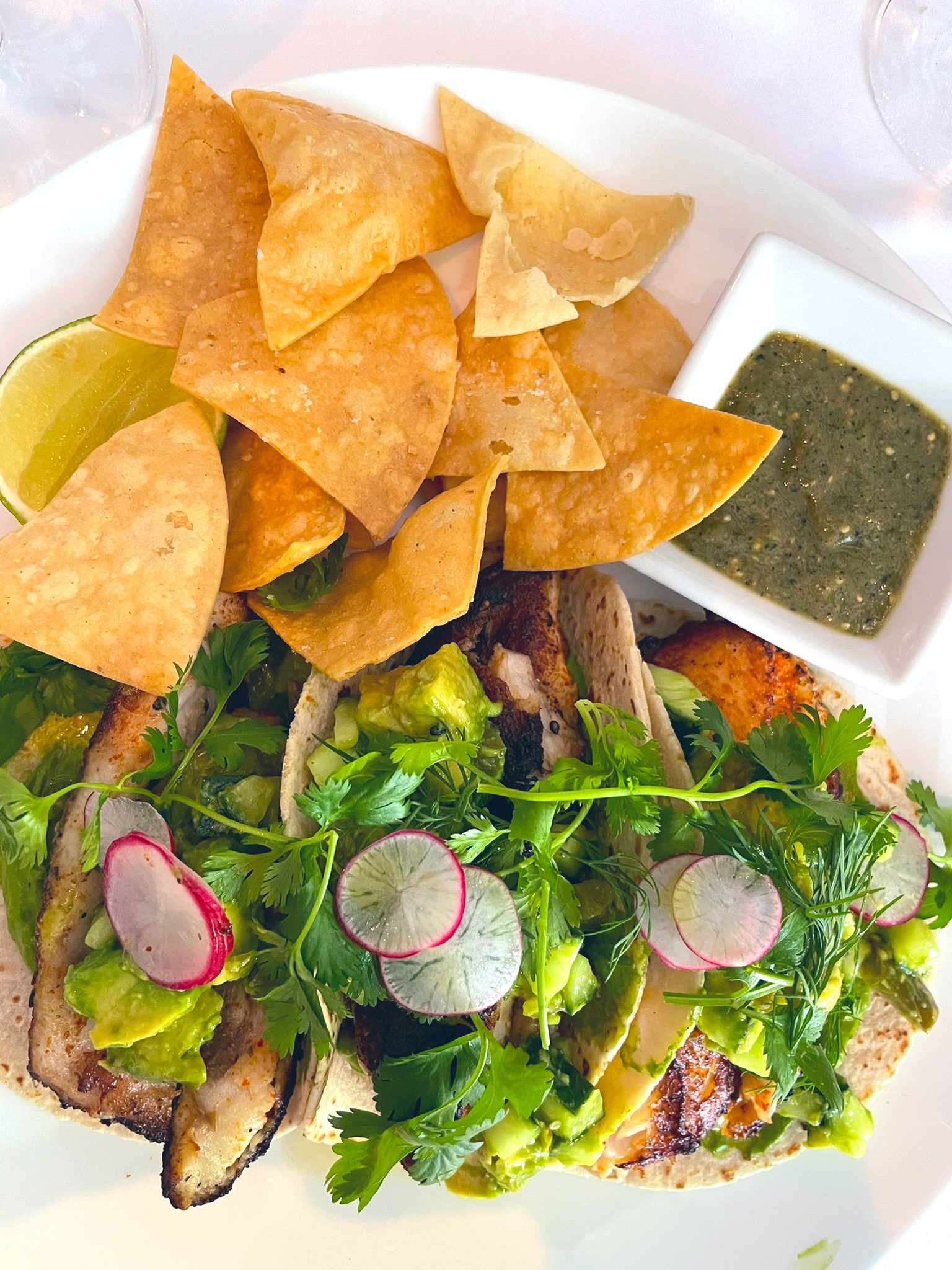
Worthy menu items included a really good piece of California sea bass — a fish that never seems to find its way to Vegas, 240 miles up the road — a substantial steak, excellent steak tartare, mammoth double-decker club sandwich, and a not over-priced wine list. On the down side: prices are astronomic and service metronomic — for the privilege of paying $32 for a Cobb salad, and 42 bucks for fish tacos (above), you also get waiters who barely look at you.

The Damage:

Around $130/pp. The Food Gal® says: “Only my husband is dumb enough to pay forty-two dollars for fish tacos. Get a salad and hope Jennifer Aniston shows up to make it worth your while.”

Image

Chez Jay, Baby

We’re spoiled, of course. You can pin a lot of negatives on Las Vegas restaurants, but bad service isn’t one of them. From our haute cuisine palaces to pizza/pasta/sports pubs, the management and staffs both on Strip and off are always happy to see you.

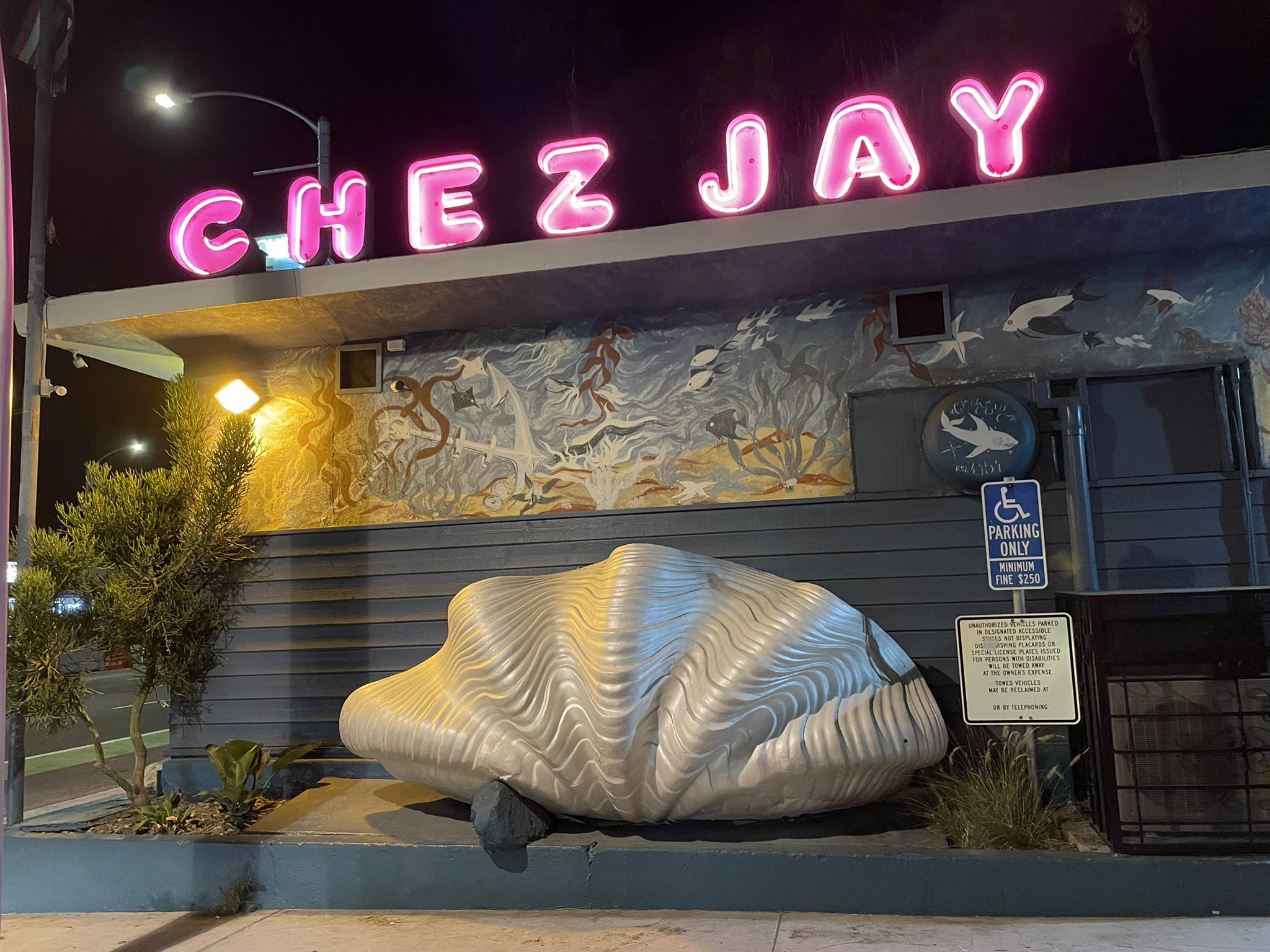
The great thing about Chez Jay is, it never got the snooty L.A. memo. Here, the absence of attitude is as refreshing as the salty breeze coming off the Pacific. Even when you roll in slightly inebriated, late at night (Who? Me?!) with the kitchen about to close, it feels like you’ve staggered into an old friend who is happy to see you.

This downmarket, laid back louche-ness has been drawing us to this lovable dive for thirty years. Only a stone’s throw from the Santa Monica Pier, the place used to be filled with drunks and fisherman (not to mention drunk fishermen) and smelled like Coppertone mixed with bait. The smell is gone, but the boozers remain. This is a good thing. There is a quiet, scruffy alcoholism to Chez Jay that provides the perfect antidote to its upscale neighbors. “Every guy who ever played Tarzan used to hang out there,” says writer/director James Orr, and you can still feel their presence every time some worn-out fellow with a weather-beaten tan and a floppy hat walks in.

Image(Sand dabs by the sand)

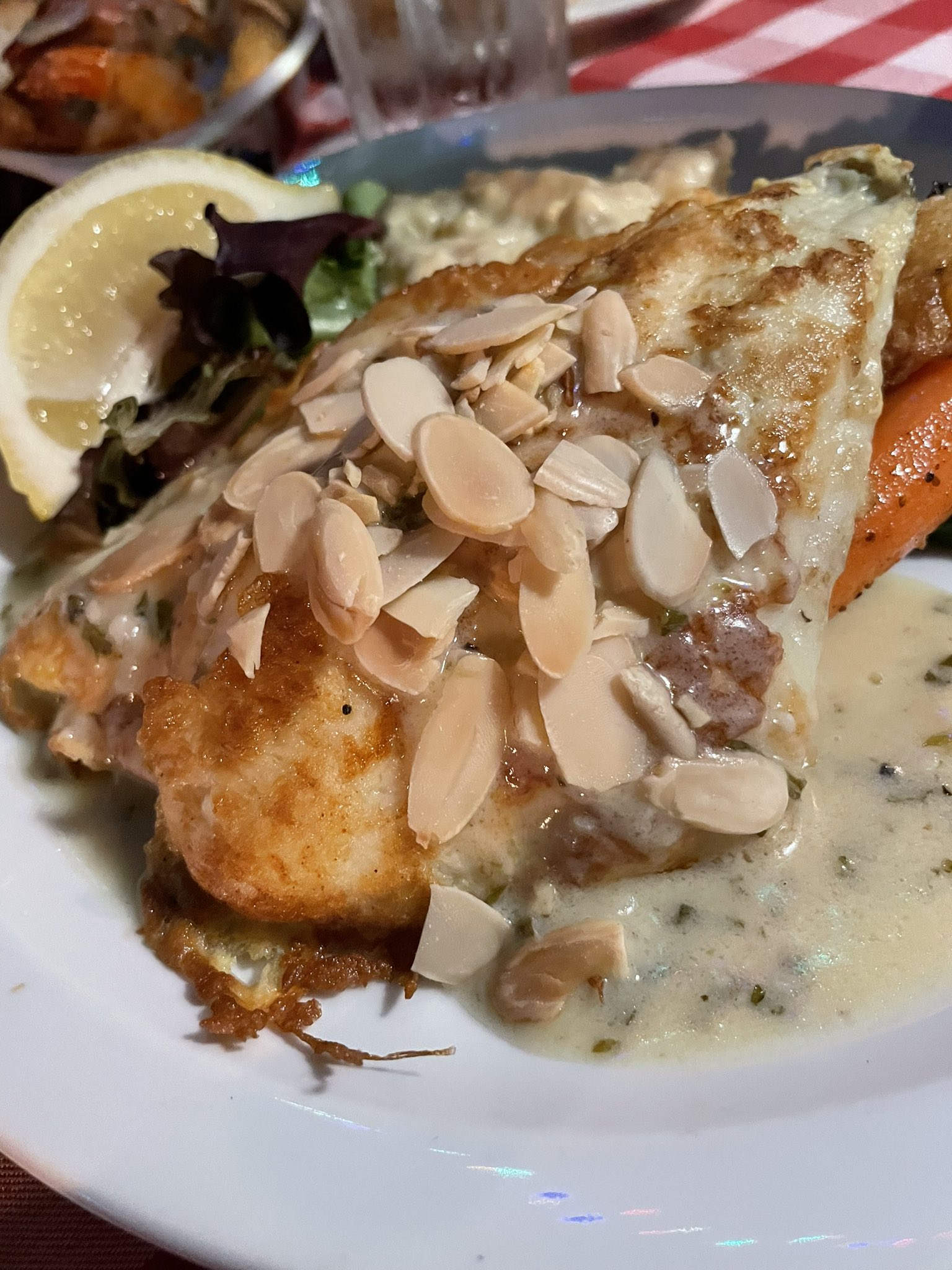
What you’ll find at CJ is the opposite of hoity-toity: a smiling welcome (whether you’re a has-been actor or not), strong, well-made cocktails, and an old-timey “steaks, seafood, chops” menu with some surprisingly tasty fare. Skip the so-so steaks and head for the garlic shrimp or sand dabs (above). And tip your sassy waitress well: she’s honed the skill of reading people into a fine art.

If there’s a better way to bring eating Los Angeles into sharp relief than lunch at the Polo Lounge and dinner at Chez Jay, we haven’t found it.

Sadly, Denny Miller is no longer around.

The Damage:

Two entrees and a few stiff drinks will run about $50/pp. The Food Gal® says:  “Chez Jay is old-school fun whether your spouse is sober or not when you arrive. Sadly though, Billy Bob Thornton, was nowhere to be found, either.”

Image(Niki knows kaiseki)

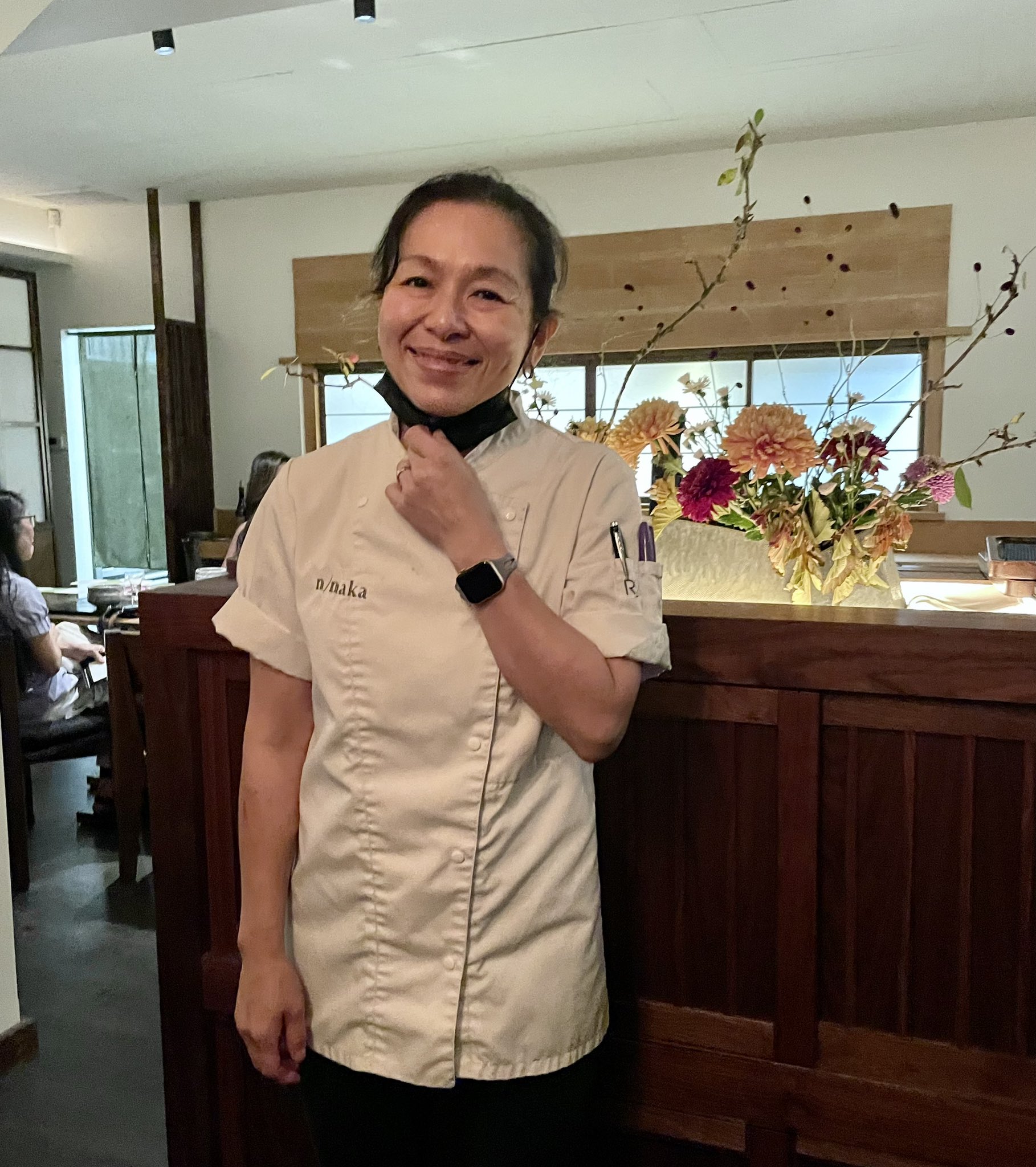
n/naka

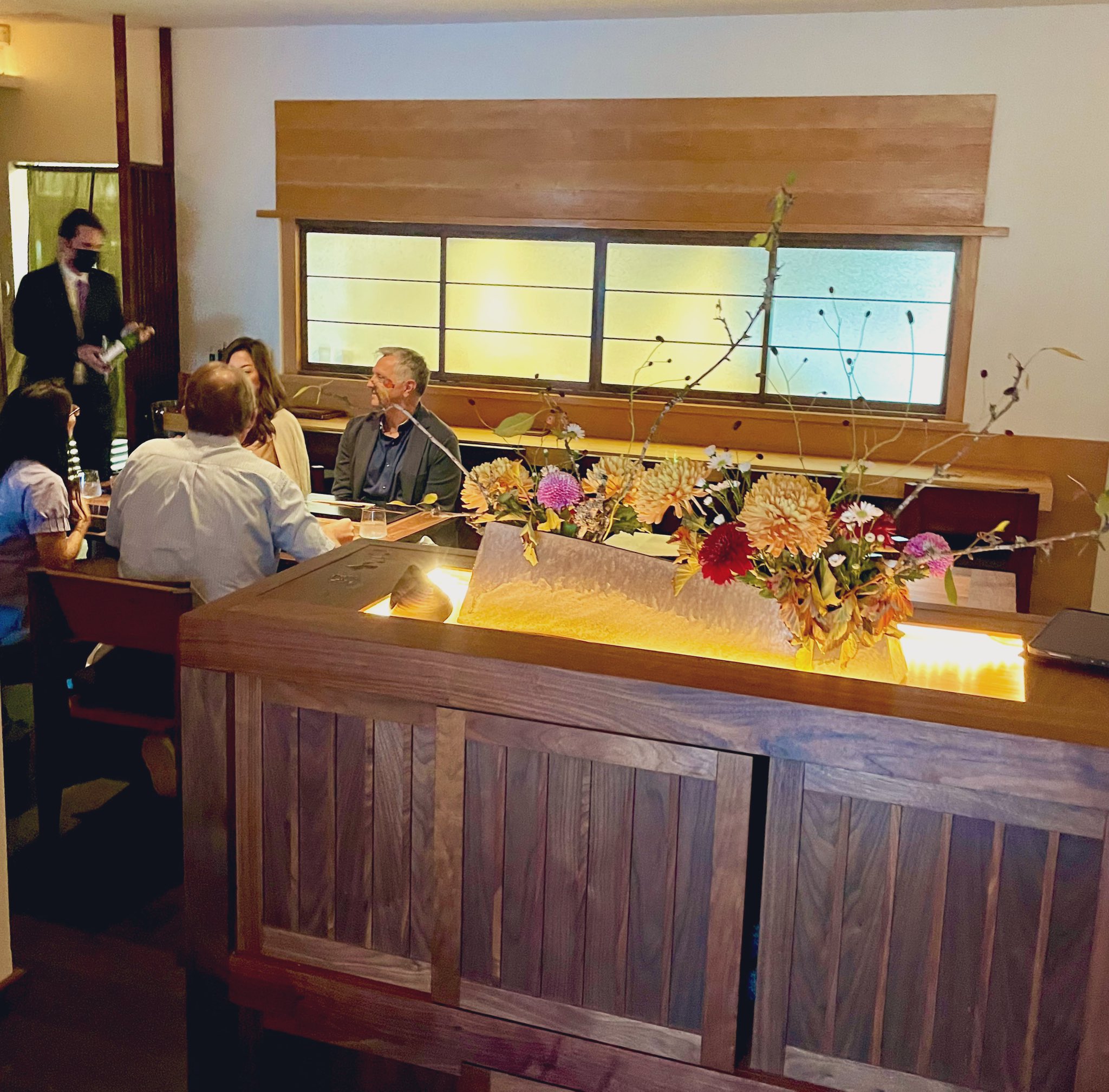
Then, shit got real. Scoring a res at n/naka takes the patience of Job and the perseverance of Sisyphus. The person typing these words has neither, but he does have friends with connections, so in we strolled to the toughest ticket in Los Angeles — a small house on a corner of a commercial street containing a 30 seat restaurant, a multi-course kaiseki meal, and a bill that would choke a horse.

Having appeared on the first season of Netflix’s Chef’s Table made a ticket to this meal harder to come by than a backstage pass at the Oscar’s.

Fawning, persistent press has sealed its fate as one of those places that actually transcends the hype and has become a cultural touchstone. To eat here is to know what high-falutin’ Californian food is about, but you no longer come to n/naka just to eat; you come to embrace it as a status symbol. As with the French Laundry up north, the food (good as it is) has become beside the point.

You’re also up against drivel like this:

Though the effort to evolve the restaurant industry’s bro culture has seen some progress, those toxic roots still run deep. Niki and Carole carved out a successful restaurant in a male-dominated industry while cooking a historically male-dominated cuisine, never compromising on their vision and values. “What is so interesting about the whole subject, about how kaiseki is this male-dominated form, is that it’s a form that relies so deeply on nature, which seems to me to be inherently feminine,” says Kleiman. “So I find that in a way Niki is this correction.”

…so woe to the diner who wants to assess things through a prism of culinary objectivity rather than a “gendered lens” of alphabet soup sexual politics.

Because these things are so important to Los Angelenos, chefs (Carole Iida-Nakayama and Niki Nakayama) have found their perfect niche: a casual-yet-formal, California-inflected Japanese kaiseki restaurant that pushes all the right buttons. Here, you can enjoy the best seafood/sushi/produce Cali has to offer, and congratulate yourself for doing the right thing while paying for the privilege.

Of course, we’re more interested in the dashi than gendered lenses, so our thoughts drifted to similar meals we’ve had in Tokyo, New York, and Las Vegas.

Nothing compares to Japan, where these multi-course, hyper-seasonal feasts are rigidly formal, with flavors so obscure they sometimes border on the invisible. Las Vegas has a kaiseki restaurant, and like n/naka, Kaiseki Yuzu is tiny, pristine, and all about impeccable technique. It can’t compete with the Nakayamas when it comes to right-off-the-boat fish, or produce grown in their own back yard, but in terms of what I saw on the plate, I’d call it a push. (Our kaiseki is also $100/pp cheaper than their kaiseki.)

Where n/n excels is in unforced elegance. The restaurant itself is simple bordering on the austere, but look closer and you see exquisite details — in the plates, the table, the seating and the food. They don’t miss any of their marks here. Service is as smooth as the inside of an oyster shell, and informative without being intrusive.

The sake and wine lists are short and superb and like the Polo Lounge, much softer in markups than what we’re used to in Sin City. (Absurdly overpriced Vegas wine lists have inured us to sticker shock forever.)

Image

The food is one eye-popping course after another, smoothly, almost effortlessly served with succinct explanations and instructions. There’s an old joke about every waiter in L.A, being a wannabe actor, so the boss says, “Why don’t you try acting like a good waiter for a change.” No one’s acting here; the service is as good as it gets.

The point of kaiseki is not as much to wow you with a single dish, but to soothe your soul with a parade of bite-sized, ultra-fresh delights, plucked at the peak of their deliciousness. It actually started out as a few small savory bites served to blunt the effects of strong green tea during a  sadō  – Japanese tea ceremony, but has morphed into its own thing. Both here and across the Pacific, “kaiseki” now denotes the height of Japanese epicureanism — a prix fixe, omakase, tasting menu (does anyone call them degustations anymore?) representing the pinnacle of a chef’s skill — hyper-seasonal, and full of symbolism (both obvious and inscrutable), edible and otherwise.

Your twelve courses aim for each station on the kaiseki cross: Sakizuke, Zensai, Owan, Yakimono etc., and to a plate, there was something to rave about.

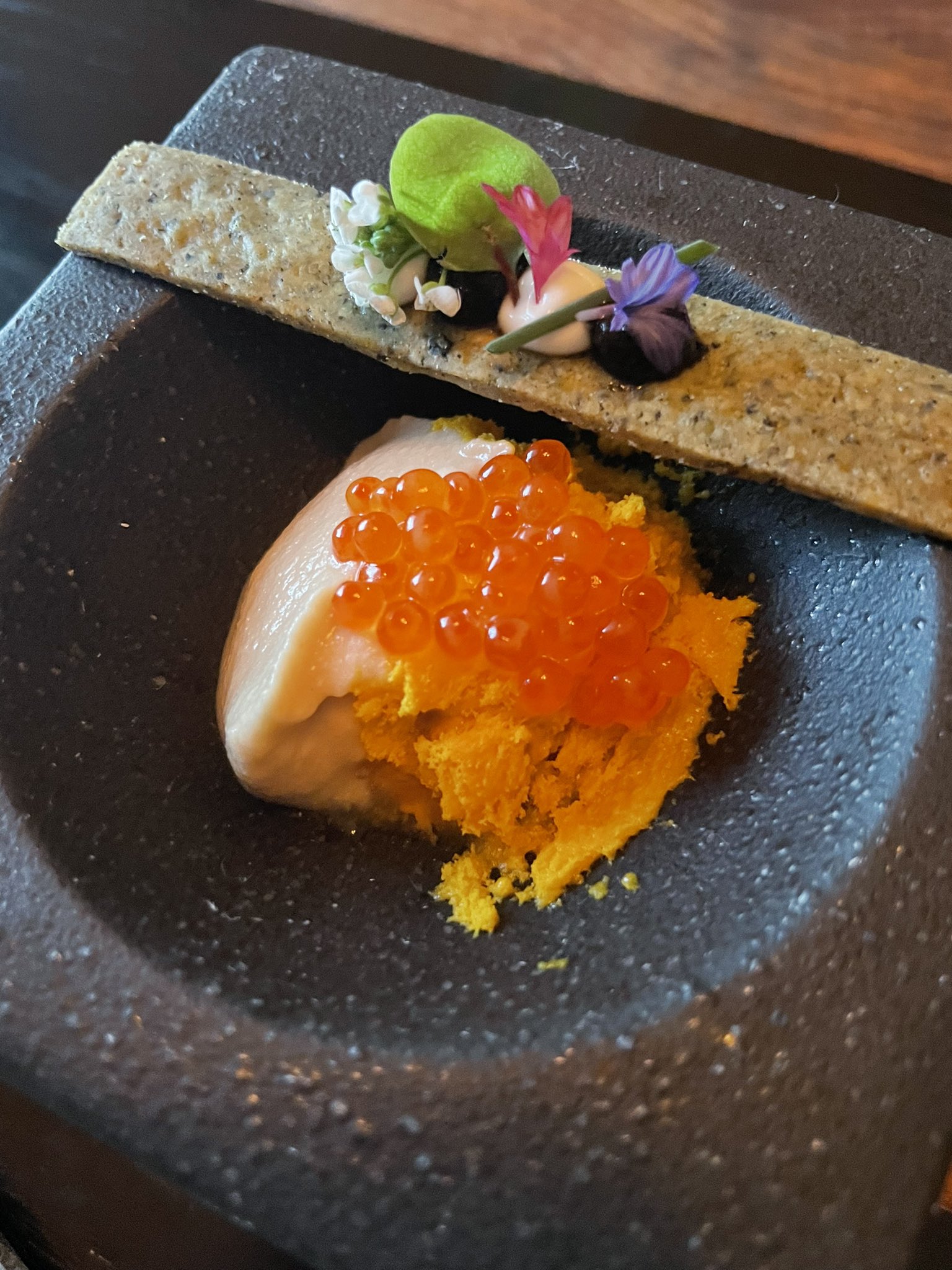
You begin with a Sakizuke of Hokkaido uni so fresh it practically sparkled. Sippery-slick, orangeish-tan and luminescent, it enveloped a carrot coconut ice and was topped with a dollop of trout eggs, every element announcing right out of the chute the chef’s skill at combining disparate ingredients into a whole greater than the sum of its parts:

Image

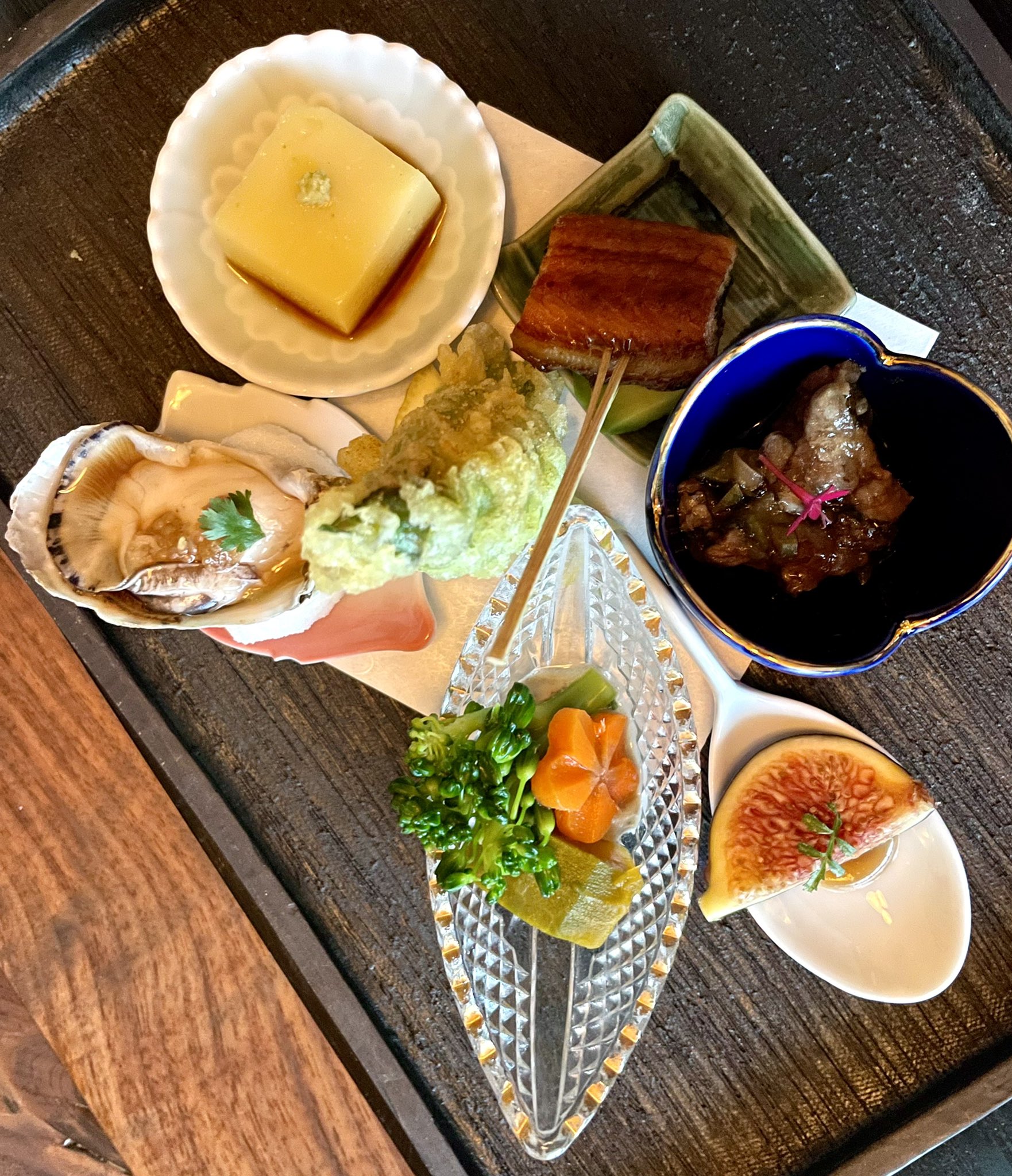
This is high-wire cooking without a net, and every bite has to be in perfect balance with what came before, which it was in the Zensai course (assortment of small bites), showcasing the chef’s repertoire:

Image

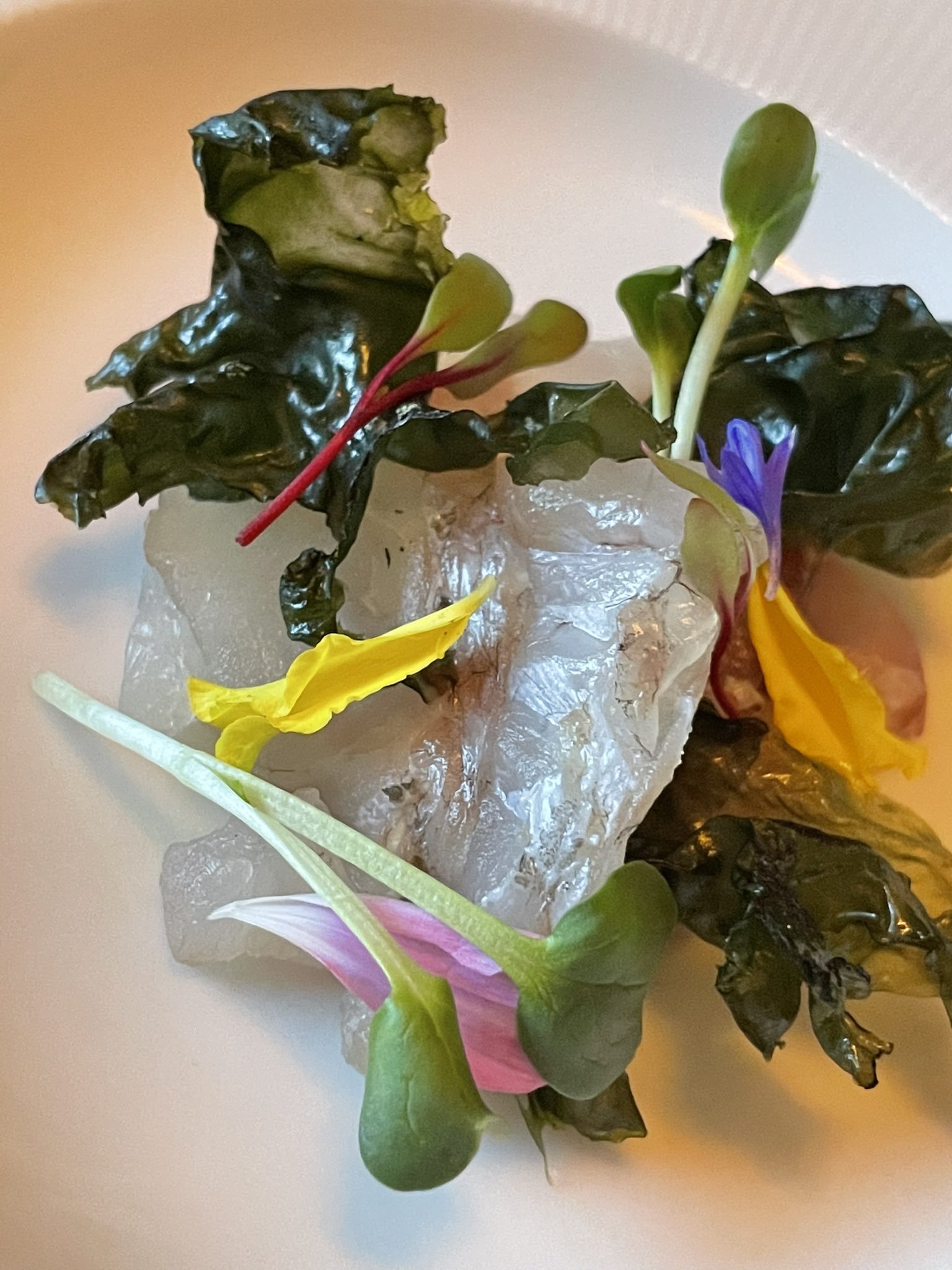
….and then on to “Modern Zukuri” course (raw fish from live seafood, usually served whole) of the kind of freshness you only find within a few miles of an ocean:

Image

…and from there your meal proceeds through an Owan (soup course), with dashi so bracing we could’ve slurped it all night long.

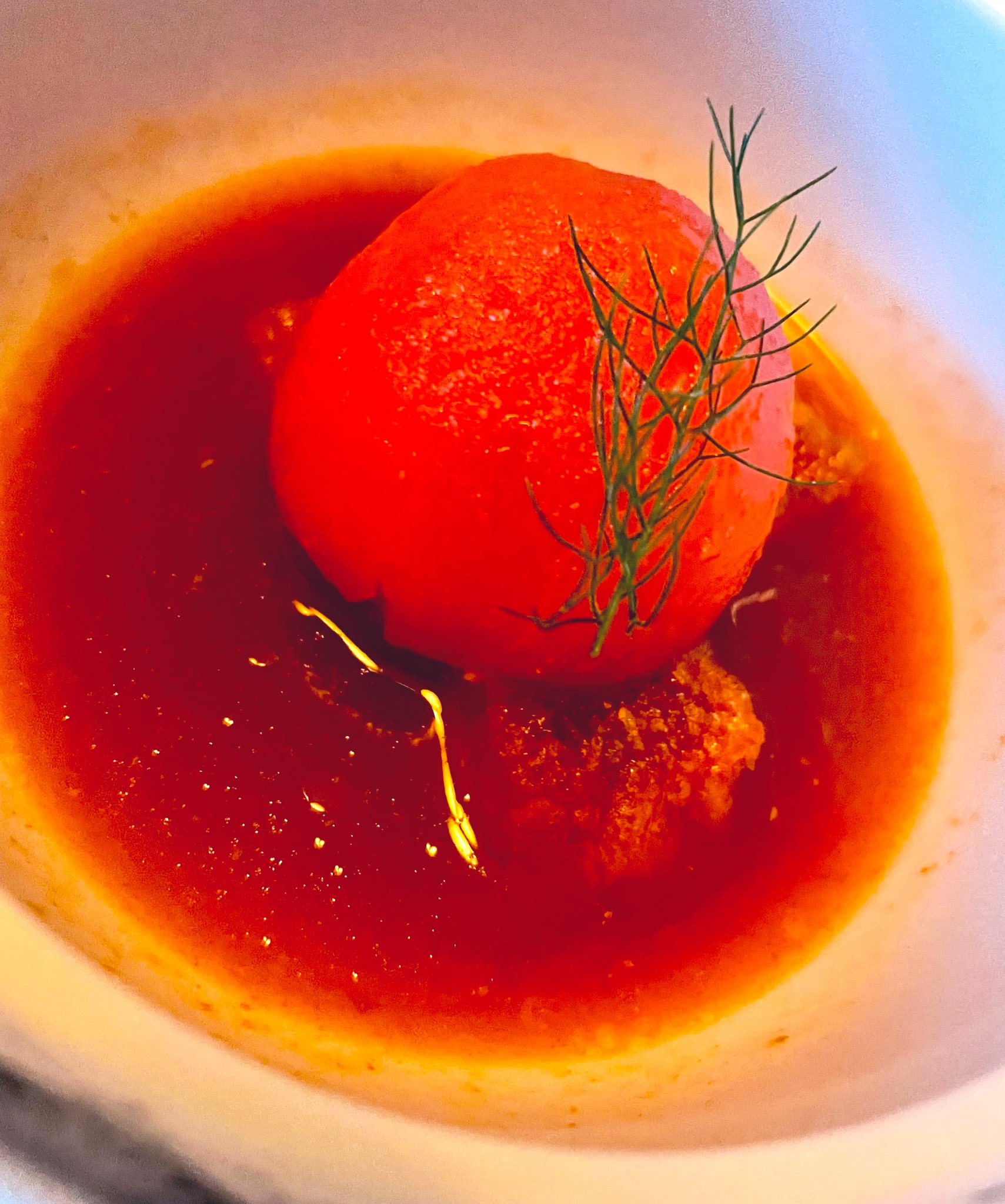
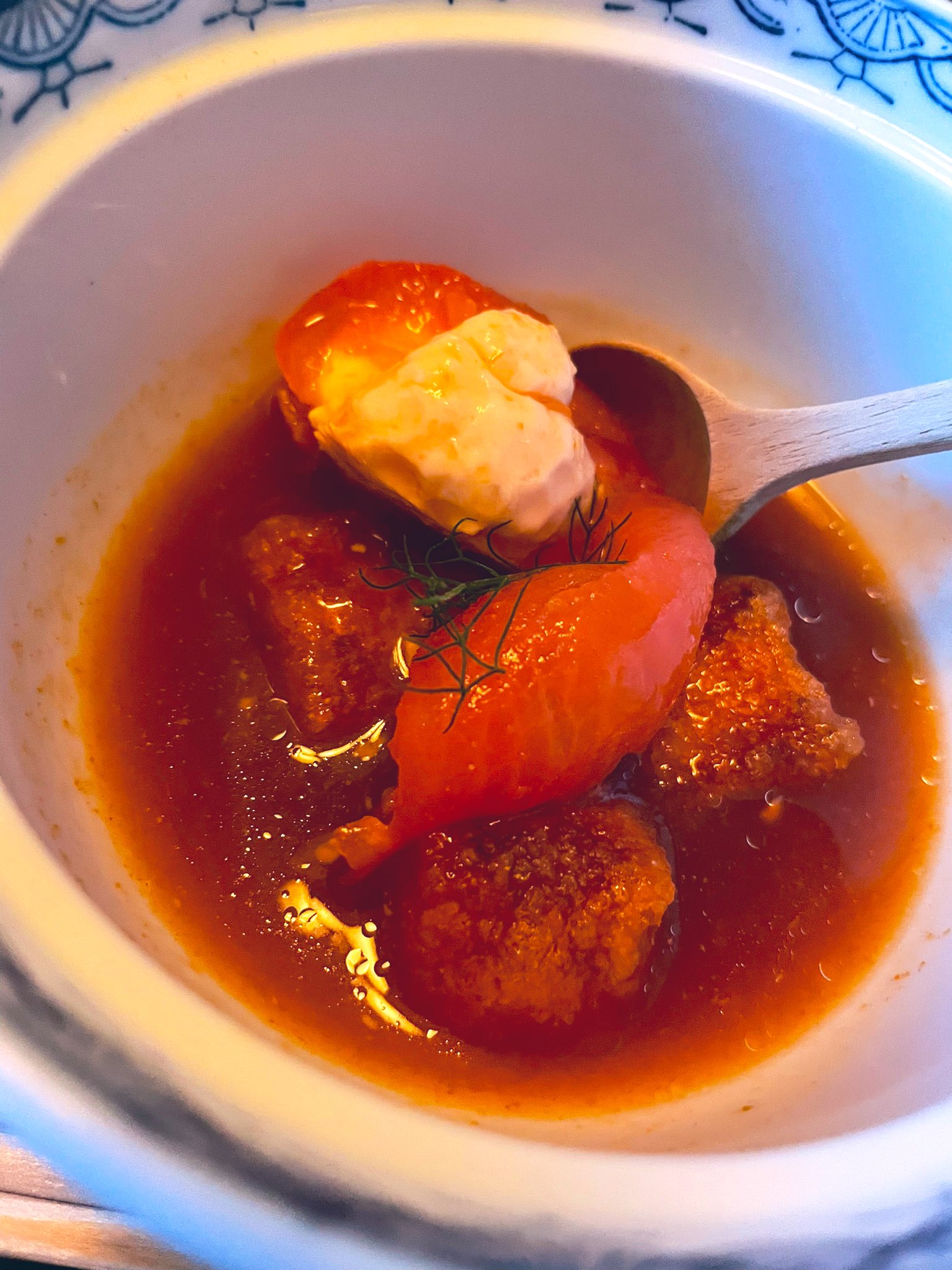
One course leads seamlessly into another: after the Tai (sea bream) soup comes twin ribbons of sashimi, followed by grilled sea trout, and then the star of the show: a Mushimono of a peeled, poached tomato wrapped around lobster, floating atop fennel mochi croutons in a tomato broth:

Image

Image

Gorgeous, complex food somehow retaining its elemental simple dignity — the best evocation of summer on a plate we can remember.

A couple of things I didn’t “get” on the menu: some weird  jelly of cactus leaves, cukes and chia seeds as the Sunomono course — usually a tart, refreshing cucumber salad. This one could compete with okra in the slimy foods Olympics. Ending the meal with with Nigirizushi (after the A-5 Mizyazaki wagyu course) was likewise odd.  “Must be a Cali thing,” I thought to myself. It sure as shootin’ ain’t a Japanese one. The signature dish of spaghetti with abalone and Burgundy summer truffles (ugh) was also about as seasonal as ski boots on a surf board, but these were but tiny blips in an otherwise extraordinary experience.

I may have had it with western tasting menus, but you’d have to be one jaded palate to ever tire of a proper kaiseki dinner. There are only a handful of restaurants in America that can compete with n/naka in delivering a meal of such subtle refinement. I’m fairly certain there isn’t a better one in Southern California when it comes to service.

The Damage:

Cost pp (including wine and sake but nothing too precious): $560. The Food Gal® says: “Loved it, but there’s definitely a California bump in pricing which is ridiculous.”

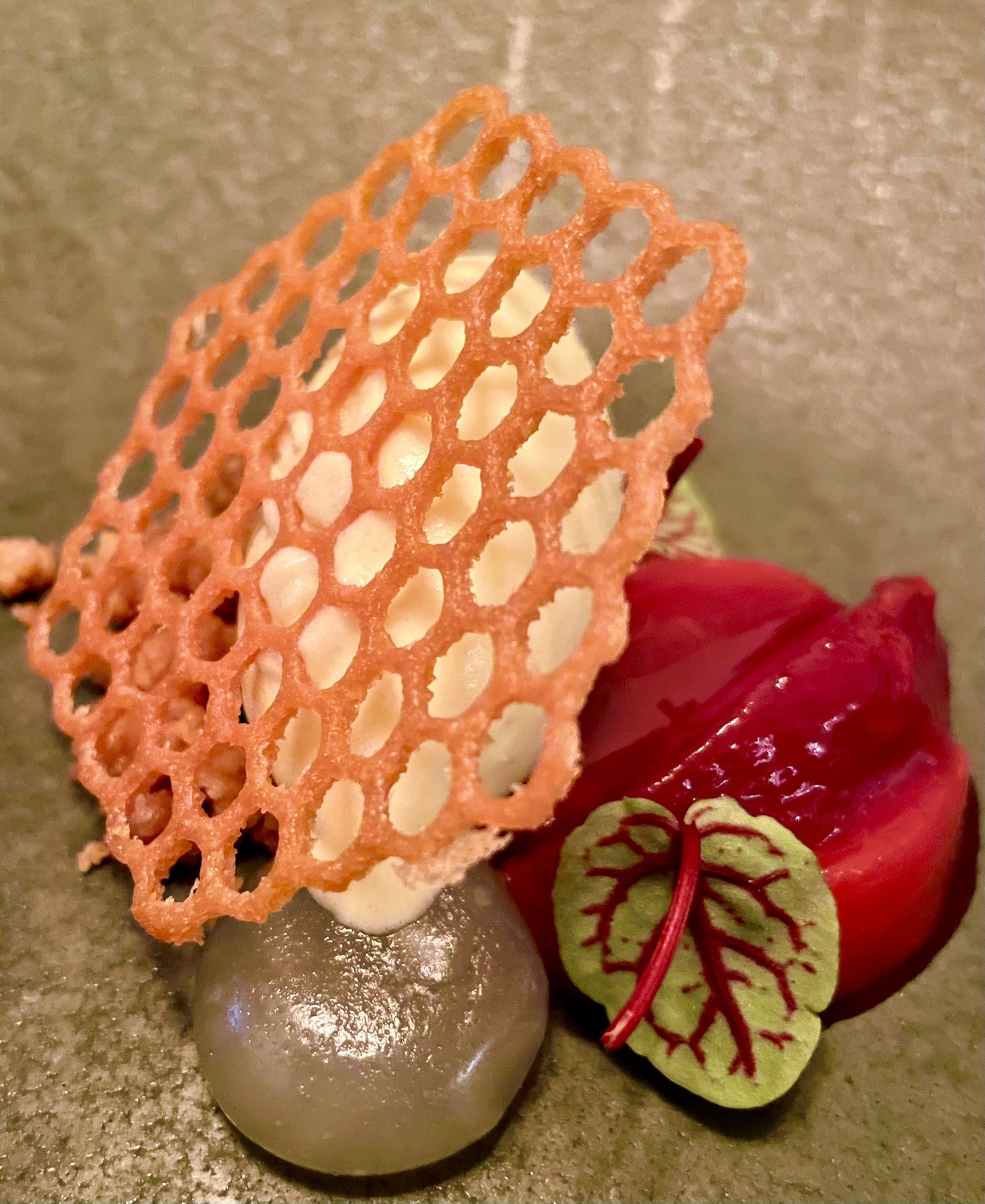
Image(Mizumono – ginger-poached plum, lavender ice cream, warabi mochi)

This is Part One of a two-part article.

The Speech

Image

Speaking in public is as natural to me as polishing off a Poulet de Bresse en Cocotte avec Champignons Glacée et Truffes with a bottle of Clavoillon Puligny-Montrachet 2018.

Between my legal career, trial work, teaching gigs and second career as a semi-famous food critic, I suppose I’ve addressed crowds (ranging from a handful to hundreds) at least a thousand times in my life.

In that last capacity, I get asked occasionally to give talks to local groups who want to hear about my career as that food dude who has spent most of his adult life obsessing over restaurants.

About a month ago, I gave such a speech to a nice group of local Rotarians. Wonderful people; nice lunch (at the always-lovely Lawry’s).

It was a version of the same talk I’ve given many times over the years, charting the culinary history of Las Vegas, my food-writing origins, and the state of our gastronomic state….all of it spiced with recommendations and tales of my many tangles with celebrity chefs.

I was sober, not hung over, and plenty prepared (not always the case years ago). But still, I rambled and forgot a few things, and it’s been bugging me ever since.

My wife (the long-suffering Food Gal®) was in attendance and gave my speech a “it was fine, you were great” review in the same tone she uses to cheer me up after another mediocre performance in bed.

So….I’ve decided to actually write out the same speech I’ve been giving for 25 years and condense my thoughts into a single 20 minute script.

There may never be a next time. Perhaps my speech-making days are over. (As I told the Rotarians: I’m a dinosaur and I know it. I was Las Vegas’s first real restaurant critic, and I’m probably destined to be its last.)

But if there is another one, if I am asked to give one more, I’ll be prepared, for once.

Image(Thanks, Rotarians, for the bio and the sunburn!)

Intro

The three questions I get asked most often when someone hears I am a restaurant critic are: How did you become one? How many times a week do you eat out? And how do you stay so thin? (turn sideways) The answers are: It’s a long story; ten times a week; and I have the metabolism of a hummingbird.

As for my weight, well, to quote the late, great Los Angeles food critic Elmer Dills (remember him?): I’m not as fat as I could be nor as thin as I should be.

Being a restaurant critic is a lot like being a horse put out to stud: It sounds like a great idea until you have to do it on command, all the time.

Anyway, being a serious critic — one who writes for money about restaurants on a regular basis — you get a lot of dudes (it’s always guys) who’ll look at you and say, “I could do that; sounds like fun No big deal. I like to eat.” It’s the same shit they say when they meet  male porn starts: “Damn dude, that ain’t work. Sign me up!” Well, like a porn star, you look at these fools and say, “No, dude, you can’t. You couldn’t keep up with me for three days.”

Of course, as with sex, the tasting is the fun part; the work is in making it fun for others. But more on that in a minute.

First, let’s talk about how Las Vegas went from “The Town That Taste Forgot” to Gourmet Capital to Celebrity Chef Hell…

So….how DID we go from the Town That Taste Forgot to one of the gastronomic capitals of the world? People like to say it started with Wolfgang Puck at Spago in the Forum Shops in December, 1992, but in reality, it began a few years earlier with a chain steakhouse….and that steakhouse was…

Anyone GIFs - Get the best GIF on GIPHY

Ruth’s Chris! Yes, as the story goes, Ruth Ertel — the founder of Ruth’s Chris — loved to gamble in Vegas. Her favorite dealer at Caesars was a fellow named Marcel Taylor. Taylor was an ambitious sort, and sometime in the late 80s he persuaded Ertel (over the objections of her board of directors) to open an outlet in Las Vegas. The thinking then was: Why on earth would anyone ever leave a casino to eat? Every hotel in those times had four different eateries: a coffee shop, a buffet, a steakhouse, and a “gourmet room” serving “continental cuisine.” (From which continent they never really specified.)

Hmmm Hmmmm GIF - Hmmm Hmmmm HmmmB - Discover & Share GIFs | Gif, Interesting gif, Cool gifs

Keeping the customer captured was on every hotels’ mind back then. The thought that people would leave to peruse the dining options at another hotel was ridiculous. The idea they might venture a mile off the Strip to eat was unthinkable.

But in 1989 Ruth’s Chris opened on Paradise Road and within a year it was the best performing venue in the chain. Other prime chain steakhouses took notice, and within a couple of years, Morton’s and Palm (back when both were actually good) had opened outposts here.

The next big moment came in 1994/1995 when Gamal Aziz (a forgotten name but pivotal in birthing Vegas’s gastronomic renaissance), brought Emeril Lagasse, Charlie Trotter, and the Coyote Cafe’s Mark Miller to the MGM. Soon thereafter, a non-celeb chef joint at the MGM –Nob Hill — was the first restaurant in Las Vegas to spend more than $1 mil on its build-out. These days, $10+ mil is more the norm.)

Steve Wynn paid close attention to the the success of Spago, and the MGM. By 1998, when he opened the Bellagio, he was ready to dial things up to “11”. As I’ve said many times: when the Bellagio opened in Las Vegas, the gastronomic ground shook in the High Mojave Desert and the whole world felt the shudder.

People take it for granted now, but the Murderer’s Row in one hotel: Julian Serrano at Picasso, Jean-Georges Vongerichten’s Prime, Olives, Aqua, and the Maccioni family, with its double-magnum of of Big Apple excellence —  Le Cirque and Circo — was like nothing ever seen, in any hotel, anywhere in America…before or since.

By the turn of the century, every national food and wine magazine, not to mention most major newspapers (remember them?) were sending writers to cover our restaurants.

(If you’ll permit me a slight detour: then and now, the lack of attention paid by Las Vegas’s mainstream media to the culinary explosion going on on the Strip, has been an embarrassment to this town since 1995. And don’t get me started on the lame-ass lip service paid by our LVCVA to our food scene — even though our restaurant scene has been, for over twenty straight years, one of the most famous in the world. Our world class dining became a big deal in spite of our local media, not because of it.)

Thus it was written in The Book of Ruth’s Chris (any biblical scholars out there?) that one steakhouse begat another and the MGM begat the Bellagio and Bellagio begat Mandalay Bay which begat the Venetian, which begat Caesars upgrading its dining options, as well as begatting all sorts of bar raising for new hotels like Aria and the Cosmopolitan.

The early aughts were the halcyon days of the celebrity chef  — Ogden, Palladin, Palmer, Batali, Flay, English, Keller (both of them), Mina, Lagasse, Andrés — when casinos would throw money at anyone famous if they’d agree to slap their name on the door. This regrettably led to to the Giadas, Ramsays, Changs and Fieris showing up (who were not, let’s say, as dedicated to quality as the original pioneers), but as with any fad, you have to take the good with the bad.  On the whole, though, it was a net gain for all concerned, and going to Vegas just to eat (something else that was unthinkable in 1995), became a trend in its own right in the first ten years of this century.

A word or two about celebrity chefs: I’m of two minds about famous chefs: on the one hand, they made this town. On the other, most of their restaurants are a joke, the culinary equivalent of an Elton John picking up a fat paycheck for a show where others sing his songs for him. Without celebrity chefs we’d all still be swooning over the Circus Circus Steakhouse; now that they’ve made their mark (and their cash), most of them should slink back to whatever TV studio keeps them employed. Just the other day, I had a colleague ask me about Bobby Flay’s new Italian restaurant, because, he said, “My wife likes Bobby Flay.” (eye roll) Summoning all the tact I could muster, through clenched teeth I muttered: “Bobby Flay is to Italian food what Chef Boyardee was to noodles.”

Chicago Med GIF by NBC - Find & Share on GIPHY

Famous chefs (most of them) are just brands. They don’t cook; they don’t even run businesses. They just sell their names for cash. Cash that you pay. For the privilege of them not cooking.

What started as the raising of the bar in a few huge hotels, got taken to the Stratosphere (the atmospheric one not the pathetic one), when the French Revolution took hold between 2005 and 2010. In short order, we saw three of the world’s greatest chefs — Joël Robuchon, Guy Savoy, and Pierre Gagnaire — plant their flags, directly from Paris, and our gastronomic revolution was complete. By 2010 even snooty New Yorkers and imperious Parisians were taking us seriously.

Now, let’s be honest here: did all this fame show up because of our wealth of natural resources? Our verdant food culture? Amber waves of grain and pristine seafood? Nope, they came because there was gold in them thar hills and every one wanted a nugget. 40 million mouths are a lot to feed, and unlike Orlando or Branson, MO, the Vegas tourist is flush with cash and ready to spend it on experiences they can’t get there or in Paducah. (I don’t know what people spend their disposable income on in Branson and Paducah, but I’m pretty sure it isn’t overpriced caviar and champagne.)

These fancy schmancy restaurants weren’t for everyone, but they represented an aspirational level of hospitality you couldn’t find anywhere but Vegas! Baby! And it was available to all! Unlike intimidating New York, snooty Paris, or self-impressed ‘Frisco.

And talk about the pendulum swinging: in about a decade (95-‘o5), we went from 99 cent shrimp cocktails and cheap buffets to being the most expensive high-end restaurant city in the country. Not to harp on the sex thing again (but it is fun isn’t it?), but some Vegas menus (and wine lists) should be served by a proctologist with a side of K-Y Jelly.

The trouble with reaching the top is, like the New England Patriots, you have nowhere to go but down….and that, ladies and gentlemen, is where we find ourselves today. To be sure, the rising tide has raised all boats, but staying afloat, will be harder and harder in the coming years. Big deal meals are not the big deals they used to be, and the quadruple whammy of aging Boomers (who fueled the 90s boom), fading celeb chefs, the Great Recession, and the past two pandemic years have made the future of fine Strip dining very uncertain…and that’s where our local dining scene has stepped up to the plate.

While the Strip may be in a slump, new things are constantly happening in Summerlin, Chinatown, and Downtown. And I’m happy to report there are now even good things to eat in Henderson, of all places (Saga, Rebellion Pizza). Where there used to be only a sprinkling of local spots and miles of franchises, now you have locally-owned, affordable, chef-driven restaurants making big splashes all over the ‘burbs.

Even if peak Vegas has passed, we still boast the best steakhouses in the world of any city that isn’t New York or Tokyo; our Chinatown is a bang-for-the-buck gem; and female chefs (like Jamie Tran, Gina Marinelli, and Nicole Brisson) are dynamos powering our local restaurant resurgence. And at the drop of a hat, I can start waxing poetic about our French bakeries, coffee scene, gastropubs, and pizzas galore.

And you can criticize Millennials, Gen-Xrs and the Instagram/Tik Tok generations all you want, but they’ve been raised to demand better ingredients and better eating and that genie ain’t going back in the bottle.

Becoming a Critic/Doing the Work

Okay, you’ve had your history lesson, but who’s this fellow giving it to you?

To answer the first question I posed at the top of my remarks, I’ve been covering the Las Vegas food and restaurant scene since 1995. When I started I was it: there were no others writing about food with any regularity or even the pretense of journalistic objectivity. I’ve never been especially prescient in anything (as my ex-wives can tell you), but one thing I did see coming down the pike was the sea change about to envelope our food and beverage industry.

As they say: In the land of the blind, the one-eyed man is king. So I started knocking on doors and asking media outlets if they were interesting in having someone cover/critique all these fabulous new eateries that were invading our humble burg…first in a trickle, and then in a tidal wave. No one was interested except Nevada Public Radio. I aced the audition (and already had a face made for radio), so I started my radio commentary years with a tongue-in-cheek admiration for Martha Stewart telling me what size tomatoes to buy.

 My first gig on KNPR radio was a sweet one for 15 years. From there I moved into segments on our local CBS and NBC affiliates, wrote for every publication in town except the Review Journal, and eventually ended up writing 8 editions of Eating Las Vegas – The 52 Essential Restaurants, which published its last edition in 2020.

Basically, I got into food writing because I wanted to be a consumer advocate. At their core, that’s what any critic is. When it comes to food, we want to guide you to where best to spend your hard-earned cash, and at our best, we teach you something while we’re doing it.

You may not like my advice on tuna tartare or tacos, but I share it from a storehouse of experience going back decades now, and from trips to Tokyo to Tuscany. To be a good food critic you need to eat a lot, read a lot, cook a lot and travel a lot. Thankfully, I’ve been able to do all four. (That hummingbird thing really helps). Comparison might be the root of all unhappiness, as Cicero said, but it’s also informs every good critic’s opinions.

Food writers are dinosaurs and we know it. Once people could take and access high quality pictures of potential meals on their phones, our goose was cooked. But we still bring something to the table. When you peruse social media for pretty pics or recommendations, all you get is crowd-sourced opinions based upon personal preferences. All taste is subjective, of course, but having done the work, traveled the globe and eaten everywhere (especially in Vegas), what I offer is the same thing Anton Ego did in the movie “Ratatouille”: perspective. An Instagrammer will only tell you if they liked something; a good critic will tell you why you do.

At this point I’m pretty much the professor emeritus of Vegas food writers, and I content myself being an influencer, occasionally writing blog posts at www.eatinglv.com (like this one!) and spreading the love for all the worthy eateries I can find.

I’ve been very lucky: I’ve had a front row seat for the biggest culinary revolution ever to happen to an American city. In spite of my prickly opinions and prejudices, I have enormous respect for people who work in restaurants. To be a good critic you have to be in love with your subject and I am. I have been in love with restaurants since I was eight years old and my passion has never waned.

I am in love with them and always will be because a good meal, shared with family and friends, is the loveliest expression of our common humanity that I know. As the great food writer Alan Richman once said: “Food is life itself, the rest is parsley.”

standing ovation oscars GIF by The Academy Awards

Lunching Las Vegas

Image

Yours truly is a world-class luncher. Dejeuner makes my day. I revel in my midday repasts like Andrew Cuomo hovering over a female cheek.

Lunch is when my appetite shines — senses are keenest, taste buds sharpest, and my bonhomie in its fullest flower. If breakfast is only good for thinking about lunch, then lunch does its best work by making you forget about dinner. And couldn’t we all do with a little less of the latter?

I didn’t always think this way. Back in the day I indulged in fabulous feasts lasting deep into the night. My first Michelin 3-star meal (at Le Grand Vefour in the early 90s) started before 8 pm and didn’t finish until after midnight. My early excursions to Paris, New York, ‘Frisco, Lyon, Rome and Milan were filled with 8 o’clock dinner reservations at nothing but the toniest supper spots.

But time passes and what once seemed exotic now feels tedious. My upcoming trips to Europe will concentrate on where to get the best midday meal, mostly with locals, not a bunch of tourists with more money than manners, whooping it up after dark.

But I digress.

We are here to discuss midday meal suggestions…but permit me another small digression before getting to those.

Lunch is an urban invention. Back in the day (way back in the day), the midday meal was the biggest – when you ate the most (after a hard morning’s labor), and giving you sustenance for an afternoon of grueling work.

The actual word “lunch” stands for a small something you can hold in one hand, kind of like half a sandwich, or David Chang’s brain.

As people became less agrarian, the middle meal kept moving to later in the day. By the nineteenth century, according to this historian, after the invention of electricity, all the proper English were “dining” after 5:00, so copycat Americans followed suit. Thus, with such hoity-toity pretensions (along with the rise of the industrial working classes) eating at noon moved from being our main fuel to being merely a pit stop in the daily rat race. Pity.

‘Tis sad because lunch – and by “lunch” we mean a proper, sit-down lunch – is the best time of the day to gather yourself, reflect on a morning’s hard work, and gird your loins for whatever action lies ahead. Not to be crude (okay, to be crude), but sex on a full stomach is as much fun as running the high hurdles with hemorrhoids.

Gluttony and fucking are as incompatible as chocolate and cheese. Exhibit A: Have you ever heard of anyone getting laid after a huge Thanksgiving dinner? (I REST MY CASE.)

I mean who even thinks about bumping uglies after taking down six jumbo shrimp, three dinner rolls, a bleu cheese wedge, a giant rib eye, potatoes au gratin, two bottles of wine and three desserts at a late supper? (PROVE ME WRONG!)

Stuffing yourself after dark is sheer lunacy. It also makes you fat. Something the good ole Romans understood two thousand years ago:

“[Romans]….believed it was healthier to eat only one meal a day…They were obsessed with digestion and eating more than one meal was considered a form of gluttony. This thinking impacted on the way people ate for a very long time.”Caroline Yeldham

Maybe that’s why I’m at Cipriani every Friday, chowing down on one simple, spectacular lunch after another:

Image

End of history lesson.

Las Vegas isn’t a lunch town. Few towns are these days. Bureaucrats eat at their desks, real estate types are driving around all day, lawyers are nailed to their computers, and casino execs do nothing but fret into their phones. With no white collar infrastructure to sustain a proper lunch environment, the pickins are slim when it comes to eating well at noon.

But do not despair mon ami, lunch is not a total loss. There are dining gems buried amongst the fast food zircons. You just need to know where to look.

And not to brag (okay to brag) but I probably eat better lunches than anyone in town.

So here they are, my highly vetted, very personal list of the best place for a midday meal in Las Vegas, with commentary, of course.

Crème de la Crème

Image(Friday vibes)

Note: Many, many places that used to open for lunch on the Strip are now closed. (This includes some former favorites like Spago, Jaleo, Delmonico, Bouchon, et al.) Good luck finding a decent sit-down midday meal in any big hotel…which is one of the reasons for this post.

Brera/Matteo’s – these sister spots have some of the best pizzas and pastas in town. Matteo’s downstairs at the Venetian is the quieter alternative, without music so loud you can’t hear yourself eat. Some of the pies upstairs at Brera will take your breath away, but fuggidabat any conversation until the stupid cruise ship music takes a break.

Brezza – for the time being, Nicole Brisson’s showplace is a 7 day lunch and dinner affair. Her extraordinary pastas need no introduction, and she even does an outstanding burger:

Image(BREZZA’s boffo burger)

(Update: As we predicted two weeks ago, BREZZA has now“postponed lunch” after serving it for less than a month. We knew it was too good to be true)

Cipriani – I eat here every week for a reason.

Capital Grille – the best chain steakhouse. Good steaks, great service, fabulous view. Some of the meat is standard issue, and the menu never changes, but it is huge and cozy at the same time (no mean feat that), and gals love it. Also good for business meals.

Milos – love it or hate it, but the Venetian has more decent midday meal options than any Strip hotel. It also now has our premier Greek seafood restaurant. Not quite the lunch bargain it used to be, but still a deal. Fabulous fish.

Marche Bacchus – still soothing after all these years. Still a wonder of wine and the best al fresco in the ‘burbs.

Wally’s – our newest fine wine/destination dining spot might have the best prices in town for expensive fermented grape juice. The store is a bargain hunter’s dream — if your idea of a bargain is getting a (normally) $400 bottle for two bills. Chef Eric L’Huillier is in charge of the kitchen, and is in imminent danger of turning this place into Las Vegas’s greatest French steakhouse.

Downtown’s Fabulous Food Faves

Image

Note: I work in downtown Las Vegas, and live two miles from my office, so you could say I eat out here All. The. Time. I eat out so much in DTLV I get bored with most of these — not because they’re not good, but because I’ve memorized the menus.

Carson Kitchen – still humming after seven years. Small menu; superb service.

DE Thai Kitchen – anything off the secret menu (which ain’t so secret) is great. So is the stuff not on the secret menu, like this incendiary green papaya salad:

Image

EAT. – get there early for one of Nat Young’s soul-satisfying breakfasts, serious sandwiches, and huevos motulenos.

8East – not so convenient unless you’re staying in the Circa hotel, but Dan Coughlin’s food is worth searching out.

Esther’s Kitchenwait for it…wait for it…this place is so crowded no one goes here anymore.

Letty’s – tacos, tacos y mas tacos!

Saginaw’s Deli – I love Paul Saginaw’s food, but there’s only so much deli my waistline can take.

7th & Carson – There is nothing surprising on the menu (except the stellar “Irish Breakfast”), but every time I eat here I walk away impressed by the execution.

Soulbelly BBQ – the No.1 barbecue in town and it isn’t even close. Excellent, out-of-the-ordinary sauces and one of our best burgers, too.

Chinatown

Image(Wai and Connie, still going strong at Big Wong)

Note: Chinatown (both the original on Spring Mountain Road and the new one popping up on South Rainbow) are their own thing. Most joints are open for lunch and dinner and everything in-between. Here are a few favorites, but there are dozens more where you can’t go wrong.

Big Wong – if bang for the buck was the only criteria, this Chinatown mainstay would be the best restaurant in town.

Chanko Shabu & Izakaya – swish swish your way to above average izakaya fare in a dark, clubby setting.

China MaMa – our best Chinese restaurant. That’s all there is to say.

Curry Zen – The Food Gal’s® fave, for good reason. Simple rice, Japanese curry, and a few gyoza are just the thing when you need to munch and run.

Image

District One – Let’s go get the oxtail soup (above), she says, and we willingly comply, even if we’re there for the Vietnamese carpaccio.

Lamaii – open for lunch, even on weekends. Top flight Thai. Incredible wine list priced to sell.

New Asian BBQ & Noodle – the second best dim sum in town (after Rainbow Kitchen).

Shanghai Taste – the best xiao long bao until someone proves to me otherwise:

Image

Shang Artisan Noodlenot actually in Chinatown, but that’s how we’re listing it. Extraordinary soups.

Rainbow Kitchen – giving China MaMa a run for its dumplings in the Chinese food supremacy department.

Rincon Buenos Aireswe forgot about RBA until we popped in for lunch a month ago. We had also forgotten about how piquant their chimichurri sauce is, and how the “lomo completo” sandwich (below) is one of the best meat and carbo loads ever:

Image(Complete with meat that’s tough to beat)

Weera Thai Kitchen – speaking of piquant: it’s tough to beat this en fuego menu of Thai street classics. Not for gringos and that’s the way we like it.

Outliers of Excellence

Image

Note: These are not exactly convenient unless you live near their ‘hood, but if you do, you should be ducking in to one for a midday bite on a regular basis.

Jamon JamonI don’t know what behooves Rafael Salines Catalá to stay open weekdays for lunch but I’m damn glad he does.

Image(Hot diggity Danish!)

Saga Pastry + Sandwich – is finally unshackled by Covid restrictions, and is hitting its stride with Scandinavian open-faced sandwiches and a Danish hot dog to beat the band. Those tiny shrimp alone are worth the trip to Henderson.

The Legends Oyster Bar & Grill – opened in the midst of the pandemic, in a weird-ass location with failure written all over it. Hopes are higher for this incarnation — the seafood is just too damn good. Classy/funky little build-out, too (sea above).

Win Kee Hong Kong Noodle & BBQ – Chinese ‘cue, soups and seats that make you think you’re in a Hong Kong alleyway. Criminally cheap, too.

>>>>>>>>><<<<<<<<

So why am I such a lunch lush these days? Some of it has to do with age and digestion — I find big evening meals simply don’t sit that well with my iron stomach, and can impinge on a good night’s sleep, even without wine.

Secondly, when I travel, I’ve found the great dining destinations of Europe to be friendlier, cheaper, and easier to access for the midday meal. Even a three hour repast at some destination dining palace leaves you plenty of time to walk it off and see the sights.

In Vegas, quite frankly, dinner on the Strip bores me. Have you tried parking there recently? MGM properties are the worst and Caesars isn’t far behind. Valet now costs $25+ at most hotels, and even on weeknights, getting in and out of the garages on the south Strip is a pain in the ass. (It was a pain in the ass even in the best of times, but at least it was free.)

Since 1998, I probably haven’t gone 4 weeks without stopping into the Bellagio. Now, I haven’t been in 6 months and still don’t see any reason to return.  What’s the point? To watch drunk day-clubbers stagger around?

The only reason to hit Caesars is Restaurant Guy Savoy. (Who exactly gets a boner over Bobby Flay doing Italian these days? No gastronome I know.) The shitshow that is Mandalay Bay? Are you kidding me? All the good places in these former dining destinations are either closed, on the rocks, or open for dinner, “Thurs-Sun 5 pm-10 pm.” Yeesh.

There’s a reason you find me these days hanging out at the Venetian/Palazzo, Wynn/Encore, and Resorts World and those reasons are: welcoming environment(s), ease of access, and most of all, good food…available at noon.

See you at lunch.

Image(See what you’re missing by eating at your desk?)