HATSUMI

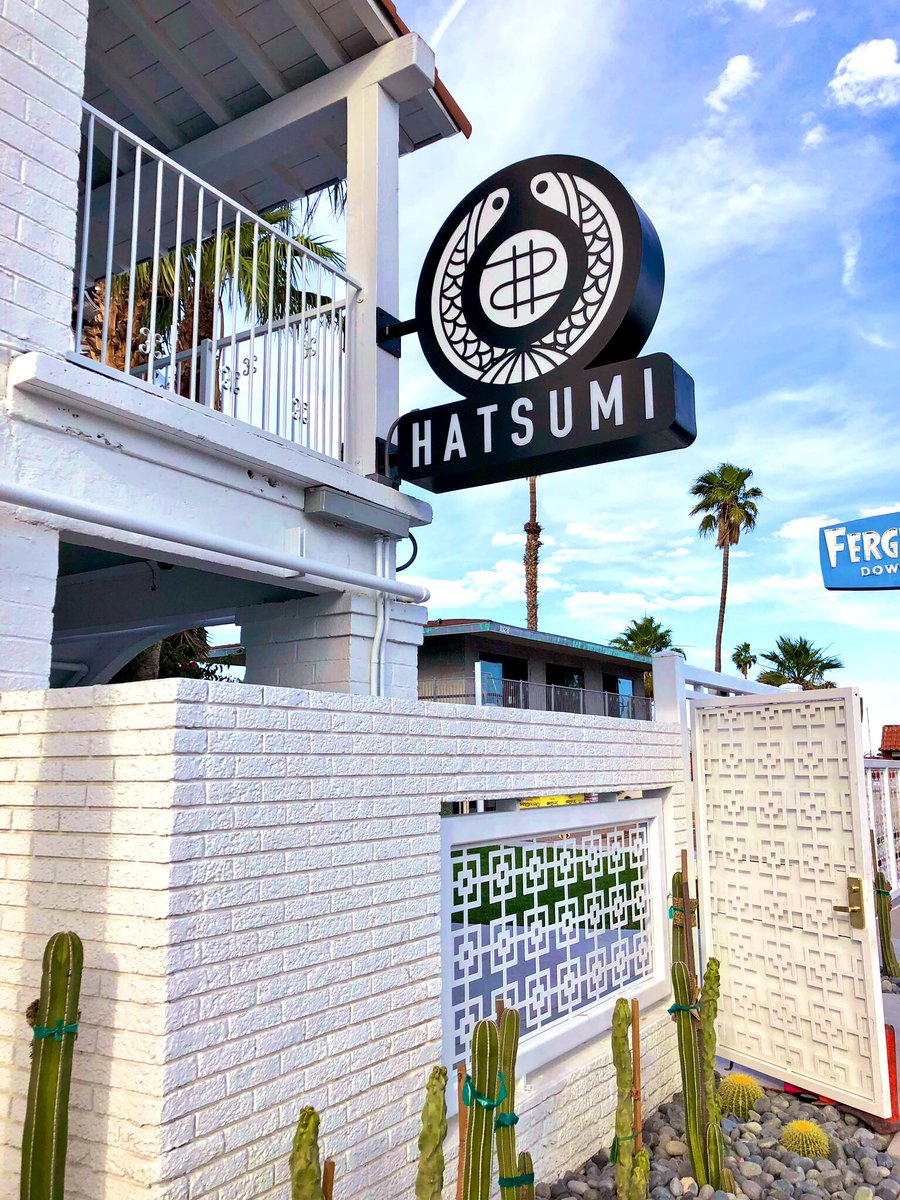
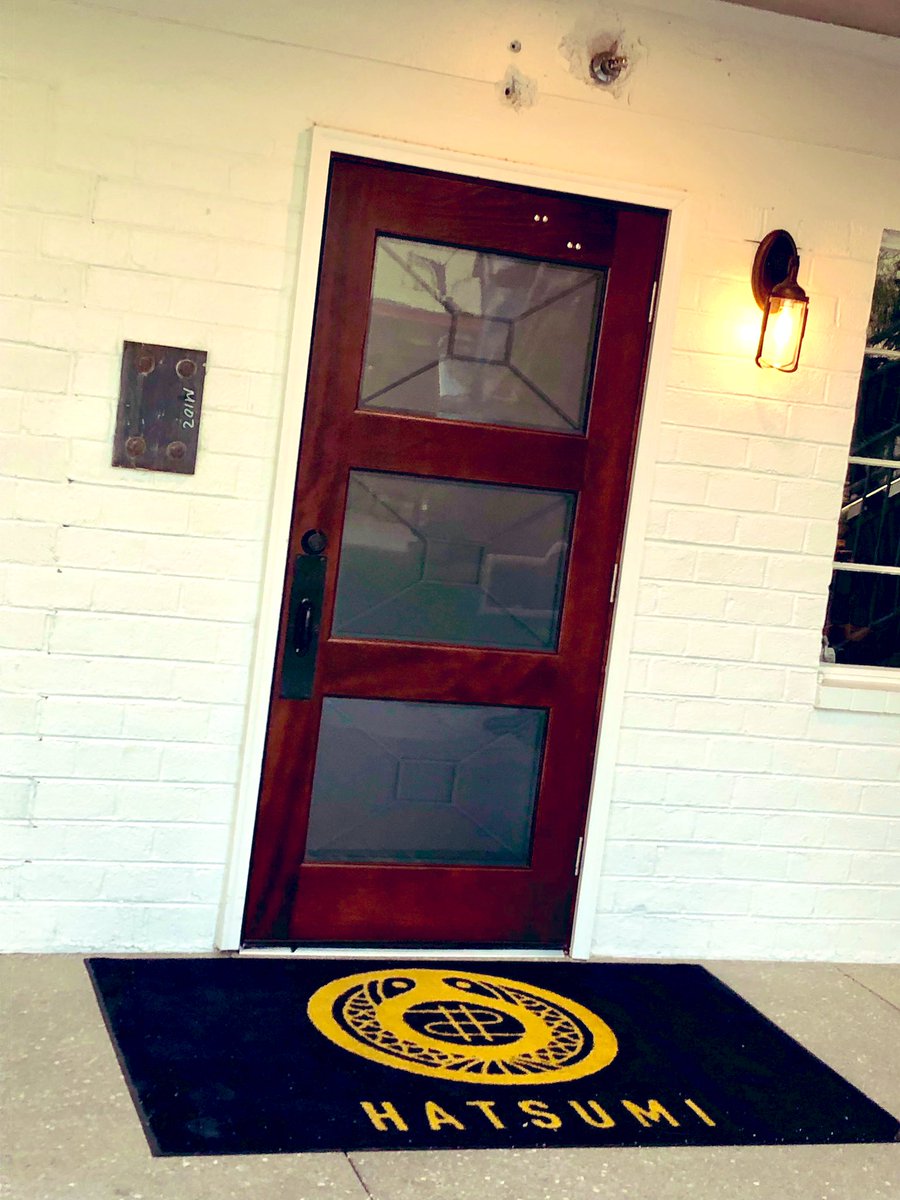
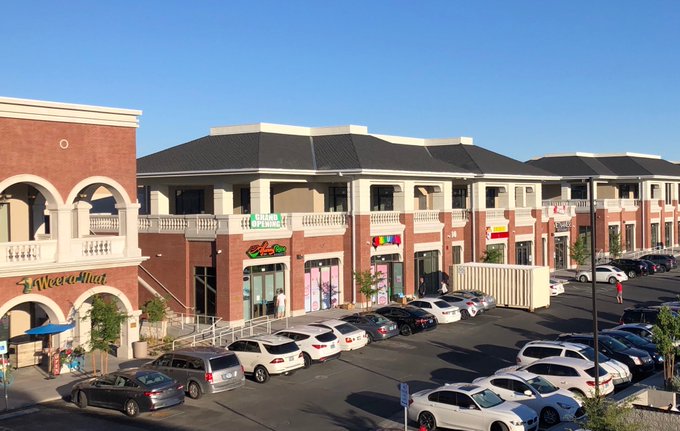
There are three things you’ll notice about Hatsumi as you approach it: 1) the strange neighborhood it’s in; 2) the walled-off fortress (inside a refurbished motel, above) that encases it; and 3) its nondescript entrance (below). None of these are exactly welcoming. All of them may give you pause before you enter.

Regardless of how you feel about the design, take the plunge pilgrim, because excellent eats lie within, courtesy of the Downtown Project’s latest über-cool real estate venture.

Before we get to praising the food, let’s address the elephant in the room. Can we come right out and say it? The DTP (the organization created by Tony “Mr. Personality” Hsieh to revive downtown) has been a disaster, restaurant-wise. Its attempts to create a viable food and restaurant scene has been a slow, painful, uphill climb, with more do-overs than my love life. I’ve lost track of the failures, the buy-outs and the re-boots of various places, and Hsieh’s real estate maneuvers have stultified, rather than revitalized, much of the neighborhood.

After ten years of dumb ideas and over-hyped music festivals, downtown continues to struggle due to its primary problem: a lack of residents to support its non-casino businesses.

What Hsieh and his sycophants have done, however, is create a cult of insiders who treat downtown Las Vegas like a private club. There’s really not enough of them to support more than a few bars and restaurants, but the whole point of the Fergusons (the walled-off space housing Hatsumi) is that there may be enough of them to turn this renovated motel space into a foodie-centric hipster hangout…er….uh….excuse me…a “curated market cultivating local music, art, nature, food and creatives/makers.” (Think Container Park without the smell of desperation.)

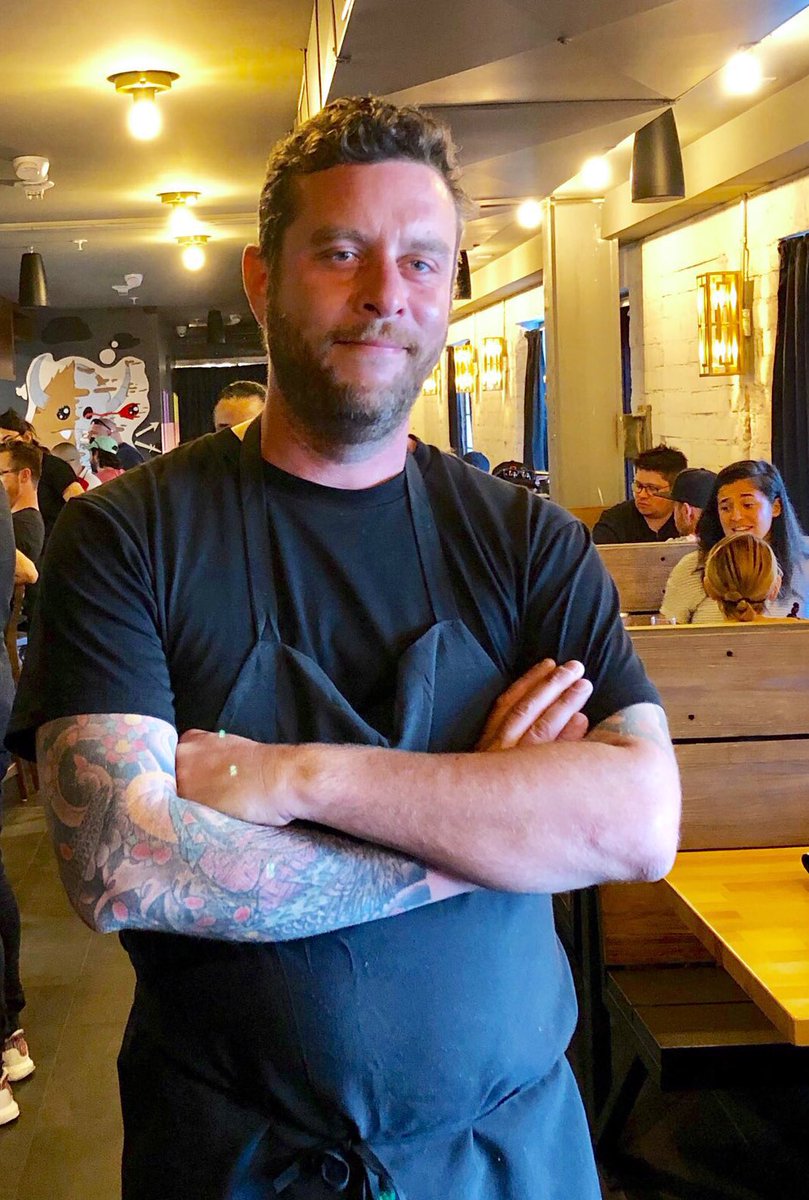
To do this, the DTP has recruited Dan Krohmer — one of our most successful local chefs (cf. Other Mama) — to create a food and drink scene compelling enough to make these folks want to flock here. (Krohmer, apparently, is one of those “creatives” who doesn’t mind being called by an adjective.)

Approaching the courtyard, you’ll see some giant, upended truck sculpture that signals you’re in the land of Burning Man. Impressive it is, but nothing gives you a clue that a robatayaki/yakitori restaurant (one operated by a bunch of gaijin, no less) lies behind it.

This is intentional. The whiff of exclusivity is everywhere. You’re just supposed to know, you know? In other words, if you have to ask about Hatsumi, you’re probably not hip enough to be here.

When it comes to Krohmer’s food, however, there are plenty of reasons to raise your coolness quotient.

Once you enter, things start to make sense. The elongated, skinny room is situated sideways with the kitchen and bar right in front of you, just a couple of steps from the doorway. To the left and right are comfortable booths, and the left-to-right wide space is surprisingly comfy and welcoming.

Krohmer’s other restaurant, Other Mama, is all about seafood, and he’s received much local acclaim for his unique spin on sushi, crudo and all things swimming. With Hatsumi, he’s ditched the yanagi for a yaki in order to marinate, skewer and grill a host of bite-size Japanese delicacies —  the sort of quickly-consumed food you find underneath train tracks all over Tokyo.

What you’ll start with involves either a cocktail, beer or sake. The wine list is practically non-existent — just like in Japan. The selection of sakes is impressive, and priced for all budgets. (I make no claims of brewed rice beverage expertise, beyond knowing that, as with wine, you rapidly hit a point of diminishing returns as you go up in price.) Bottles are offered in both 300ml and 720ml sizes, making light imbibing a breeze if you’re a party of one or two. Nothing goes better with this food.

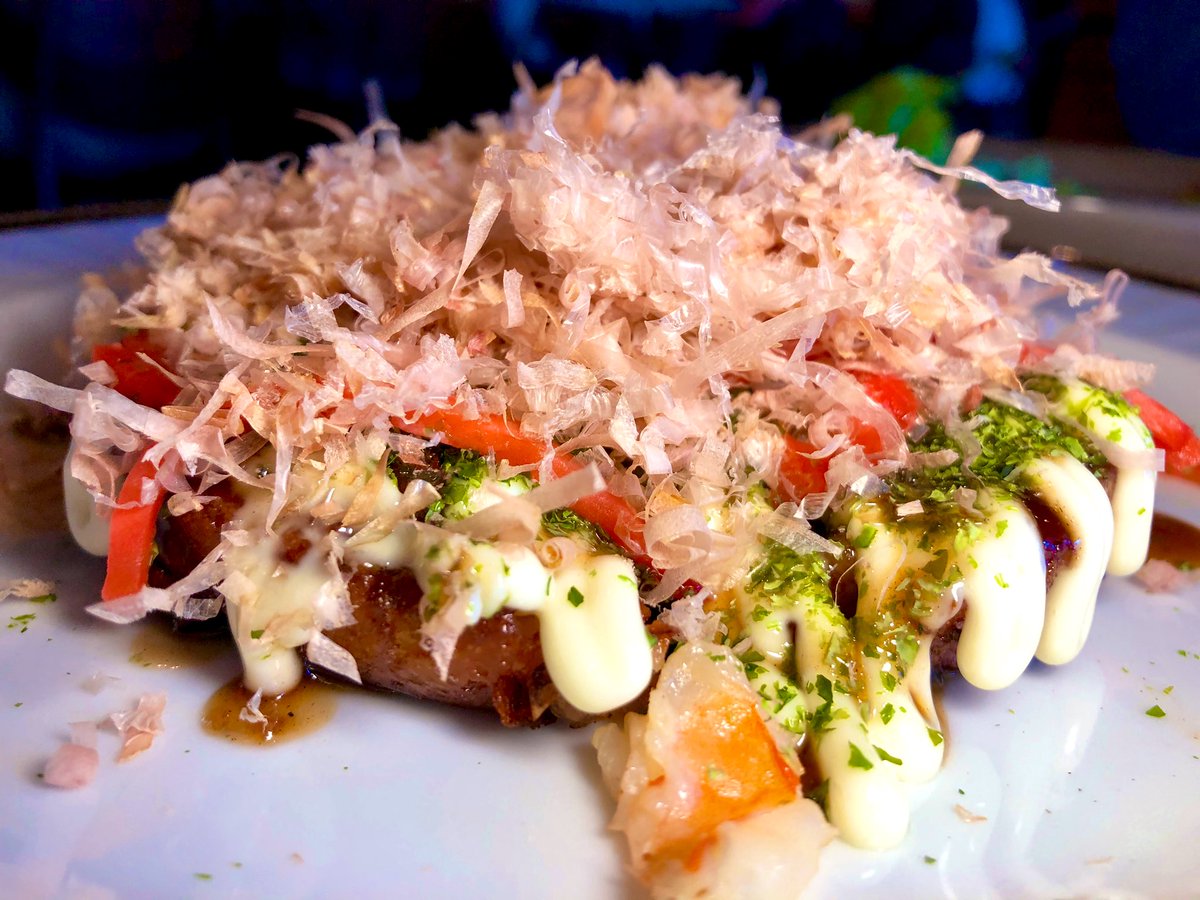
(My oh my okonomiyaki)

If you want to turn completely Japanese, you’ll head straight to the okonomiyaki — a savory cabbage pancake here spiked with shrimp and bacon. It may not be composed with the same tenderness as the ones as Tatsujin X or Raku, but it pushes all the right umami buttons. From there you should proceed to the breaded and deep-fried eggplant katsu, which will have even eggplant haters reflexively grabbing for second bites.

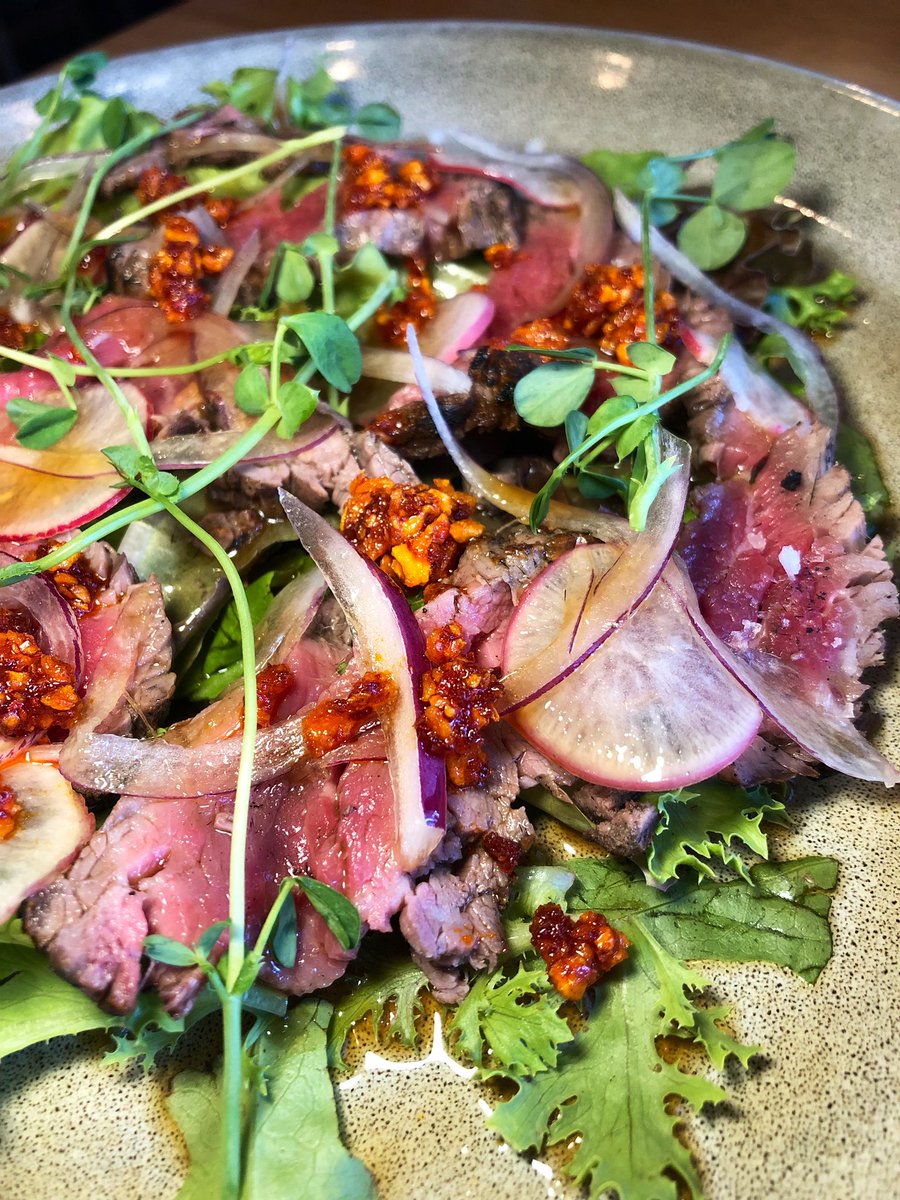
(Tantalizingly terrific tataki)

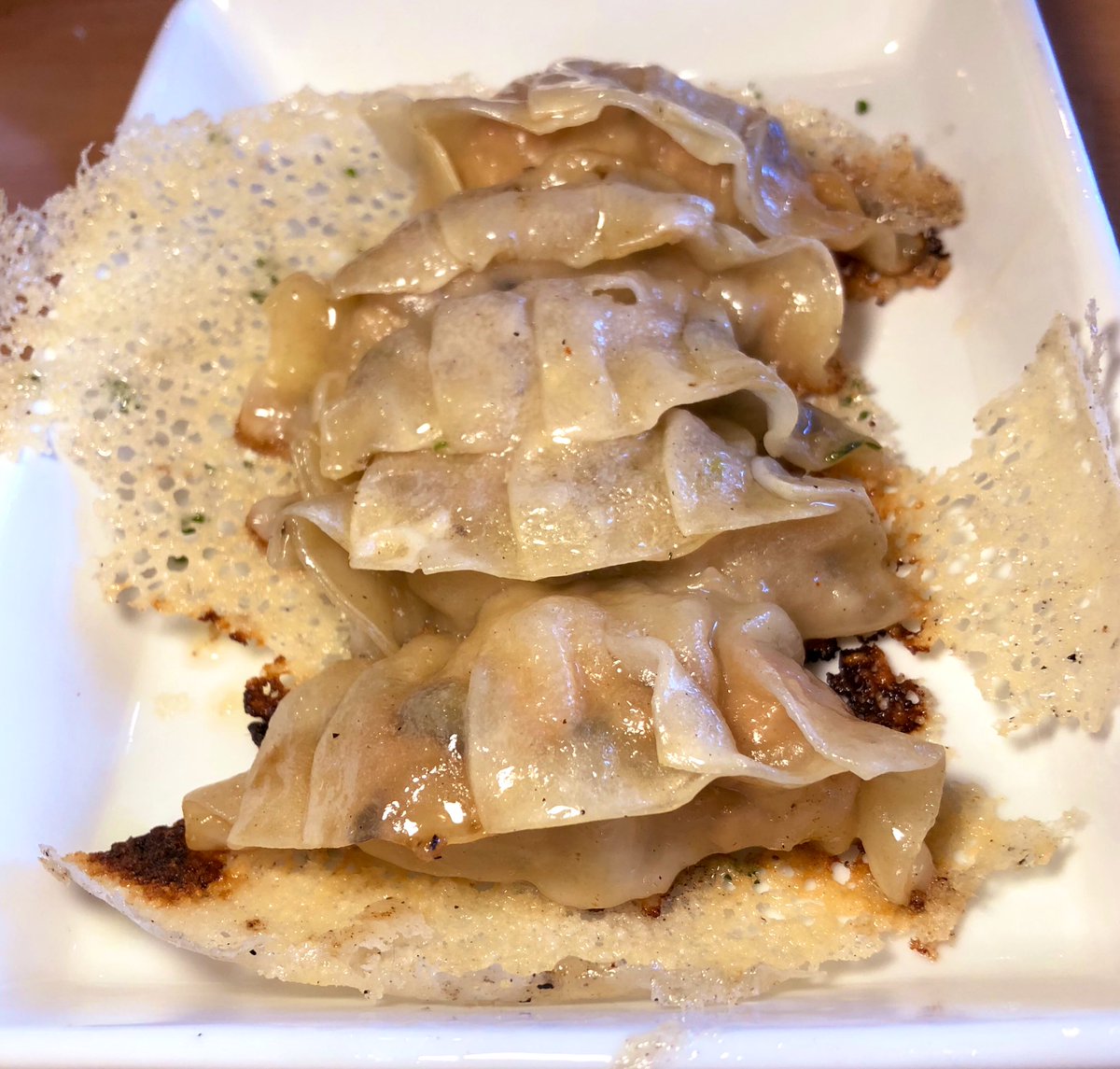
Both of these come under the “Plates” section of the menu and are meant to be shared, as are the gyoza (here with that crispy skirt thing that’s all the rage), beef tataki salad (swimming in ponzu), and Lomi Lomi (ocean trout, also swimming in chili-enhanced ponzu).  Less acidic, but equally satisfying, are the poached chicken salad, nicely dressed with a mild, miso vinaigrette and full of big chunks of cashews, and asparagus chawanmushi — a baked, grainy, white tofu custard that tastes better than it looks.

Having made three visits here, it appears this section of the menu is a work in progress. Krohmer made his name by creating a core menu and then playing off it, seasonally. I expect some of this menu is still in flux, depending upon how the neighborhood reacts to his warm mushroom salad (a bit dense for summertime), or a jumble of braised pork bellies (kakuni) on a plate — a recipe straight from the David Chang playbook.

If they’re available, get the crispy quail breast stuffed with ground pork flecked with veggies. Unless you’re a tofu lover skip the house-made stuff (thick slabs in a cool dashi broth that is the very definition of the bland leading the bland). You’re better off with the pickled vegetables — they’re a lot tastier and a treat unto themselves.

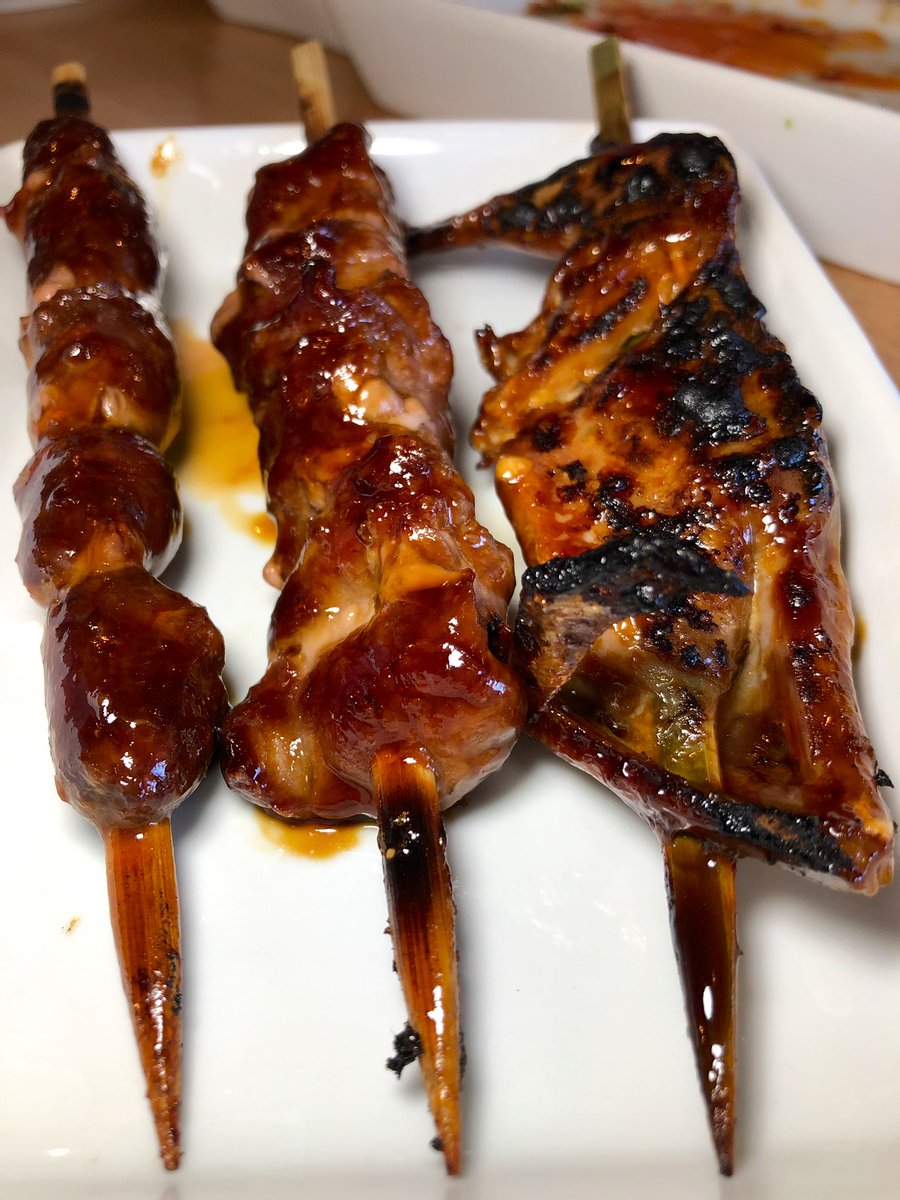
(Smoke some kushi, grab a kushi)

Then, there are the skewers. Lots of them, grilled carefully over binchotan charcoal, and glazed with sweet soy. The perfect bar food. Food you can contemplate, or absentmindedly nibble as you drink or concern yourself with more incorporeal matters.

Las Vegas doesn’t have a pure yakitori restaurant — one specializing solely in grilling chicken parts — but this is the closest we’ve come.  Yes, there are izakayas on Spring Mountain Road and points south, but Hatsumi is the first to raise the grilling of bird parts to a specialty of its own. Heart, liver, thigh, meatball, you name it, they’re grilling it…to a “T”. Juicy, succulent, meat from the whole bird comes to your table on point and perfect.

Like a lot of seemingly simple food, the beauty is in the details — in this case cutting each morsel to a similar size and watching them to the exact second of proper doneness. Nothing is worse than overcooked chicken, and nothing less appealing than the opposite. Here, you won’t have to worry about either and will drop your kushi in appreciation.

As for dessert, just remember what you’ve been told (by me) dozens of times: if you want a great dessert in an Asian restaurant, go to a French one.

Krohmer’s menu is striking in its foreignness, and rather stubborn insistence on hewing closely to the izakaya template. How he carefully articulates the flavors of Japan, without compromise, is something to be admired, but it begs the question(s): Is downtown Las Vegas ready for real Japanese food? Are there enough residents, true believers, and Downtown Project acolytes to provide it with enough customers? Could it (shudder) be good enough to actually draw people from the ‘burbs to these long-neglected blocks?

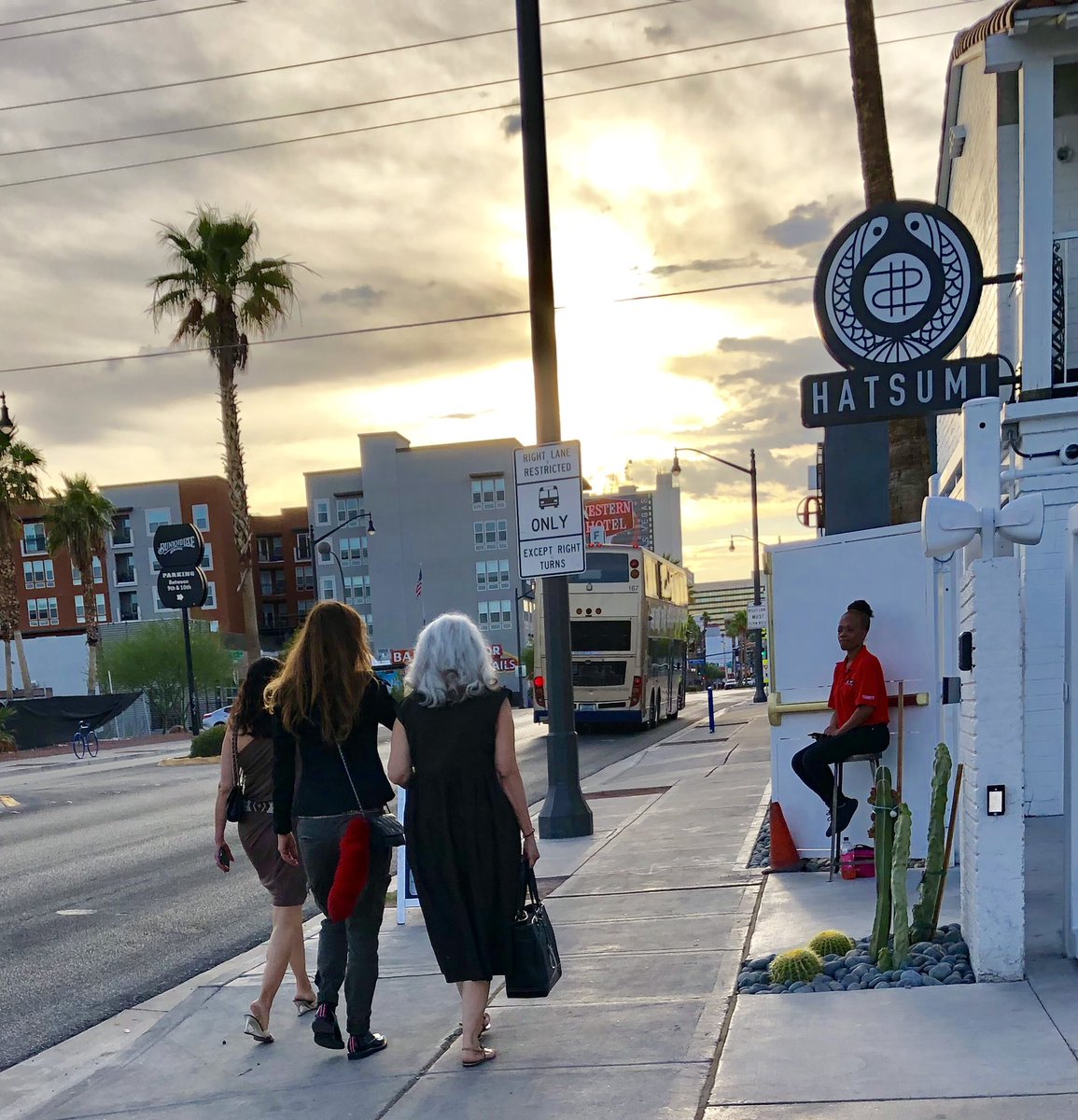
Well, it certainly drew these three gals down there one night, and each of them looked about as hip as a halter top…so there’s hope.

My first meal here was comped; my next two ran us around $100/two including a small bottle of sake and two cocktails. You can easily get out of here for half that if you want just a few skewers, a share plate and some sides. .

HATSUMI

Fergusons Downtown

1028 East Fremont Street

Las Vegas, NV 89101

702.268.8939


SPAGO Redux

Image result for Spago Las Vegas

No matter what it does, it does well. No matter what you order, expect it to be one of the best versions you’ve ever had. Call it Wolfgang Puck magic; call it a great management; call it hiring good chefs at the top of their game. Whatever it is, call it consistency. Because if there’s one thing that sets Spago apart from its competitors, it is an almost military precision to its food. You will rarely have a bad dish in any Puck restaurant. At Spago, you’ll never have a bad bite.

Las Vegas got its first taste of Spago in December. 1992, and for the next twenty-five years it loomed large over the Strip dining scene as the granddaddy of all of our great restaurants. When its lease finally was up at the Forum Shops in 2018, it decamped for the Bellagio. Puck signed a management deal with the hotel (no more operational headaches for him!), and with a wave of the hand (and a “don’t let the door hit your ass on the way out”), the dreary Olives got a bright, modern makeover into Spago 2.0.

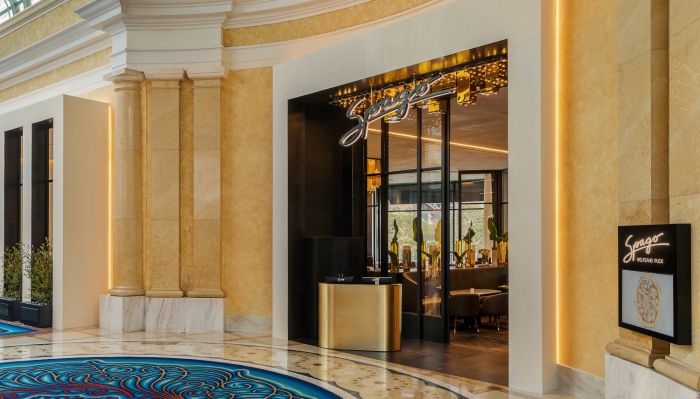
About the only thing not to like about the new location is the front of it (seen above). Instead of signaling you’re in for a big deal meal at one of the most famous restaurants in America, the signage is abstruse to the point of invisibility, and you can be right in front and not know there’s a restaurant there.

Once you’re inside, this aesthetic sin will be quickly forgotten. The bar still hugs the right side of the restaurant, and low-slung table seating allows you to eat or linger near all those top-shelf cocktails. Large windows and glass doors now frame an outdoor patio that provides the best seating in the hotel for the fountain show. (There are lots of tables outdoors, but they go fast at peak times, so reserve ahead if al fresco is how you want to go.)

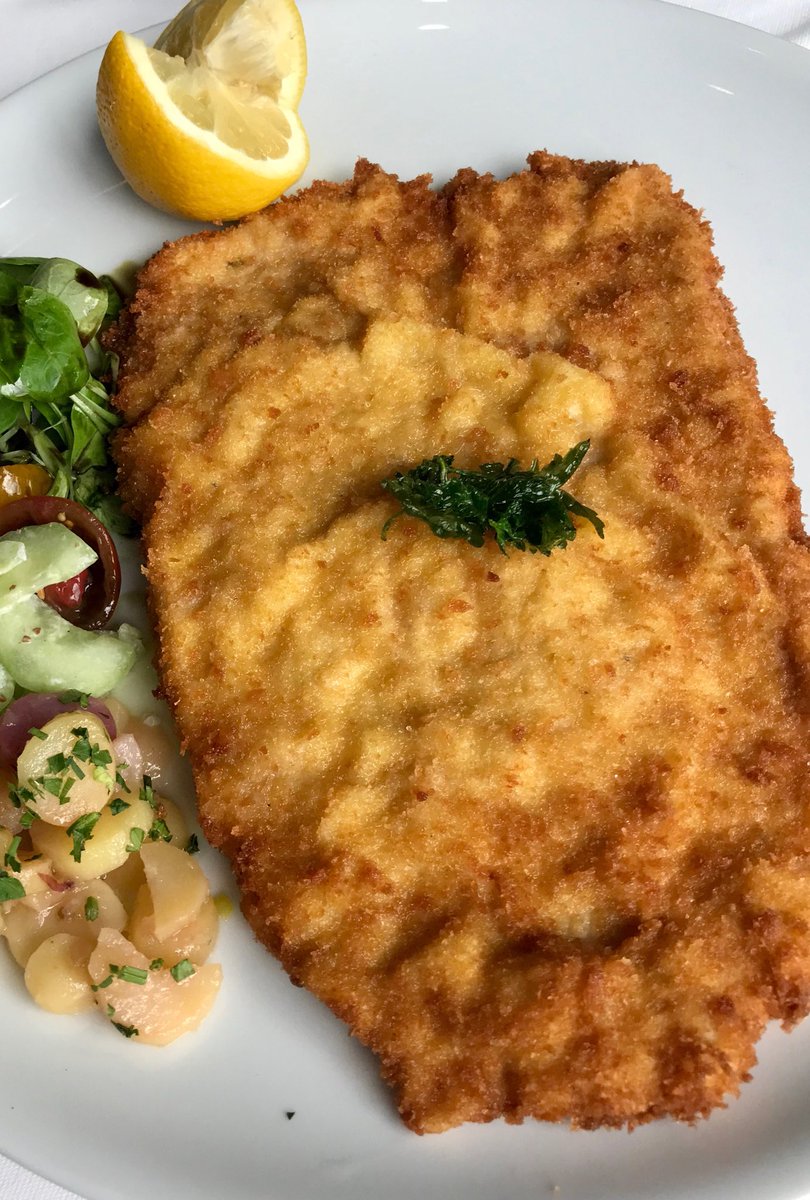
Whether you sit outdoors or in, the menu will provide the sort of soothing satisfaction Puck has always delivered: a blend of classics (veal wiener schnitzel, steamed cod “Hong Kong style,” smoked salmon pizzas, crispy skin branzino), with the seasonal (sweet corn agnolotti, heirloom tomato salad, Santa Barbara spot prawns, vegetable ragout with asparagus velouté), and the formidable (veal chop, lamb rack, and a côte de bouef for two – each as good as any steakhouse’s). Sometimes there will be big eye tuna crudo, sometimes foie gras ice cream. Whatever specials your waiter recites, rest assured it will be worth the tariff.

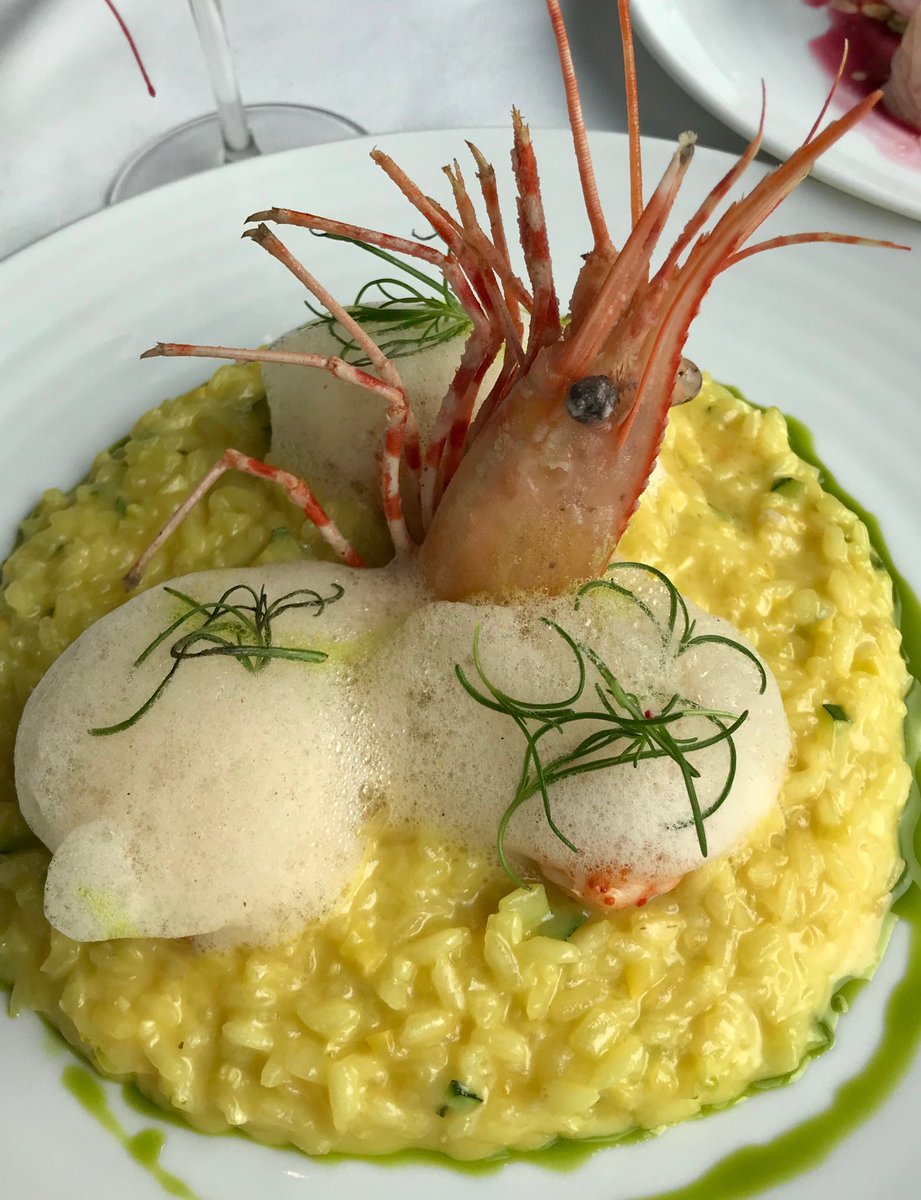
(I’m just mad about saffron…risotto)

Mark Andelbradt, a Puck veteran, has been at the helm since the move to the new digs, and his facility with pasta is every bit as nimble as his command of roasted cauliflower. If his proteins are the equal of a beef emporium, his noodles match up nicely against any Italian. More than once I’ve done a side-by-side comparison of Spago’s house-made pastas with some celeb-chef versions around town, and every time Spago’s has come out on top. Andelbradt’s spicy lamb Bolognese cavatelli, squid ink garganelli, and those agnolotti are textbook examples of the genre, and when he’s doing saffron-seafood risotto, don’t miss it.

Image result for Spago Las Vegas cookie platter

When you’re done with the savories, the sweets are there, just waiting to destroy your willpower. The spiked lemon with yuzu cream, chiffon cake and citrus mousse (above) has been on the menu so long, it’s almost iconic as those pizzas. The chocolate chip cookies are worth a trip by themselves, but as memorable as those are, the thing to get is Wolfgang’s Kaiserschmarren — a showstopping souffléd pancake (for two) that actually feeds four…but which will probably be wolfed down by the first one lucky enough to get to it.

The wine list holds few surprises. (It was pretty boring at the old location, too.) There are plenty of overpriced bottles from the usual MGM-Bellagio offerings. (Yes, they standardize the wine selections throughout the MGM family of hotels these days. Because accountants.) Stick with the by-the-glass selections if you don’t want to feel like you’ve been asked to bend over and grab your ankles.

You don’t go to Spago looking for culinary adventure anymore than you go to Pierre Gagnaire’s Twist in search of a pork chop. What Spago is selling, what Spago has always sold, is a Cal-Ital blend of Europe technique with American panache — a hybrid cuisine that’s as fresh today as it was 35 years ago; a cuisine as elemental as a pizza and refined as caviar.

All of America owes a debt to Spago for the way we eat nowadays — combining finely-tuned, gutsy food with just the right sophisticated spin without pretense. Open kitchens, upgraded pizzas, casual dining with killer food — all of these started with Spago. In a way, every gastropub from Portland, Maine to Portland, Oregon is an homage to the type of cooking first popularized by Wolfgang Puck. But he did it first, and in many ways, Spago still does it best.

I’ve eaten at Spago so many times I’ve lost count. This new incarnation I’ve been to five times. They never comp me, but a few freebies always show up. Dinner for two will run around $150-$200, including a shared dessert and a couple of drinks each. Service is uniformly excellent whether they know you or not.

Get this: Artisanal salumi pizza; smoked salmon pizza; spicy shrimp pizza; spicy tuna tartare; foie gras ice cream; Gulf shrimp cocktail; prime beef burger; field mushroom soup; roasted cauliflower; Anson Mills grits; veal wiener schnitzel; steamed cod “Hong Kong” style; branzino; all pastas; seafood-saffron risotto; Santa Barbara spot prawns; vegetable ragout; veal chop; lamb rack; côte de boeuf rib eye steak for two; cookie platter; spiked lemon with yuzu cream; Wolfgang’s Kaiserschmarren.

SPAGO

Bellagio Hotel and Casino

3600 Las Vegas Blvd. South

Las Vegas, NV 89109

702.693.8181

MOTT 32

Image result for Mott 32 Las Vegas

Chinese food used to be everywhere and nowhere. Every town had one; no one paid much attention to them.

Those of us of a certain age remember Chinese food as it used to be — slightly mysterious, slightly boring, and ubiquitous.

Today, if TED talks are to be believed, there are more Chinese restaurants in America than McDonald’s, KFC and Burger King combined.

There isn’t a backwater anywhere in America that doesn’t sport at least one Chinese restaurant. In places as far flung as rural Texas, godforsaken South Dakota,  or suburban New Jersey  — there would always be a “Jade Palace” or “Chang’s Garden” holding down the corner of a building, slinging their stir-frys and satisfying customers with gloppy sauces and kung pao predictability.

Image result for Chinese restaurants in America

In many of these places, the family running the joint (and make no mistake, the entire family worked there) would be the only Chinese-Americans in town. Like many poor immigrants, they were shunned at first and had to find work where they could. And feeding people (themselves included) was one business readily available. So the Chinese spread throughout America in the 19th and 20th centuries, bringing their tasty-if-predictable food with them. And for about 150 years, things stayed pretty much the same.

Like many Americans, I didn’t discover Chinese food until I left home as a young adult. (I don’t think the idea of going to a Chinese restaurant ever occurred to my parents.) I remember thinking how strange moo goo gai pan was the first time I tasted it. Ditto, shiny roast Chinese turkey, won ton soup and a host of other standards. What was chop suey? And what were these strange, slick, shiny sauces on everything? Who was this Foo Young character, and why was he deep-frying my eggs and bathing them in brown gravy? Confused I was, but intrigued as well.

Image result for La Choy

Making things worse (and almost blunting my enthusiasm entirely) was a concoction put out by La Choy called Chicken Chow Mein— which was probably many American’s introduction to non-restaurant Chinese food. It’s probably no exaggeration to say that La Choy did for China’s gastronomic reputation what Mao Tse-Tung did for high fashion. Amazingly, even though one of the founders of La Choy was killed by lighting (a sign from the heavens, no doubt, concerning his product), it perseveres.

Thus did generations of Americans learn about this cuisine through a cultural prism refracting decades of tribulation, compromise and synthesis, until the red-gold, banquet hall Chinese-American restaurant became as familiar as an old shoe…and just about as interesting.

(Hot and sour Shanghainese xiao long bao)

All of that started to change in this century, as almost by sheer weight of China’s cultural muscle did its various cuisines start to assert themselves on the American palate. In place of egg rolls came xiao long bao. Candied spare ribs suddenly took a back seat to cumin lamb skewers, and dry-fried this and boiled that became the order of the day, with luminous, supercharged Sichuan fish opening up our sensibilities as well as our sinuses.

If the 19th and 20th centuries represents American-Chinese food’s birth and growing pains, then the 21st century is truly version 3.0 — with a blossoming of taste awareness and appreciation that this cuisine’s great great grandparents could only dream off. The textural subtleties of Canton province have been replaced by the noodles of the north, the dumplings of the east, and spices of the western plains. Regional differences are now celebrated, not glossed over in a sea of cornstarch, and intrepid fellow travelers scour the internet for the best bao, or the most luscious lamian. Knowing your chop suey from your chow mein is no longer enough, now one must be able to parse the fine points of jelly fish salad and fried pig intestines.

So, how does the novice reconcile all of these regional specialties into an easily digestible format? The hard way is to seek out little warrens of authenticity –the holes-in-the-wall in Chinatown (wherever you find a Chinatown) –where unique dishes are celebrated and compromises few.

Or, you can make it simple on yourself and go big box — in this case, with a trip to Mott 32 — the pan-Chinese restaurant that does to Chinese food what Morimoto did to Japanese cuisine a decade ago: present a modern menu in a hip, funky-cool space having more in common with a nightclub than any Chinese restaurant you’ve ever seen.

(Dinner and a show – this kitchen provides both)

Mott 32 seemed to pop up out of nowhere in 2014 in Hong Kong, and immediately asserted itself as a major player on the upscale Chinese restaurant scene. Its website is deliberately opaque about its origins, stating only that it is named after an address in New York City(?). It opened here around New Years and plans are underway for global, big-box Chinese restaurant domination. Singapore and Bangkok are next on the horizon. Vancouver and Dubai have already been conquered.

The glamour you’ll see from the get-go; the money behind these digs drips from every opulent detail. It takes about 10 seconds of checking out the fabrics and comfy booths to figure out that you’re no longer in “Wok This Way” territory. Giant doors off the casino floor lead to a broad and deep bar area, with an ocean of top-shelf alcohol on the shelves, ready to bathe the long bar with their magnificence alchemy into complicated cocktails. (I don’t much bother commenting on great cocktails anymore, because interesting libations are everywhere in Vegas these days. For the record, this bar’s A-game is better than most.)

The lighting is diffuse and muted, but not too much, and the young women dotting the place (at the hostess stand, behind the bar) are as sexy and shiny as a lacquered Chinese box. Dresses are short, black and tight, and the cleavage is so profound, this joint’s nickname ought to be Mott 32D.

Don’t let all the comeliness fool you, though, because the food is the tits as well.

With a bases-covering menu of everything from Cantonese dim sum to hand-pulled noodles to Peking duck ($108), the whole point of M32 is to present upscale Asian with fashion-forward cocktails, in a glamorous setting in hopes of enticing a stylish crowd to descend. The website touts its Cantonese roots, “with some Beijing and Szechuan influences in our signature dishes” — which explains the nightly dim sum (limited if great), and perhaps the best roasted duck you’ve ever eaten.

(Just ducky)

The duck ($108, above) is the centerpiece of every meal here and it deserves to be. The two-day process it takes to bring one to table produces a bronzed, brittle, gleaming skin having bite-resistance of a thin potato chip. There are decent Peking ducks all over town (Wing Lei, Jasmine, Blossom, New Asia BBQ and Mr. Chow spring to mind), but the effect here is an otherworldly contrast of moist, rich meat topped with a duck fat-slicked crisp. Duck doesn’t get any duckier — its only drawback is you should have at least four people at your table before you order it. When you’re asked how you want your second course — as a deep-fried duck “rack,” or minced meat in lettuce cups — insist upon the latter, as the former (above bottom right), is a waste of time and bones.

It’s a shame they aren’t open for lunch, because dim sum at dinner feels as strange as dried fish maw ($498/pp(!)) for breakfast. Those dried fish bladders are for Chinese high rollers who love their squishy, gelatinous texture. (Their appeal to the western palate is, shall we say, a bit elusive.)

The dim sum are more approachable, and you’ll find no better xiao long bao (here called Shanghainese soup dumplings) in Las Vegas. They come four to an order ($14), and you’ll want to try both the traditional pork and hot and sour versions — the latter providing plenty of punch.

Next to the dim sum and the duck, the Pluma Iberico pork (above, $42) gets pushed the most by the staff. It is dense with flavor, a bit too sweet, and juicy  — with as much in common with basic Chinese BBQ as that duck has with a McNugget. Before it arrives, you might want a few smaller plates, like the crispy dried Angus beef (below, $16), which comes out like a tangle of wispy, deep purple folds that shatter in the mouth with barely a bite. It is the barest gossamer beef, the antithesis of jerky. In another type of restaurant you might even call it molecular.

(We’re not in Panda Express anymore, Toto)

For those wishing something meatier, the Triple Cooked Wagyu Short Rib ($88) provides enough beef for four hungry souls to gnaw on…although its inclusion on the menu feels like the restaurant is (literally) throwing a bone to its conspicuous carnivorous customers.

Those not wanting to spring for a whole duck can get some shredded quacker in a Peking duck salad ($18) with black truffle dressing. Lighter appetites will appreciate the wild mushrooms in lettuce cups ($20), or thick slabs of deep-fried Sesame Prawn Toast ($18) — which, in bulk and pure shrimp-ness, redefines this usually bland standard.

Not many non-Chinese are going to drop two Benjamins on the kitchen sink soup known as Buddha Jumps Over the Wall  ($198), but hot and sour ($14) and won ton ($11) give plenty of soupy satisfaction for the price. If you’re dying to try fish maw, $68 gets you a cup of spongy, tasteless collagen. Yum!

In keeping with its Cantonese roots, there are plenty of expensive seafood options, none of which (abalone, sea cucumber, etc.) make much sense for Occidentals. But there’s plenty to love about the lobster “Ma Po Tofu” (above, $68) with its chunks of shellfish swimming with spicy/silky bean curd, as well as the smoked black cod ($42), and the poached fish (usually sea bass, $42) — floating in a Szechuan pepper broth —  makes up in refinement what it lacks in kick.

Just for grins and giggles, we ordered two old reliables — Kung Po Prawns ($38) and General Tso’s Chicken ($28) — on one of our four trips here, and they each were flawless, properly spicy and not too sweet. You’ll have no complaints about the nutty shrimp fried rice, either.

(The Cantonese love their custards)

Desserts got my attention as well. (When’s the last time that happened in a Chinese restaurant?) They feature the au courant (Bamboo Green Forest (top right, $16)) alongside the classical (Mango with Coconut (sticky) Rice Roll ($12) on the split (Modern/Classic) dessert menu. Even an old bean paste hater like me found myself slurping the pure white custard-like Double Boiled Egg White (bottom left, $12) , on top of some grainy/pasty Black Sesame something-or-other. The pastry chefs at Guy Savoy have nothing to worry about, but for a restaurant working within the Chinese vernacular, these are damn tasty.

Mott 32 is as slick as that duck skin, but no less satisfying.  The eclectic menu signifies that Chinese food has now taken a great leap forward into the promised land of high-end, gwailo dining dollars (something Japanese food did twenty years ago). Just because it’s a huge, expensive, well-financed chain doesn’t mean that it should be dismissed. The casual, luxurious vibe and ingredient-forward cooking are calculated to appeal to purists and tourists alike, and by and large, they pull it off.

More than anything else, though, Mott 32 represents a modern Chinese invasion. A China no longer burdened by its past; a cuisine no longer defined by egg rolls, fortune cookies and orange chicken. Whether you’re impressing a date or hanging with a crowd of conventioneers, you won’t find any better Chinese food in Las Vegas.

Like I said, this place is expensive. Expect to pay at least $100 for two (for food) unless you go crazy with the high-end, Chinese gourmet stuff, which you won’t. The wine list is Strip-typical, meaning: aimed at people with more money than brains. The somms are very helpful, and eager to point you to the (relative) bargains on the list, most of which go much better with the food than overpriced Cali cabs or chichi chardonnays. One of our four meals here was comped; another (for three) set us back 460 samolians, with a $100 bottle of wine.

MOTT 32

The Palazzo Hotel and Casino

3325 Las Vegas Blvd. South

Las Vegas, NV 89109

702.607.3232