Roman (Wine) Holiday Part II

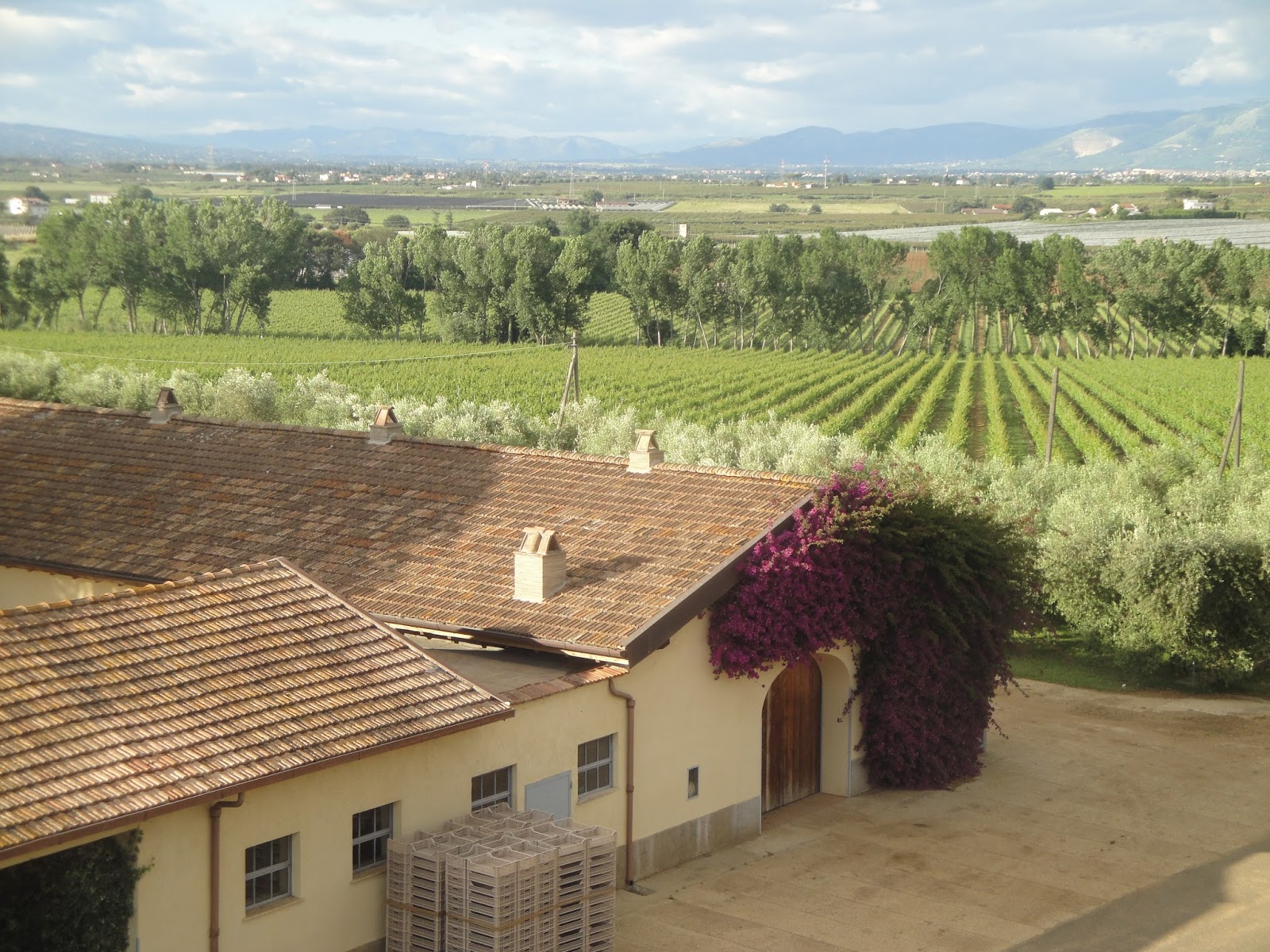
https://1.bp.blogspot.com/-ZoITzmBDGEk/V0y8Cg2oSAI/AAAAAAAAUyk/gX9B2TtYPpcayDUjZExNaPkkdqCIHg5FgCLcB/s1600/casale%252C%2Bvigne%2Be%2Bbouganville.JPG

If Cincinnato and Marco Carpineti represent Roman vinters moving forward by looking to the past, Casale Del Giglio is a winery of a much more modern stripe. Located on the slopes and plains (and some former marshland) some fifty kilometers south of Rome, it utilizes its 180 hectares of vines to make an assortment of varietals that stretch the boundaries of what Italian wines can be.

Along with wine journalist Charles Scicolone, we toured the winery with winemaker Paolo Tiefenthaler who explained that the area, being located on sandy soil in the Agro Potino valley near Anzio, did not have much of a wine-making tradition before they started cultivating it back in the 1990s. Teifenthaler told us through an interpreter that they saw this unexplored territory as being perfect for viticultural experimentation — it having a temperate maritime climate similar to those found in Australia, California and Bordeaux. As a result (and with the full blessing of the European Union), over sixty different varietals were planted to see what grew (and tasted) best. With such a broad canvas to work from, Tiefenthaler arrived at a stunning assortment of wines — fifteen in all — that aim to bridge the gap between classic and international tastes, as well as solidifying the area as a microclimate to be taken seriously.
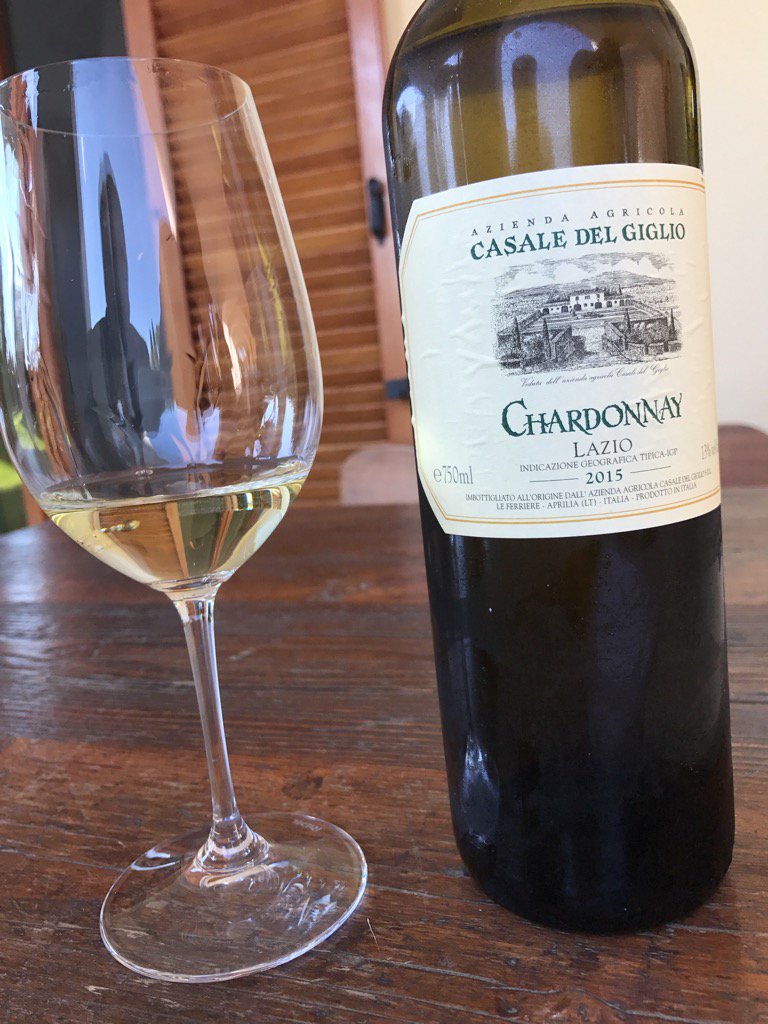
One very un-Italian thing about Casale Del Giglio’s wines are the labels. In a nod towards the international market (and in breaking with the traditional Italian wine labels – the motto of which has always been: “obscurity and confusion over clarity and information”), their bottles identify the maker, the grape (if it’s not a blend) and the location of the vineyard. Most of their wines are classified as IGT (Indicazione Geografica Tipica – the third tier of Italian wine classification) which allots more freedom to winemakers to use different grapes and blends than the more restrictive DOCG and DOC denominations.
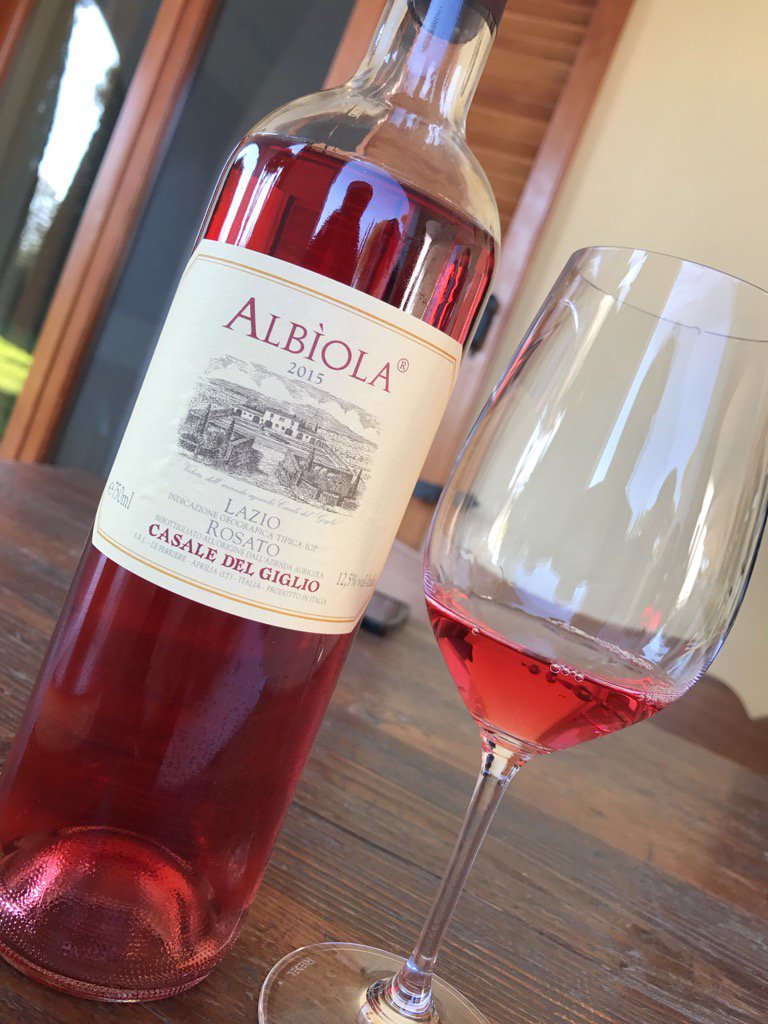
Triefenthaler takes that freedom and runs with it. His chardonnay uses no oak and goes through no malolactic (secondary) fermentation. The result is a full-bodied, crisp wine that is a pure expression of the grape. It was one of many non-traditional wines we tasted that caused me and Scicolone to sit up and take notice. Just as pleasantly surprising was the Albiola Rosato — a rose of Syrah and Sangiovese grapes — that was surprisingly rich for a wine so pink. It’s strong acidity and raspberry/strawberry aromas make it a perfect wine for sipping all Summer long.
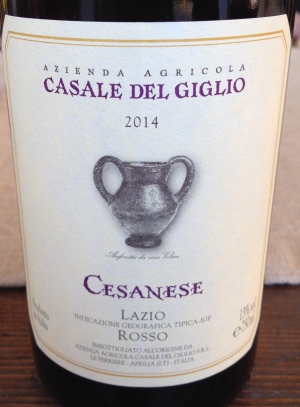
 

img_2157

On the more traditional front, Casale Del Giglio weighs in with a big, spicy, tannic, vaguely herbaceous Cesanese (pictured above) that Elise Rialland — our winery guide for the day — said goes perfectly with a Spezzatino di Bufaletta dell’Agro Pontino (water buffalo stew). Absent any water buffalo in your neighborhood, a beef stew would match splendidly as well.

Of the other red wines we tasted, the huge, sweetly tannic Tempranijo was a monster that needs taming by food or aging, and the 100% Cabernet Sauvignon showed promise as well, although, like many of the reds, it seemed quite young, very fruit-forward and a bit rough around the edges. Still, when you consider that these wines retail for well under twenty dollars a bottle, you’re getting quite a mouthful for the price.
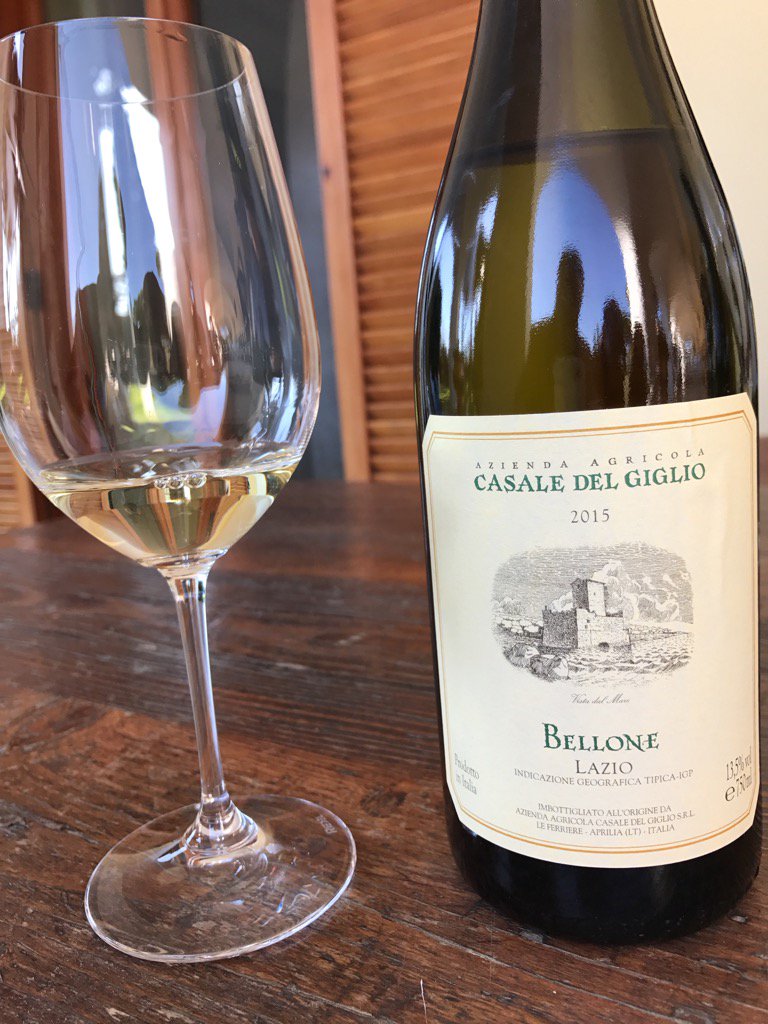
Two wines that need no qualifiers are the Bellone and Mater Matuta. The Bellone is yet another worthwhile way to break the bonds of your chardonnay, sauvignon blanc, or pinot grigio habit — it being a complex and subtle blend of ripe tropical fruit beneath a nicely floral nose. What sets it apart from your run-of-the-mill $15 white wines is the strong acidity and a bracing finish that tastes like a sea breeze smells. I can’t think of a better wine to accompany a fish stew or raw seafood platter.
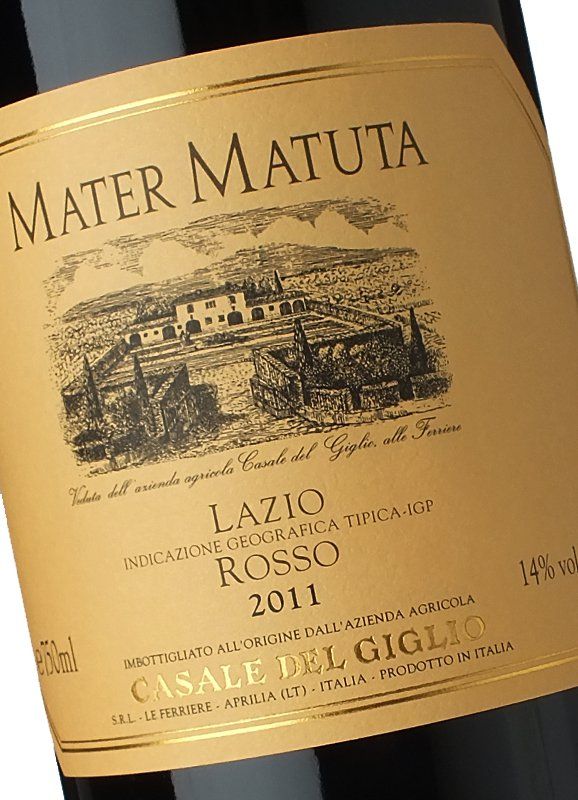
https://www.italvinus.it/images/prfmtgrande/vi/mater13_art800.jpg

If the Bellone is an ode to the ancient varietals of Lazio (the province of Italy wherein Rome lies), the Mater Matuta represents a leap into the 21st Century. Elegant and powerful, this flagship wine is a blend of 85% Syrah and 15% Petit Verdot, and displays a deep, dense ruby red color, and complex aromas of black cherry, coffee and about half a spice rack. The tannins are finely integrated and the finish lasts until next Tuesday. In all, quite a bottle for $50, and quite a landmark for an area that had no idea it could make such a splash with grapes that had never before spoken Italian.

Old school or new, Roman wines have broken the shackles of cheap white wine that defined its viticulture for so long. Tasting the full panoply of Casale Del Giglio wines (including a wonderful late harvest wine called Aphrodisium) taught me that no longer will I look past the “Lazio” designation when I see it in a wine store or on a list. These are very attractive wines at very attractive prices, and all of them are made to match with Roman food, one of the world’s great cuisines.

A FEW WORDS ABOUT ROMAN RESTAURANTS

Image may contain: 1 person, sitting, table, food and indoor

“To a Roman, wine is just another form of food.” Charles Scicolone reminded me of this several times as we tasted our way around Rome for a week. What he also impressed upon me was that Romans (who are very serious about their cuisine) look upon wine as an integral part of any meal, but, being Romans, don’t exactly stress out over it. You’ll never find a Roman dissecting the fine points of a food and wine match. Certain fundamental rules are followed (lighter wines with fish, heavier ones with meat), but after that it is all about enjoying them simultaneously. Here are a few restaurant and wine bars where you can maximize your enjoyment of both in the Eternal City.

Il Sanlorenzo –  Despite being 45 minutes from the ocean, Rome has never been much of a seafood town, until now. This elegant, seafood-centric place, a block off of the Corso Vittorio Emanuele II, proudly displays the daily catch at the front bar, offers six kinds of Le Acque (mineral water), artisanal breads, and stunning selection of raw seafood. It’s 85€ tasting menu is quite the bargain, and the modernist carpaccio of red shrimps just as satisfying as the artful twist on linguine con vongole.

Flavio al Velavevodetto  – The trouble with traveling to Rome (as with New York, Paris, Tokyo, etc.) is I’m always torn between classic places to which I can’t wait to return, and wanting to try out newer joints that everyone is raving about. Thankfully, Rome doesn’t follow food trends as much as the rest of the world, so it’s easier to ignore whatever some travel magazine is writing about this month. Flavio de Velavevodetto has been around forever, and isn’t on anyone’s thrillist, but the food is Roman to the core. A wall of wines greets you as you enter (and doubles as the wine list) and the menu couldn’t be simpler. The rigatoni con la pajata (with veal intestines) and coda alla vaccianara (braised oxtail) also could not be any better. “Velavevodetto” means something like a Roman “I told you so,” and after two bites of your meal, you will have to admit that I told you so.

Checchino dal 1887 – Right around the corner from Flavio al Velavevodetto is this venerable establishment, that is just as comfortable and just as good. Specializing in the “fifth quarter” of the animal, the menu is a testament to how Romans were into offal long before it became fashionable. Wonderful wine list as well.

Dal Bolognese –  I never go to Rome without taking at least one meal here. Directly off the Piazza del Popolo, you enter this fashionable haunt of power lunchers and well-healed shoppers. The thing to get is the bollito misto with mostarda and salsa verde. There might be other good things to eat on the menu, but the meat platter with mustard fruits is so spectacular I can’t even think of ordering anything else. Except the fritto misto (fried seafood); it’s out-of-this-world too.

Al Moro – There is an old saying about Roman restaurants that the worse the art is on the walls, the better the food. Al Moro’s walls won’t win any awards (see picture above), but the fegato (calves liver with agrodolce onions) ought to be enshrined somewhere. You won’t find better culatello ham or bufala mozzerella anywhere else around the Trevi Fountain, either. Go early for lunch to see how the smart business set enjoys its midday repast.

A FEW MORE WORDS ABOUT ROMAN WINE BARS

Image may contain: 2 people

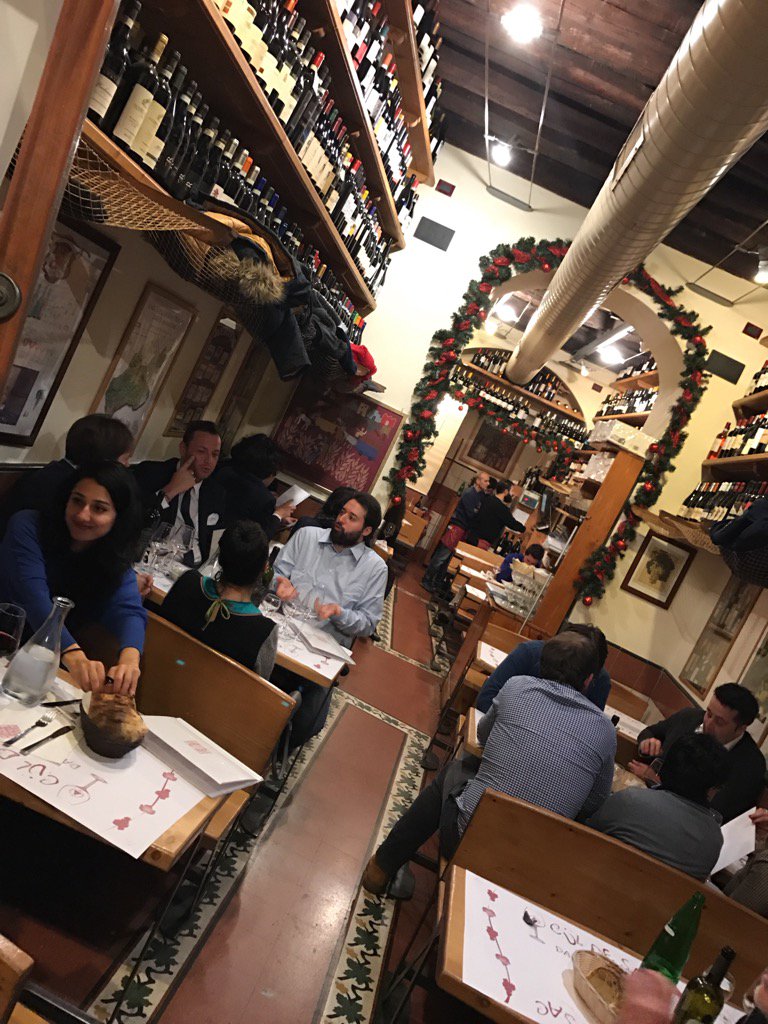
Roman ristorante are far less formal affairs than their Parisian counterparts. Still, you’re expected to order two or three courses in them, and they are not the place to pick up a light bite. For that you have pizzerias and espresso bars everywhere (of variable quality), but for our money, wine bars are the way to go if you want a simple snack or plate of pasta without a lot of fuss after dark. The bonus is, of course, they also have incredible wine selections, some real bargains by the glass (or carafe), and no one frowns at you if you just want a small plate of some incredible artichoke ravioli with a Gravner Breg like we had L’Angolo Divino. The other bonus is these spots are all within a short walk of each other in the Centro Storico

Il Goccetto (pictured above) – Very popular with the young crowd. Doubles as a wine store. Nice antipasti display counter as you enter. Go early or late and go with a thirst.

Cul de Sac – An old favorite off the Piazza Navona. Friendly welcome. Outdoor seating.  Rome’s first proper wine bar (since 1977) is still one one the best, with food a lot better than you expect it to be.

L’Angolo Divino – A cozy spot right off the Camp de’ Fiori, the modest entrance gives you not a clue as to the beauty of the food and the wine selection. An incredible list with a very helpful staff.

THE WINERY

CASALE DEL GIGLIO

Le Ferriere

Latina LY, Italy

39 06 9290 2530

http://www.casaledelgiglio.it/en/

THE RESTAURANTS

AL MORO

13, Vicolo Bollette

39 06 678 3495

http://www.ristorantealmororoma.com/en

CHECCHINO DAL 1887

30, Via di Monte Testaccio

39 06 574 3816

https://www.checchino-dal-1887.com/

DAL BOLOGNESE

1, Piazza del Popolo

39 06 361 1426

FLAVIO AL VELAVEVODETTO

97, Via di Monte Testaccio

39 06 574 4194

http://www.ristorantevelavevodetto.it/

IL SANLORENZO

4/5, Via dei Chiavari

39 06 68 65 097

http://www.ilsanlorenzo.it/

THE WINE BARS

CUL DE SAC

73, Piazza di Pasquino

39 06 6880 1094

ENOTECA IL GOCCETTO

14, Via dei Banchi Vecchi

39 06 686 4268

L’ANGLO DIVINO

Via del Balestrari

06 68 64 413

http://www.angolodivino.it/it/homepage


Roman (Wine) Holiday

Image may contain: cloud, sky, outdoor and nature
 Twenty years ago, back when dead tree journalism was still thriving, I attended a convocation of food writers in Napa Valley. For a few days, bigwigs from the New York Times, Saveur, and Bon Appetit rubbed shoulders with food writers from around the country. Among the cookbook scribes, Marcella Hazan was the biggest draw – commanding the main stage for her Italian cooking demonstration. Her husband Victor did the same as he lectured passionately and pedantically about the glories of Italian wine. After his talk (where he was introduced as America’s preeminent authority on the subject), I asked him if there were any books or guides to help me gain a better understanding of Italian wine (or any understanding of it for that matter). His responded that he didn’t think so. Apparently, to learn anything about Italian wine in America, in 1997, you had to know Victor Hazan.

My how things have changed. Thanks to the tireless promotion of  Piero Selvaggio, John Mariani, Joe Bastianich and others (and America’s food revolution and the internet), learning about Italian wines is much easier than it used to be. But it’s still a very dense and difficult subject, even for the most ardent oenophile. When you consider that Italy has twenty different wine growing regions, producing wines from hundreds of different grapes (over 350 authorized varieties at last count), the task is daunting indeed. (By way of comparison, France uses around 50 different grapes for its storied wines.)

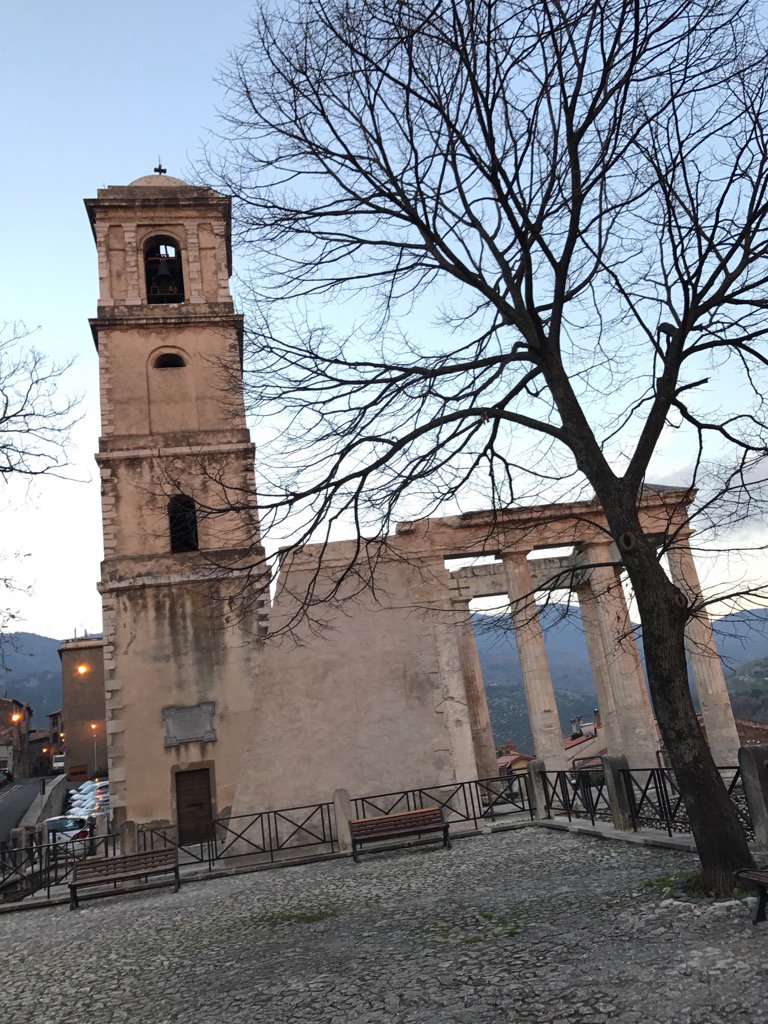
As my Italian wine IQ grew (helped along by multiple visits there), one thing always puzzled me: For a country so rich in wine, no one ever talks about Roman wines.  While Roman food may be renowned, its wines are rarely mentioned in the same breath. Perhaps they have suffered from an excess of Est!! Est!! Est!! (“The dullest white wine with the strangest name in the world.” – Jancis Robinson) and the oceans of cheap Frascati that fuel the trattorias of the Eternal City. Between a reputation for cheap, uninteresting wine, and America’s taste for the killer “B’s” — Barolo, Barbaresco, and Brunello di Montalcino — the flavorful and affordable wines being made south of Rome have had an uphill climb to gain the audience they deserve. But climb that hill you should, and climb it I did (to the town of Cori pictured above), to taste some well-crafted, intense and fruit-forward juice that may finally put Roman wines on the map.

http://www.atasteofitaly.ie/wp-content/uploads/2016/08/agricola-biologica-marco-carpineti_01.jpg

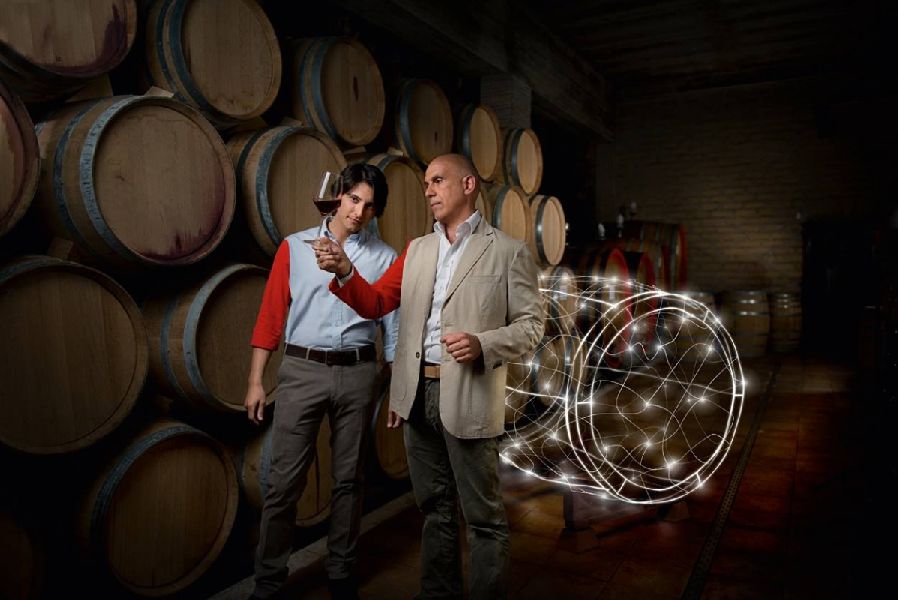
Marco Carpineti (seen above with son Paolo), comes from generations of winemakers, and since 1994 has been making his own wines organically, and bio-dynamically, using no herbicides, chemical fertilizers or synthetic products. His winery is set into a mountain cliff on the road to Cori, just south of Rome, which itself sits almost 4oo meters above sea level. His vineyards are located on the hills and fields below the mountain, and from these sites he crafts a number of bewitching wines, many of which are made with grapes you’ve never heard of.

Bellone (BAY-lon-AY) is one such grape. A native vine that hints at the herbaceousness of a good sauvignon blanc, with a nice, round mouthfeel and lemony finish that makes it perfect for seafood and oysters. If Carpineti and other Lazio producers have their way, it is a white wine that might challenge the ubiquitous (and often boring) pinot grigio for Italian white wine supremacy.

https://www.wineatwine.com/media/k2/items/cache/69b5f85da08d181d48515c6d41e3e0a5_XL.jpg

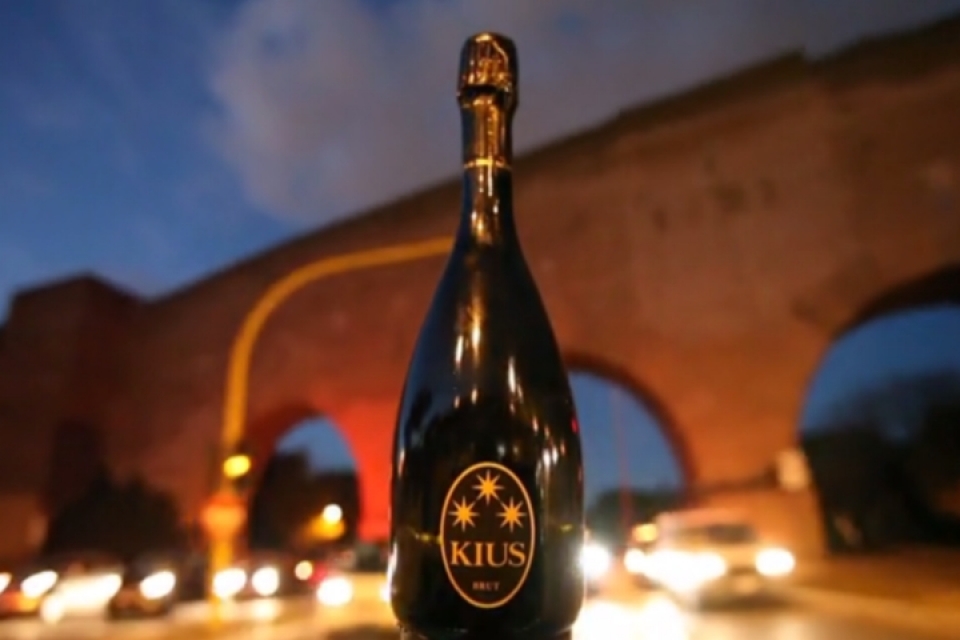
Whether it does that or not, it certainly makes a very firm and fresh sparkler — that Carpineti calls Kius — a bubbler that is every bit the equal of many a prosecco. A step up in depth takes you to their Kius Extra Brut — made exclusively with Nero Buono di Cori grapes — well-balanced with a hint of fragiolini (small strawberries) and brioche on the nose, and a long, medium dry finish.  It starts slightly sweet and floral on the tongue and ends dry, and practically begs to be drunk with a variety of summer foods and mild cheeses.

The Bellone grape makes another appearance in their Capolemone white — a wine that seeks to harness the soil and scents of this native grape. The light straw appearance is deceptive as the wine is uncommonly round and full in mouth. It finishes with hints of lemon, making it a perfect accompaniment to grilled fish or fresh oysters. Just as compelling was their Moro — a blend of white “Greco” grapes — that yield a softer, fruitier wine with hints of ripe fruit, perhaps due to 30% of the grapes being fermented in “refined oak barrels.” Were I tplanning a meal around these two wines, I’d offer the Moro as an aperitif with the antipasti, and serve the Capolemone with some cioppino.

img_2133


While the sparklers and white wines impressed us the most at Carpineti, their Tufaliccio red blend — of Montelpuciano and Cesanese grapes — won the award for the hardest to pronounce, easiest to drink wine of the day. This is a soft, mellow, easy to gulp red that would go beautifully with a variety of foods — sort of like a cru Beaujolais, only earthier and without the latter’s high-toned fruit.

Paolo Carpineti couldn’t have been a more gracious host, and to cap off our day of tasting, he drove us to the top of the town of Cori, where the Temple of Hercules stands — built 300 years before the founding of Rome.

If you time your visit right, as Paolo did for us, you will wind your way to the top of this ancient town right at the end of the day, where one of the most fabulous sunsets in Italy awaits you.

Italian wines, by their nature, are not wines for dissection and introspection. They are as indispensable part to the enjoyment of an Italian meal, as any pasta or protein. Italians view wine as a food, and as something to be enjoyed with food. This was the lesson of Cincinnato, a cooperative wine maker a little down the hill from Carpineti.

http://q-ec.bstatic.com/images/hotel/840x460/279/27945006.jpg
Cincinnato is a winery, as well as an agriturismo, which means you can spend the night, sip, sup and stay to your hearts content (as long as you book one of their modern, comfortable rooms in advance). It is named after the famous Lucius Quinctius Cincinnatus, a 5th Century BC Roman politician who, rather than consolidating his power and lording it over the country, instead went back to his farm in the Cori countryside — as depicted by the logo:

The Bellone grapes for the above wine are cultivated in the lava hills around the Cori. Bellone has often been thought of as a “simple” or blending wine. It may not have the structure of more exalted grapes, but in Cincinnato’s Castore bottling, there is nice acidity to go with its silvery color and tart, faintly lemon peel-like finish. In all, quite a mouthful for less than $15 retail.

img_2095

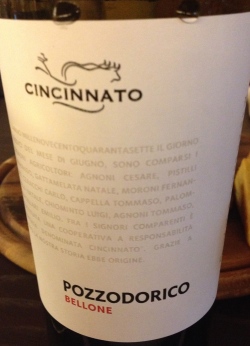
From there, wine writer Charles Scicolone and I worked our way through the entire catalogue. (Wine tasting tip: If you’re going to tour Italian wineries, always be sure to bring your very own Italian wine expert with you.) Both of us liked the Castore, but we were more enamored of the Pozzodorico Bellone, perhaps because it is fermented and aged in wood for six months, giving it more body and complexity and length than its stainless steel cousin.

We then sampled a fruit-forward blend of 50% Bellone, 30% Malvasia del Lazio, and 20% Greco — called Illirio Cori Bianco — and a Pantaleo, made with 100% Greco grapes. Giovanna Trisorio — our wine guide at the winery — described the Greco grape as an ancient, indigenous variety that produces a soft, yet full-bodied wine. I liked the Illirio’s minerality, but found it lighter, tighter and tarter in the mouth than the much fuller Panteleo. That both wines pack so much lip smacking complexity in bottles costing around $10 is something to behold.


img_2096

Of the reds we tasted, the Polluce (Poll-U-cha) was the clear cut winner.  Made with 100% Nero Buono grapes, this was a fresh, smooth, easy-to-drink red. It was dark purple in the glass and a touch smoky — more redolent of black fruit than red — and just the sort of vino rosso you’d want with some beef cheek ravioli.

“All of these wines need food,” said Scicolone, and the winery obliged, filling us with a variety of local salumi, meats, cheeses and breads to accompany our serious sipping, all accompanied by their gorgeous, fresh, peppery olive oil.


img_2093

Cincinnato represents over 130 families, farmers and grape grower in the Cori region. It has brought its wines into the 21st Century with a sleek and stylish label that announces some very approachable wines at incredibly soft prices. Most of its catalogue sells in America in the $10-$20 range, and for that price you’re getting some serious wine making. The wines are named metaphorically (Castore and Polluce are characters in a famous Italian opera; Illirio means “hill”), but they make it easy for you by identifying the main grape variety right on the front of the label. These varieties deserve to be drunk more than they are on this side of the pond, and after a few sips of Bellone, you may never go back to pinot grigio again.

This is Part One of a two-part article.


Bocuse d’Or Birthdays – Part 2 (The Restaurants)

http://www.lyonbureaux.com/wp-content/uploads/2016/11/DSC06596.jpg
When one travels to Europe, one expects to eat well. When one travels with ELV, one can expect to eat some of the best food on the planet. And that’s what we did for the last ten days of last month. On the oft chance that some of you may someday follow in our footsteps (or live vicariously through us if you don’t), here are some of the gastronomic highlights of the gourmet birthday trip of our lifetime:

WALDHOTEL SONNORA

https://www.dasfilet.ch/data/124/_12I0394.jpg

Holding three Michelin stars, and tucked way back in some woods between the wine village of Bernkastel and the city of Trier, the Waldhotel Sonnora was the best restaurant I could find to celebrate a special day in my life. Unfortunately, we lingered  a bit too long tasting wines with one of our favorite people in the wine world, Sofia Thanisch at Weingut Thanisch:

Image may contain: 6 people, people smiling, indoor

…so we were a half hour late for our reservation — a delay that, we were informed (in a very German, matter-of-fact way), would require all of us to take the tasting menu. “You mean we all have to eat the same thing?” I asked the proprietress (implying that that was the last thing I wanted to do). “Yes, you will order it and you will enjoy it,” she replied. (The only thing missing was an “Achtung!” clicked heels and a Hitler salute.)

From there on the food and the service were perfectly fine, but having everyone (all five of us) eat the same thing (for 175 euros a head, for lunch) is not my idea of an epicurean outing…and left a bad taste in my mouth.

What made up for that taste was a venison dish of uncommonly rich, wild, gaminess:

Image may contain: dessert and food

The menu stated it came from the Eifel Forest not far from the restaurant, and the flavor made you believe it. This wasn’t some namby-pamby deer dish that tastes of denatured animal flesh; this was the real deal, the kind of wild deer hunters live for, warm with the scent of a just-killed animal, gorgeously enhanced by the wine-laced reduction sauce. It didn’t make up for my overall disappointment, but it came close.

LE MONTRACHET

When you dine at Le Montrachet, you feel as if you’re eating in the center of the wine universe. The restaurant is part of a small inn tucked on one side of the village of Puligny-Montrachet. Surrounding you are the vineyards of the greatest white wines in the world, and the signs  (Montrachet, Chassagne-Montrachet, Puligny-Montrachet, Meursault) clip by with the kilometers as you drive down the Route des Grand Crus, or turn up into the villages which host these iconic vineyards.

As charming as these villages are, good restaurants are few and far between. Le Montrachet came highly recommended (by Alan Richman, no less) and proved the perfect spot for a midday repast after hiking around famous vineyards in sub-freezing weather. This being white wine country (the famous reds of Vosne-Romanée, Chambertin and Nuit-Saint-Georges are made 20+ kilometers to the north), we settled on the Les Jardins de Puligny menu, which, at 64 euros for five courses (including cheese) was a flat out steal.

As you can see, this is hearty, Burgundian fare — pâté de campagne, squash soup, torchon of foie gras, guinea hen with lentils — lightened by a chef’s touch, that paired perfectly with a sassy Aloxe-Corton and a Puligny-Montrachet (natch) from Vincent Giradin:

Image may contain: food
And then, of course, was the cheese course:
Image may contain: food
 All local, all unpasteurized, each one having that deep, animal funk that comes from the earth and gets lost in the voyage across the pond. Alan Richman also told us “By all means, get the cheese,” and he was right on that score too. Le Montrachet is not especially fancy or formal, but it is exceptionally friendly, and its one Michelin star is well-deserved.
 LE SAUVAGE
Image may contain: food

Guy Savoy once told me that he didn’t serve any beef in his restaurants in Paris because he didn’t like French beef. I love Guy Savoy, but after tasting this Charolais côte de boeuf at Le Savauge in downtown Dijon, I have to conclude that he needs his head examined. The grain may not have been as fine as some American beef, but the flavor was a knockout. It was every bit the equal of any steak I’ve had in America – rich, dense, and almost sweet with intense beefiness. Dijon didn’t impress us one bit, it being a sad, somber, almost vacant place in mid-winter, but this restaurant was a treat — an informal grill-type atmosphere with a superior wine list and one of the best steaks (for 58 euro, for a gigantic steak for two, no less) of my life.

And BTW, as long as we’re singing the praises of this fabulous little find in dreary old Dijon, the jambon persille was trés magnifique as well:

Image may contain: food(Ham, elevated, as only the French can)

LA MERE BRAZIER

For three days in Lyon, we froze our asses off. It didn’t get above freezing for one minute, and no matter how much long underwear we put on (check out the layers I’m wearing in the picture below), the chill cut right through us. This can be explained partially by geography. Lyon – the second largest city in France — sits on an island between two rivers (much like Manhattan). On one side is the Saône, and on the other, the Rhone. Both act like long wet refrigerators chilling all air passing over them. This is probably a welcome thing in August, but I’ll never know. What I do know is that our lunch at La Mère Brazier warmed the cockles of my heart like no other.

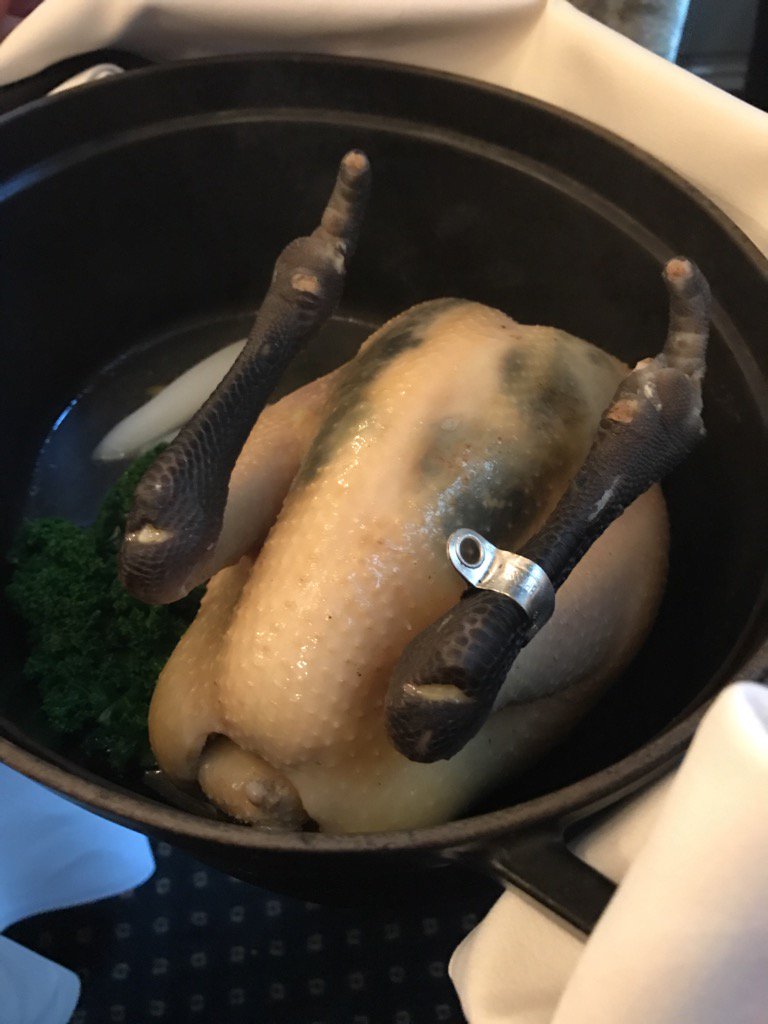
The centerpiece of the lunch was poulet de Breese demi-deuil (poached Bresse chicken in half-mourning – pictured above and at the top of the article). Larousse Gastronomique calls it one of the most famous Lyonnaise dishes “particularly the version given by Mere Fillioux,” and mandates that the bird be of the highest quality and poached. The name comes from the dark truffles beneath the skin which give the appearance of a mourner’s veil hiding their white skin. Any recipe that roasts the bird, is little more than a chef’s short-cut and an abomination. An abomination I say!

As soon as we saw it on La Mère Brazier’s menu (for two, for 200 euros) we were hooked. For those of you who’ve never had Bresse chicken, the bird itself is a revelation — the white meat having none of the bland stringiness that plagues American chicken, and the dark meat having a finish that lasts until next Tuesday. The dish is served in two courses — one festooned with black truffles, the other a rich, chicken-truffle soup under a puff pastry dome — and is so good is could justify a transatlantic flight.

I thought long and hard about whether to book a table here or at Paul Bocuse. Both are old-fashioned restaurants (LMB dates to 1923, PB has held 3 Michelin stars since 1965), but too many chefs told me the food at Bocuse is tired and metronomic, so I opted for the older restaurant with one less star. I’m glad I did as there was nothing old-fashioned about La Mère Brazier except the building, the beautiful service and that beautiful bird.

Image may contain: 1 person, standing and suit(Sommelier Alexandre Pons knows we have a sweet spot for Chartreuse)

BERNACHON

https://s-media-cache-ak0.pinimg.com/736x/d1/ab/ff/d1abffe1024cb58f4c25b6a9f4b5db99.jpg

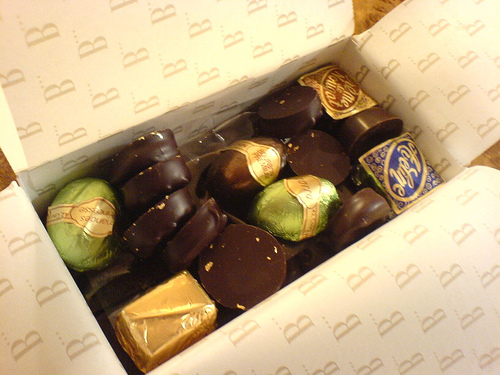
What can I say about Bernachon that hasn’t been said before. It may be the best chocolatier on earth. It certainly has the best goddamned hot chocolate in the goddamned universe:

No automatic alt text available.

So thick you can practically stand a spoon in it. And I would kill for one of their bon bons right now. Bean-to-bar chocolate has been all the rage in American chocolate circles for a few years now. They’ve been doing it here since 1953.

http://www.chocolandia.es/blogdelchocolate/wp-content/uploads/2012/01/Bernachon-surtido.jpg

‘Nuff said.

LES HALLES PAUL BOCUSE

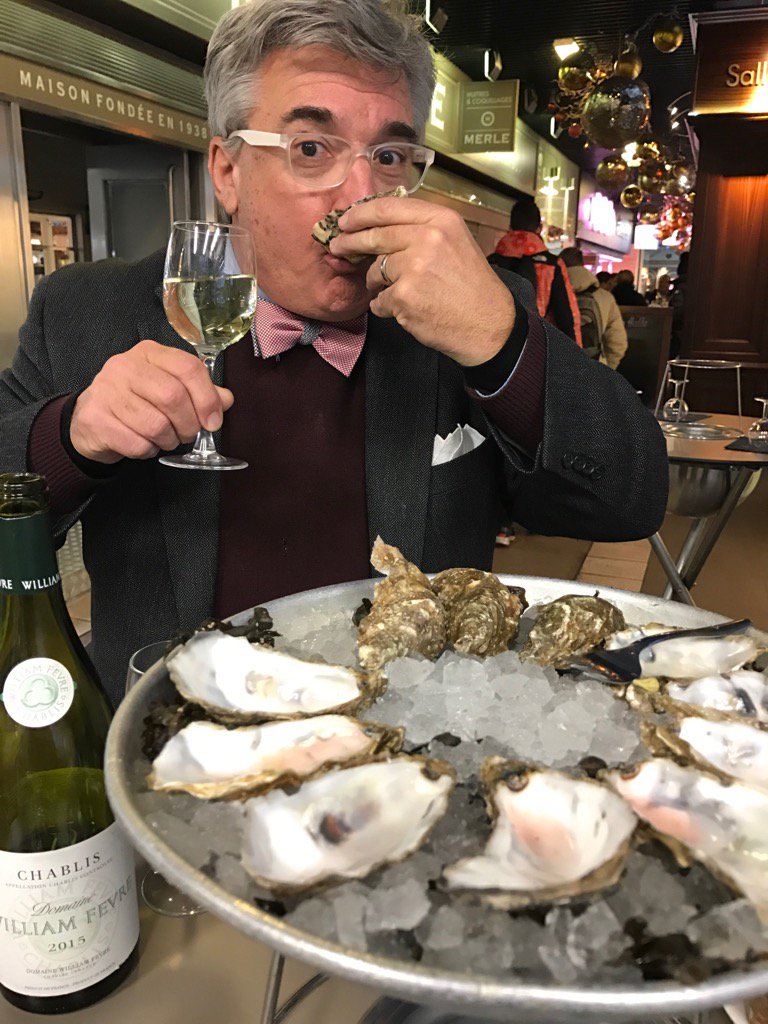
(Oysters and Chablis at 9:00 am. You gotta problem with that?)
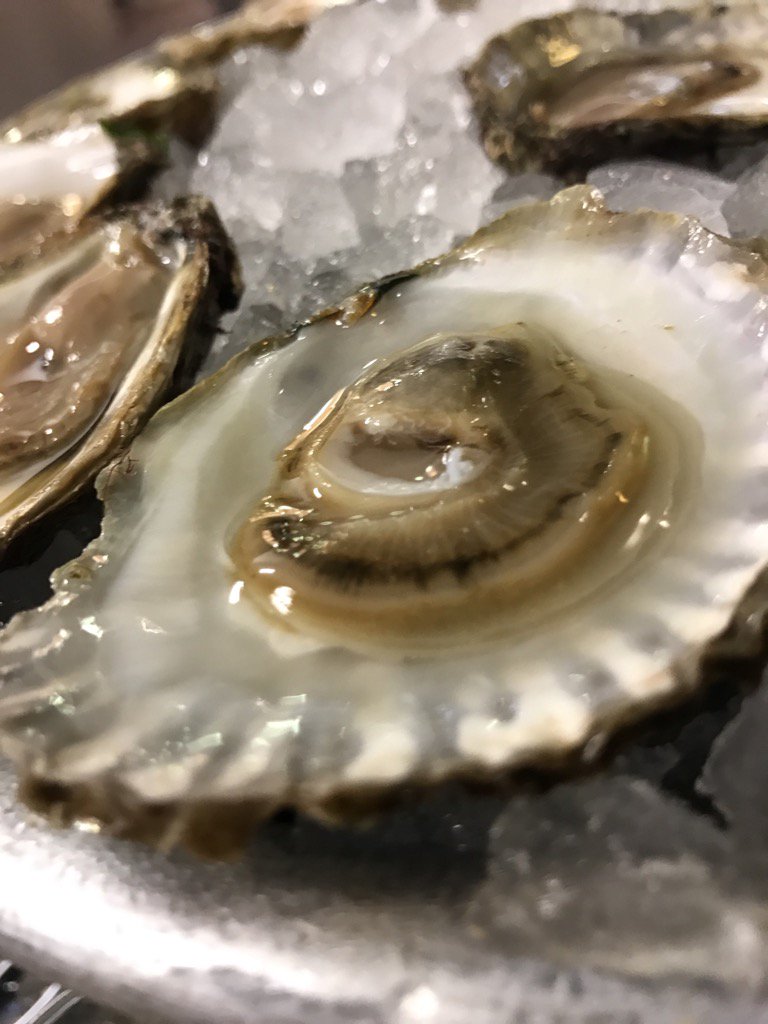
Les Halles Paul Bocuse are the food halls of Lyon. They’re not as huge or eye-popping as the markets in other large European cities (Venice and Barcelona spring to mind), but there’s no beating the French pastries there, or the Belon oysters:

Also known as European flats, they are the world’s best bivalves — small, flat, sweet and saline, with a finish like licking a copper penny. There are worse ways to spend a morning in France than chugging down a bottle of Chablis with three dozen of these beauties. As you will see, we should’ve stayed at Les Halles, or ducked into one of the many bouchons (small bistros) that pepper the streets of Lyon, serving local specialties like pâté en croute and boudin noir. A bad bite in any of them is hard to find, or as our gourmet ami Sebastien Silvestri said, “They (the Lyonnaise) don’t know how not to make it good.”

Unfortunately, we found the one Michelin-starred restaurant in Lyon where that was not the case. Instead of seeking out a tasty bouchon, we wasted a meal at….

PIERRE ORSI

Image may contain: 1 person, sitting, table and indoor

ELV hates wasting a meal. Any meal. Especially when he’s traveling in France. Ten years ago, we visited Pierre Orsi and were thoroughly charmed by the place. A decade on, the food tasted as dated as the décor. One dish dazzled us – a ravioli with foie gras and black truffles – the rest of our meal could’ve been from some pseudo-bistro in Bosnia . On the plus side, the service was wonderful and the wines were spectacular. (We never tire of drinking grand cru wines for 100 euros in France that would cost 4Xs that much over here.) But it’s going to be a long time before I forget my dried-out lobster, Monsieur et Madame Orsi.

LA BOUITTE
Image may contain: night, house and outdoor

In a perfect world, this would’ve have been our first big deal meal and not our last one. As it was, we made a spectacular drive to Les Trois Vallees (The Three Valleys) of the French Alps to La Bouitte (“Little House”) to experience the cuisine of René et Maxime Meilleur.

As it was, our meal here was taken after a solid week of eating in French and German restaurants. When that happens you hit the wall sometimes. And by “hit the wall” I mean what you experience what the French call la crise de foie (liver crisis) where your stomach (and liver) have ceased to function normally, and hunger becomes the last thing on your mind. Having been through these Michelin-starred rodeos before, my digestive system is well acquainted with la crise de foie, and the best one can hope for is no extreme gastrointestinal eruptions and a quick re-gaining of one’s appetite. Luckily, we had none of the former and powered through the latter, meaning: we ate our three-course dinner at La Bouitte (really more like eight courses when all the freebie courses are factored in), but we weren’t hungry for any of it in the least. In fact, so “not hungry” were we that, for the first time in twenty-five years, we skipped the cheese course.

To repeat, we skipped the cheese course.  In a Michelin-starred restaurant. In France. No Tomme de Savoie, Beaufort, Reblochon or Gruyere or Comté would pass our lips this night.  Au revoir, we said, to any Tamié, Tome des Bauges or Chevrotin. And kiss goodbye any thoughts of a Vacherin du Haut Doubs. “Quelle horreur!” we could hear the Julia Child screaming from her grave. But we simply could not stomach another bite.

Thus were we unable to fully enjoy one of the great, rustic dining rooms of the world, set amidst the splendor of the French Alps.:

http://media.sit.savoie-mont-blanc.com/original/214829/0-309624.jpg

…nor could we take the full measure of the Meilleur’s cuisine:

http://www.la-bouitte.com/media/galerie/restaurant-labouitte-2-5.jpg

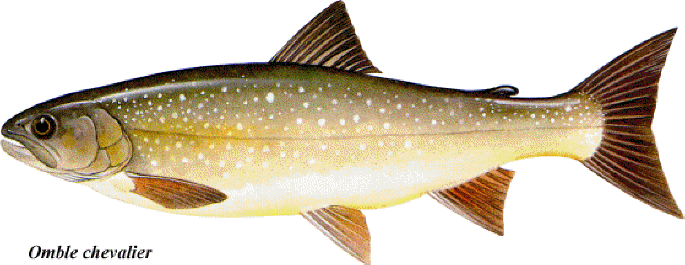
What we did have was the elevated cooking of the Savoyard, an area rich in pastures, lakes and rivers, and renowned for its fresh water fish. The Food Gal had the omble chevalier (arctic char), while I took the lake trout “bleu” and both were a revelation in the beauty of the local waters. The flavors were pure, simple and direct, as if the fish had jumped out of the stream and onto your plate. Every bite a testament to confident chefs who know they are working with supreme raw ingredients and only want to make them shine.

Which is exactly what they did with this plate of warm Savoie root vegetables:

Image may contain: food

….proof once again that great vegetarian cuisine does not come from vegetarian chefs.

Everything about La Bouitte — the room, the staff, the spa, the dinner, the two-fisted wine list:

Image may contain: 1 person

….and the breakfast, was just about perfect. We can’t wait to return…the next time with a big appetite.

LE MONTAGNARD

Image may contain: table and indoor

Man does not live by Michelin-starred dining alone. Sometimes, all you want is a bunch of melted cheese on bread. And man, if that’s your thing, you’ll think you’ve died and gone to heaven in this part of the world. Cheese is king in the Savoie. Cow’s milk cheeses to be precise. And they know how to melt it right. With lots of gooey, winy goodness, served with a bracing glass of the local vin blanc. Chef John Courtney (who had also recommended La Bouitte) told us we needed to hit Le Montagnard for its authentic fondue, so that’s just what we did. From the wooden tables and plaster walls to the ski boots lining the front hallway, this is soul-warming, ski resort food at its best. You think you know from fondue? You don’t know from fondue until you’ve tasted one made with local Beaufort cheese.

 AUBERGE DU ROSELET
Image may contain: water

Our last meal in France took place on the shores of Lake Annecy, known as “Europe’s cleanest lake.” It’s alpine, crystalline waters are known for all sorts of water sports, and also some of the tastiest omble chevalier in the business.

We stumbled upon Auberge du Roselet on the shores of the lake as we were driving to Lausanne, Switzerland. The sign said “Spécialties de Poissons”  so we bit, and walked in, not knowing what to expect. What appeared was an unexpected treat, and the kind of out-of-the-way, knock-your-socks-off meal that only exists in France.  The welcome was warm and cordial; the tables were dressed with thick linens, and the menu was the prettiest (and heaviest) I’ve ever seen. (see picture above). So pretty was it that we begged to take one; they said no. Then we offered to pay for one; they said “no, merci.” Finally, we contemplated stealing it. But the food was so good, and the view so stunning, and the staff so nice, we demurred.

With appetite restored, we feasted on delicately smoked ham:

Image may contain: food

Beautifully salmon fumé:

Image may contain: food

…and finally, the piece de resistance:

Image may contain: food

….a gorgeous omble chevalier specimen, swimming in butter, as it should be.

All of it from a modest little place along the road, on a country drive through the Haute-Savoie. Amazing, but seemingly par for the course in this part of the world.

Don’t let anyone ever tell you that France doesn’t have, top to bottom, the best restaurants in the world. If someone tries to tell you that, politely tell them they are wrong.

Food may be a passion in other parts of the world, but in France, it’s a religion.

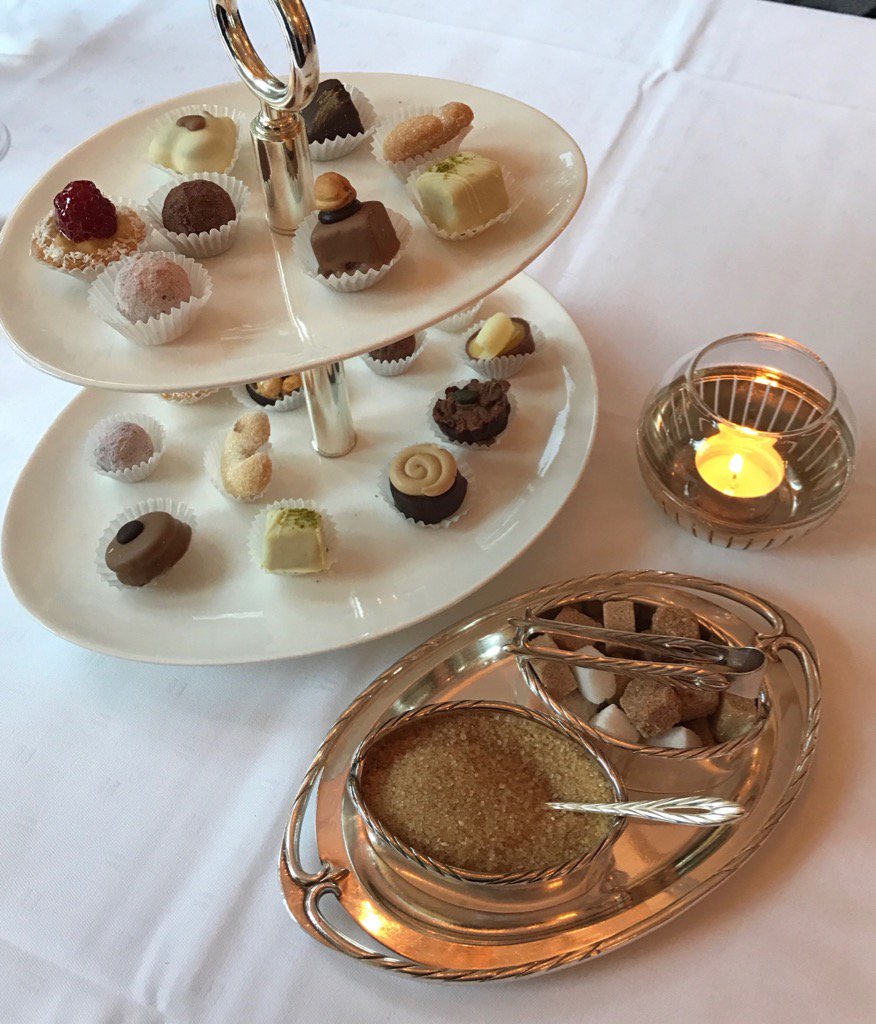
(Petit Fours is French for “I can’t believe they’re serving us more food!”)
WALDHOTEL SONNORA

Auf dem Eichelfeld 1, 54518

Dreis, Germany

 Tel: 49 6578 406
LE SAUVAGE

64 Rue Monge, 21000

Dijon

Tel: 33 3 80 41 31 21

LE MONTRACHET

10 place du Pasquier de la Fontaine, 21190

Puligny-Montrachet

Tel: 33 3 80 21 30 06

LES HALLES PAUL BOCUSE

102 Cours Lafayette, 69003

Lyon

Tel: 33 4 78 62 39 33

BERNACHON

42, cours Franklin Roosevelt

Lyon

Tel: 04 78 52 67 77

LA MÈRE BRAZIER

12 Rue Royale, 69001

Lyon

Tel: 33 4 78 23 17 20

PIERRE ORSI

3 Place Kléber, 69006

Lyon

Tel: 33 4 78 89 57 68

LA BOUITTE

Saint Marcel, 73440

Saint-Martin-de-Belleville

Tel: 33 4 79 08 96 77

LE MONTAGNARD

Rue des Places, 73440

Saint Martin de Belleville

Tel: 33 4 79 01 08 40

 AUBERGE DU ROSELET

182 Route d’Annecy, 74410

Duingt

Tel: 33 4 50 68 67 19