MOMOFUKU’d


ELV note: It was just announced this week that the executive chef of Momofuku Las Vegas (Michael Chen) left after only two months on the job. We doubt this will affect any of the food there, however, as the “executive chefs” in most celeb chef Strip restaurants are little more than functionaries, executing a menu that is pre-determined thousands of miles away. Our objections to the food (as you will read below) has much more to do the recipes as conceptualized, not as they were cooked.

ELV Note #2: The following review appears in this month’s issue of Desert Companion magazine.

UMAMI BOMBS AWAY!

It’s hard not to admire what Chef David Chang has done with Momofuku (“Lucky Peach” in Korean). What began as an eight-seat eatery in lower Manhattan in 2004 has spawned an empire that now stretches from Soho, New York to Sydney Australia.  It’s also not hard, after eating your way through Momofuku, to sometimes wonder what all the shouting is about – shouting from the rooftops being what the influential New York food media has done almost from the day Chang opened. Once they laid the groundwork, social media took over, and for well over a decade, foodies the world over have been inundated with tales of Chang’s influence and ground-breaking cuisine.

When other chefs and restaurants went into recession hibernation in 2008, Chang kicked his expansion into high gear, opening noodle bars, Vietnamese restaurants and impossible-to-get-into joints in New York — expanding his brand while taking full advantage of the rise of the Millennials and their need to have something tasty (and Instagram-worthy) to eat. There are now five Momofukus in the world, more are planned, and to the delight of his fans, Las Vegas finally has one.

In the beginning, the entire Chang oeuvre consisted of barely a handful of items. Because of its small size, the original Momofuku Noodle Bar in lower Manhattan featured a few bowls of ramen, a couple of appetizers and some stuffed bao buns and that was it. On such bare bones was a food empire born.

The genius of Chang did was in upgrading those  noodles, enriching the broth, and loading smoky bacon onto classic Korean and Japanese items that, until he came along, most Americans wouldn’t touch with a ten food chopstick.  He also cooked (and seasoned) the Korean fried chicken like a real chef, and made a big deal about using better ingredients. No bottom bin ham for him. He used real Virginia country ham, Kurobuta pork, and the fluffiest bao he could find. He cured his own pickles too, (a big deal in 2004) and made sure everyone in the food media knew about it.

Most of all, though, Momofuku  became all about umami — umami being the word for the intense, savory quality that only the densest, saltiest, most amino-acid rich foods (like steak, cheese, smoked meats and soy sauce) possess.  In the Chang universe (then and now), it’s all about overwhelming your palate with this fifth taste (after sweet, sour, salty, and bitter). His food does this at the expense of delicacy and refinement but his audience didn’t seem to care one bit. Subtlety being as important to a David Chang meal as dialogue is in a Vin Diesel movie.

Thus will most of your meal be so umami-drenched that your palate will be screaming for mercy after several plates appear, each overloaded with whatever miso-shoyu-smoky-kombu concoction Chang can’t help buy incorporating into every bite.

If smoke is your thing, you’ll be in smoked hog heaven. By all means then, don’t miss the pork meatballs swimming in (you guessed it) plenty of smoked black-eyed peas.  Is Momofuku’s pork ramen soup good? Yes, but it’s also so smoky that three sips in you will want to run up the white flag. Ditto the oysters Momofuku – the seafood essence of which is obliterated by smoky bacon bits. There’s also a smoked pork chop and roasted mussels on the menu, with the mussels being festooned with (wait for it) plenty of smoked Benton’s bacon. The food is so smoky here it ought to be sponsored by Marlboro.

When Chang and his troops are through pouring on the smoke, they find many other ways to up the umami ante. Sichuan rice cakes are thick stubby rice noodles smothered with pork sausage, while chilled spicy noodles get a heap of sausages and cashews to effectively overwhelm the interesting starches and spices beneath them – pork sausage and cashews being the belt and suspenders of the umami-overload universe.

After three trips around this menu, I threw in the towel. There are some good things to eat here – the spicy cod hotpot being good fish, well-treated; the katsu chicken an old-fashioned, mushroom cream sauce delight – but by the time you get to them, you will have been drowned by a tsunami of umami. By all means get the pork belly buns (the ones that made Chang famous), but skip the chicken karaage version – they being sad and stringy. The vaunted rotisserie chicken comes with deep-fried bones (some edible, some not), and is not as good as it thinks it is.

What is good is the seating. You may have trouble getting one, but that’s only because every under-40 in Vegas seems to be beating a path to this second floor location in The Cosmopolitan these days. What they find is a large restaurant fronted by a long bar that itself is five times the length of the original operation. Beside that bar are a number of high tops – for waiting, drinking or overflow dining – and beyond them a huge open kitchen that looks like it could feed an army base. For its size, the room is remarkably comfortable, the tables well-spaced, and the noise level (relatively) civilized. Service is also top notch, with management and waiters who are well-versed in the food. The wine list is sinfully overpriced, and the sake/sochu list woefully sparse.

David Chang deserves a lot of credit. He made this food safe for aspirational foodies and non-Asians alike — folks with limited resources who wanted to hop on the foodie bandwagon and expand their knowledge of chewy noodles, miso broth and various edible esoterica. All of this was a treat when you were ducking into a teeny tiny noodle emporium for a quick fix of soup and a bao bun. To put an entire meal together from this food, however – after your taste buds have been bludgeoned into one-dimensional submission – is a big-box experience of a different order. If you still use party as a verb, and don’t mind that everything on your table tastes the same, you might feel right at home amongst all the umami.

Nothing about Momofuku is as good as its reputation, but in this day and age, that’s enough.

MOMOFUKU

The Cosmopolitan Hotel and Casino

702.698.2663
Indian Uprising

The average Italian restaurant gets more customers in one night than a good Indian restaurant gets in a month. – Calvin Trillin

When it comes to restaurant food, I have the attention span of a housefly. I can be awash in wonderful Italian and find myself dreaming about French. Knee deep in delicious dim sum can’t dissuade me from dreaming about Dijon, and when I’m tucked into a tiramisu, I tremble at the thought of terrific tom yum.

And when I’m supping on seafood, I sigh about steak. And vice versa.

Yes, I’m an inveterate food slut, jumping promiscuously from cuisine to cuisine, and chef to chef, always looking for something elusive and delectable and just out of reach. A true gourmet is always a bit unhappy; always unsure of whether he has found the perfection that he seeks, invariably restless to fall in love with whatever he’s not having that very minute.

Any great restaurant town — New York, Chicago, Tokyo, Las Vegas, etc. — is like an orgy to an epicure. Lying before him are endless pleasures of the flesh: ripe, nubile, willing morsels there for the taking. But as anyone who’s ever been to an orgy knows, they can be exhausting and overwhelming…or so I’ve been told.

Yes, there is such a thing as too much great Italian food, an overflow of fine French, or a surfeit of steak. I can even overdose occasionally on superior sushi. When a confluence of these things occurs, there’s only one cuisine that helps me re-calibrate my desires — Indian.

Maybe it’s the breads, maybe it’s the vegetables. Most assuredly it is the heady mix of spices that infuse this cooking. Indian food overwhelms the senses. Subtlety is not its strong suit.  Kaleidoscopic flavors, intense aromas, and powerful punches to the palate are what defines it. There is also a depth and richness to its soups and stews that is deeply soul-stirring. The Japanese may have defined umami, but Indian culture imbues its cuisine with almost mystical levels of savory complexity. Just like it does its religion.

It always amuses me to wonder what an Indian chef or cook must think of a simple, French tarragon chicken, or spaghetti and meatballs. “My god,” they must think, “what kind of simple-minded baby food is this? It only has a few ingredients and hasn’t been absorbing fifteen different ground spices all day.”

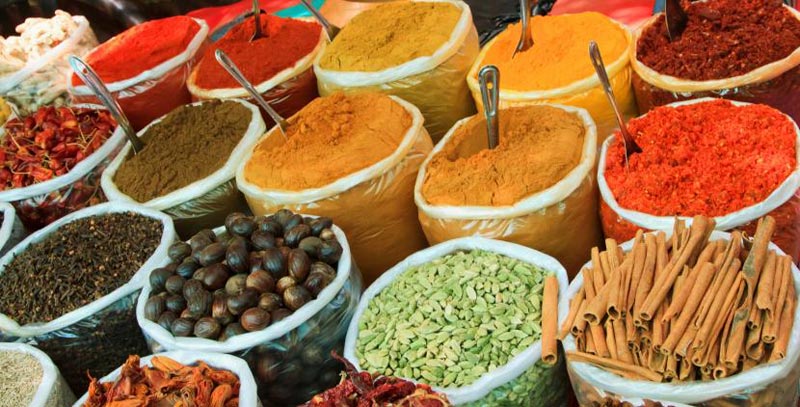
Spices being the raison d’etre of Indian food. Not spicy in the sense of extreme heat and concentrated capsicum (although some Indian food can be as fiery as any foods) but spicy in that every dish contains a plethora of pronounced piquancy, presented by a panoply of palate-pleasing presentations.

http://2.wlimg.com/product_images/bc-full/dir_95/2821723/spices-1300271.jpg

When you consider the dozens of spices, and hundreds of combinations that can be made with these ingredients, a mastery of this cuisine seems almost unobtainable:

https://s-media-cache-ak0.pinimg.com/564x/c0/91/8a/c0918a07c507e10100098915b6be4bad.jpg

And these are just the basic ones. Did you know that both green and black cardamom is used in the Indian kitchen? Or that cumin should be freshly roasted? Or that un-ground nutmeg lasts forever?

The point is toasting and roasting of these seeds is essential to good Indian cooking, and it is the mastery of these things that distinguishes a good Indian chef from a poor one.

I’m not going to sit here and tell you I can tell whether an Indian chef is a whiz at re-creating this cuisine 8,000 miles from his homeland. I can however, say that we are experiencing an upgrade among our Indians, brought forth by chefs who seem to be putting a lot more effort into their dishes, and trying to take tepid tikka masala and lame lamb rogan josh from the doldrums of the dreaded all-you-can-eat Indian buffet, and bring them into the 21st Century. And our two best are only a half mile apart from each other on Paradise Road:

ORIGIN INDIA

Part of the reason Indian food has such a dreadful reputation is that the dishes lend themselves to constant reheating — the thick, stew-like concoctions fairly begging to be put in a steamer tray buffet. Unfortunately, this re-serving of yesterday’s (and the day-before-yesterday’s) dishes results in a flattening out of the piquancy that distinguishes the great, spice-infused concoctions of the sub-continent.

Origin India has always aimed to be our best Indian restaurant, and by and large it has always succeeded. It’s definitely the most upscale, with a nice bar, wine list and decor that stresses comfort over quick and easy convenience.

What the menu now stresses, under the new hand of Chef Jeyakumar Jeevamurali  (call him Murali for short) is the bright, powerful flavors of southern India. I’ve eaten at Origin many times in the past, but this is the first time I noticed the dense, unique layering of flavors in each of the dishes. Indian food is as tough to photograph as the names of its chefs are difficult to pronounce, so you won’t get a deluge of food porn close-ups like we might with other cuisines.

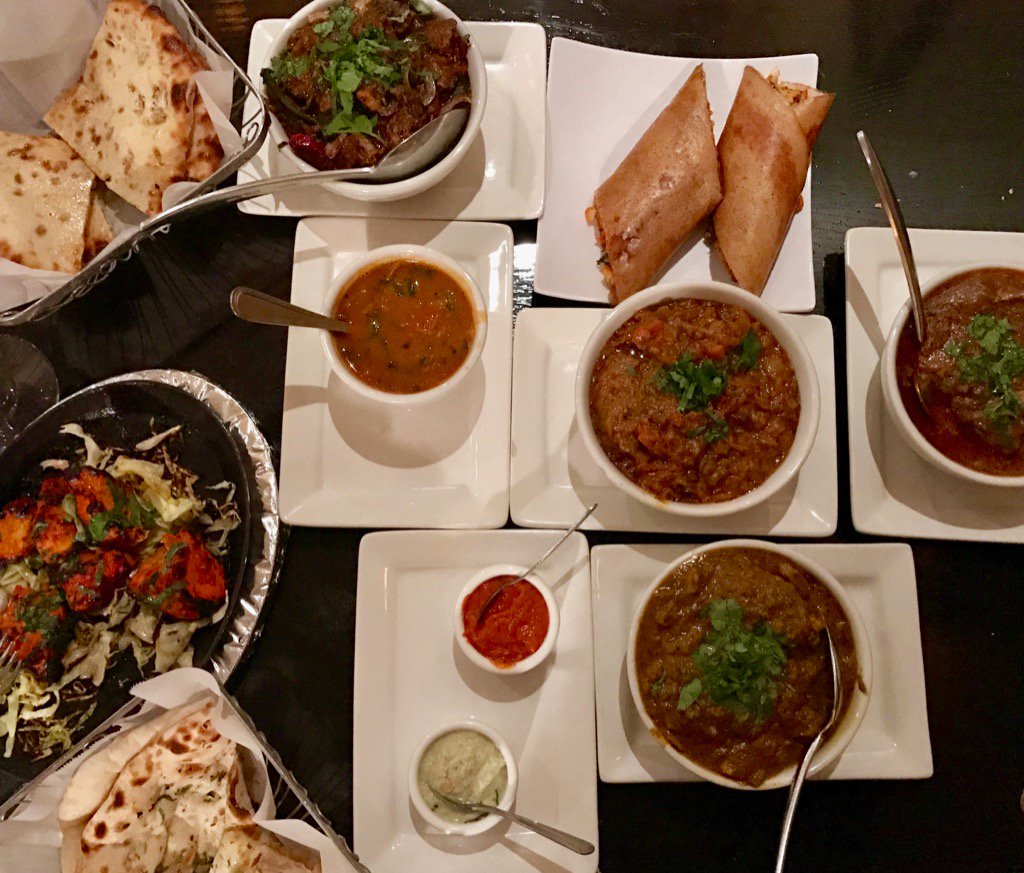
Suffice it to say that each of Origin’s dishes at the top of the page — chutney chicken, lamb nihari, goat pepper fry, et al — may look similar from afar, but each punch you in the palate with their own flavor profile. The chili paneer (batter-fried cheese in a tomato-pepper sauce) was sweet and slightly spicy, just as it should be, while the ground lamb chapli fairly explodes with fresh herbs and green chilies. Only the slightly dry tandoori chicken seemed a bit careless, but as most customers want chicken cooked until the last drop of juiciness is  wrung from its tender striations into a cinder of meat (the same way Greeks overcook everything into a briquet), it’s probably just a concession to the public.

Better by far are those stewed proteins — each one different in spice and texture. What we look for in Indian food is distinctiveness between its dishes, and Jeevamurali provides it in spades. A touch of sweetness distinguishes the chutney chicken (along with some bright vinegar notes), while the lamb is deep, soulful richness in a dark gravy. His signature dish is the goat pepper fry: it being a study in drier, stir-fried meat-meets-heat. The Peshwari nan coming out of this tandoor is the best you’ll find this side of Harvest by Roy Ellamar.

URBAN TURBAN

A relative newcomer (only two years old), Urban Turban occupies the space of a former cigar bar on Paradise Road.

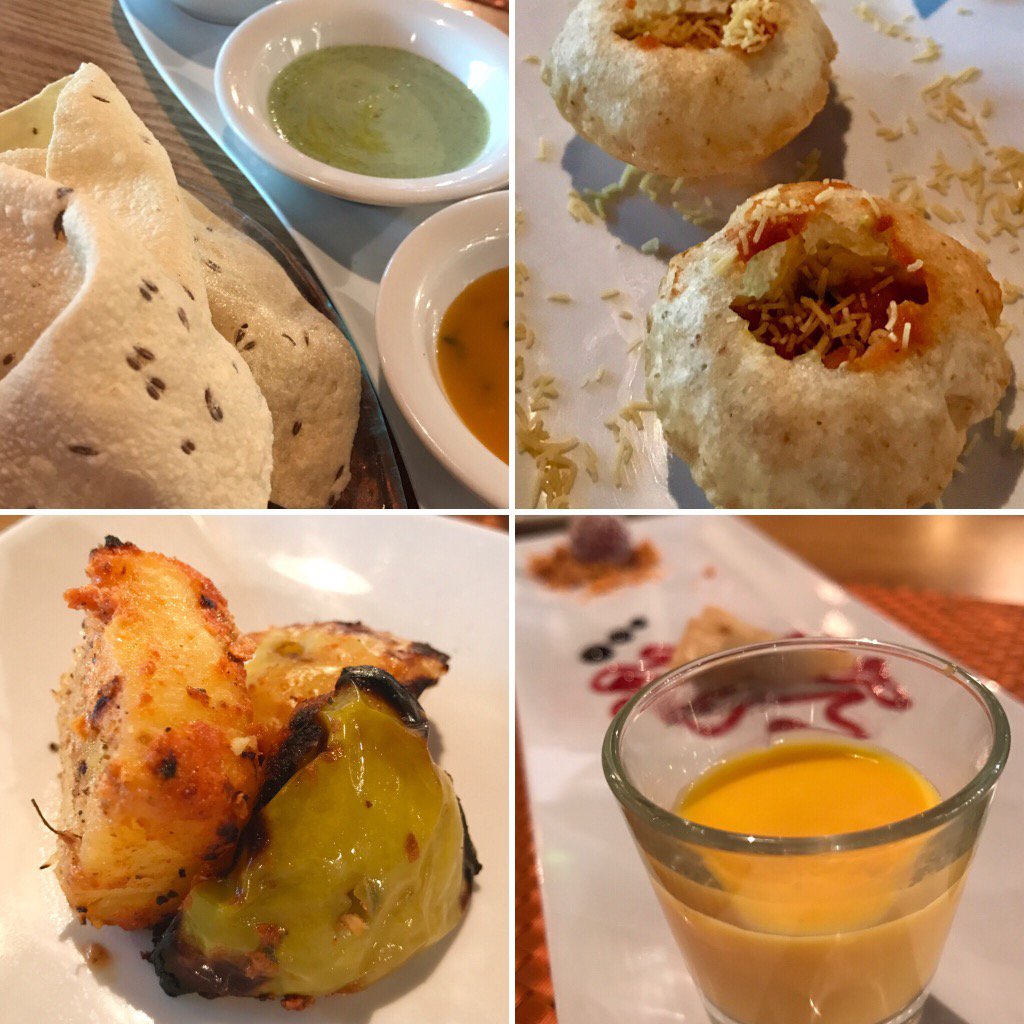
Small bites and more creative plating than in your average Indian joint are what separates it from the pack, and the meal we recently had felt more refined and polished than the stew and soup-centric stuff you usually get.

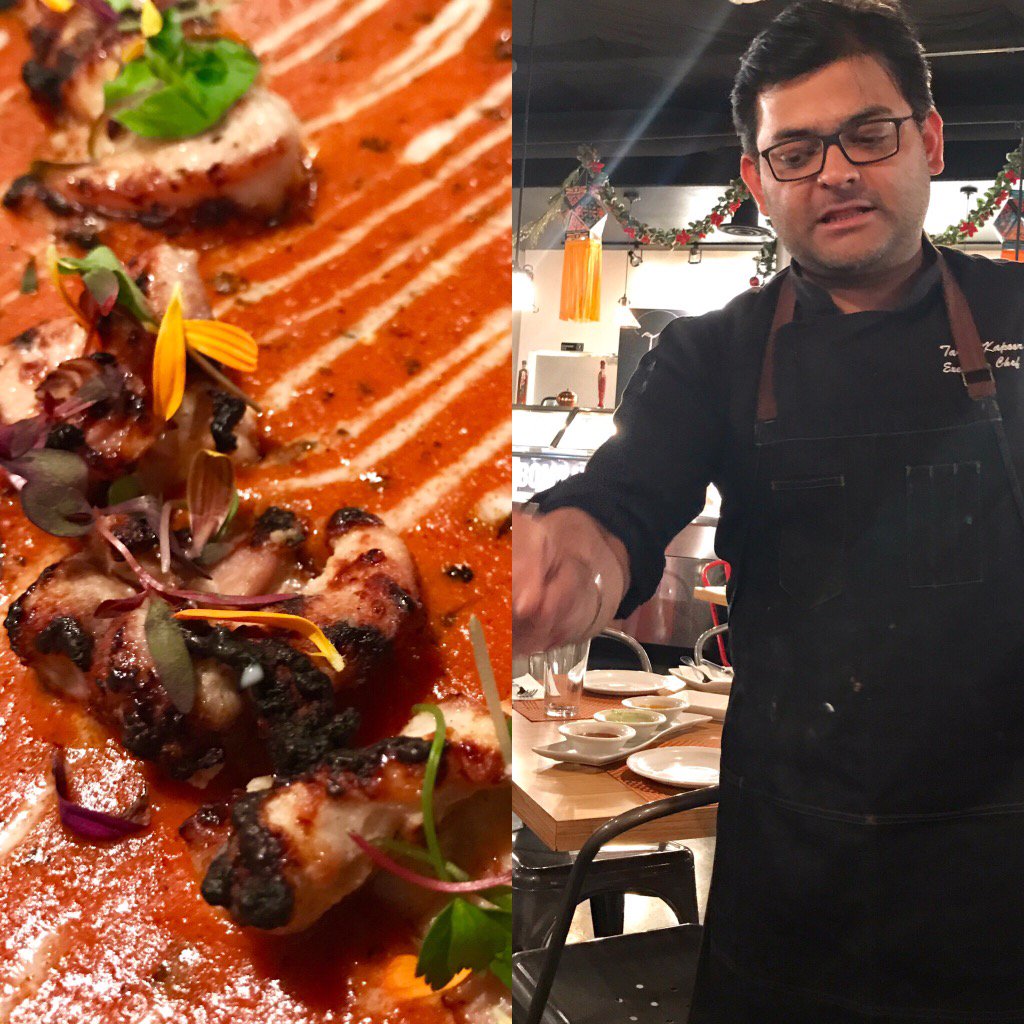
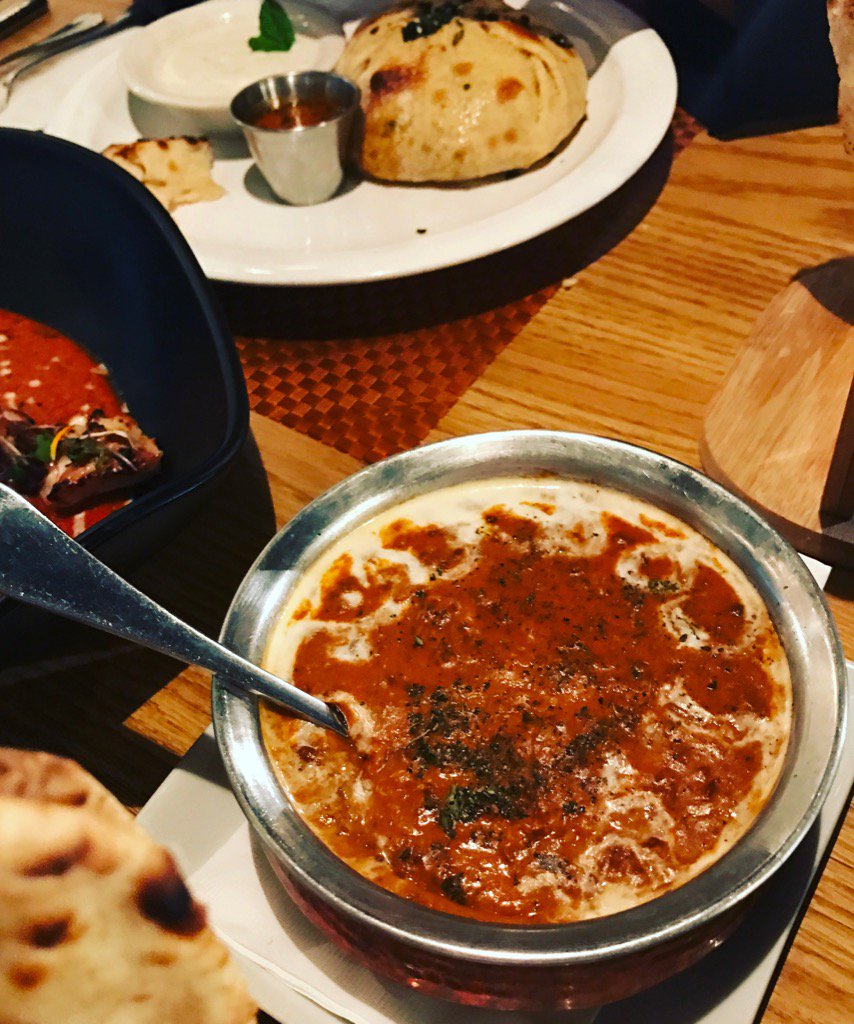
Credit for this goes to Chef Tarun Kapoor, who brings a more modern sensibility to this menu, without sacrificing the multi-dimensional ka-pow that distinguishes this cuisine. The butter chicken royale (pictured above) employs cream cheese to take this ground nut, butter-cashew sauce to a different level, and his clay oven roasted fruits (bottom left above) are a thing of subtle beauty.

(Tarun Kapoor emphatically instructs on his intense, indigenous Indian eats)
Speaking of soups and stews, you won’t find a more life-changing one than Kapoor’s take on black lentil dal:

….it being surpassingly complex for something that looks so simple. Kapoor tells us that it takes long, long cooking to get the lentils, spices and milk to blend into a buttery mass of vegetarian decadence. One bite in and you’ll be willing to forswear meat altogether.

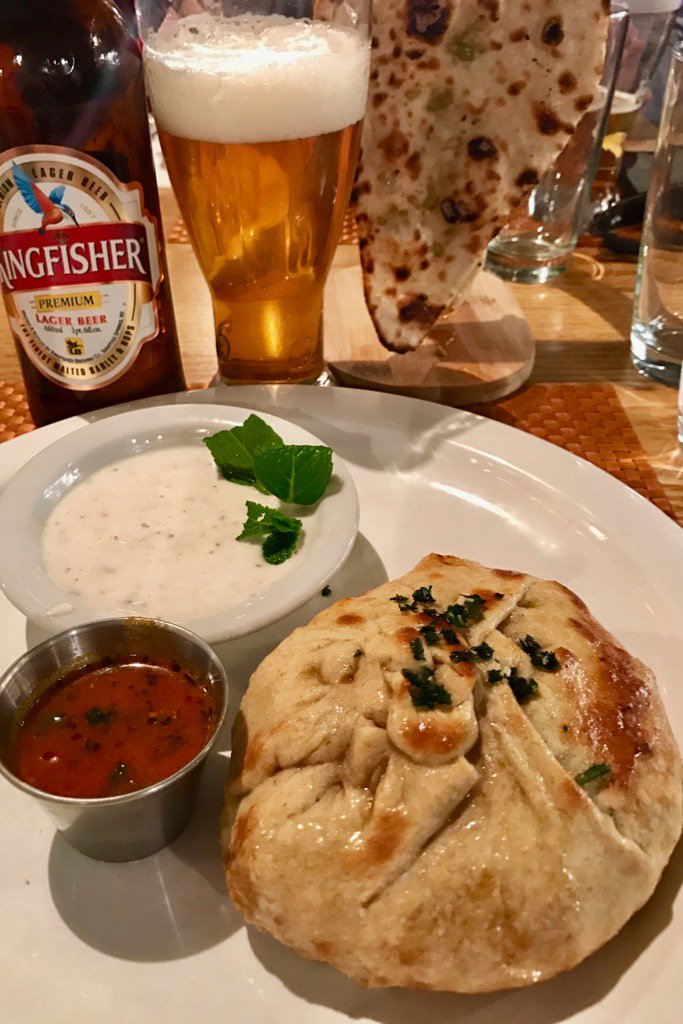
Equally good is his parda biryani (bread-covered rice):

…a satisfying  marriage of two ingredients not usually made for each other. But unlike most nuptials between two starched souls, no friction ensued. Instead, you’ll find yourself reflexively dipping into the rice with your bread, and then dipping the both of them into the cool raita, or the nice, warm tomato sauce.

As we said at the top, there is a depth to this food that few Western cuisines can match. Between the long, slow cooking, the raft of spices, and the liberal use of legumes, you will find yourself hardly missing meat at all. Which is sometimes just what your palate and your body needs.

Both of ELV’s meals were comped.

ORIGIN INDIA

4480 Paradise Road

Las Vegas, NV 89169

702.734.6342

http://www.originindiarestaurant.com/

URBAN TURBAN

3900 Paradise Road

Las Vegas, NV 89169

702.826.3217

http://www.urbanturbanusa.com/


Image may contain: 1 person, smiling, outdoor

ELV postscript: We dearly, direly, desperately wanted to include Turmeric Flavors of India in this round-up, but after four meals there (each one worse than the last) we simply cannot recommend it. Our love of this cuisine is such that we will probably give it a fifth try, sometime in the near future, before writing it off altogether.

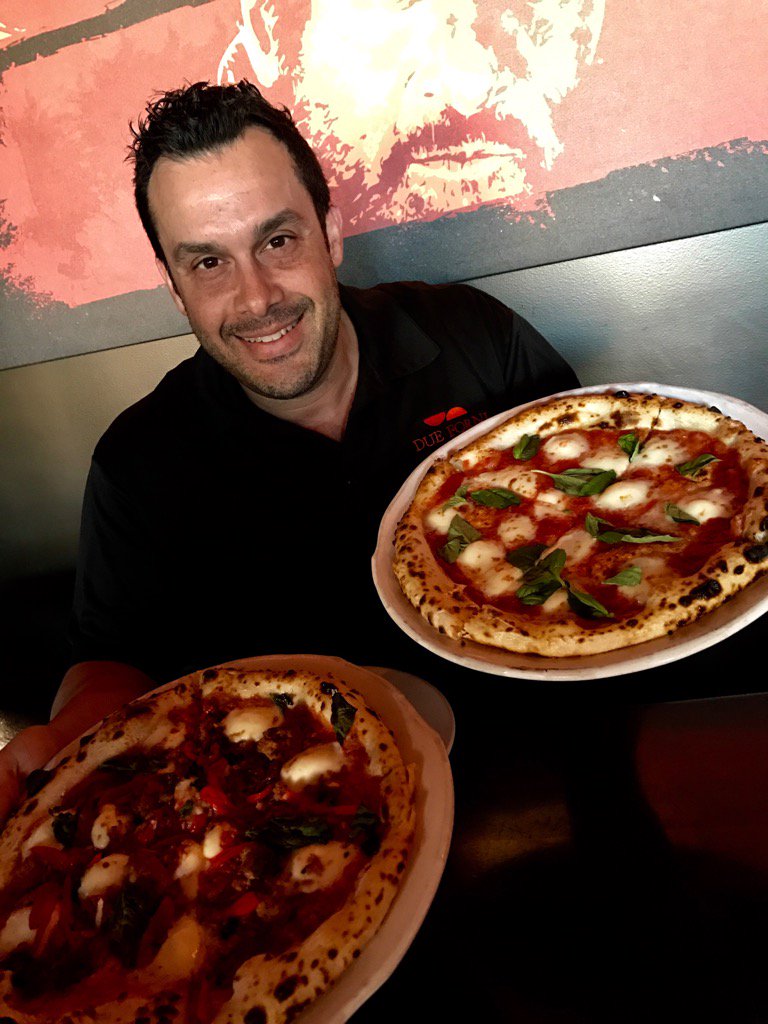
Carlos Buscaglia Is Leaving DUE FORNI

The pizza ovens will remain. The pastas will continue to be made. The uber-cool drinks, funky wine list and Neapolitan pies aren’t going anywhere.

But Due Forni is losing the man who (along with Alex Taylor) invented the concept and has kept it going for the past six years.

Yes, Carlos Buscaglia is moving on, going back to the Strip, and leaving his pizzeria progeny behind.

And suddenly, Las Vegas feels a little less artisanal, more by-the-numbers, and not quite as culinarily compelling.

Six years ago it was a match made in heaven. Six years ago, the Strip was in the doldrums, and chefs like Buscaglia, Howard Choi, and Daniel Ontiveros were looking to make their mark in the ‘burbs. One by one they sought to pioneer and present a better way of eating to the citizens of Las Vegas. One by one they tried to elevate our food scene, and one by one they (along with David Clawson, Bradley Ogden and others) have crashed upon the rocks of our insatiable addiction to prefabricated, freeze-dried and franchised food.

There have been some success stories, to be sure: Dan Krohmer’s Other Mama being the most notable of the bunch. But by and large we are a blue collar town who prefers the sanitized and safe to the original and thought-provoking.

“There’s too many chain restaurants and too many people who want to eat in them,” is how Carlos put it to me last night. “It can be very discouraging.”

Indeed it can. Every day at my office I’m confronted by staff and co-workers who prefer Jimmy John’s and Claim Jumper to something owned by a local. All they really know is that these places are safe and predictable, and that’s all they really want. Instinctively they know, what Buscaglia and I know: that it takes a certain leap of faith to put yourself in the hands of a local chef. Better by far to trust the judgment of thousands before you, and give yourself over to a formula that’s worked millions of times, be it in making a mediocre sandwich or a fried chicken chalupa.

That’s what Due Forni and Buscaglia have been up against from the get-go, and that’s what they’ve succeeded against, against all odds.

But, as he explained to me, it’s time to move on.

“Frankly, I’m tired of cooking everything in two ovens and in a 400 square foot kitchen with no stove. I’m looking forward to managing a big kitchen again.”

That shouldn’t be a problem where’s he’s going since HEXX (where he’ll be running the kitchen), is a multi-tiered, high-volume operation that will keep Carlos on his toes.

What they are gaining Due Forni will be losing: a chef with great taste, and serious cooking chops. Buscaglia has been on the Vegas food scene since the early 90s when he was slinging noodles at Pasta Mia. From there he worked his way up the kitchen ladder all the way to becoming top toque at Fiamma, before departing to pursue his dream of bringing great ingredients and great pizza to the neighborhoods.

He succeeded and Due Forni succeeded, but time marches on and new challenges must be faced. From the sound of things, new ownership is taking over DF and, for the time being, the template will remain in place. (It still does a bang-up business most nights of the week, despite being surrounded by shopping malls with loads of shitty dining options that the public can’t get enough of. I’m talking to you, Downtown Summerlin.)  It remains to be seen if they do Carlos’s legacy proud, but let’s keep our fingers crossed that the dough will be just as crispy-chewy, and the toppings just as top-shelf as ever.

Even if they do, however, not having Carlos Buscaglia cooking off the Strip just made eating off the Strip a little less tasty.