Tapas, Tapas, Tapas…and Paella!

Viva España!

Remember when Spanish food was going to be the next big thing in America? We’re talking about 25 years ago when Jaleo first opened in Washington D.C..

Or maybe it was when Ferran Adrià made such a big splash with El Bulli around the turn of the century. Everyone couldn’t wait to get on that deconstructed bandwagon, could they?

Or how about Cafe BaBaReba? It was damn tasty (in the Fashion Show Mall, if you’ll recall), but came in the early aughts and left after five years.

Or perhaps you remember the excitement when José Andrés opened The Bazaar in Los Angeles in 2008? Back when his molecular cuisine was going to take America by storm? How did that work out?

Or how about when the opening of our very own Jaleo (in The Cosmopolitan) signaled an expansion of all things España in 2011? (Once again, the food was great; but the forecast fizzled.)

All of these (accompanied by breathless food writer prose) presaged a Spanish revolution in American eats. In hindsight they amounted to more false starts than at a track meet for the deaf.

But 25 years after one, 10 years after, another and 7 years after the last prediction, Spanish food is finally sweeping Las Vegas off its feet.

And by “sweeping off its feet” I mean Las Vegas now has more tapas than you can shake a pinxtos at.

Overnight (and by “overnight” I mean the last two months), we have seen three (count ’em 3!) Spanish-style joints open up in the neighborhoods — and they’re all very different from one another. And they’re all great.

So let’s count the ways Spain is finally conquering our food scene, beginning with the most traditional of the armada.
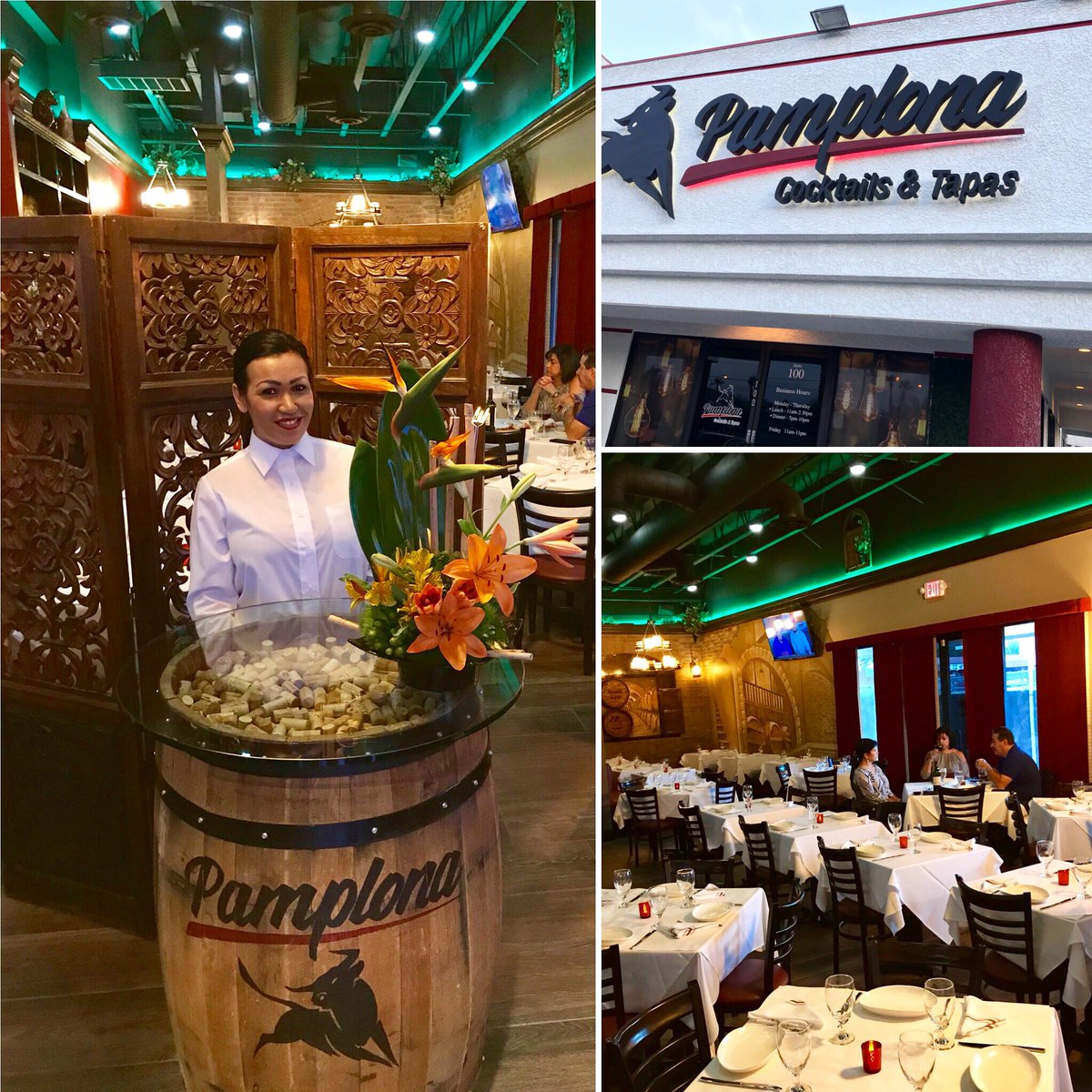
The first thing you notice about Pamplona Tapas & Wine is how nice it looks. Tucked into one of those generic strip malls  on west Sahara, it occupies a space that has housed several failed food operations — all of them done on the cheap and none of them lasting for more than a year or two. Owner Marisol Crespo also owns the shopping center in which it is located, and her attention to detail informs the comfortable surroundings, and the intimate cocktail bar, each of which beckons you as soon as you leave the commercial environs of the street behind. She also had the good sense to put Errol LeBlanc behind the stoves, and his decision to hew closely to the classic flavors of Spain makes PT&W your essential first stop on any tapas tour.

You’ll want to grab a cocktail from the small-but-mighty list, or a sangria that takes a back seat to no one’s. Then you’ll move over to a table with proper linens on it, and dive into a menu that would be right at home in Madrid.
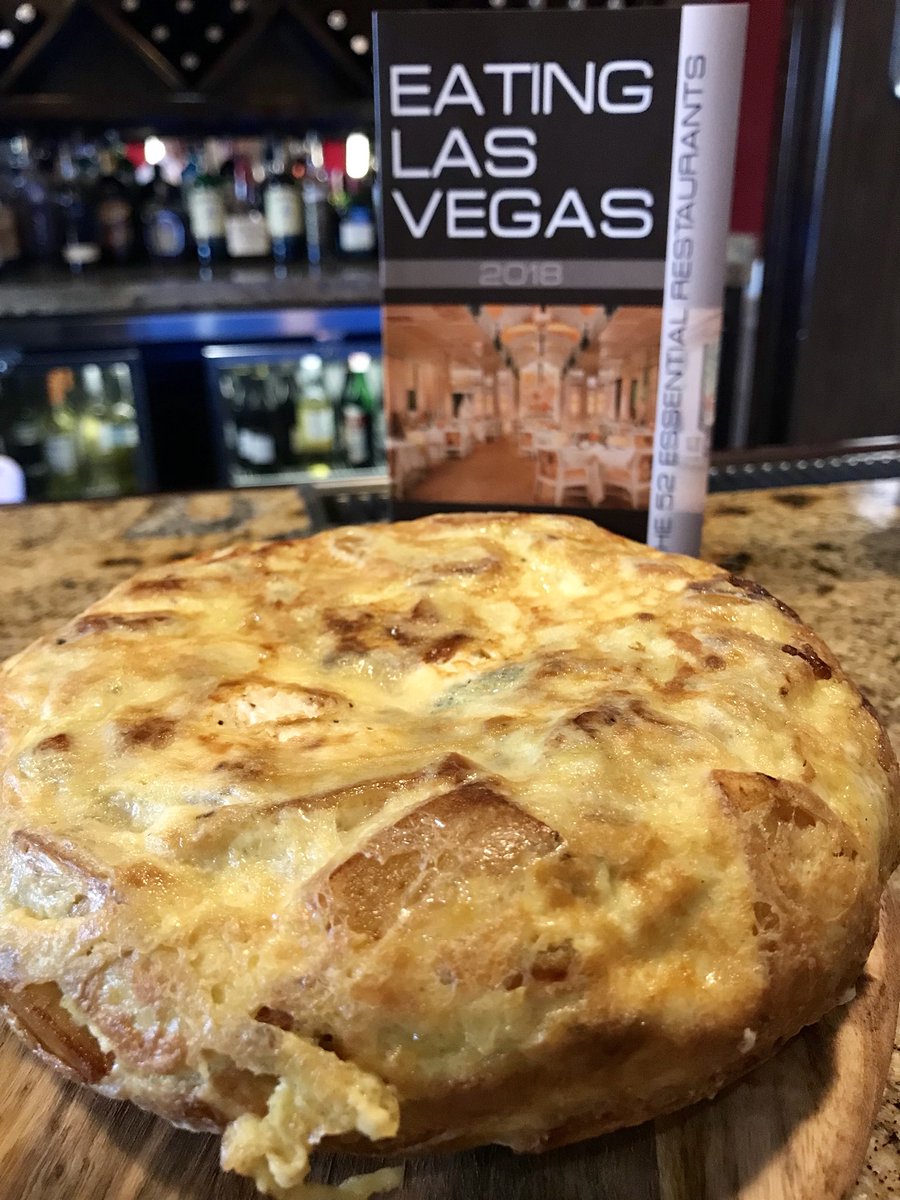
(Shameless book plug/ELV approved tortilla)

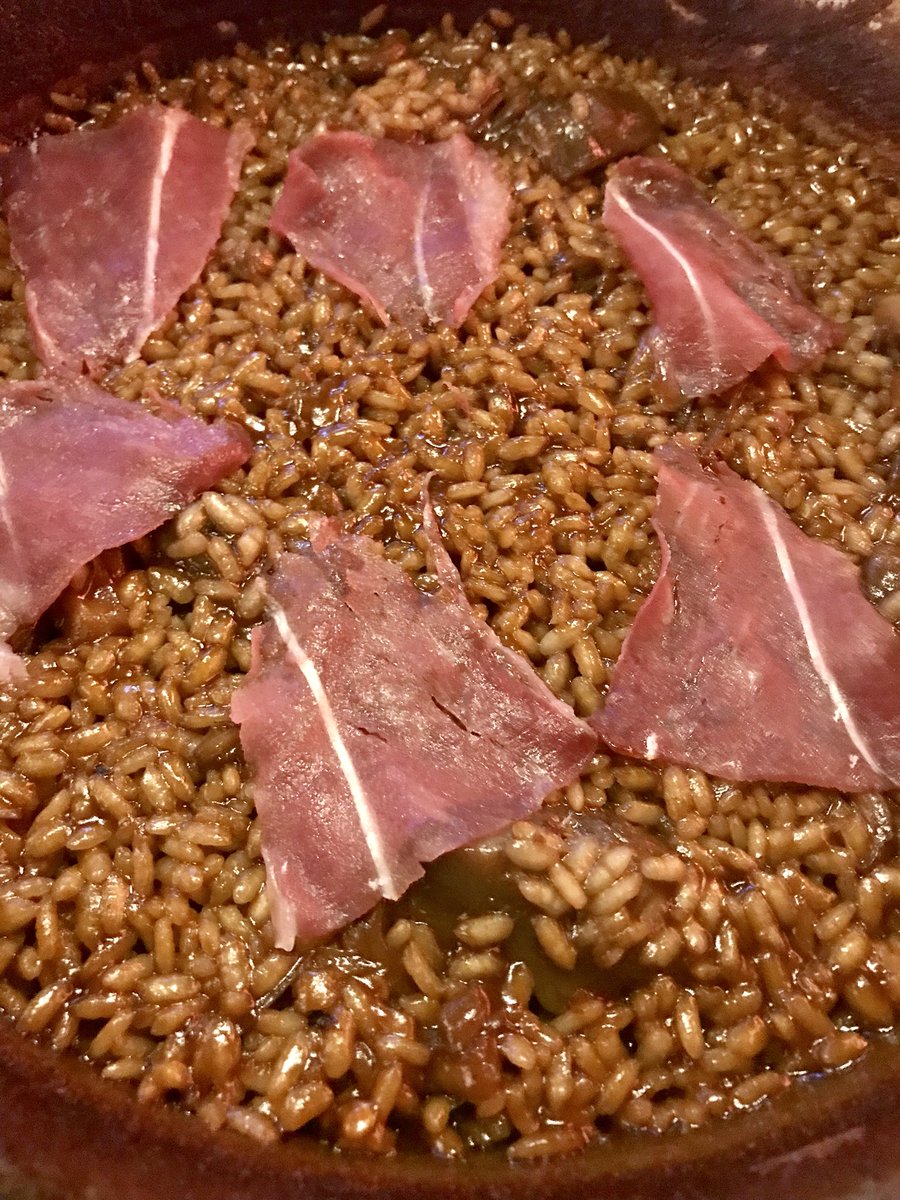
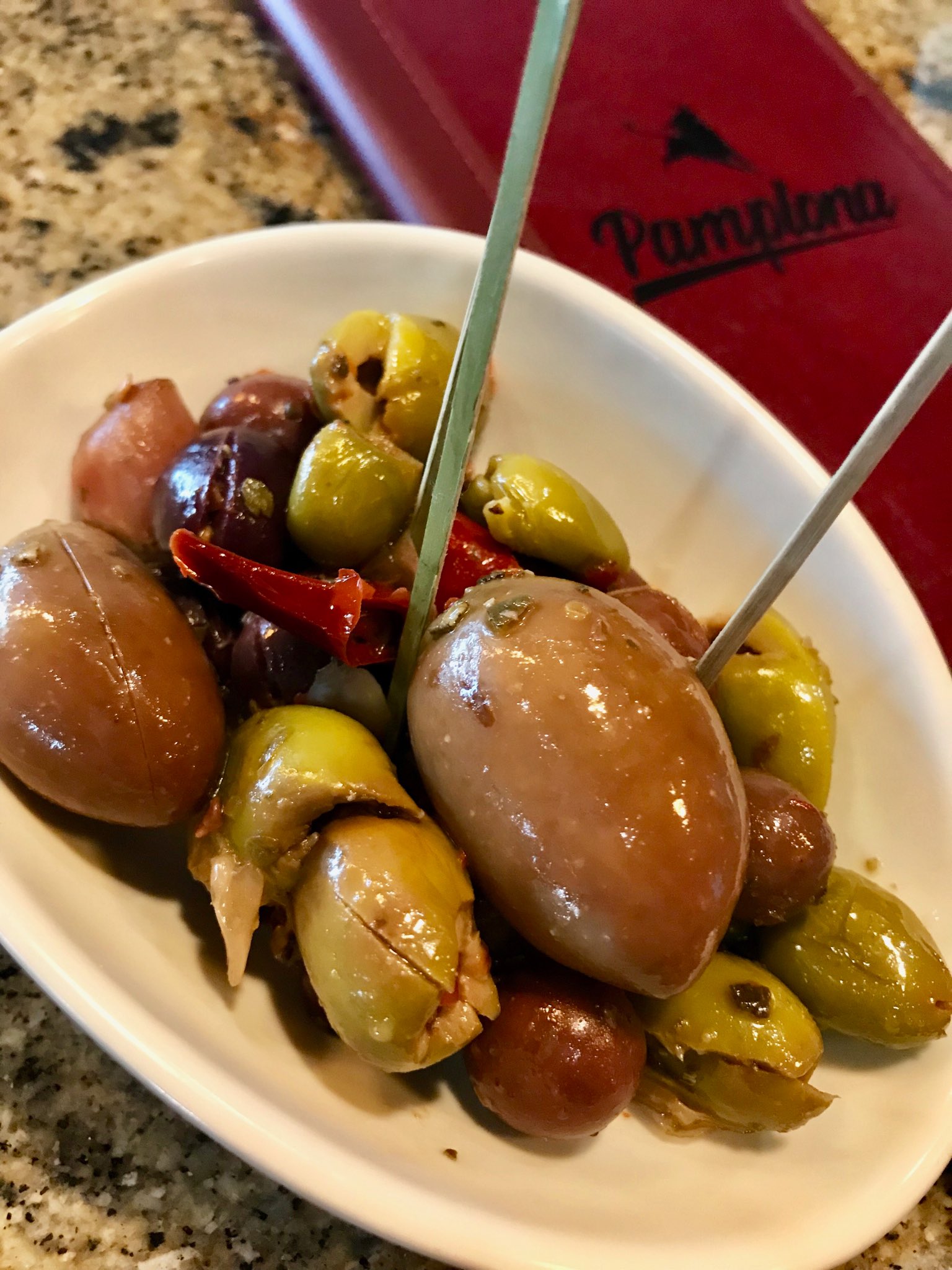
Start your meal with whatever they suggest, but don’t miss the jamon serrano on crusty bread, or the spicy sobrasada sausage spread. (I also like the Spanish cheeses they serve, which are pretty much the same cheeses they serve at every Spanish restaurant, but I don’t like them so much I want to fill up on them.) Move on from there to some Peruano snapper ceviche with piquillo peppers, and then buckle your seatbelt for the most authentic versions of aceitunas (olives), patatas bravas (baby potatoes), setas al ajillo (mixed mushrooms with lots of garlic), and piquillo relleno de queso de cabra (roasted, stuffed peppers), and a tortilla Español (pictured above)that Las Vegas has ever seen. Not to take anything away from Julian Serrano (the chef or the restaurant) or José A., but once you’ve tasted these versions, there’s no reason to endure the indignities of the Aria or Cosmopolitan hotels again to get your bite of Spain.

As you move through the menu, the hits keep coming: croquetas de pollo that are as good as Jaleo’s; paella Valenciana (with rabbit and quail) that’s better than the one at Julian Serrano (the restaurant), and gambas al ajillo that is guaranteed to drive away all vampires:

Image may contain: food

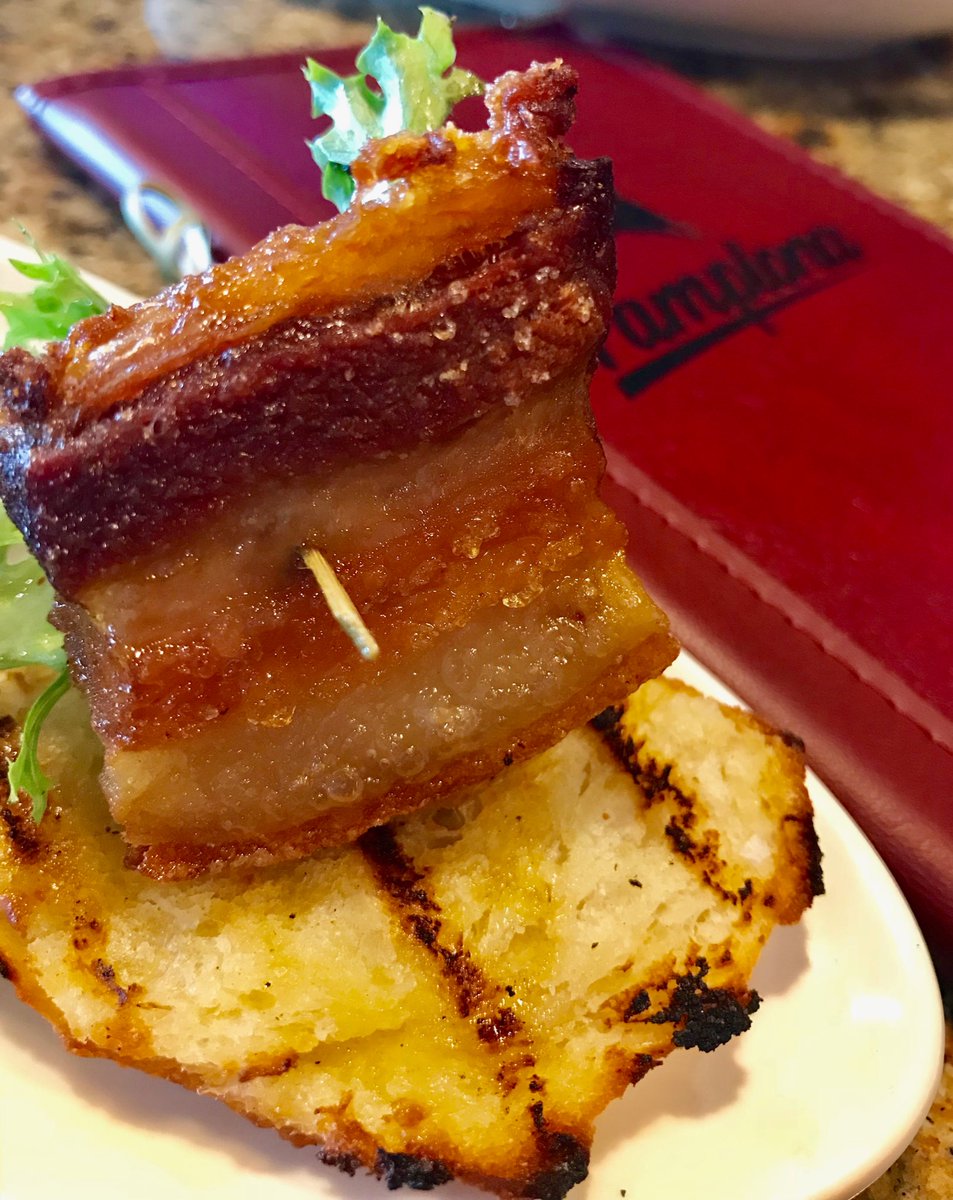
Garlic is to Spanish food what butter is to French, so gird your loins for some of the most pungent dishes you’ve ever experienced. This is not to say the dishes are bereft of subtlety (LeBlanc knows how to balance his flavors), but only to give fair warning that sharing is essential unless you want to knock your partner over with your breath later in the evening. They also do a fine job with all of their plancha’d, grilled and skewered meats here — with the honey-glazed pork belly and finger-licking-good lamb chops the ones not to miss.
About the only thing I can’t recommend about Pamplona is the wine list. It looks like an afterthought, or, even worse, the handiwork of some wine salesman who threw it together on his way to a bigger account. In this era of so much interesting wine coming out of Spain, Portugal and South America (at all price points) its meager selection does no justice to either the food or the atmosphere. And even though no one’s going to drink it but me, there should be several sherries offered by the glass.
But I’ll happily look past the Woodbridge chardonnay and the forgettable Cali cabs for another Juan Carlos Garcia cocktail or his sangria:
Image may contain: drink, indoor and food
(Tapas are priced between $5- $15, with the paellas for two (which can be nicely split four ways) running around $40.)
PAMPLONA COCKTAILS & TAPAS
5781 W. Sahara Ave. #100
Las Vegas, NV 89146
702.659.5781
(This is the first part of a three-part article. Here is a tasty snap to give you a preview of what’s to come.)


The Inn at Little Washington

Image result for The Inn at Little Washington

I am not a patient man. In my world, immediate gratification takes too long. Yet it took me forty years to get to The Inn at Little Washington. Forty years of reading about it, contemplating its fabulousness, and kicking myself for not taking the time to journey an hour west of Washington, D.C. to sample the cuisine of Patrick O’Connell.  (To be accurate, with D.C. traffic being what it is, the drive can easily take two hours. Perhaps that has had something to do with it. )

Accolades have been never-ending over that time — Five Diamonds from the AAA; five stars from Mobil (now Forbes); two Michelin stars, more Wine Spectator awards than you can count; best restaurant in the Washington D.C. area seemingly forever; cooking for Queen Elizabeth — you know, the usual for a small country caterer who made good in a town of 158 people.

Sometimes, a whole decade would pass (hello 1990s!) and it would slip off my radar a bit. Then I’d pick up some food or travel magazine and there it would be, accepting medals and beckoning again — one man’s very particular vision of luxury; a chef’s fantasy come to life of what the ultimate in American fine dining could be. But then some plans would be derailed, or life would intrude, and before I knew it, two generations had passed without me getting to see what all the shouting was about.

What O’Connell started in 1978 began rather modestly. At a time when Alice Waters and Jeremiah Tower were taking the West Coast by storm with their farm-to-table renaissance, and Le Cirque was defining the ne plus ultra of big city dining, O’Connell and his then partner, Reinhardt Lynch, decided to convert their catering business — operating out of a converted gas station — into a charming country inn. They were definite Francophiles in the Tower/Waters mold, but where Chez Panisse was a bunch of hippies cooking great food in a college town, theirs was a more proper sensibility. The linens were starched and the place settings were just so. Thus it remains to this day, and the attention to detail here makes this place as different from Chez Panisse as Judy Dench is from Joan Baez. But that starchiness fades as soon as you approach the doorway. The formality of the premises may be set to impress, but the welcome is as warm and sweet as shoofly pie.

Image result for The Inn at Little Washington

The design is Downton Abbey meets Colonial Williamsburg, with more than a touch of English flamboyance — which makes sense when you learn it was done by a British stage set designer. Chintz, portraiture and floral prints are everywhere — so much so that you’ll want to break out your hunting jacket and jodhpurs.   (I didn’t ask, but their fabric-cleaning bill has to be through the roof.) Everyone is all smiles as you approach and every guest, even the regulars, seems to soak up and bask in the special-ness of the place. The decor may be over-the-top Anglophile, but the cuisine is resolutely French, and what is so astonishing is how O’Connell (a chef with no formal training) has been able to evolve with the times and present a menu that is both classic and modern.

Perfect, warm bread is served as soon as you order. The butter the right temperature and just soft enough — barely resistant to your knife and an immediate indication that someone in the kitchen is paying attention to the smallest details. Amuse bouches are offered, and whatever shows up will take your breath away. Does a gougère get more spherical or precise? Can a cold artichoke soup be anymore intense? Oysters come with a quartet of frozen fruit “slushies” scoops — each one a sweet and acidic counterpoint to the briny mollusk beside it. No matter what menu you order from — “Enduring Classics,” “Gastronauts,” or “The Good Earth” — you can be assured of four exquisite courses for a set price of $218/per person. (Really more like six to eight dishes once all the amuses and various edible doodads are thrown in.)

Image may contain: food

Besides those Wellfleet oysters — each as plump and briny as this shellfish can get —  the Classics menu brings forth a carpaccio of herb-crusted Elysian Fields lamb loin (pictured above) — nine medallions of magenta-colored raw lamb upon which sit three scoops of “Caesar Salad Ice Cream.” The ice cream is flavored with garlic and Parmesan, and once you get past the surprise, you realize it is simply a cheese-infused aioli in a frozen, emulsified guise. This is O’Connell playing with his food (and keeping up with the times), but he does so without affectation and with a firm sense of flavor.

Image may contain: dessert and food

More classically rooted is the duet of bread-crusted rabbit loin (above) with braised chestnuts, apples, and prunes — highlighted by the sort of dense, rich reduction sauce that makes you wish they served it by the spoonful. Following on the Classics menu was Pekin Duck Three Ways — pan-seared breast, sausage and confit — served on sparkling sauerkraut that would do an Alsatian proud.  On the “Gastronauts” side, things lighten up a bit as they featured the season’s first white asparagus poached in cream, and presented with a dollop of Royal Osetra caviar, followed by foie gras with port-soaked raisins atop a rich, savory Catalan custard, and then a simple rectangle of grilled marlin decorated with peeled grapes and a curried hollandaise. This is not cartwheels-in-the-kitchen cooking, but the rendition of each dish was as on point as French food can be. Of all the mains though, the one that got our attention was a simple parsley-topped, very rare lamb loin, served with a crépinette of lamb merguez sausage, presented like a lollipop at the end of a rib bone. It was elegant yet simple, minimalist and precise, and gave the slightest of nods to modernist cuisine without giving in to the absurdity of it.

Image may contain: 2 people, including John Curtas, people smiling, indoor(I have mad respect and total man-love for Patrick O’Connell – there, I said it.)
A single meal, forty years into a restaurant’s run, hardly gives one the depth of knowledge needed to summarize a chef’s cooking. But my scant evidence told me O’Connell takes great pride in his proteins, and that he has almost perfect pitch when it comes to letting ingredients express themselves. As with all accomplished French chefs, it is the marriage of great food and wine that informs his dishes. And, as with the great, long-lived restaurants of France, a broad, deep, and carefully curated wine cellar is at your disposal. Choosing those wines will take some time though, since the eighty page list is a treasure trove of name brand bottles and obscure offerings. High rollers will enjoy all the big hitter verticals of Burgundy, Bordeaux and Napa cabs (at the usual choke-a-horse prices), while mere mortals will have a field day matching this wine-friendly food with plenty of selections under a hundred dollars. If you’re willing to venture into the world of Rieslings and Italian whites, there are bargains aplenty. Markups for non-trophy reds run in the 100-200% range over retail, which is modest by destination dining standards. Corkage is charged at fifty dollars for your first bottle, and seventy-five for the second, but they happily waive the charge if you purchase at least one 750 ml bottle (at any price) from their list.

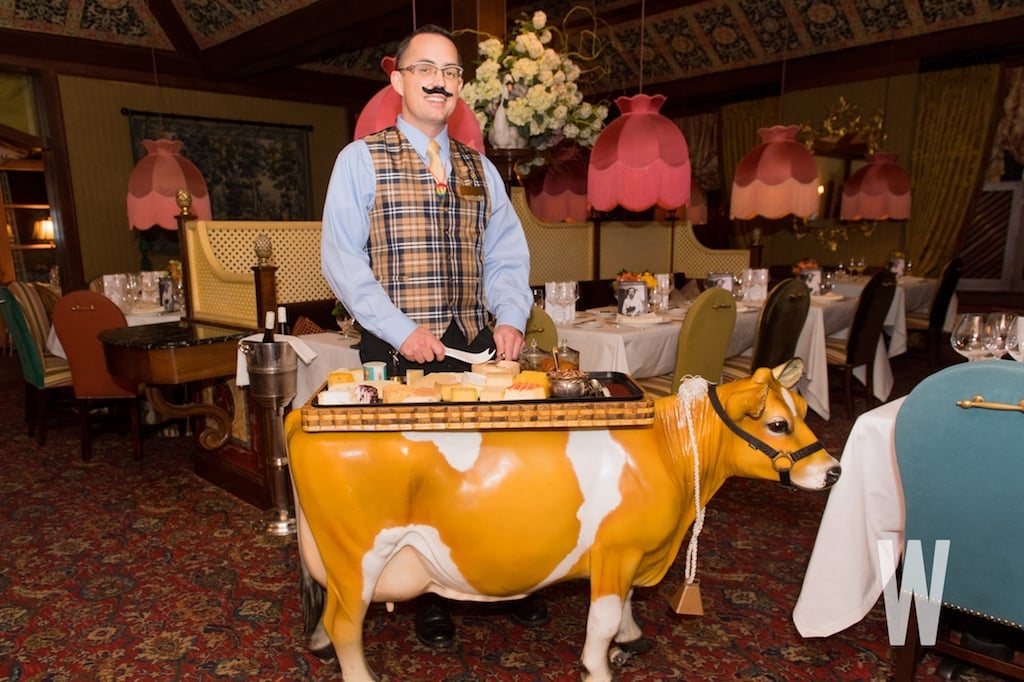
Much is made of the cheese cart here and the attendant puns (e.g., “You won’t Brie-lieve our selection.” “Havarti had that one?”)  but the array is impressive and served at peak ripeness. The fact that it’s presented on a rolling cow cart (that even moos!) only adds to the cheesiness of the presentation. It all might be a bit much for the over-serious epicure, but I was rather fondue of it.

Image may contain: dessert and food

Desserts are more soothing than surprising. There’s no faulting the warm Granny Smith apple tart with buttermilk ice cream (above), or the lemon tartlet. The one curiosity — “Apparently A Pear” — disguises a bracing blackberry sorbet beneath a golden meringue crust, the whole ornament bathed with a warm, melting sabayon that dissolves the crunchy exterior and any remaining resistance you have to the old-fashioned charms of this place.

Along with great food and wine, it is that old school charm and comfort that The Inn at Little Washington has been selling since January 28, 1978. There is a soothing quality to a meal here that very few, if any, restaurants in America can duplicate. You are cosseted from the moment you approach the front door until you bid adieu three hours later. In this era of bare tables, pin lights, interminable tasting menus, Instagrammable dishes and media-strutting chefs, it is a throwback in all the best ways. And it seems the qualities it brings to the table are now captivating a third generation of diners. On the weeknight we ate there, Gen-Xers and Millennials outnumbered the aging Baby Boomers in the very full dining rooms.  Hospitality like this never goes out of style, and it won’t be another forty years before this aging Boomer experiences it again.

IALW Opening Night Menu only 28JAN1978

THE INN AT LITTLE WASHINGTON

309 Middle Street.

Washington, VA 22747

540.675.3800

http://theinnatlittlewashington.com/


Remembering Joel Robuchon

(Ed. note: This article originally appeared, in slightly different form (and with less food pictures) in Desert Companion magazine; you can access that version by clicking here.)

The Death of Taste

Joël Robuchon’s passing isn’t just sad news in itself. It signals the beginning of the end of Strip fine dining as we know it

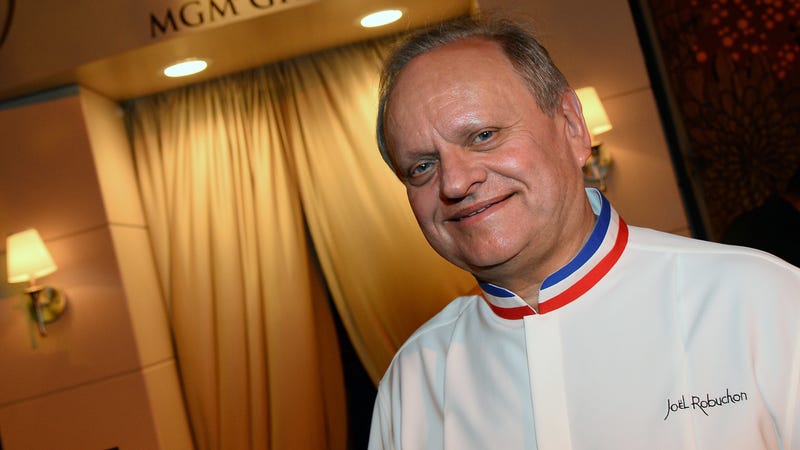
When Joël Robuchon announced in 2004 that he was coming to the MGM Grand, Ruth Reichl, then editor of Gourmet magazine, called it the most important news in American gastronomy in the past 50 years. He was not a TV chef a la Bobby Flay and Emeril Lagasse, nor was he an old warhorse in the Paul Bocuse mold. Instead, this was a very French chef — the “Chef of the Century” (as designated by one French gastronomic journal) who had retired in 1995 while still at the top of his game — and Las Vegas was where he was going to plant the first flag in his campaign for an international comeback. He was bringing not just the fanciest of French food to town, but something far more important: credibility.

It’s hard to overstate what his arrival meant for Las Vegas’ dining reputation. Our top-down, celebrity-chef culture was starting to garner some criticism by the early 2000s; and even though our dining options had vastly improved under the (absentee) auspices of Michael Mina, Wolfgang Puck, Thomas Keller, and others, it was easy for food snobs to dismiss our restaurants as little more than branding exercises designed to appeal to the reality TV crowd. But Robuchon and his colleagues changed all that. Here was a chef’s chef, a revered master of the culinary arts bringing his technical skills and otherworldly flavors to Sin City, a place whose culinary history had more in common with Elvis impersonators that the haute cuisine of Paris.

All that changed in early 2005. Robuchon was not a household name in America, but gourmands the world over spoke of him with reverential awe. Imagine Yo-Yo Ma showing up in the land of Donnie and Marie, and you get the idea. He arrived not only with a cuisine that had wowed international gastronomes, but also with a radical concept in fine food that remains with us today. What L’Atelier de Joël Robuchon did (first in Paris in 2003 and then in Las Vegas) was to turn the very idea of gourmet dining on its head by presenting the most sophisticated of cuisines in something that looked like a sushi/tapas bar. These days, avid foodies take for granted — indeed, demand — eating finely tuned food in laid-back surroundings. Robuchon, however, did it first and did it best. “C’est une revolution!” the French food press proclaimed, and so it was. And it set the stage for the wave of chef-driven food in informal settings that was to become the signature style of restaurants everywhere for the first two decades of the 21st century.

In gastronomy, as in art, fashion and architecture, the seismic changes often happen from the top down. What is haute couture one year in Milan often shows up three years later on the clearance rack at Macy’s. Robuchon begat this revolution as a reaction to the high pressure (and crippling expense) of chasing Michelin stars. He brought forth his L’Ateliers as a new way to feature the best of French food. Unfortunately, as with many knockoffs of luxury brands, imitators have remixed his ideas into a sweeping casualization of our dining culture — without the attention to detail or chops that Robuchon and his troops brought to the table.

The past 10 years have seen a steady erosion of the many comforts that used to make eating out so delightful. Civilized noise levels, comfortable chairs, and tablecloths are becoming as obsolete as tasseled menus, and one wonders if truly fine dining and its attendant luxuries won’t soon be leaving the stage along with the ghost of Monsieur Robuchon. Our entire dining revolution began with Spago, and gained worldwide attention with the addition of luminaries such as Le Cirque and Bartolotta Ristorante di Mare. These were big-deal meal restaurants, with service and prices to match, but they announced themselves (and Las Vegas) as a food scene to be reckoned with.

No one is making such a splash these days. Bradley Ogden won the Best New Restaurant James Beard Award in 2004; it was replaced with a boring (I’m being kind) Gordon Ramsay Pub. Instead of the Tuscan elegance of Circo, we now have Lago, a restaurant with lots of small plates and all the charm of a bus station. The Strip isn’t trying to make its restaurants world-class anymore; it wants social media “likes” and Instagrammable David Chang clones. For 20 years, Las Vegas’s reputation as an upscale resort town was directly related to the quality of its restaurants. (You can gamble or get a Chanel bag anywhere these days, but where else in the world could you find dozens of superb dining options, from the greatest steaks to haute cuisine palaces, all in a couple of miles of each other?) As we head deeper into this century, it seems our hotels are all too willing to soil that reputation in their quest to dumb down Vegas into another Branson, Missouri — albeit one with drier weather and more day clubs.

The visionaries of Las Vegas recognized that Baby Boomers had money to spend on upscale food and drink — but, beyond that, they recognized great restaurants as an aspirational signifier of the finer things in life. When sitting side-by-side and screaming at each other is the new restaurant normal, it may signal a devolution from which there is no return. If Las Vegas wants to retain its stature as a dining destination for a certain level of affluent traveler, it’s going to have to recapture the spirit that brought Robuchon, José Andres, Guy Savoy and Pierre Gagnaire here, not vapid TV personalities and warmed-over noodle shops.

In the meantime, we still have the virtuosity of his two restaurants in Las Vegas. Whether L’Atelier and Joël Robuchon at the Mansion (his more classically formal dining room) will soldier on remains an open question, but his legacy will be far vaster than whether his restaurants continue to serve the food he made famous. Joël Robuchon taught us how technically precise, and almost perfect, restaurant cooking can be. And for his last act, he taught chefs and diners that elegant, visually stunning plates of food need not be accompanied by stuffiness or pretension. Ruth Reichl was right: Joël Robuchon was the biggest thing ever to happen to American gastronomy — and he was the biggest and best thing ever to happen to restaurants in Las Vegas.

The unforgettables – Some quintessentially Robuchon plates:

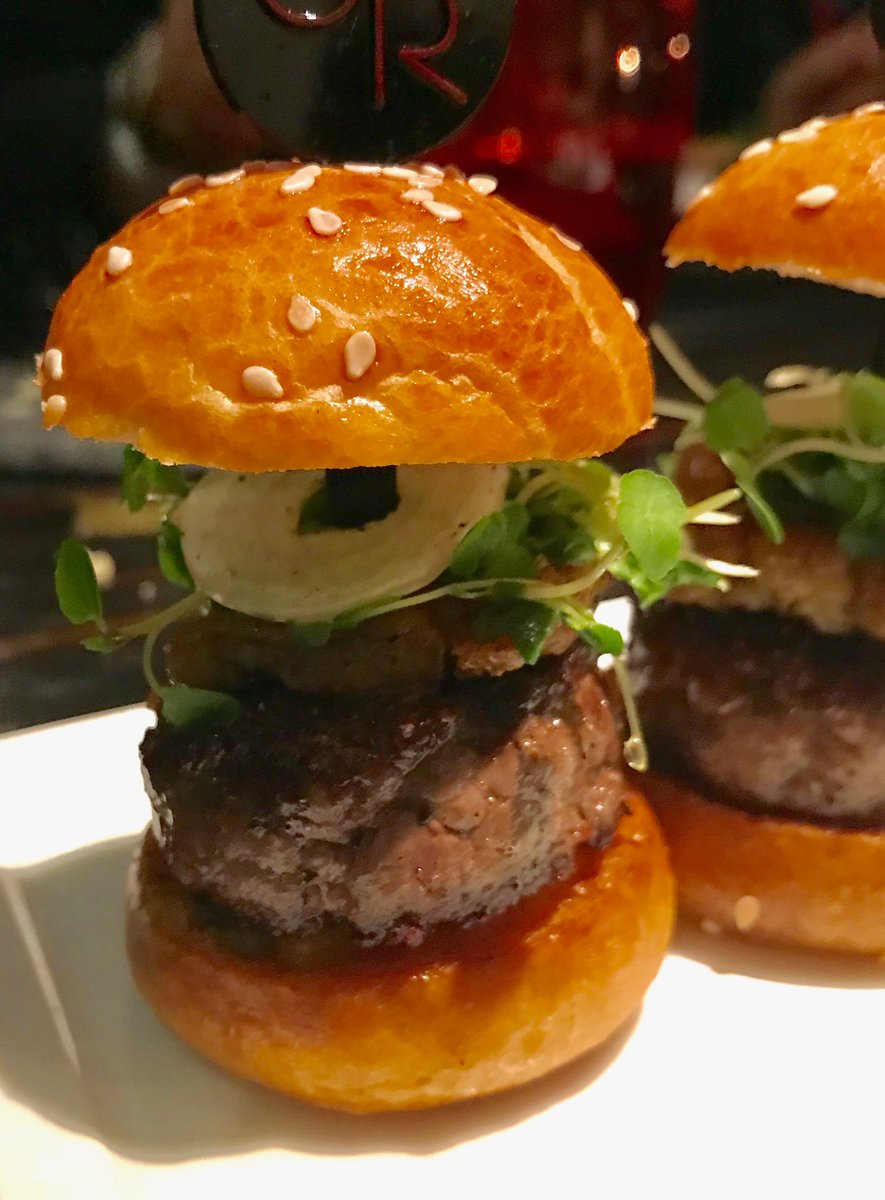
The world’s best mini-burger

Everyone does sliders/mini-burgers these days, but you’ve never tasted one as good as this.

Tomato gelée with mozzarella

Photo of Joël  Robuchon - Las Vegas, NV, United States. Tomato gelee topped with mozzarella

Robuchon once told me the hardest dish in the world to make was a Caprese salad. “It only has four ingredients, so there’s no place to hide.” Ever the master of simplified sleight-of-hand, he riffs on tomato, olive oil, basil and cheese by disguising the tomato as a clear liquid, and putting the world’s most perfectly formed, teeny tiny, basil-accented, mozzarella balls on top of it.

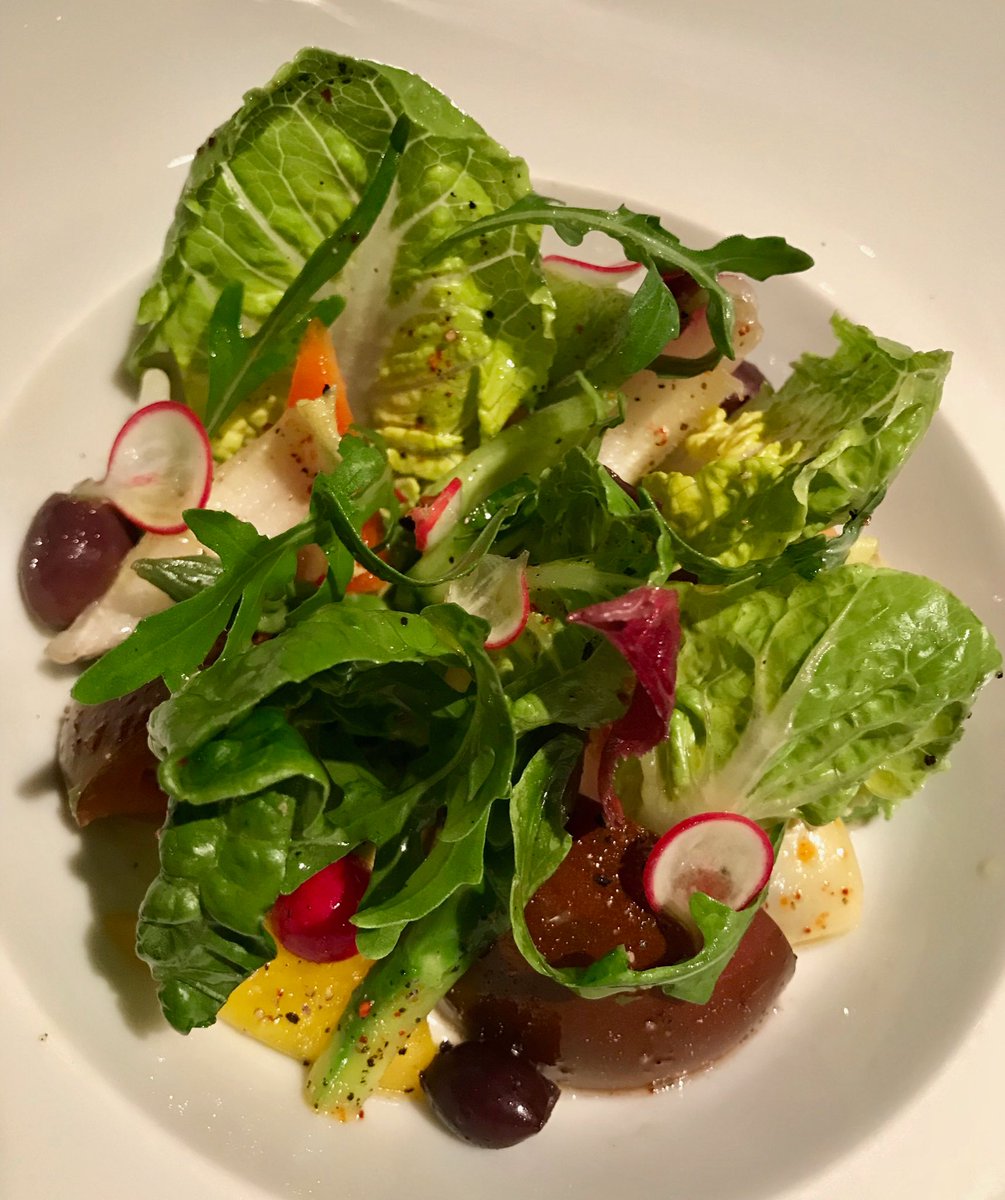
A simple composed salade

So good it could make a vegetarian out of you.

Le Caille (Quail)

Image result for Joel Robuchon Le Caille

A dish that goes back to Robuchon’s glory days at Jamin (his first 3-star Michelin), the breast of quail is rolled and filled with foie gras and then given a honey-soy glaze. “His philosophy was to treat simplicity with sophistication,” is how Executive Chef Christophe De Lellis describes JR’s cuisine, and nothing says it better than this dish.

La Langoustine “Fritter”

It’s hard to improve on the flavor of a dense, sweet, almost gamy langoustine, but Robuchon figured out that wrapping it in phyllo with a single basil leaf and serving it with a basil-garlic pistou was just the trick. “We were taught not to needlessly add flavors,” says L’Atelier Exec Chef Jimmy Lisnard, “but to amplify the product itself.”

Fin