Well This Sucks – The Covid Diaries Vol.1

Image

The Coronavirus Diary. Volume 1, Day 1, Friday the 13th: Clouds on the Horizon

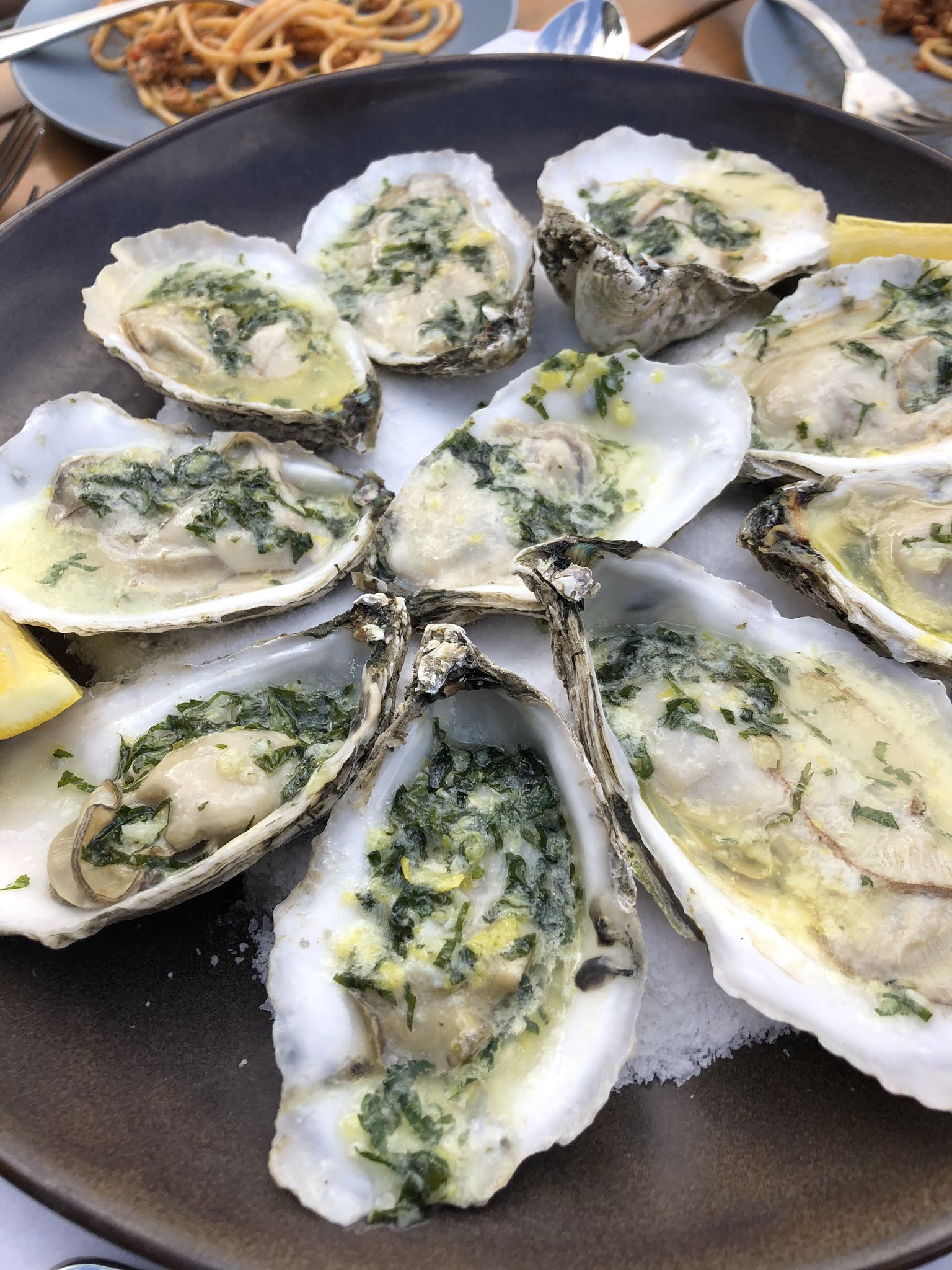
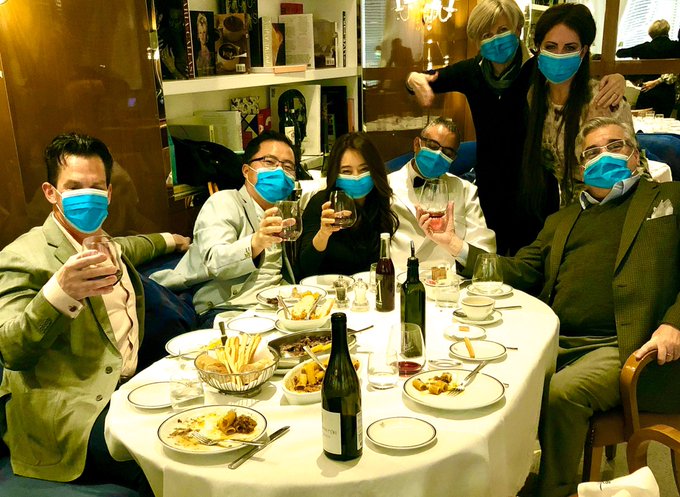
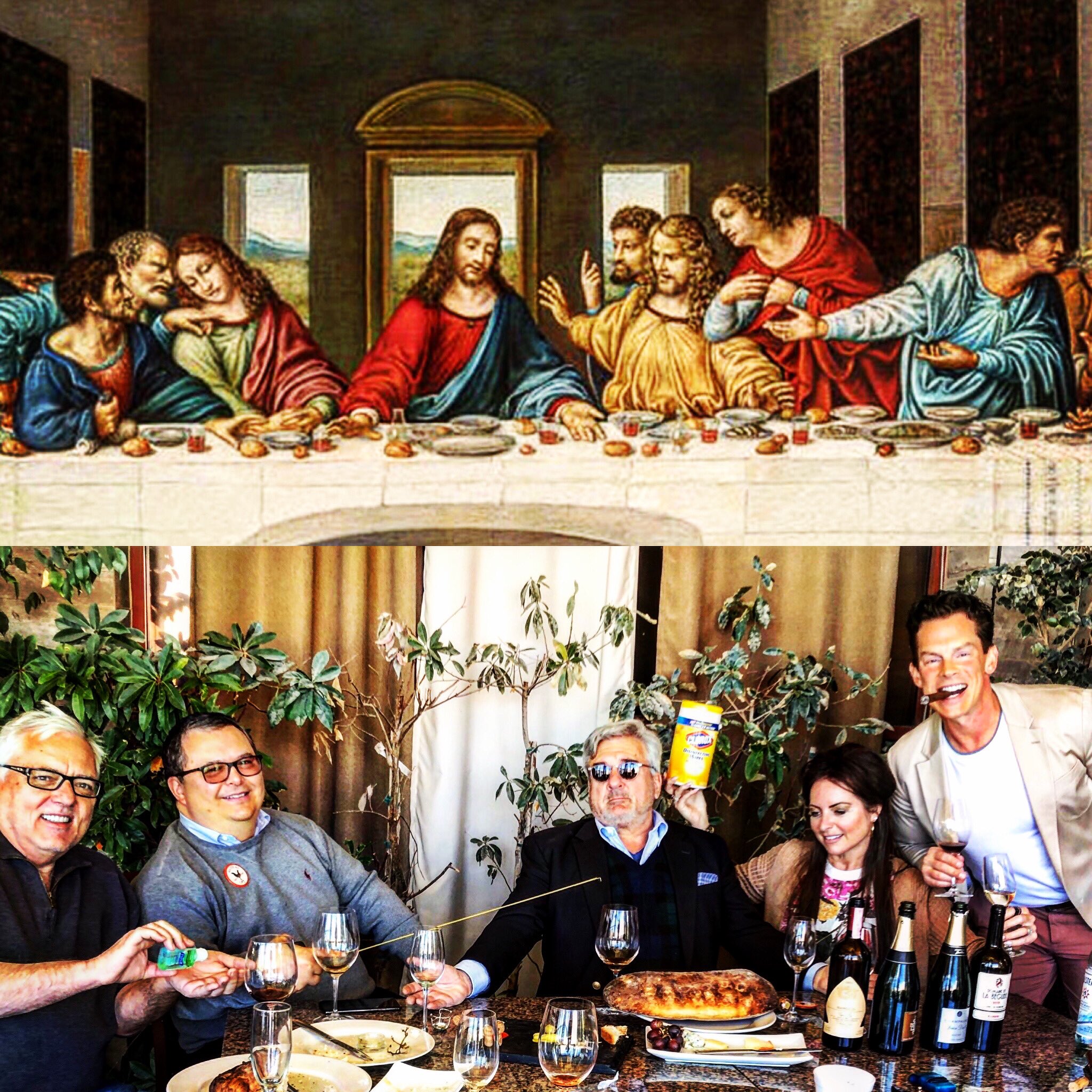
Who would’ve thought that my lunch at Cipriani last Friday would be the last time I had a really good, relaxed time in a restaurant?

We ate well. I ate in two shifts: the first with two colleagues, the second with good friends and The Food Gal®.

Lunch turned into dinner at Soho Japanese Kitchen where I tapped out after a few courses. (Seven straight hours of eating and drinking will do that to you.)

Crowds were smaller at both places; you could feel the clouds of contagion building. Everyone knew fear and layoffs were in the air. We just didn’t know how soon and how severe it would be.

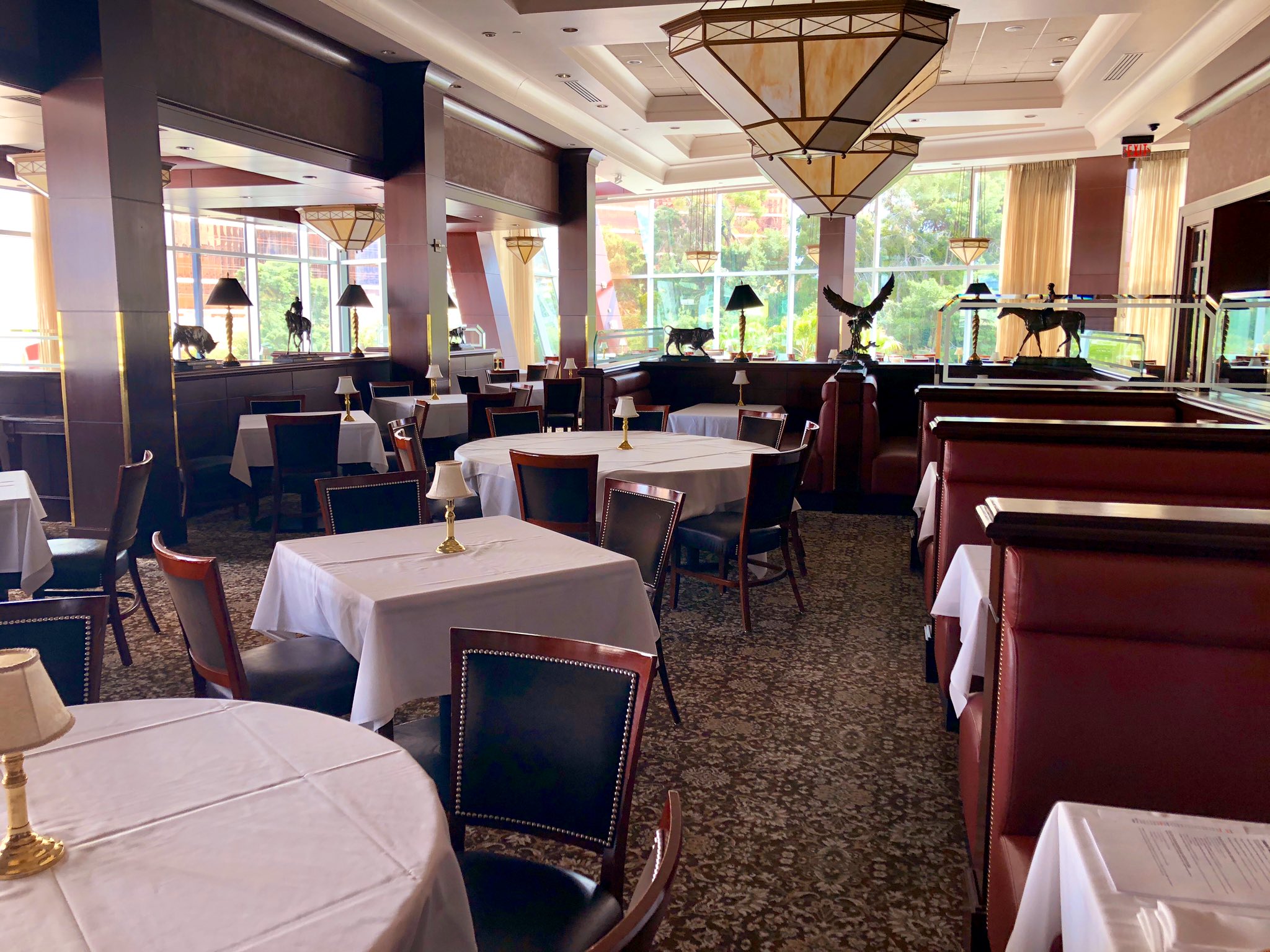
Our waiter Vincenzo looked around the Cipriani dining room and said he was worried for both of his jobs (there and at Giada). Like many in the Vegas hospitality trade, he holds down two gigs — lunch and dinner — often at two very different spots. Vincenzo is as Italian as Pavarotti, with a twinkly charm underneath his sing-song-y accent, and he fits an Italian restaurant like parm on pasta. Three days later he will be out of both jobs.

Day 2, March 14: Canary, Meet Coal Mine

The Bellagio announces it is closing all restaurants except Sadelle’s and Prime.

Day 3, March 15: Reality Looms

Beware the Ides of March, Caesar was told. He ignored the warning; the rest of Las Vegas took it to heart. Within five days of the announced severity of the coronavirus, MGM uses today to let the hammer drop on all of its venues. Some hotels, like Caesars and Venetian/Palazzo stand firm and act like they can weather the storm.

Because of this, for about two days, locals feel restaurants and bars will still be functioning, albeit with far fewer customers. Still, it’s obvious the virus has mushroomed into society-wide panic. Most media outlets are claiming the virus is “sweeping the nation,” even though the number of Americans actually infected with Covid_19 amounts to .00016% of the American populace.

“We’ll figure out a way to keep the doors open,” Venetian and Caesars say. Silly them.

I spend the afternoon getting drunk on expensive hooch on my patio, and eating some tasty cheese I had flown in from The Cheese Store of Beverly Hills — because eating and drinking well is to me what swinging a golf club is to Tiger Woods.

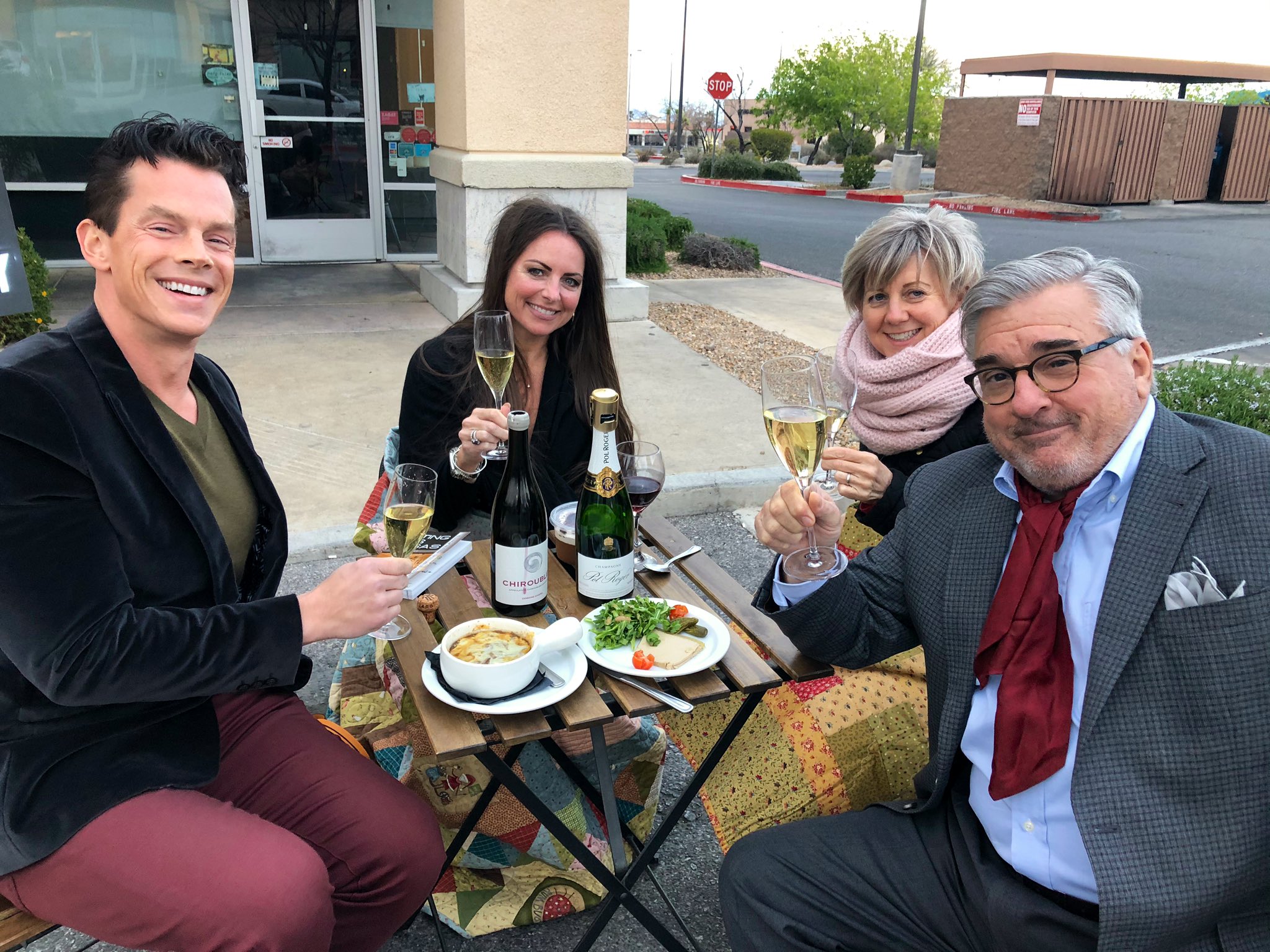
Day 4, March 16: Support Your Local Chinatown

Image

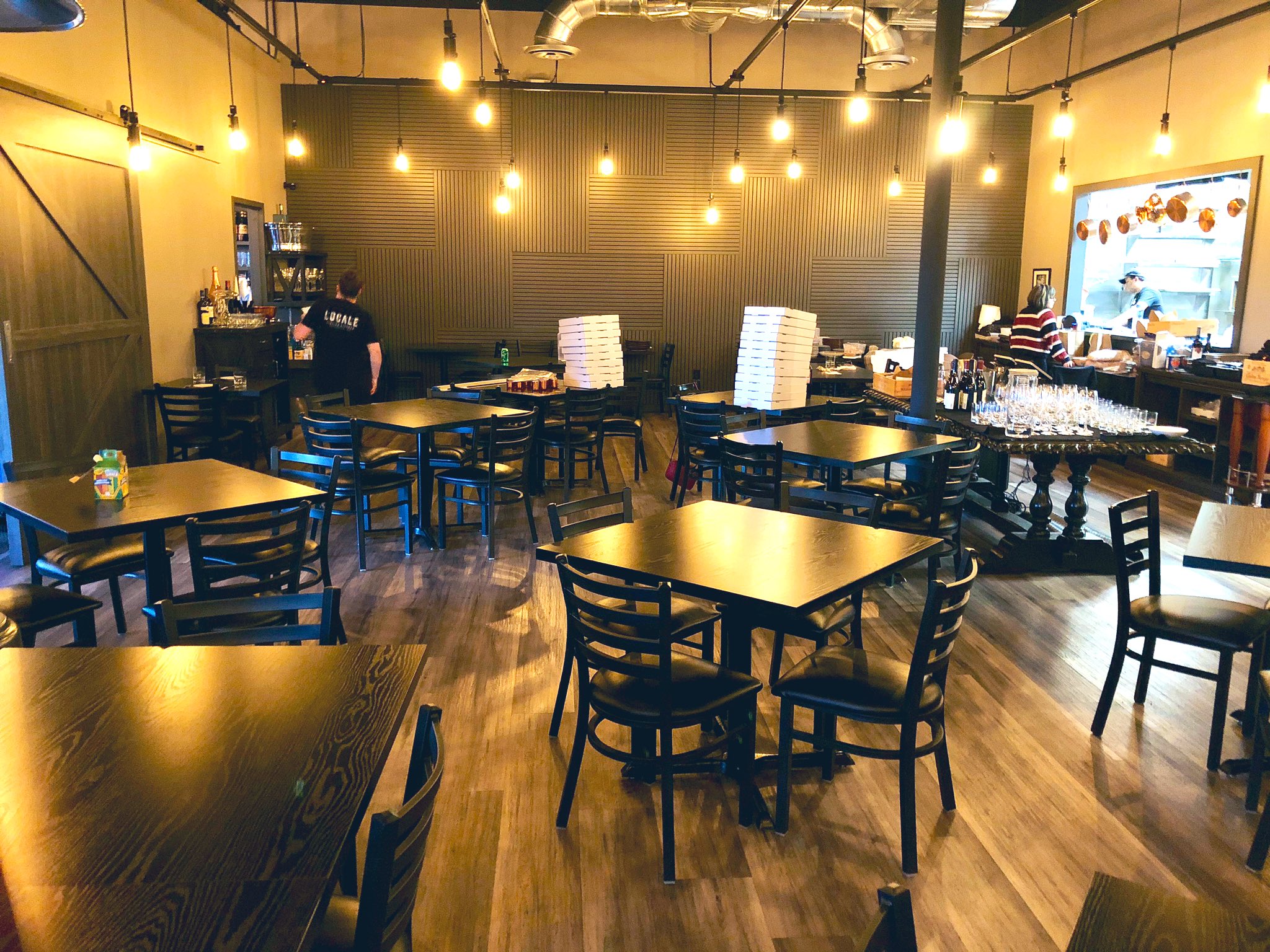
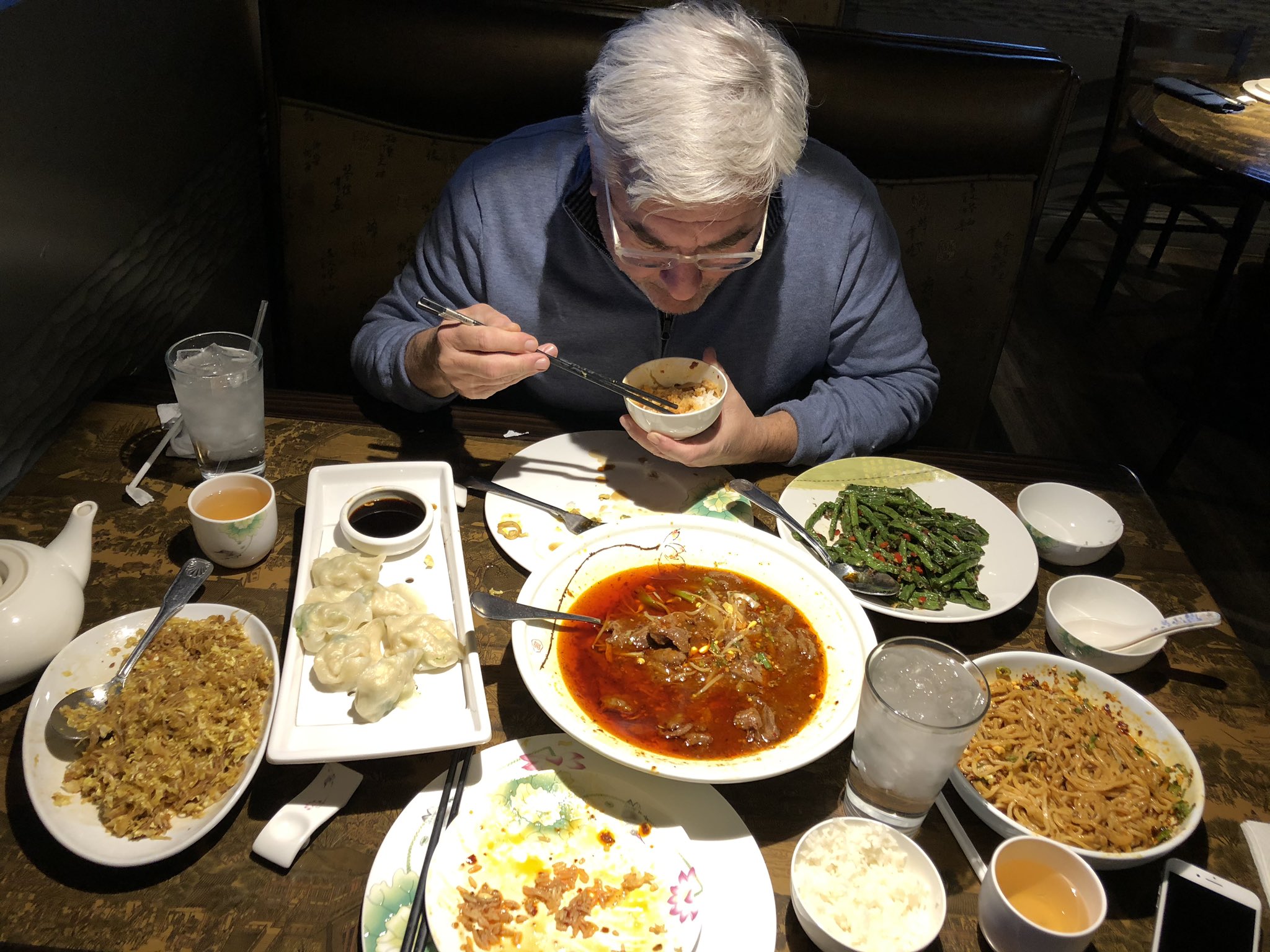
Hotels and Strip restaurants closing left and right. Local joints girding their loins but seem safe. I make a show of going to Every Grain for lunch (it’s mostly empty), and China Mama for dinner (ditto). And I’m not shy about letting social media know what I think about all of this viral hysteria and how it will devastate the hospitality industry. For this I get called everything from Typhoid Mary to the worst thing since Hep C.

I also get into one of those Facebook commenting wars with someone named Emily Jillette, who’s married to someone named Penn Jillette, who calls me everything from a joke to an asshole. It’s really quite amusing to have her (try to) insult me by telling me how she’s “friends with lots of chefs” who “universally hate me.” Emily hates me (apparently) because I’m eating in restaurants and encouraging others to support these businesses in a time of crisis.

She’s not the only one who hates me for thinking this whole quarantine-thing is a huge overreaction, but she’s definitely the most profanely entertaining  of the bunch.

Day 5, March 17, Goodbye to all That:

Image

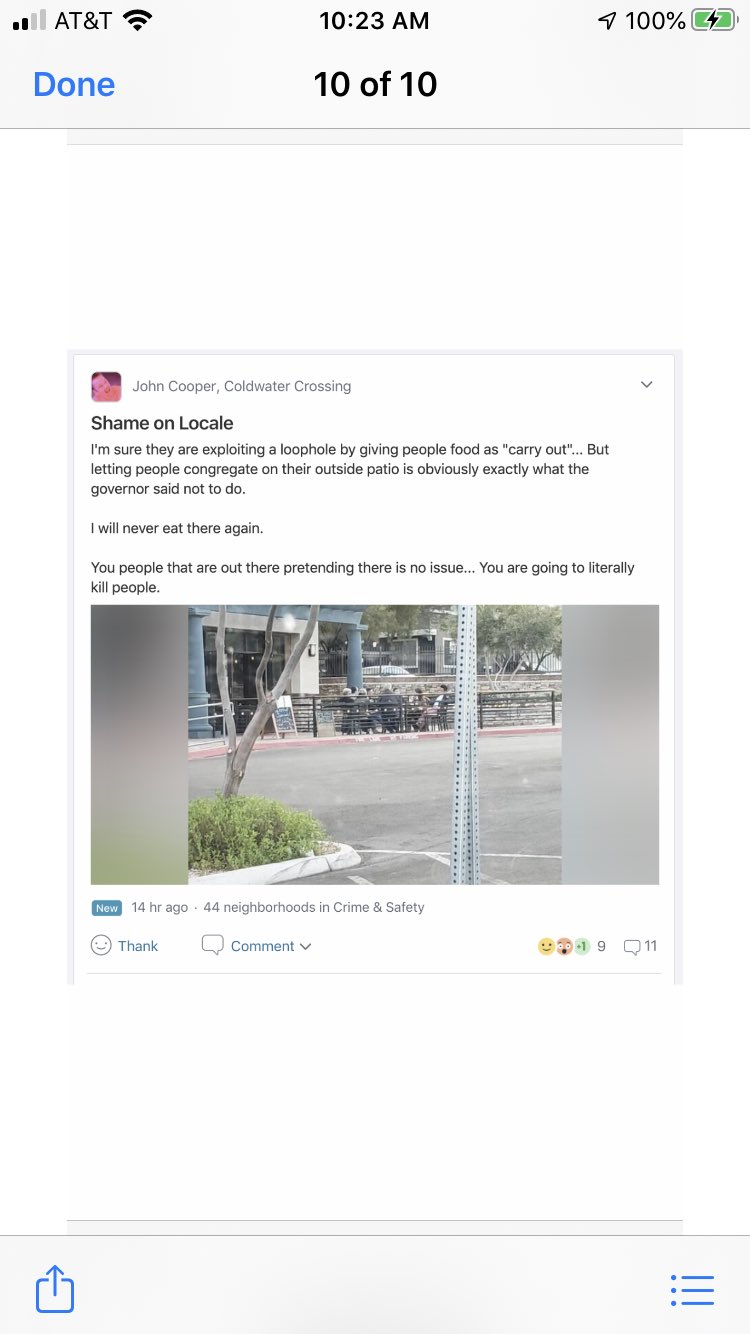
In less than 24 hours, every bar and restaurant is being told to close or serve customers by take-out only. This results in my having to drink my coffee outside of my favorite coffee bar — Vesta Coffee Roasters — in downtown Las Vegas. I do not like being told I have to drink my coffee on a grab-and-go basis. My lack of amusement at this ridiculous restriction will be made more than apparent in the coming days.

This is when reality really starts to sink in. By noon everyone knows the Governor is going to order the shutdown of all “non-essential businesses.” The Governor of the State of Nevada does not realize that for many of us, restaurants, coffee bars are just as essential as a warm bed.

For these reasons, we hunker down on Tuesday and eat leftovers (yummy) from China Mama for lunch as we await the governor’s proclamation. It is Saint Patrick’s Day and no one seems to notice.

That night we eat at Edo Tapas & Wine to show our support, and as good as the food is, the place feels like we’re administering its last rites. No way will a chef-centric, highly-tuned restaurant like Edo be able to survive on take-out trade. Someone should tell our clueless Gubenator this, but he’s too busy listening to the hysterics.

Day 6, March 18, The Day the Music Died:

Image

Last night the Gubenator shut down the Strip (which he has the power to do). He also “ordered” all “non-essential businesses” to close, which, technically, he does not have the power to do. (At least it’s debatable in some quarters.)

Regardless, he’s a politician and politicians pander to the majority and the majority of people are screaming for government to “do something” about a virus that’s infected .000017% of the American population. So order away he does.

And everyone complies. Everyone complies because, 1) they’re scared not to comply; and 2) they know everyone will hate them if they don’t comply. (I know 1 and 2 are basically the same thing, but I’m trying to make a point here.

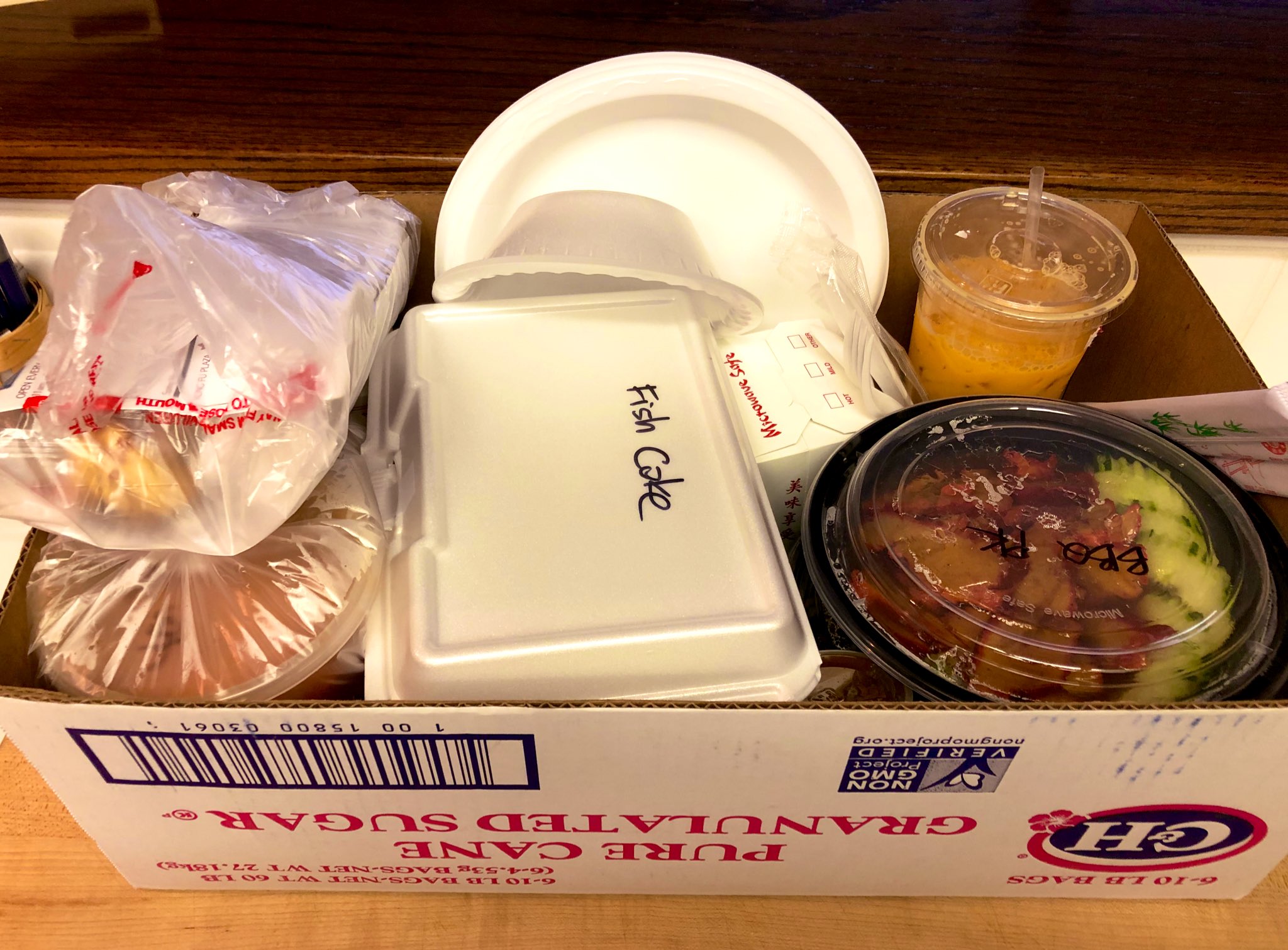
In support of our Chinese-American restaurants — who, after all, have been doing to-go food better than anyone for 170 years — we order take-out from Kung Fu Thai-Chinese. (Las Vegas oldest – since 1973 – Chinese restaurant.) I’ve never been quite sure whether Kung Fu is a Chinese restaurant that serves Thai food or a Thai restaurant with a Chinese menu, but it doesn’t matter these days. It always does a solid job, and it’s been years since I’ve been. so there’s a silver lining to the unfortunate circumstances that bring me here.

The Food Gal® picks up our huge order ($66 + $10 tip) we gorge ourselves on Yen Ta Fo, Todd Munn, Pad Thai and Spicy Chicken. We have enough food to last for days.

I announce on Twitter that no one’s getting a bad review while we try to weather this economic body blow, and I mean it.

Day 7, Thursday, March 19, Pastries and Steaks:

Image

I wake up at 4:00 am with an idea(s): 1) to start this diary; and 2) not to let this craziness defeat me. Restaurants are as much a part of the American cultural identity as football and gas-guzzling cars. It’s sort of amazing how quickly sports dried up (and how no one seems to miss them all that much), but restaurants are where we sustain life and enrich it. Methinks people are going to be screaming for food to return to normalcy a lot faster than begging to see if Andrew Bogut dunks on Miles Plumlee.

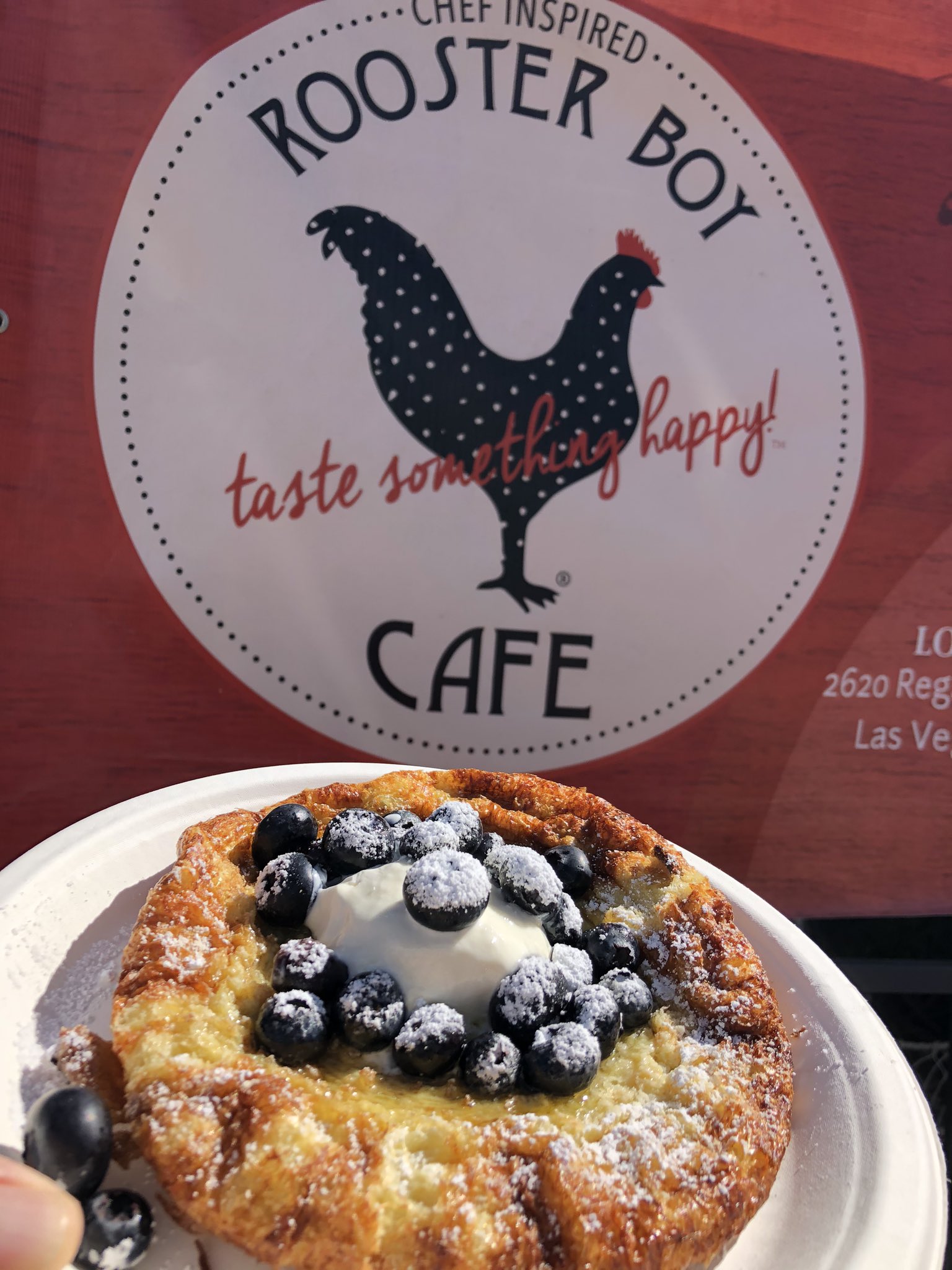
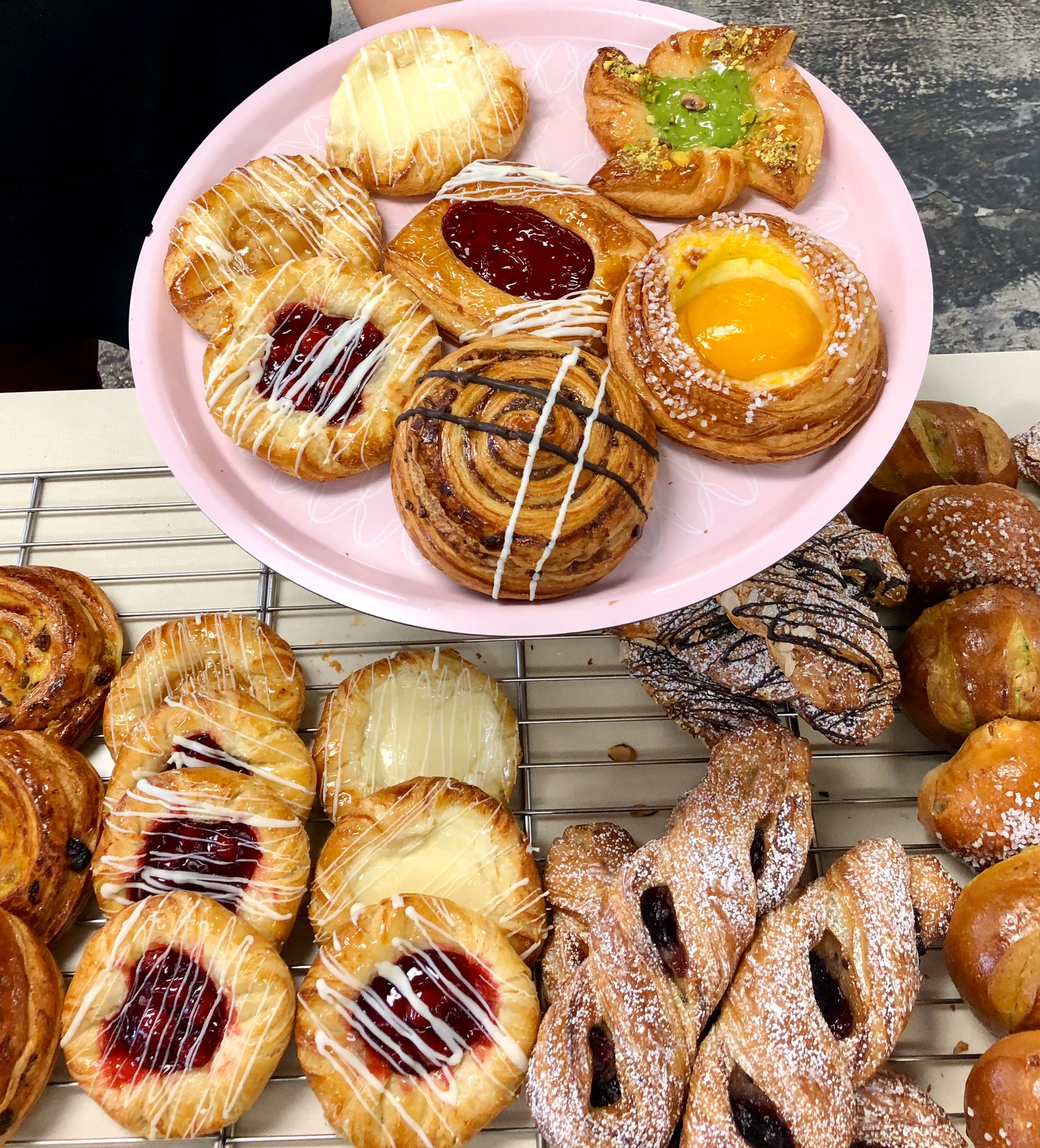
I’ve also decided to stick with my normal routines as much as possible. And by “stick with my routines as much as possible” I mean start my morning with good French pastry.

This part is easy. Food serving operations like Delices Gourmands French Bakery & Cafe are not being shut down, you simply can’t stay and sit to enjoy your morning brioche. Mr. Curtas is very fond of his morning brioche, and will therefore pick-up, take it to his office, and enjoy it there.

These pastries taste to him both of butter, dough and normalcy, so, for fleeting seconds he can pretend his world is not crumbling around him.

As he’s munching and pretending with his Danish, Mr. Curtas wonders just how fucked is the American restaurant industry? 

Answer: Very. 15 million people are out of work in less than three days to combat a virus that will never infect even 1.0% of our population. A virus that all medical experts say 80% of adults will recover from without any medical intervention.

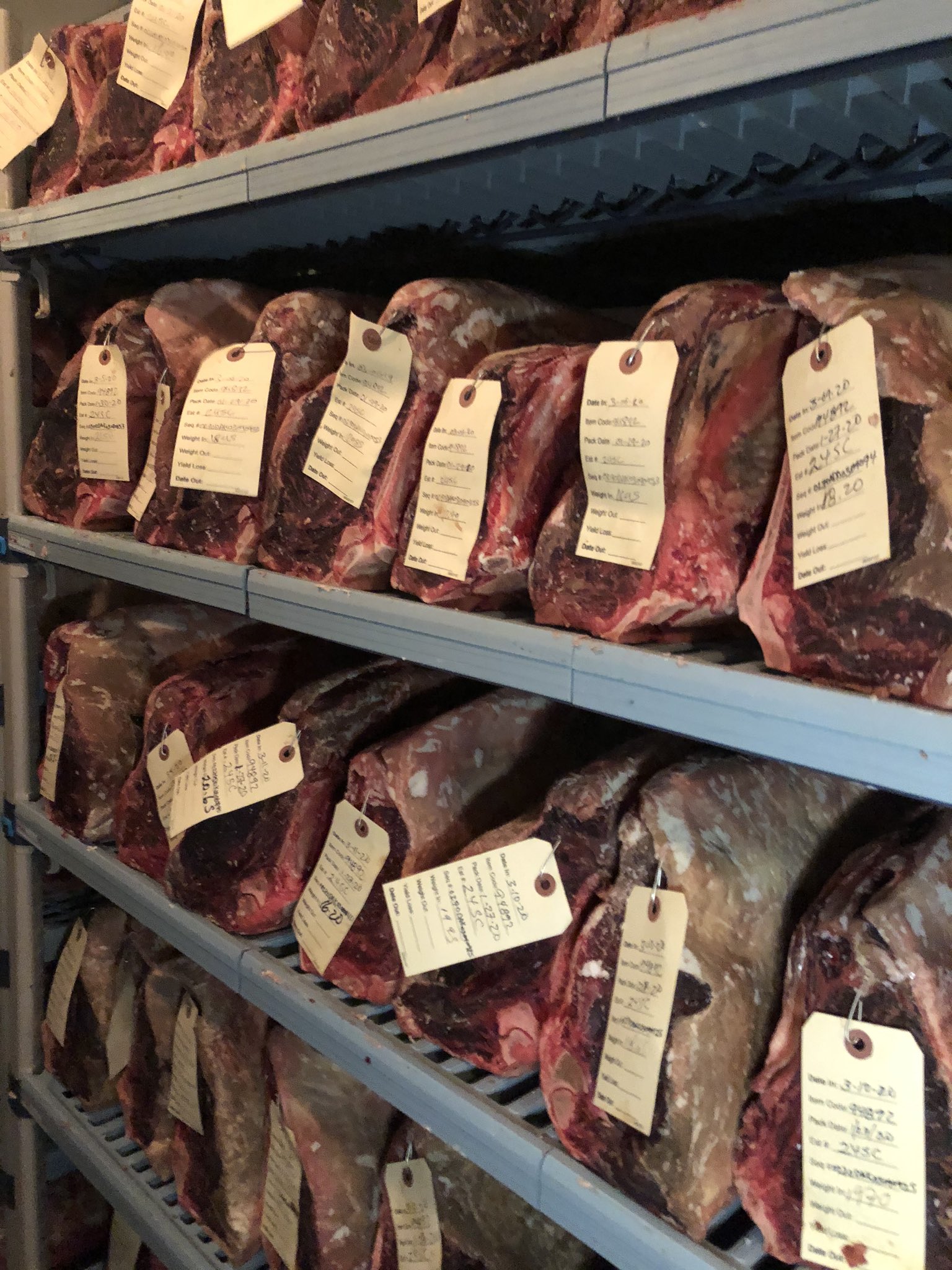
As Mr. Curtas ponders these statistics, he decides to do two things: 1) refer to himself solely in the third person til this thing blows over; and 2) eat steak for lunch. Good steak. Steak directly from the Capital Grille meat locker.

Image

With the help of Manager Drew Weintraub, we get a tour of the locker and get to pick out an entire strip loin to be bandsaw’d into individual steaks. This costs $250, but we get eight, restaurant-quality strip steaks (and a porterhouse)out of the deal.

Image

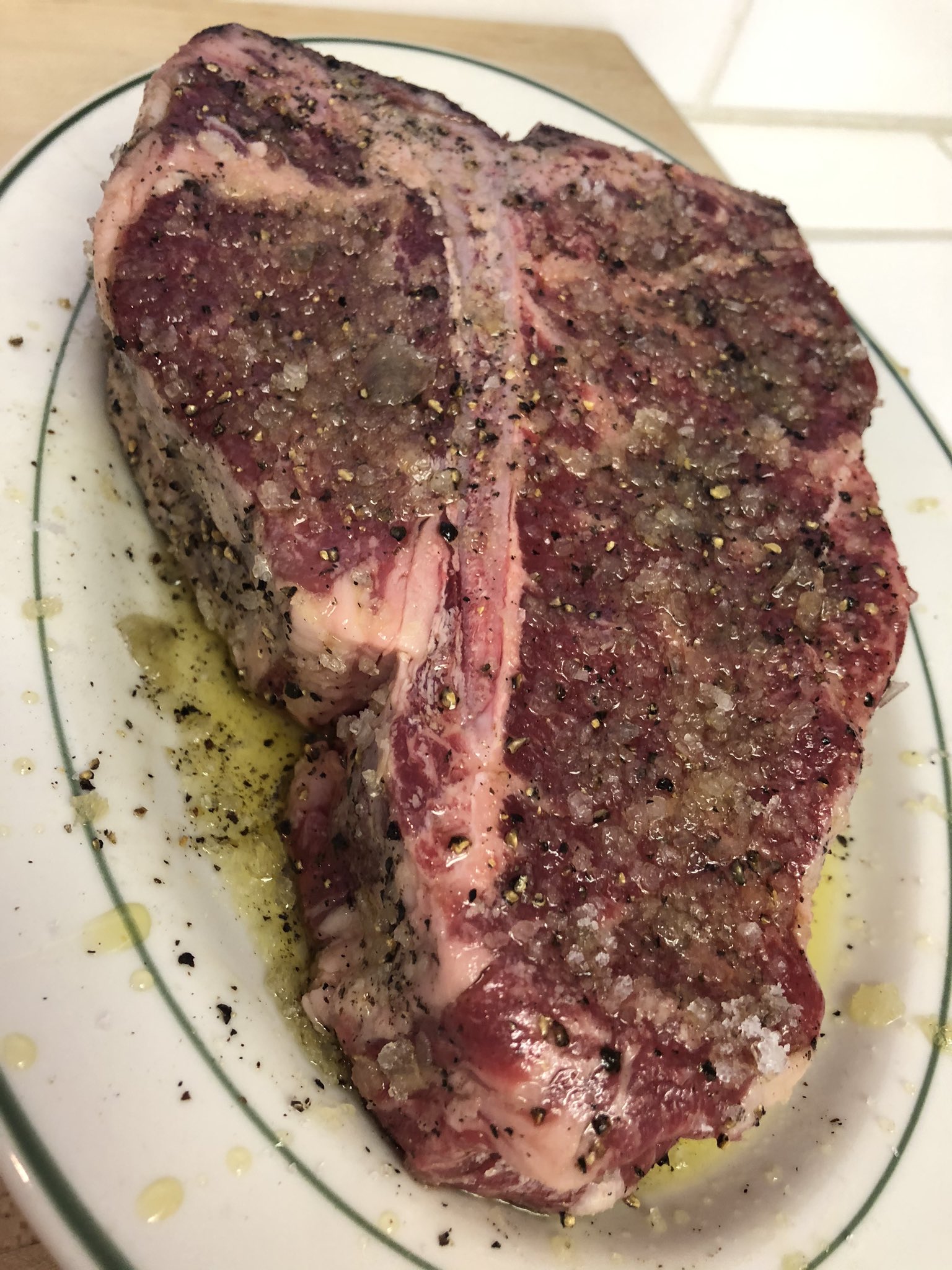
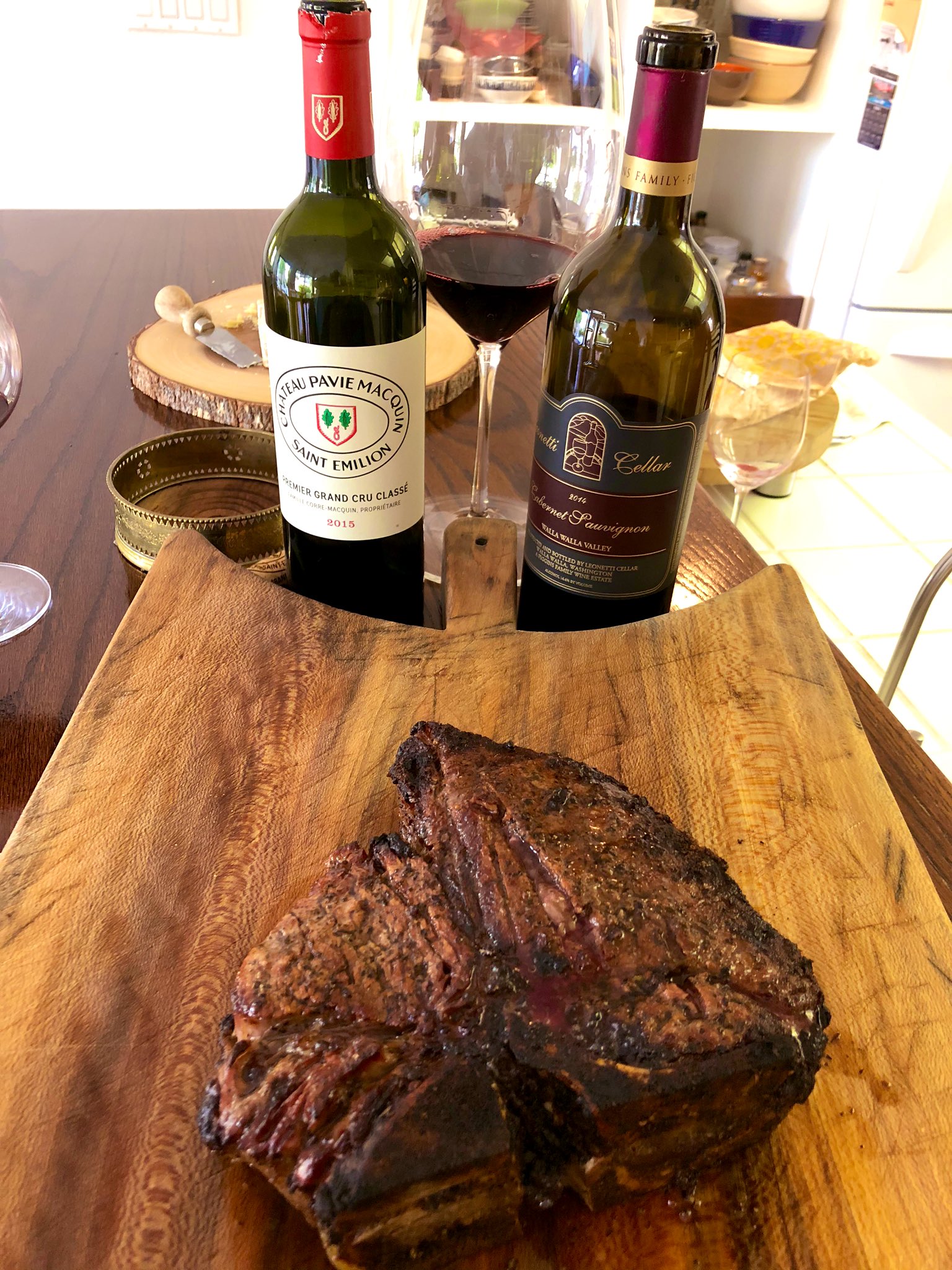
We take them home, and with the help of our comrades-in-epicurean arms the Tollefson’s, we cook up the porterhouse — heavily-seasoned (above), seared on both sides, finished under the broiler). It was damn tasty, and half the cost it would’ve been at the restaurant. But let’s face it, great steaks lose some luster when nibbled on your kitchen counter.

Image

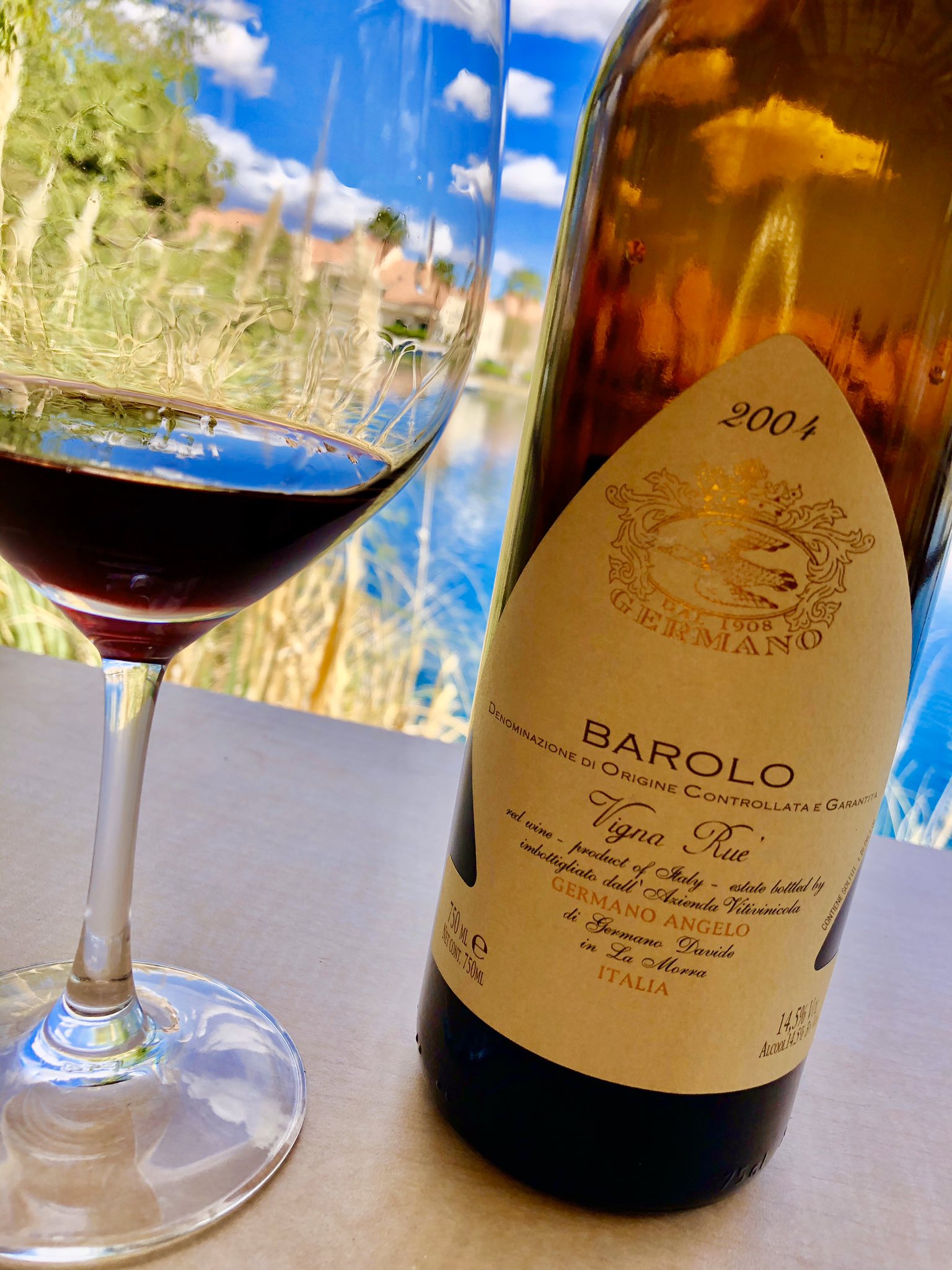
Sounds pretty okay, doesn’t it? Super steaks and expensive wines for lunch?

It’s not. It’s bloody awful. As he’s chewing his steak and quaffing his wine, Curtas can’t stop the emptiness from grabbing his stomach, like a clouded mood settling permanently into his gut. Fears and fatalism sickening in their ubiquity, unquenchable by food or drink.  And now they are upon him. The world has lost its fucking mind. And things are about to get worse.

It’s Not You, Jose Andres, It’s Me

Image

The hottest love has the coldest end. – Socrates

We’re done, José.

It’s over.

It’s not you; it’s me.

Time to move on.

I’m not good enough for you.

I need space. (So do my trousers.)

Breakups can be sad, but sometimes tears are the price we pay for the freedom we need. (And boy do I need my freedom from the tyranny of tasting menus.)

Breaking up can make you a better person. This might be good for both of us.

Before we go into why this is necessary, a little history is in order.

What we now call tasting menus, used to be called degustation menus. They were the province of a certain level of high-falutin’ French restaurants, and they usually came on a little insert to the menu offering to let the chef decide what special courses he would feed you that night.

Tasting menus were an adjunct to the main, a la carte selections, and were of interest to mainly the most dedicated gourmands. You knew you weren’t in for the usual starter-main-dessert meal, and that the courses would be smaller, and there might be a couple more of them. Mainly though, you went the degustation route because it promised to show the kitchen strutting its best stuff.

This is the way things were from the late 1970s (when yours truly became seriously involved with cooking/food/restaurants), until the late 1990s.

Then, Tom “Call Me Thomas” Keller and Ferran Adrià came along and ruined everything.

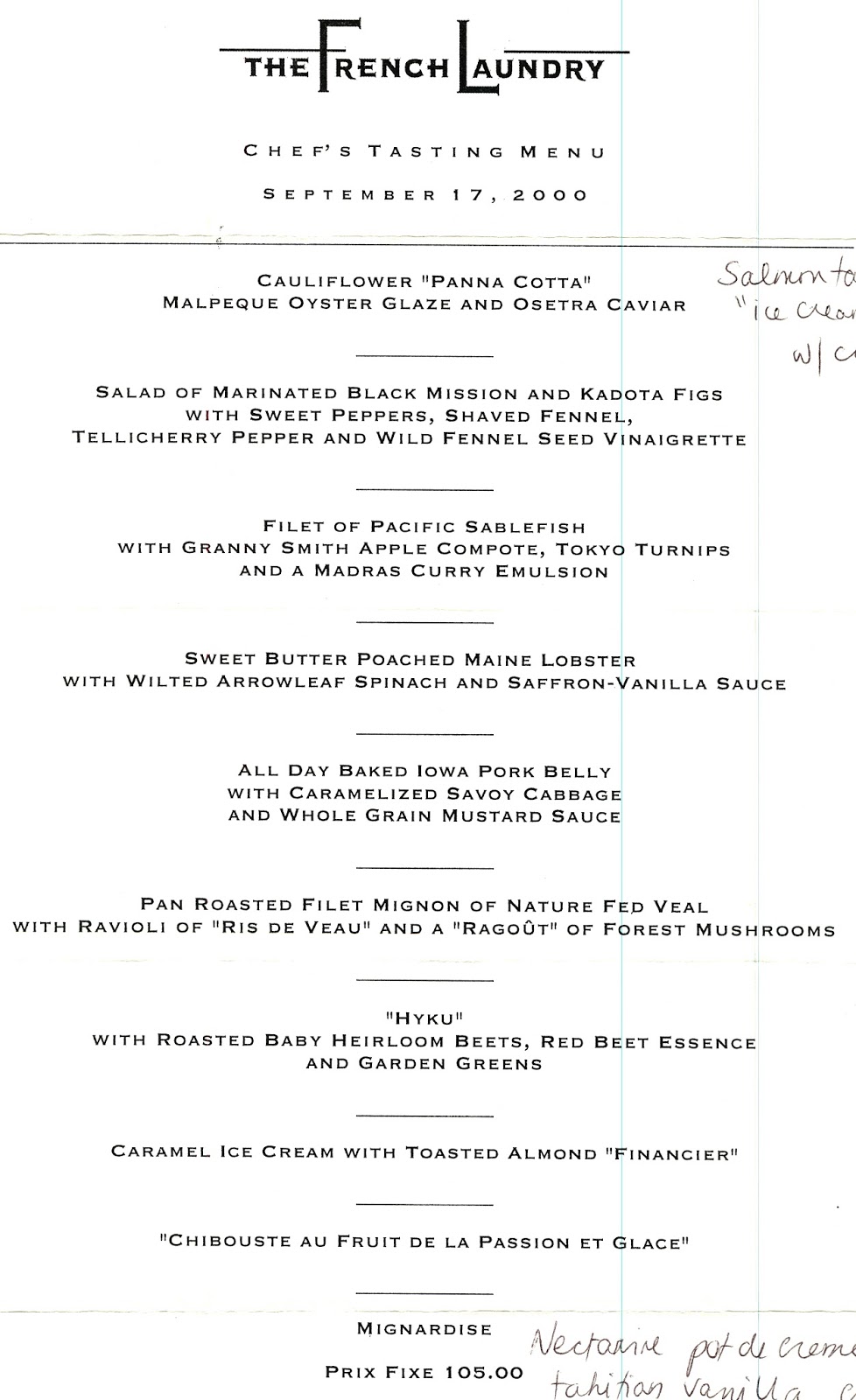
Image result for French Laundry menu(This looks like 10 courses, but at the end of the evening, it was more like 15)

Gastronomy historians might have another take on this, but from my perch, the whole “you will be eating/swooning over 15 small plates of chef’s creations” really took off when Keller got soooo much press for his (mandatory, multi-course) feast at The French Laundry.

In 1997, I was in Napa Valley at a writer’s conference with Ruth Reichl, Colman Andrews, Corby Kummer, Barbara Kafka, and a host of others, and that’s all they could talk about. This talking eventually morphed into a gazillion raving/fawning articles about Keller in every major food ‘zine. Soon enough, the copycat race was on.

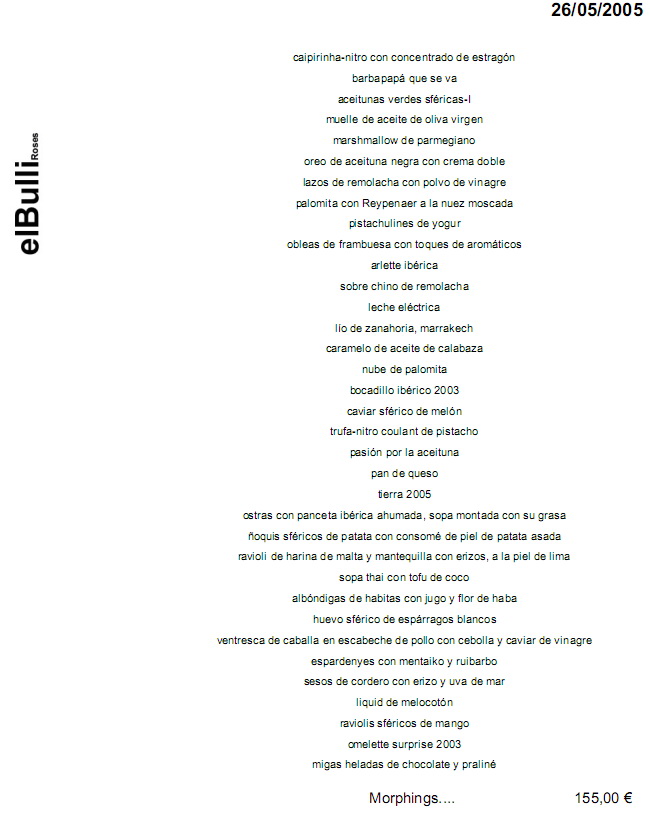
When Adrià made his big splash with El Bulli around the same time, the die was cast and high-end restaurants from Lima to London adopted the formula of wowing their customers with “techniques” over taste. A chef friend told me of going to El Bulli fifteen years ago and throwing in the towel….after the 44th course with more on the way.

No longer were a half-dozen specialties of the house enough, as you might find at Paul Bocuse or Le Cirque.  Instead, Keller and Adria started an arms race of escalating courses…where mutually-assured palate destruction was the result if not the goal.

These days, almost every restaurant in the World’s 50 Best centers its cooking around a bill of particular, itty bitty ingredients done by the biteful.


Image result for el bulli menu degustacion

It’s time to stop the madness.

Who really wants to eat like this? Answer: no one.

Watching chefs piece together teeny tiny pieces of food into dish after dish of edible mosaics no longer holds any fascination for anyone but jaded critics who constantly need to be dazzled while “discovering” the next big thing.

As Robert Brown elucidates in his excellent evisceration of the form, tasting menus have debased cuisine by turning it into an exercise in solipsism for chefs:

By tailoring his operation around it (essentially turning it into a glorified catering hall since most, if not all customers eat the same meal), a chef is able to run his restaurant with a smaller kitchen staff, determine with precision his food purchases, and enhance his revenue by manipulating, if not exploiting, his clients by exercising near-complete control over them.

Conceptually, the tasting menu is a losing proposition for the client even in the happenstance of an enjoyable dish. If and when you get such a dish, it is usually never enough, thus making you desirous of something you cannot have; i.e. more of the dish. When you have a dish that is less than stellar or just plain bad, the chef has foisted on you a dish you did not bargain for, thus debasing your meal in the process. The perfect or near-perfect meal is all but unattainable when your waiter brings you six or eight or twelve, sometimes even many more, tastes. Given the intrinsic hit-and-miss nature of tasting menus, I have never come close to having such a meal. As with great dramas, musicals, concertos, or operas, culinary perfection is almost always found in divisions of two, three or four.

I read this essay two years ago and agreed with it, but it took that much time (and several more marathon meals) for the lessons to sink in. (You might remember that I was also bored out of my gourd by Meadowood and Alinea a couple of years ago.)

If New York restaurants are any indication, the next big thing is a return to sanity: the classic catechism of appetizer-entree-dessert. The way you eat in good French restaurants and homey Italian trattoria; the way the human body was meant to digest food.

When I go to Spain in a couple of months, it’s going to be a challenge — since the Spaniards invented (or have at least expanded and exploited) this unnatural way of eating more than any other culture. One of my solutions will be to go at lunch (like I do in Paris and Italy), where the meals are shorter, more focused and more fun. Plus, you then have the rest of the afternoon/evening to walk off the calories.

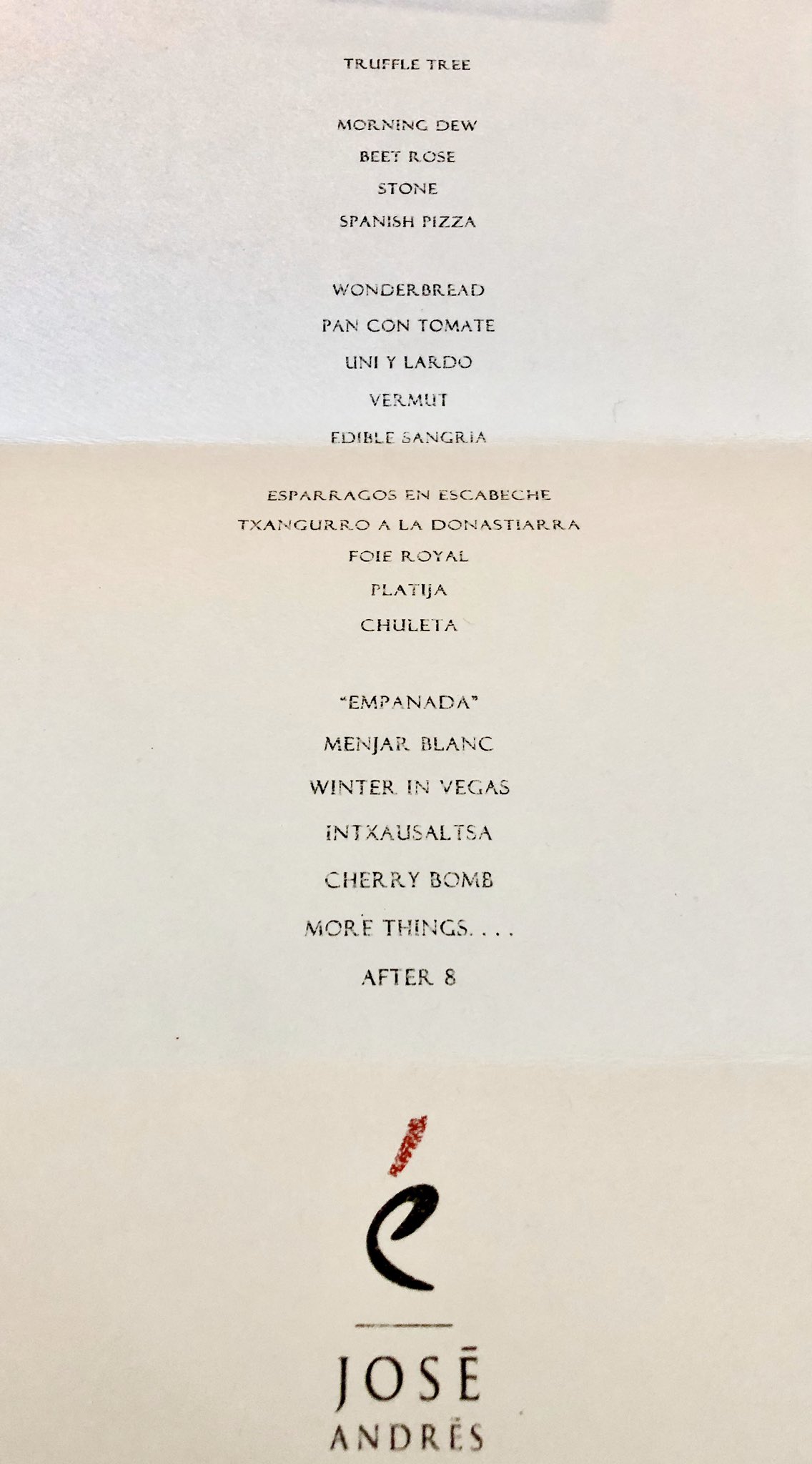
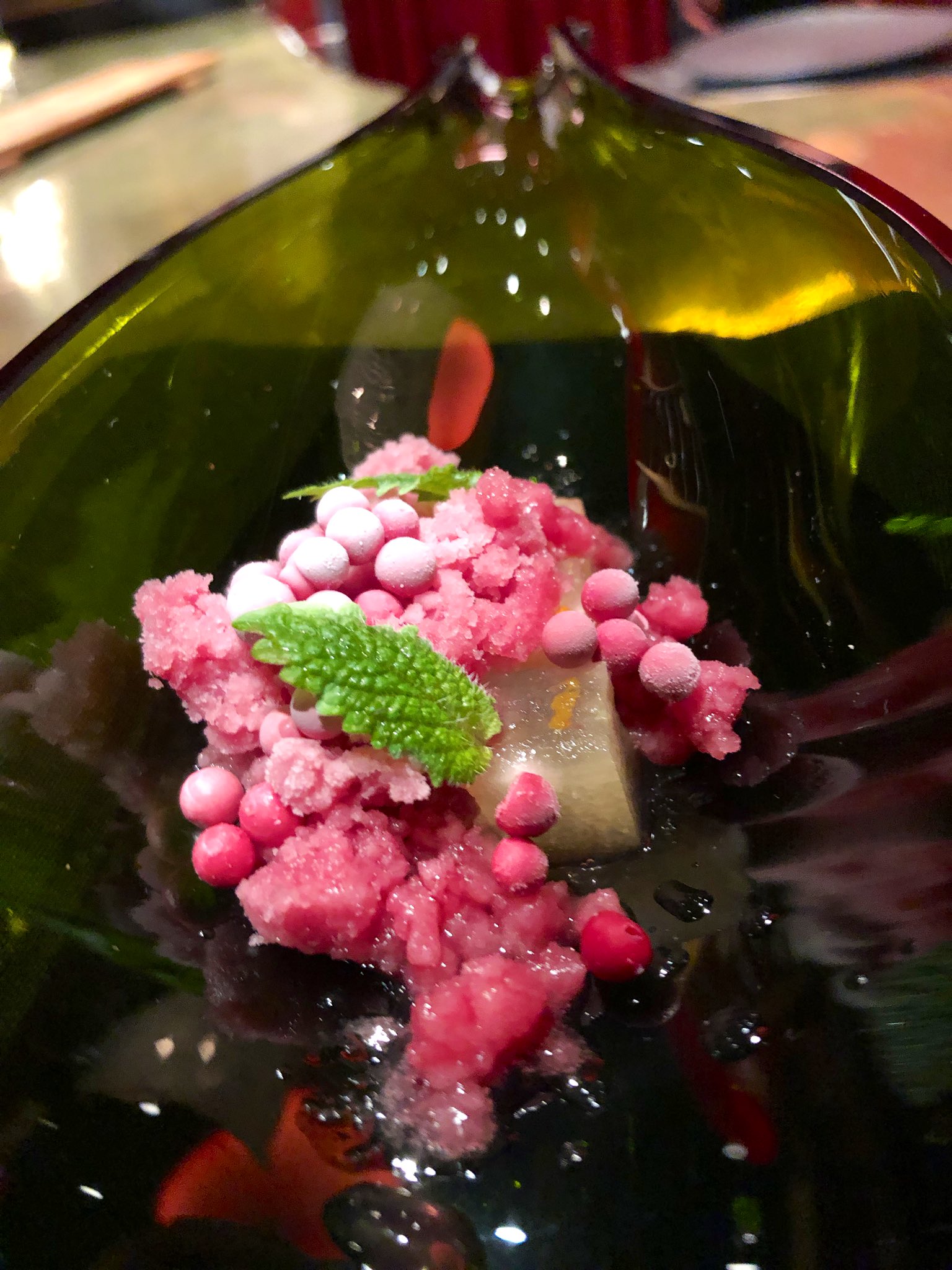
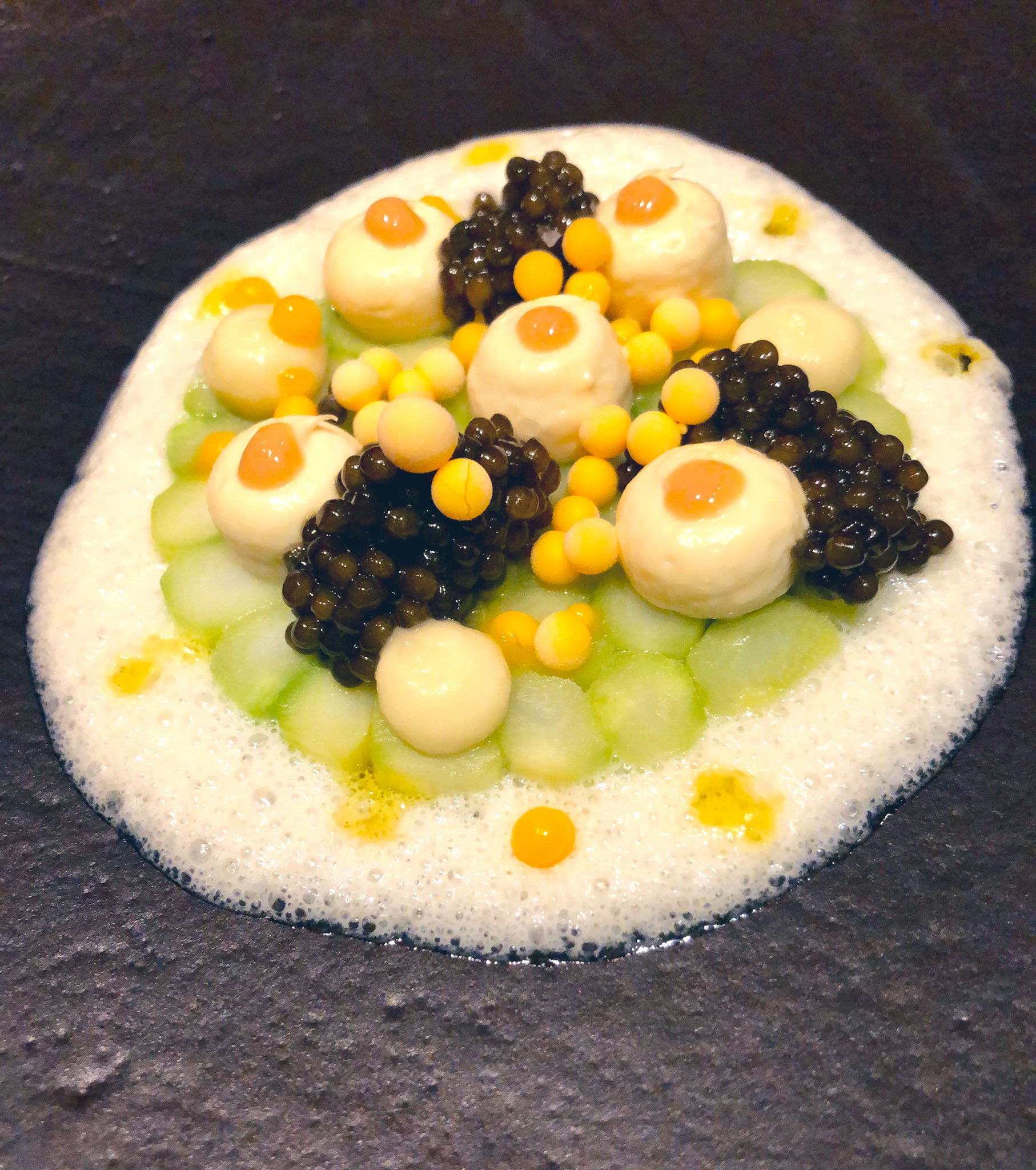
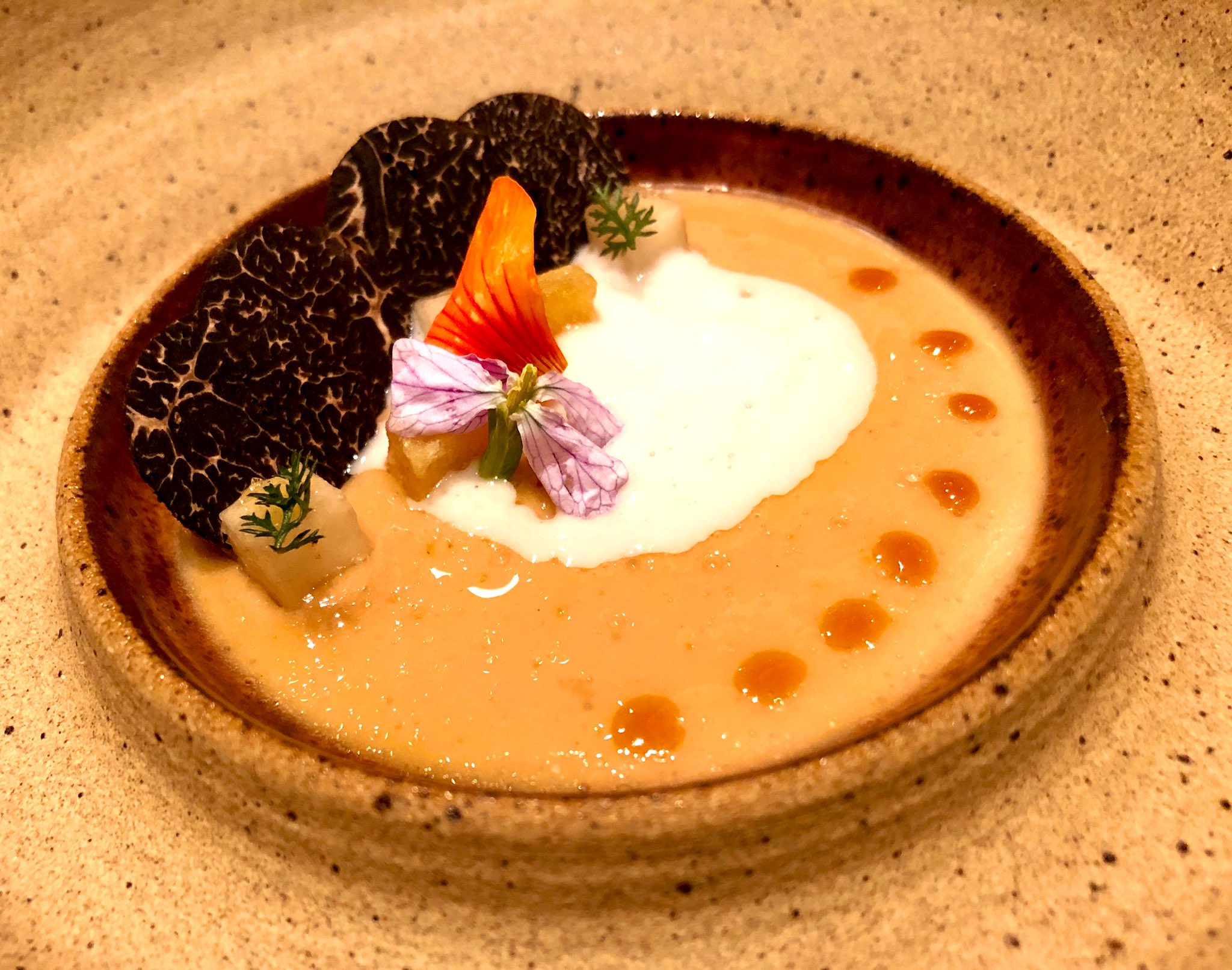
As for my recent meal at é by José Andrés, below you will find the list of dishes, along with some tasty snaps.

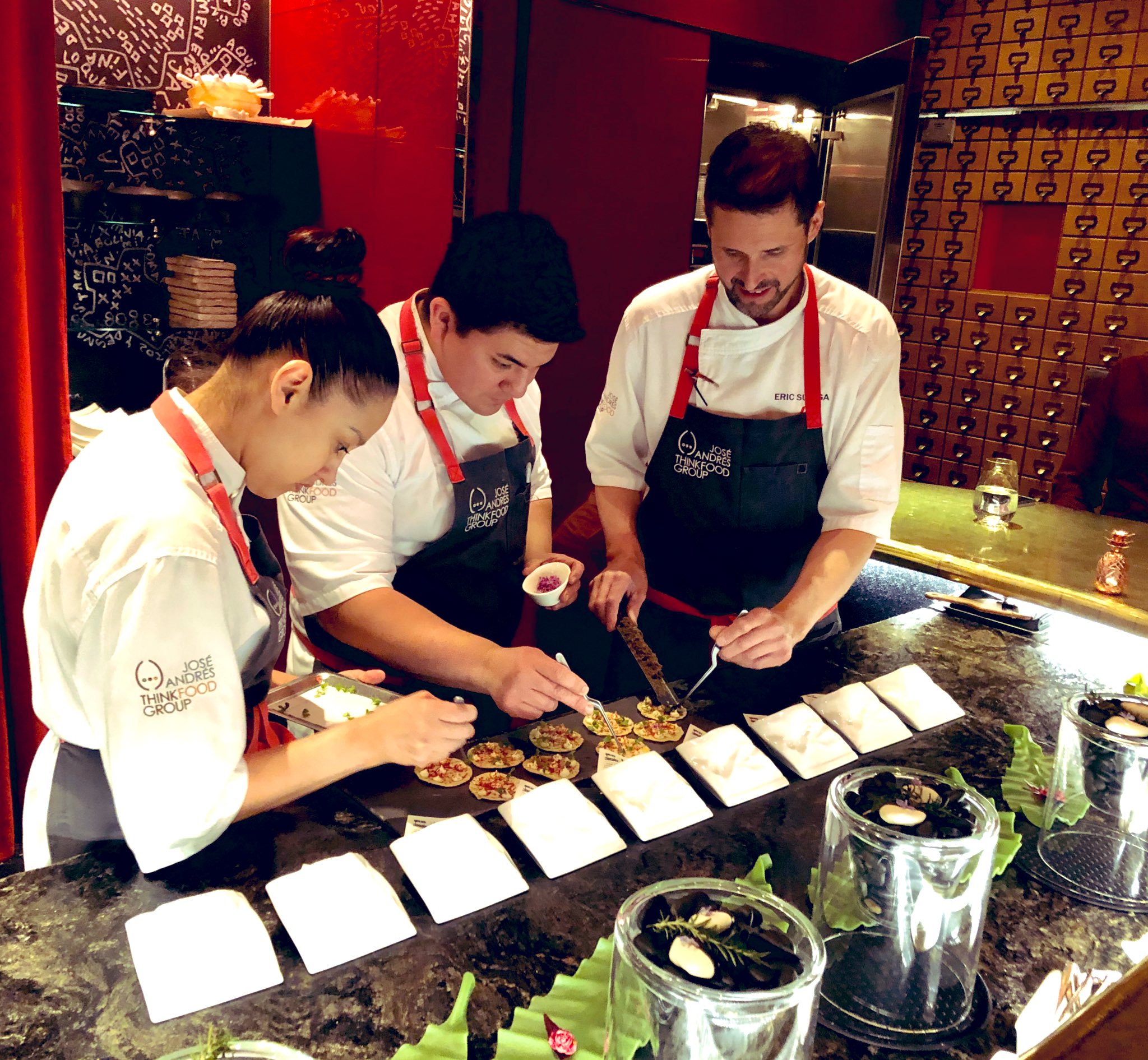
For the record: almost every bite was a testament to intense flavors and culinary skill. It was my third meal at é in as many years, and the best of the bunch. Chef de Cuisine Eric Suniga and his crew orchestrate a perfectly-timed concert where everything harmonizes — with a staff busting their asses while never missing a beat or hurrying the customers.

It’s dinner and a tweezer show, a plating performance if you will (the actual cooking takes place out of sight), which almost makes you forget you’re paying $400/pp for a meal with strangers.

The only trouble is there’s both too much and too little going on. Too many dishes and not enough time to reflect and contemplate them, and not that enjoyable if you really want to savor the cooking, the techniques, or the food and wine matches (which are excellent).

Even with those criticisms, though, there probably aren’t five other restaurants in America that can match it.

Image(Suniga and crew are on it like a bonnet)
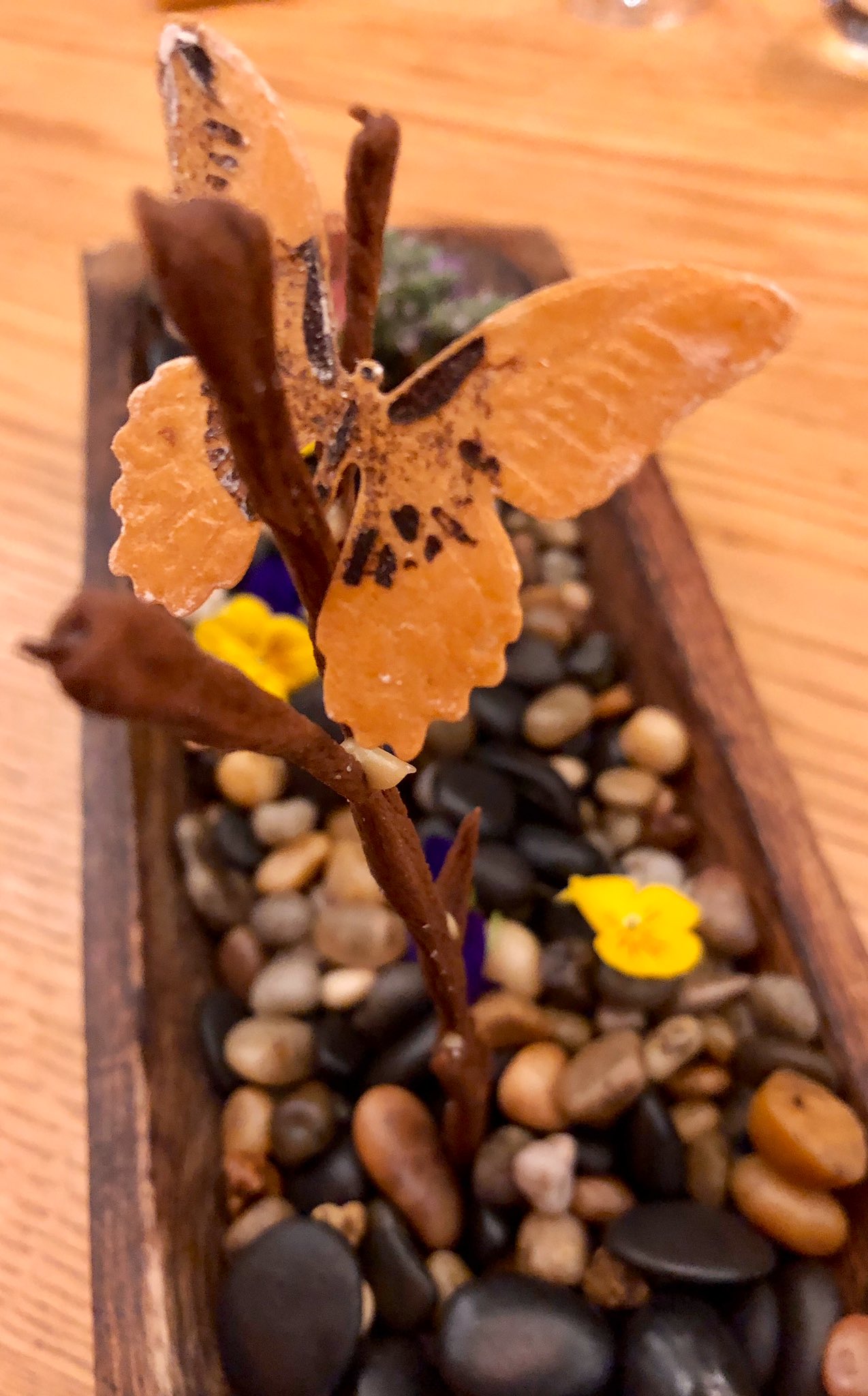
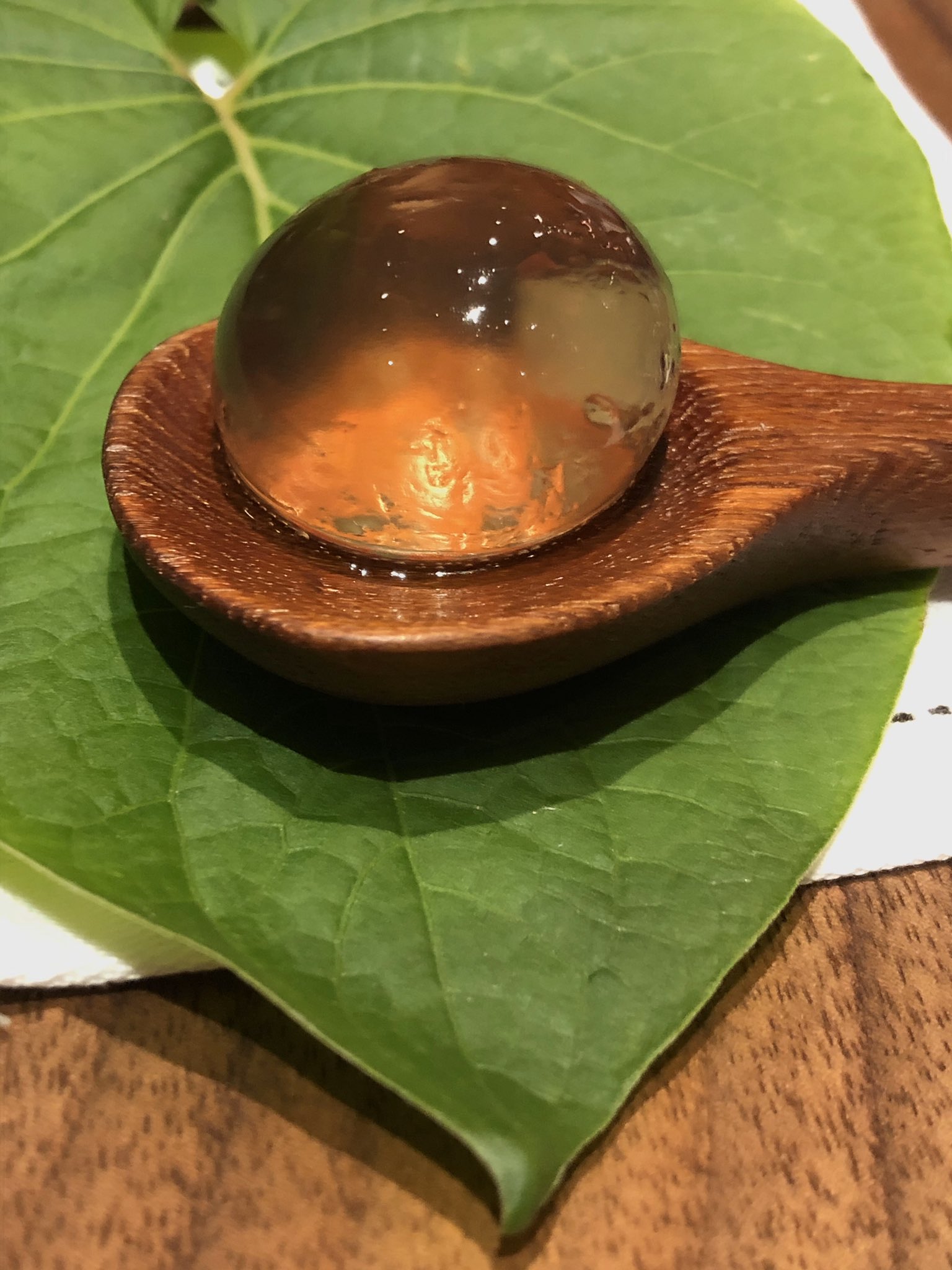
But for me, no màs. Never again.

I don’t want to eat 20 different things at a sitting. I realized some time ago that you quickly hit a point of diminishing returns with these slogs — your satisfaction being inversely proportional to the number of fireworks going off in front of you.

Three to six courses is all one’s brain and palate can absorb. Everything else is just cartwheels in the kitchen, the chef as baton twirler.

To be brutally honest about it, this type of meal isn’t about the food, or the wine, or the conversation. The point is to have you ohh and ahh over the production. There isn’t much time between courses to do anything else.

The great joy of going to a restaurant is deciding at the very last minute what you want to eat, not what the chef insists you eat. Tasting menus rob you of that singular pleasure, and for that reason alone, I must bid them adieu.

Here are the dishes:

Truffle Tree

Image

Morning Dew

Image

Beet Rose

It was small and and tasty but not that photogenic; let’s move on.

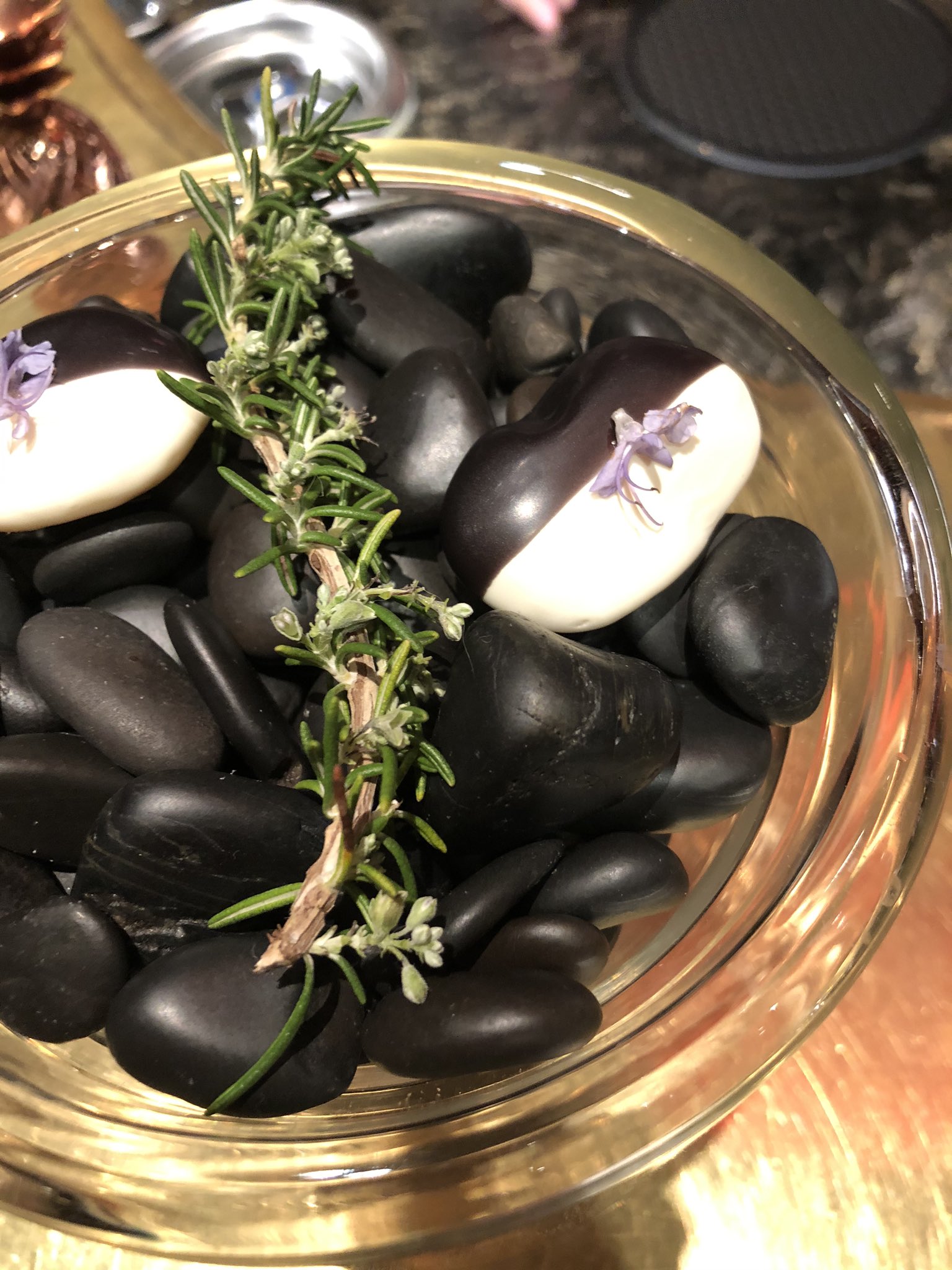
Stone

Image(The black and white thingees are actually cheese; the things that look like stones are stones. Don’t eat those.)
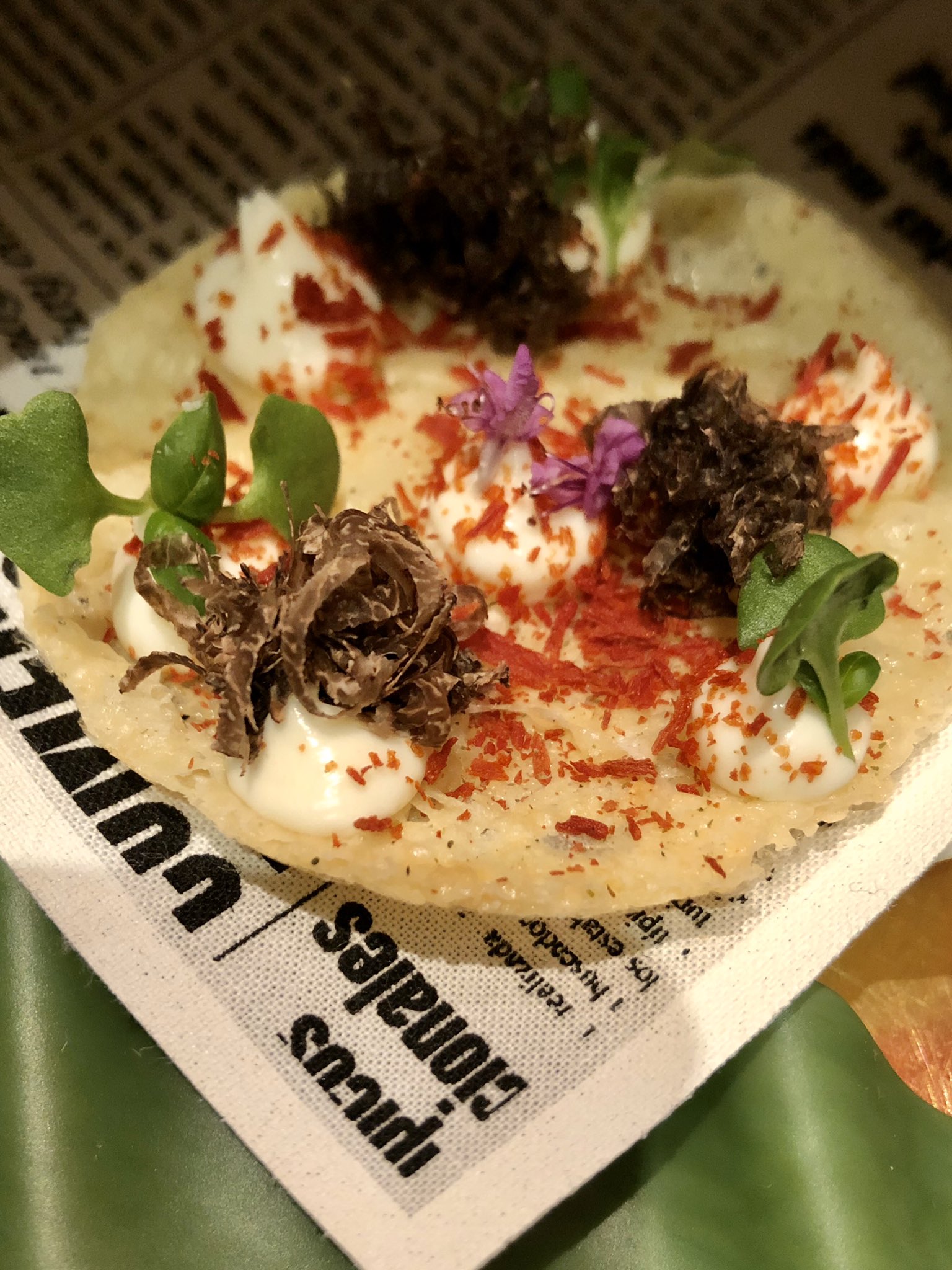
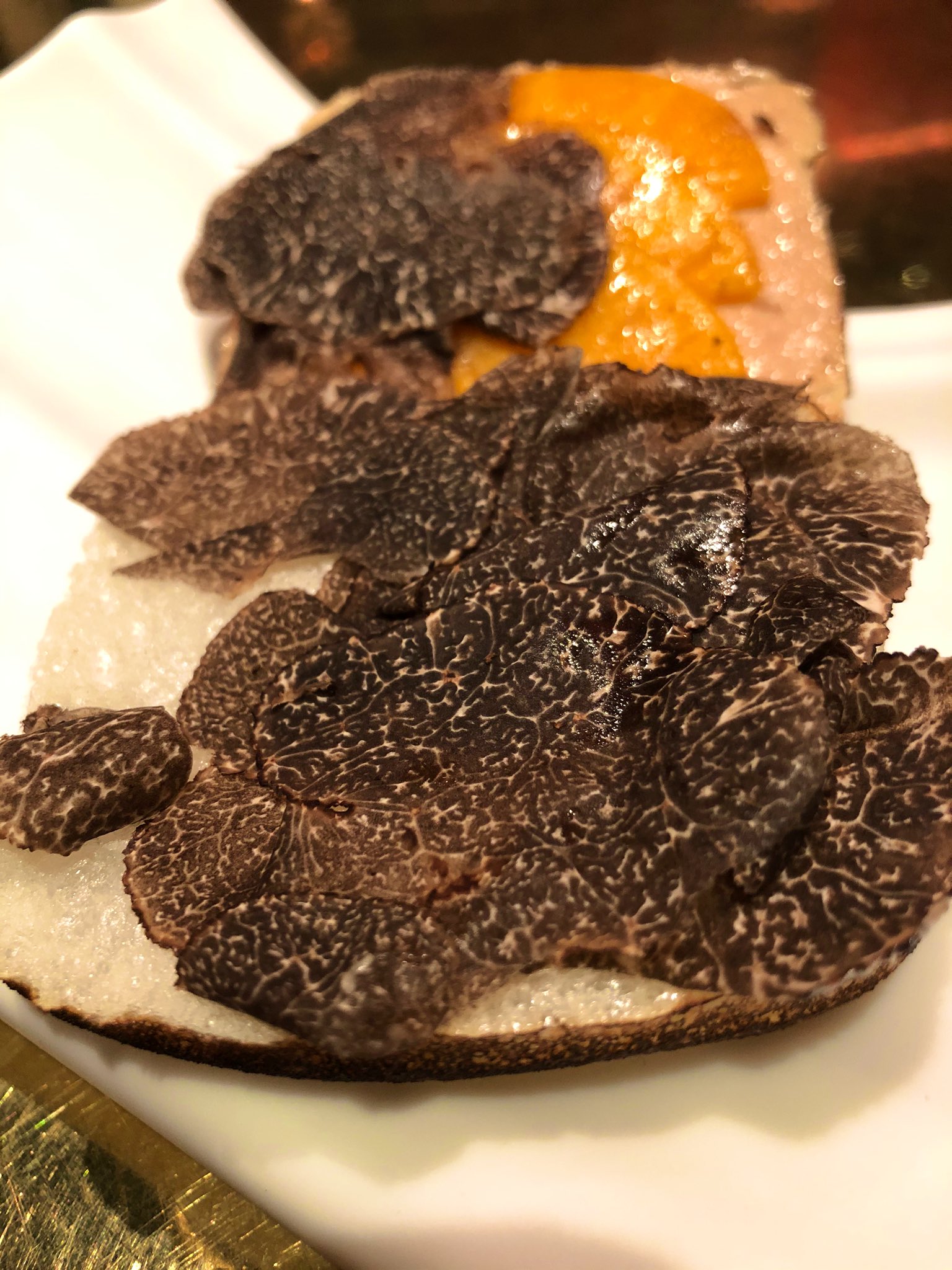
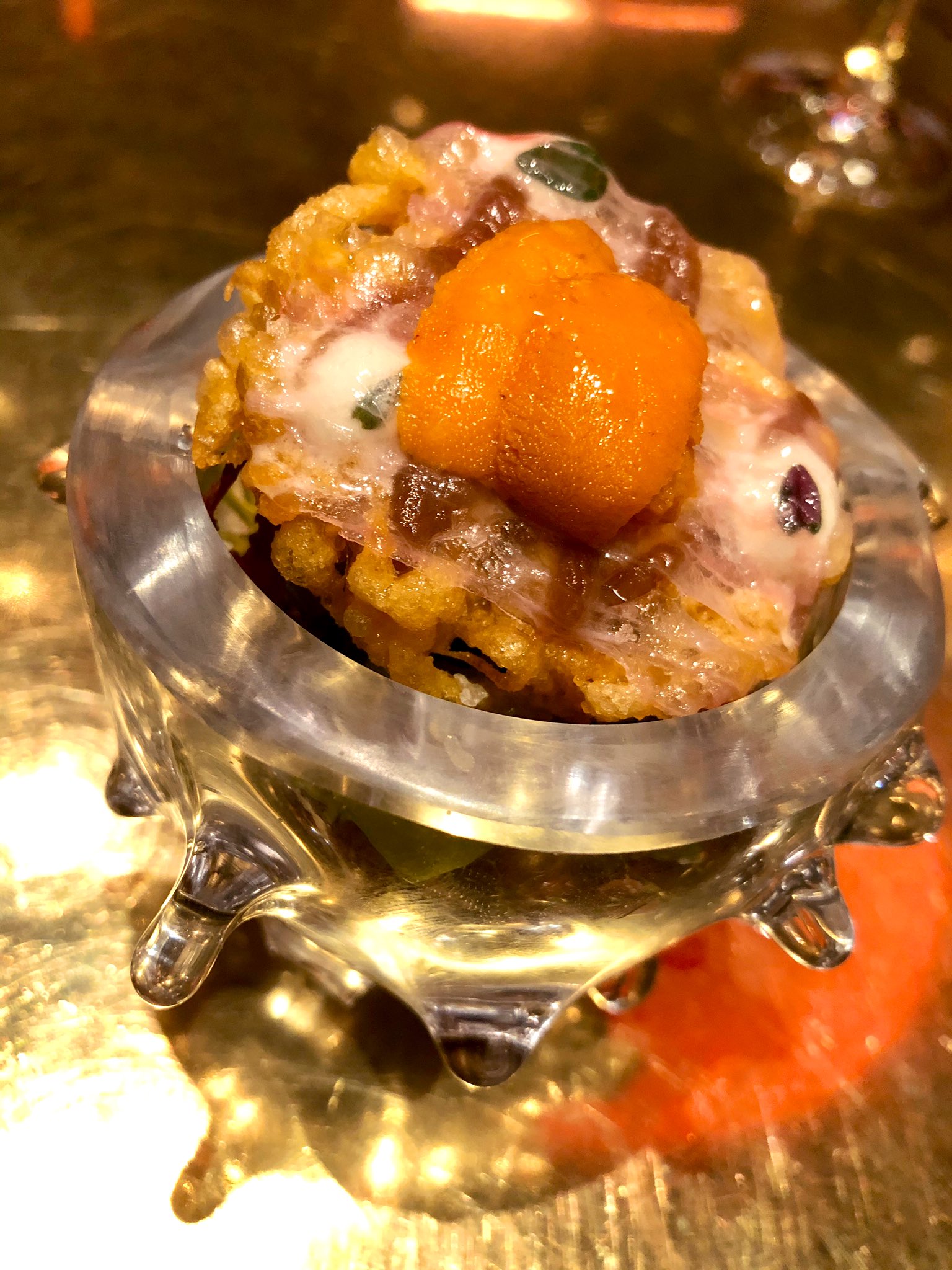
Spanish Pizza

Image

Wonderbread

Image

Pan Con Tomate

This was a small piece of the world’s greatest ham on an almost-not-there puff of bread. The only thing wrong was there should have been more of it.

Uni Y Lardo

Image

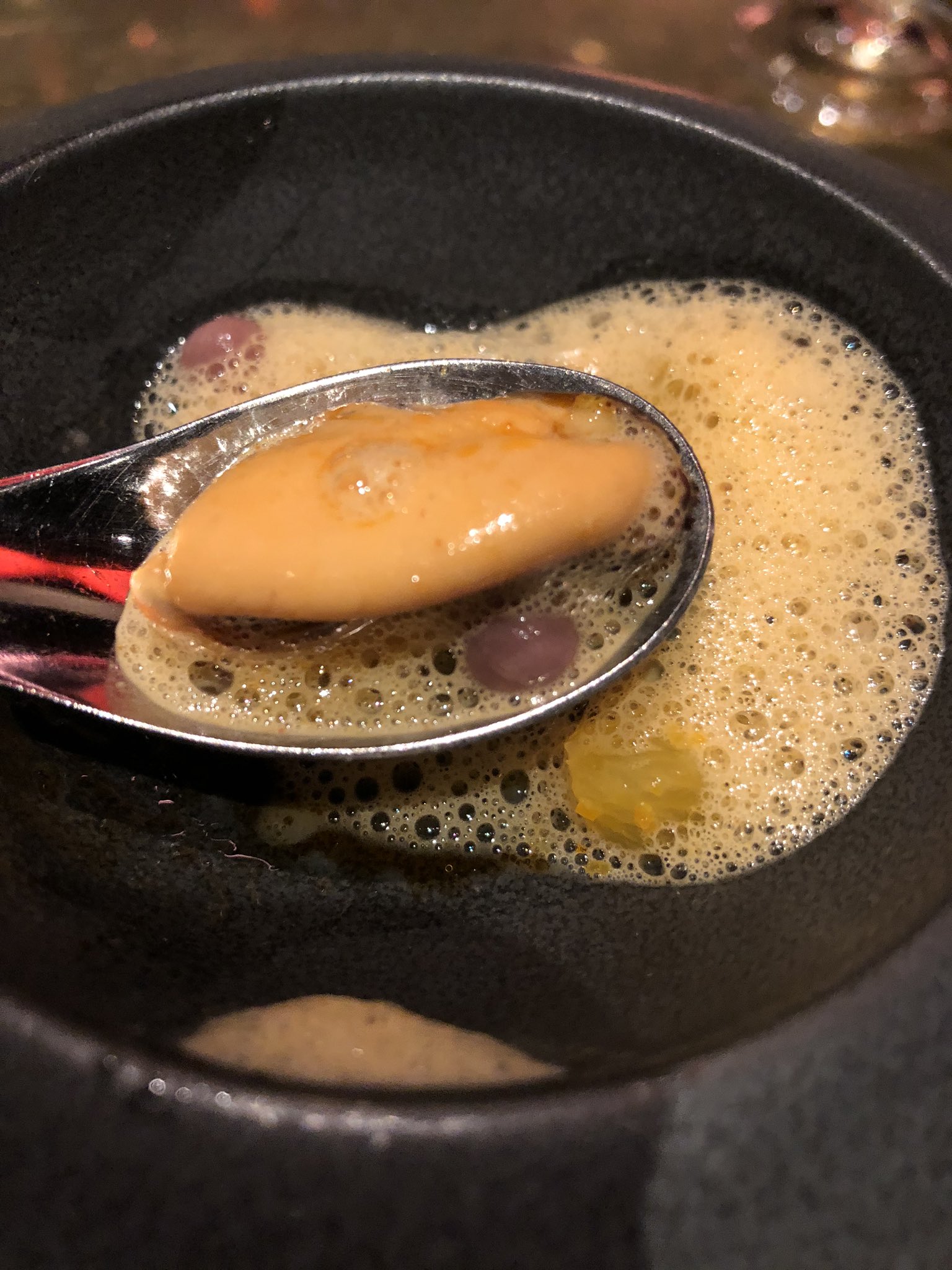
Vermut

Image(This dish fomented much mussel love)

Edible Sangria

Image(The description doesn’t lie)


Esparragos en Escabeche

Image

Txangurro a la Donastiarra

Crab served in its shell — deliciously crabby but unremarkable.

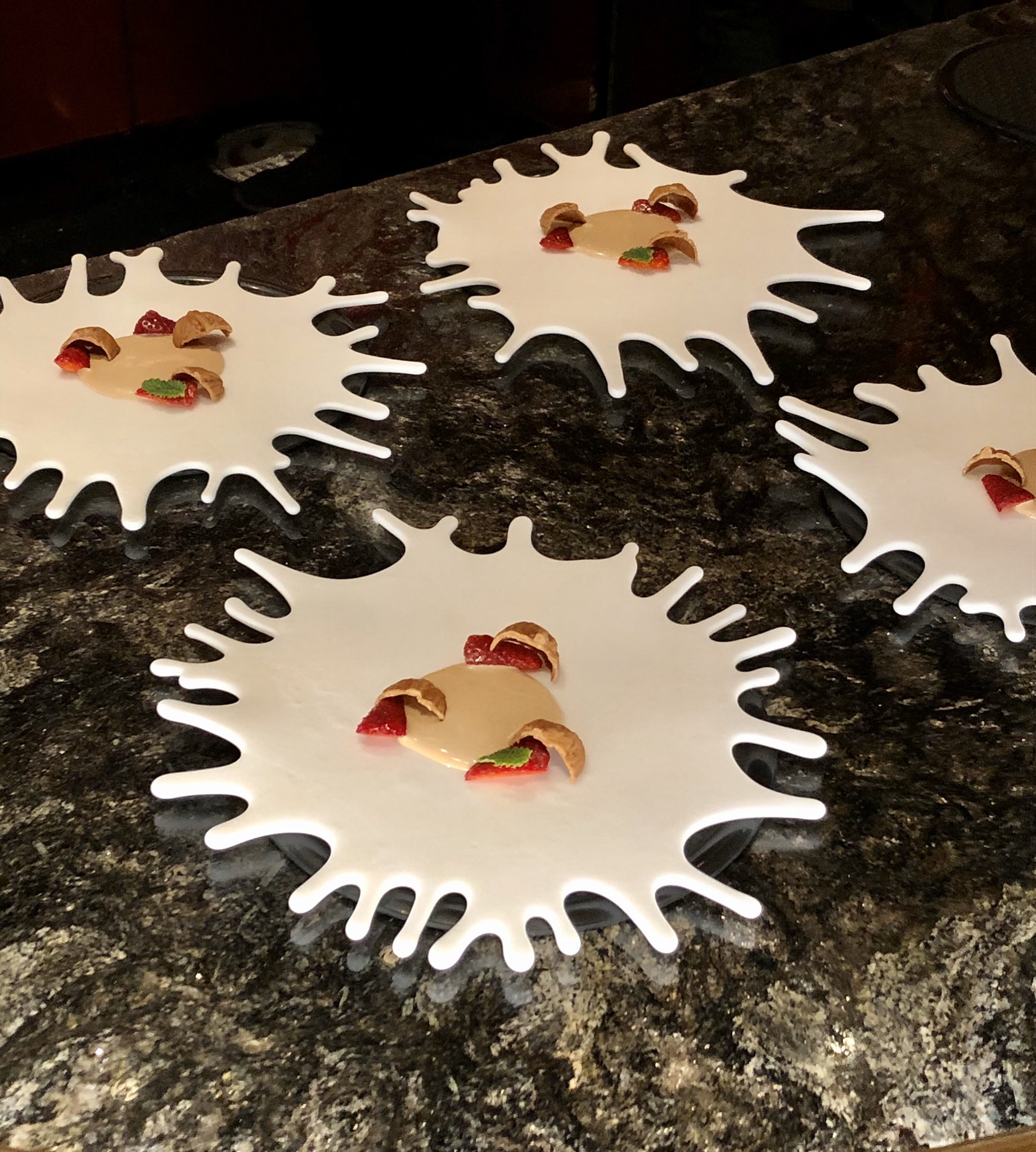
Foie Royal

Image


Platija

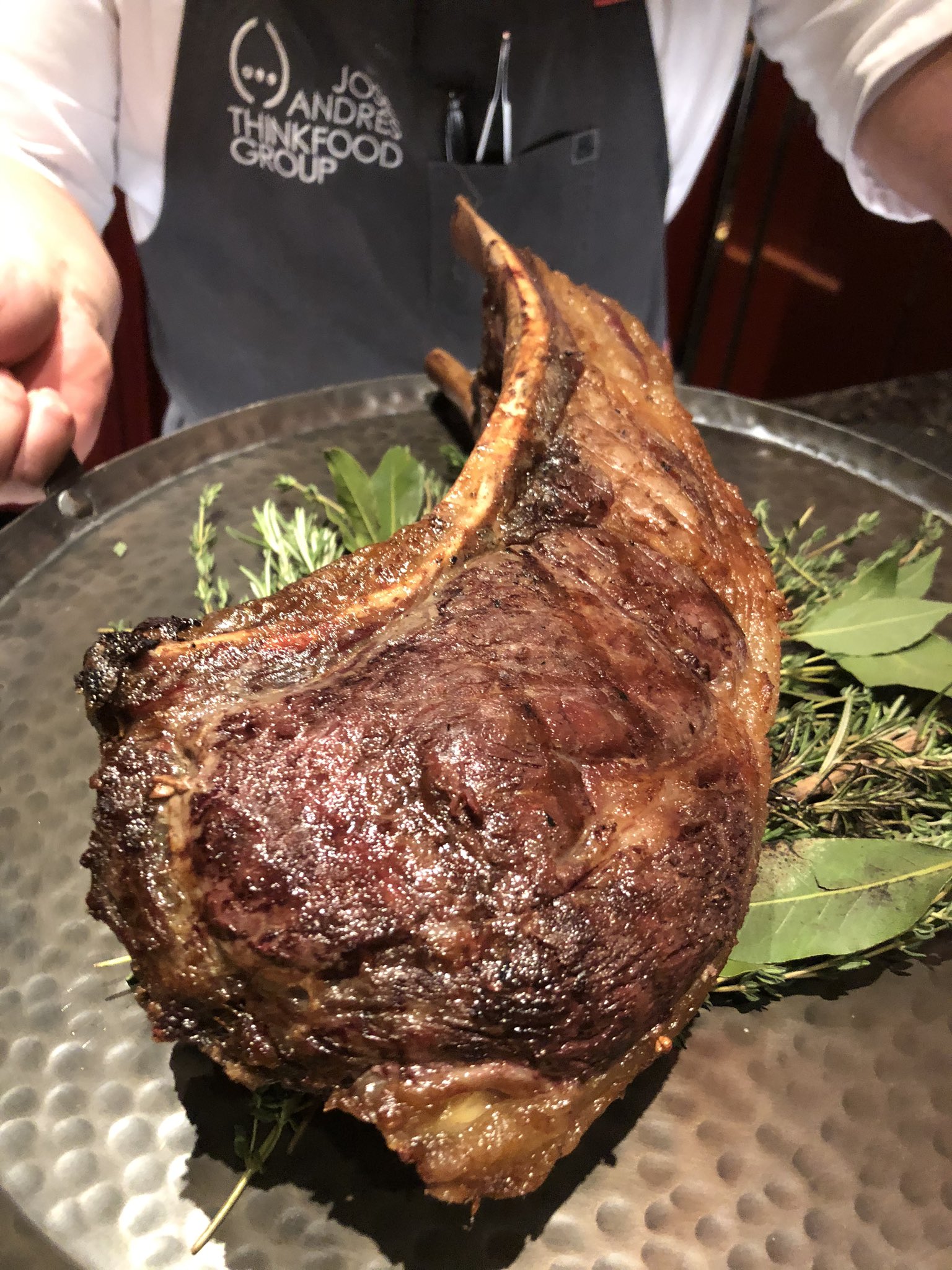
Image(Steak for 8? No problemo!)

Chuleta

A block of fluke that was no fluke…even if it was a bit boring. FYI: fluke is always boring. Sorta surprised they used it.

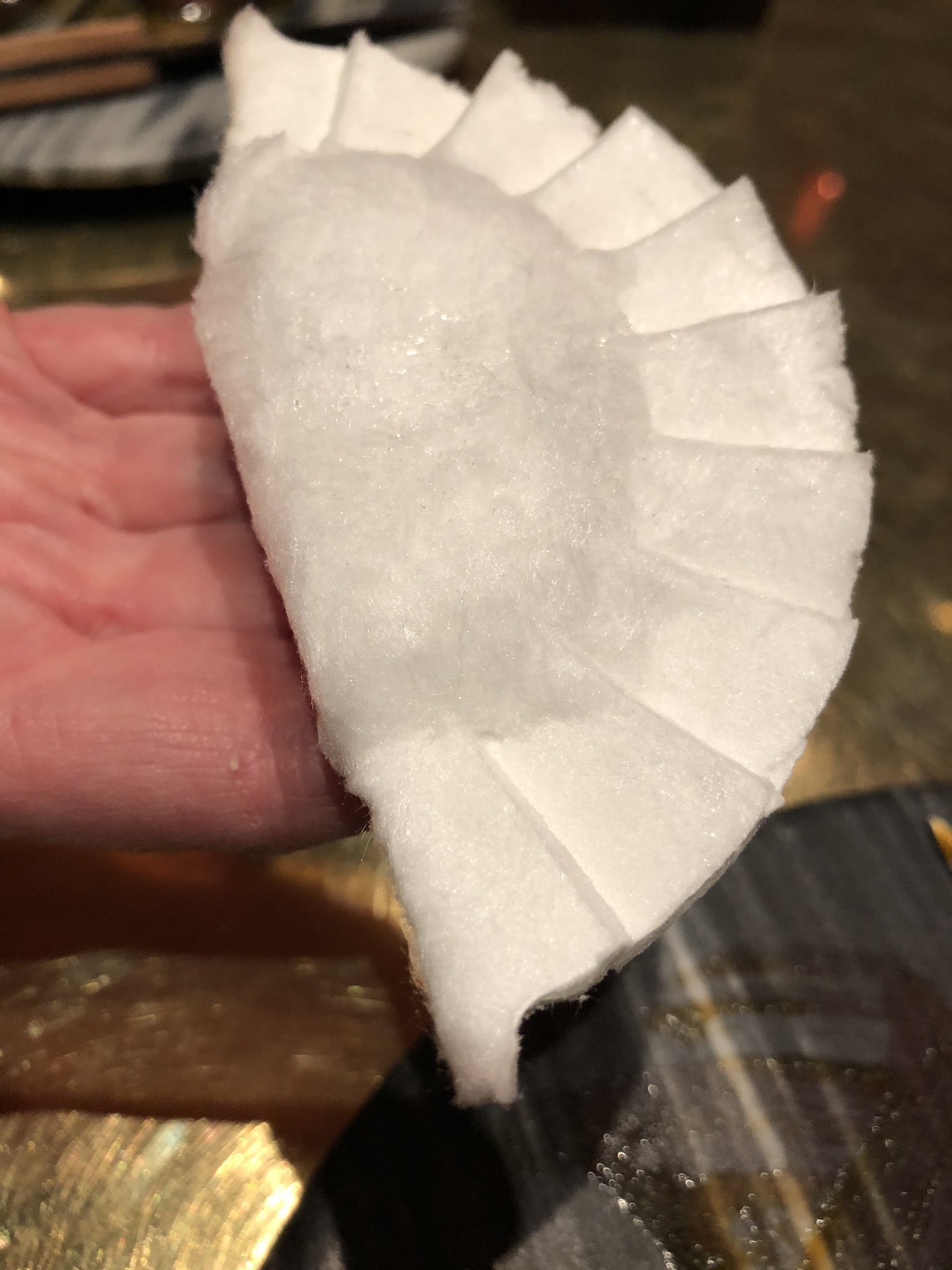
Empanada

Image(This started out as a ball of cotton candy the size of a small child)
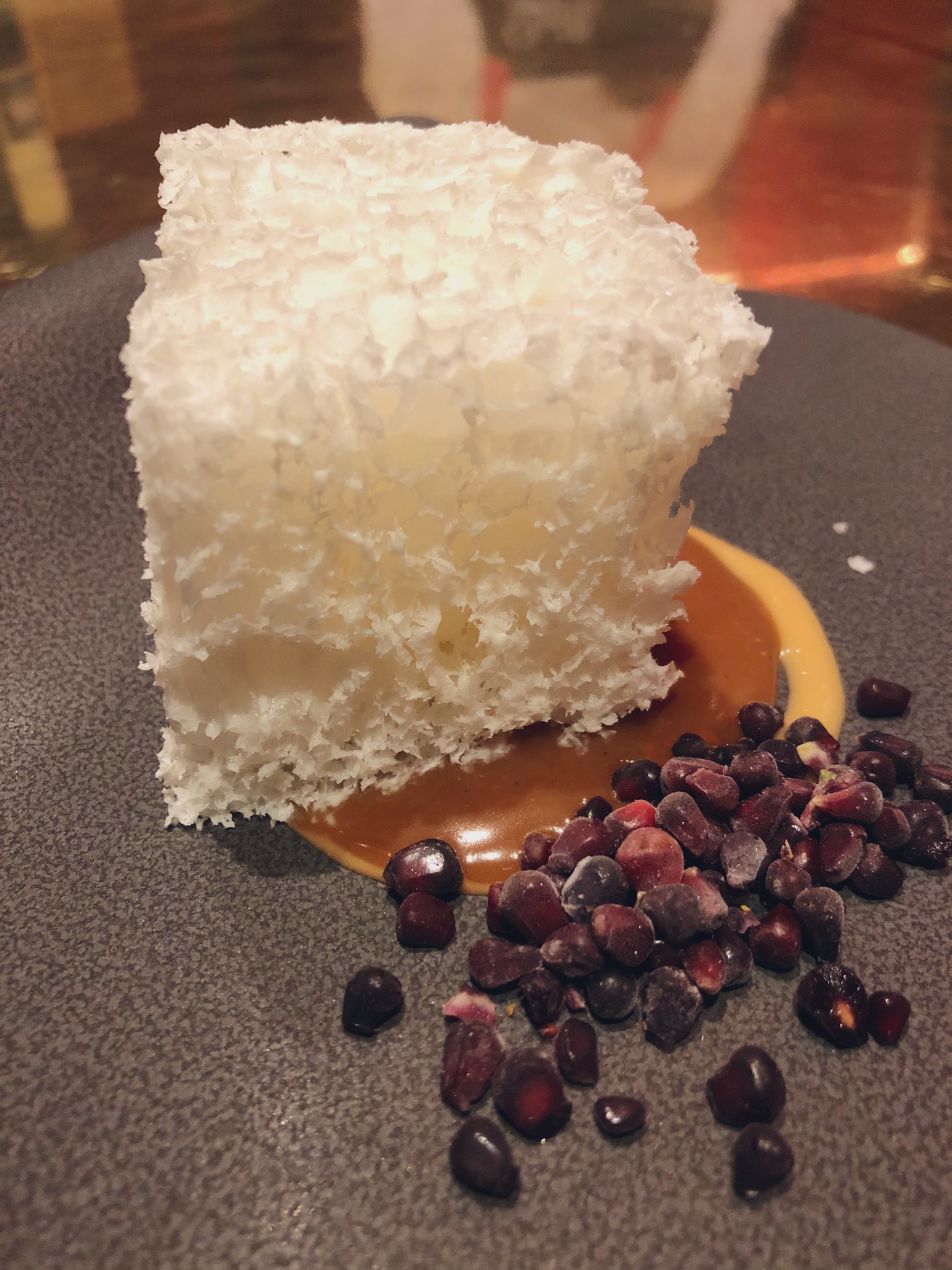
Menjar Blanc

Image(White food, aerated)

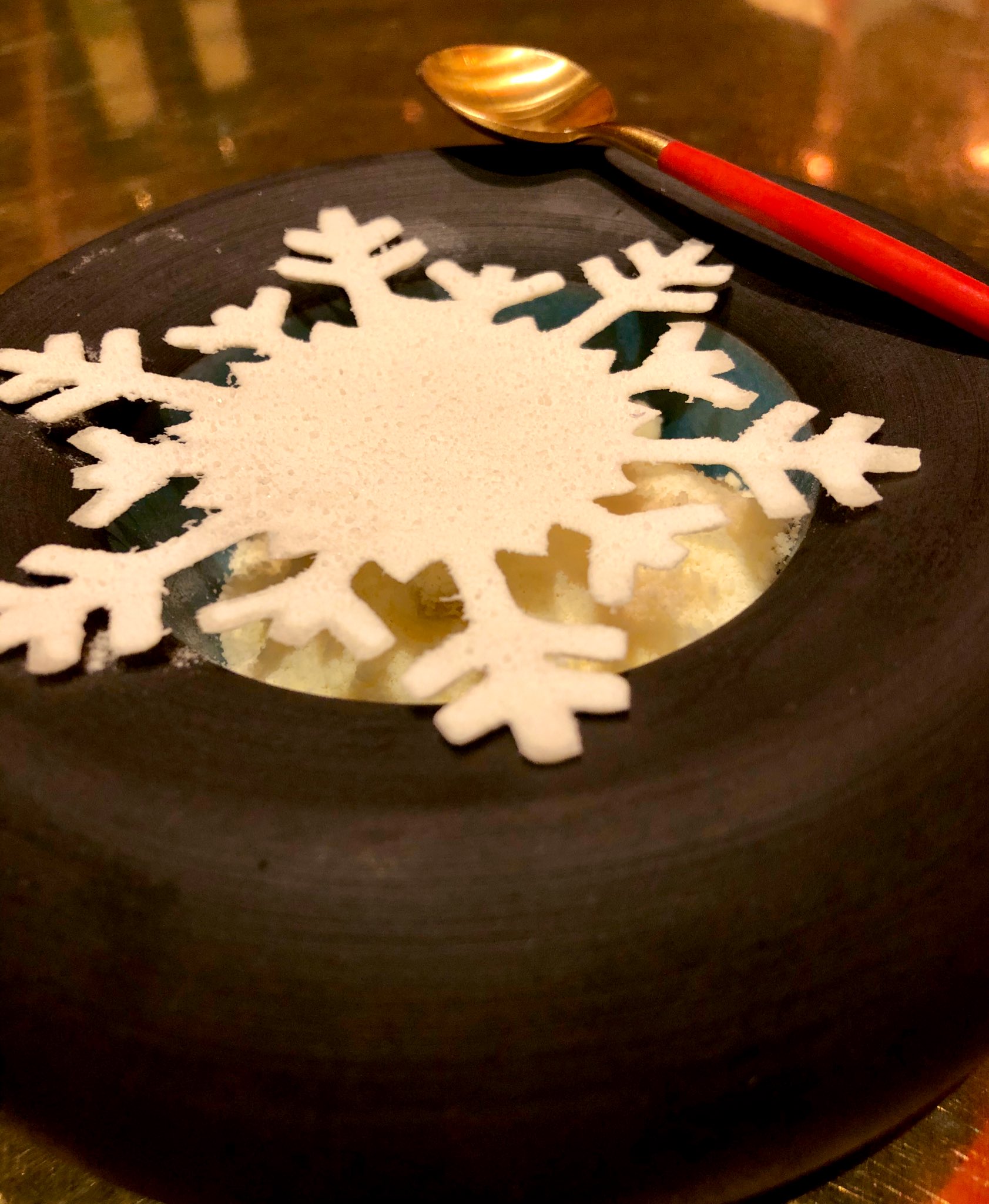
Winter in Vegas

Image

Intxausaltsa

Image(Your guess is as good as mine)

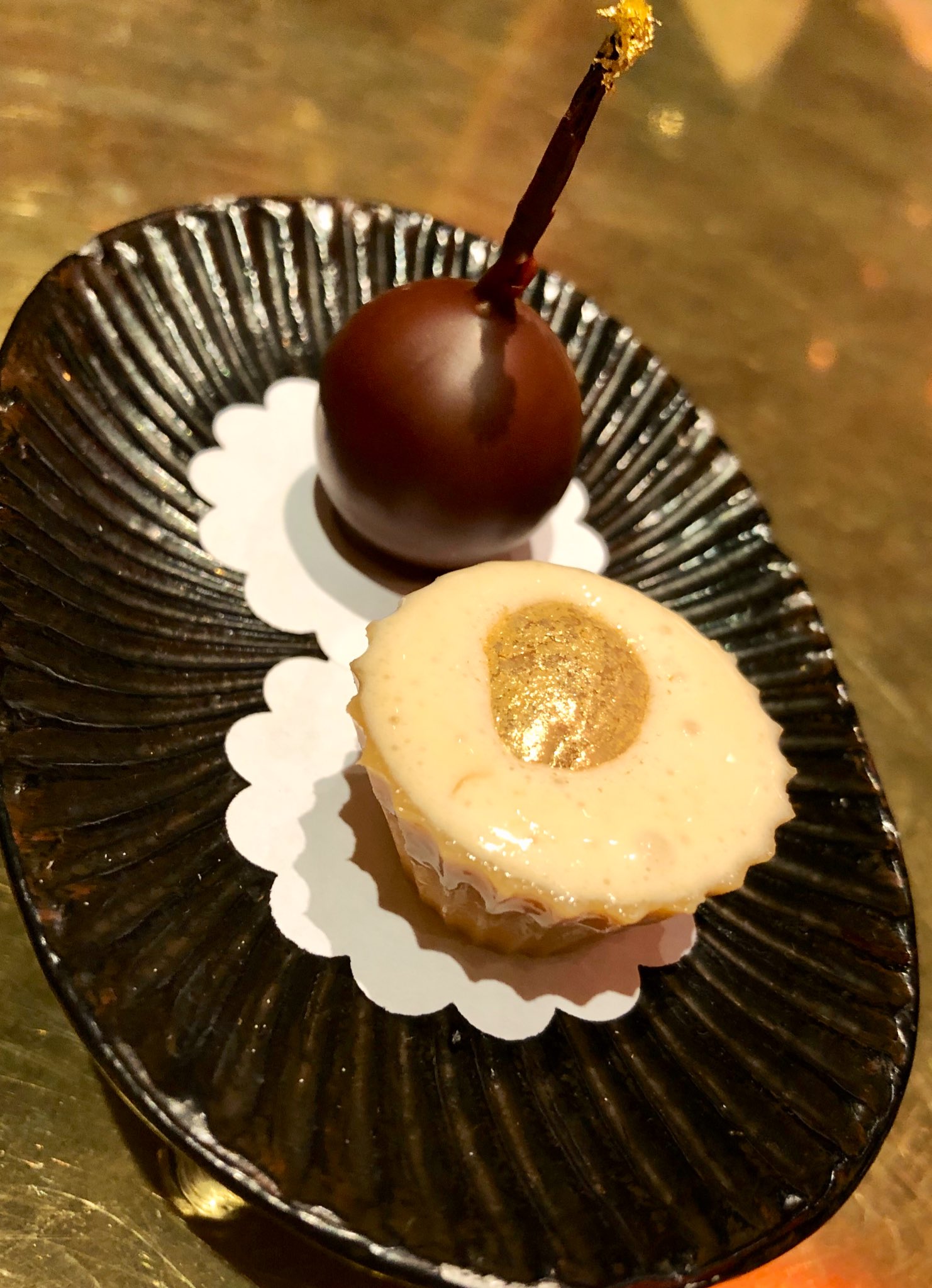
Cherry Bomb

Image

More things…

By the time you get to “more things”, only the heartiest of soldiers is still ready for combat. Most have run up the white flag as they’re being politely herded off to make room for more cannon fodder.

That’s when it hit me and I mumbled, “I still love you, José; I’m just not in love with you anymore. Certainly not with this dining concept. Whatever flame you may have ignited in me 20 years ago with your wacky Spanish molecular manipulation is now but a smoldering ash — the charred remnant of a fiery passion that once had no bounds (or course or calorie counts), and is now as worn out as bacon-wrapped dates.”

You’re better off without me. You’ll be happier with someone who appreciates you more than I do.

And I’ll be happier dating your sexy siblings: the smoking-hot Jaleo or the bodacious Bazaar Meat.

You wouldn’t mind, would you?

I hope we can still be friends.

Our meal for 2 came to around $800, including tax, tip, and $120 worth of wines by the glass. Notably absent above is any consideration of price-to-value ratio. For aspiring gourmets, globe-trotting gastronauts, and culinary show-offs, it’s probably worth it. For a one-time splurge it’s absolutely worth it. There’s no more convivial way to experience the glories(?) of molecular gastronomy, accompanied by a great steak.

é by Jose Andres

The Cosmopolitan Hotel and Casino

3708 Las Vegas Boulevard South

Las Vegas, NV 89109

702.698.7950

There Was a Chef

Image

There was a chef who once lived in Las Vegas.

By happenstance, I came into all of this chef’s possessions. All he had in the world when he died, as a very old man, back in the early 1990s.

From these I eked out the barest outline of his career.

German he was, at a time when German lots of chefs were.

Or maybe he was Swiss, as several postcards came to him from Reigoldswil, Switzerland. Only four cards, survived him, all in German, all of them showing the same, sad, sepia-toned building in a faraway hamlet.

Regardless, he as either German or Swiss or Swiss-German at a time when lots of chefs came from there.

He lived and worked here long before anyone thought celebrity and chef belonged in the same sentence…much less the same description.

When he lived and worked in Las Vegas, no one cared who the chef was. The only people who knew a chef’s name was their family and their employer.

Image

How he came to Las Vegas is anyone’s guess, but from pictures it appears he first landed in Philadelphia as a young man, and then went to San Francisco, where, by 1946, he was being described as a “famous chef of the Sir Francis Drake Hotel.” His “fame” allowed him to appear in a advertisement for a gas-fueled ceramic broiler sponsored by The Pacific Coast Gas Association.

He was very proud of this grainy, b/w photo in the corner of a west coast magazine few probably ever read. Proud enough to keep the cut-out page with him his entire life.

For whatever reason (money? a girl? health?), our “famous chef” wound up in Vegas in the 1950s (like a lot of my relatives), where he worked at the Last Frontier and then the El Rancho Vegas, before moving on to the Desert Inn and the Flamingo.

He ended up being a room service chef at the Flamingo in the 1960s. This feels like quite a drop from being a famous chef in San Francisco, but I think he was proud of being the room service chef at the Flamingo.

Image

If the 8X10 glossies are any clue, he was a big fan of some movie stars — Ann Sothern, Dorothy “Dottie” Lamour, Gloria DeHaven — lights as dim as the memory of Swiss-German chefs who once came to this desert to run our kitchens and make food for hungry gamblers in the middle of the last century.

All he had when he died were those clippings, postcards, a snuff bottle, brass knuckles(?), some menus, and picture of himself as a very young man, and a few more of him as a working chef standing beside a wall of food he helped to create.

There were also two small, identical pins sporting narrow ribbons of bleu-blanc-rouge — no doubt some small honor accorded to him for mastering something French — he was proud enough of those to keep them with him his entire life.

Image

That’s it; that was his life. Or all that is left of it.

Nothing is especially sad about these things, but they emit a profound sadness all their own. So few scraps. Such little evidence of a life — pieces of paper, pictures, and a handful of trinkets for a fellow who spent his entire adult life in professional kitchens — who learned a trade and traveled an ocean, and then a continent, to ply a trade when there was nothing star-studded about it, just hard work.

Work that started in Europe, then advanced to a fancy hotel in a major city, and ended in the banquet rooms and coffee shops of a desert casino. The work is what gave his life meaning, I think, and perhaps what gave it joy, I hope.

Max Weber was our chef’s name.

He never married, nor had any kids.

His last years were spent in bed, in the middle of a room, in a small house in Las Vegas, being cared for by the family of a woman he had worked with. They were all he had.

At the end of his life, all of his possessions could fit in the bottom of shoe box.

Image

Does anyone remember him? Probably not. Now only me, not for the work he did, but for what he represents: a life spent feeding other people for a paycheck, because that is what he was good at and was trained to do. There was no glory in it then, and what little there was, Max tasted if only for a moment.

And then the vitality of fame fleeted, and Max had to get back to work.

Chefs like Max were the culinary backbone of Las Vegas — the spine and blood and sinews of hundreds, thousands of bent bodies, frazzled nerves and tired hands who fed tourists well, and kept them coming to Las Vegas again and again, until what you were eating mattered just as much as what you won. They built this town as surely as any game of chance, but no one knew their names then and no one cared.

But Max cared. You can tell from his shoe-box that he cared.

And he had his memories. Of posing with movie stars, and of long groaning tables filled with heroic proteins, miles of steam, architectural ice, and trenches of vegetables. Of midnight buffets and ceramic stoves he stood at at and advertisements with his picture in them. Of a little town in Switzerland he escaped, and a desert town where he landed. Where he ended up making sandwiches for people who knew nothing of this famous San Francisco chef who was somebody once — a man who traveled so far to feed so many….until at last the flame on the stove flickered no more.

Image