The Joys of Dining Alone

https://fineartamerica.com/images-medium-5/and-the-adjective-of-the-day-is-lucullan-ed-fisher.jpg

The great Roman general Lucullus was known to throw the most elaborate feasts in all of Rome. Cicero, it was said, would decline invitations from him out of guilt at knowing all the expense Lucullus would go to to impress even a single guest. A famous story goes that one night, the general had no plans for his evening meal; no guests to entertain; no one to impress. Upon learning this, Lucullus’s chef remarked, “Sir, since you will be alone this evening, I thought I would prepare something simple.” “What?” Lucullus replied. “Did not you know, then, that today Lucullus dines with Lucullus?”

Single friends, solitary Romans, dateless gastronomes, lend me your ears. There’s a lot you can learn from Lucullus. He understood that the greatest dinner guest you will ever have is yourself. Instead of shying away from good meals when you’re traveling alone, without a mate, or waiting for your spouse to leave the slot machines, you should seize the day, and find a restaurant in which to indulge your wildest fantasies. And by “wildest fantasies” I mean eat and drink anything you damn well please. The joys of dining alone are many, and if you can get past your self-consciousness, you just might find yourself appreciating your meal in ways you didn’t think possible.

These days, you see single diners in good restaurants much more frequently. Gone are the stigmas attached to unaccompanied women (loose), and solitary men (loser), freeing them both to enjoy themselves. Just think about it: when you show up solo, you are the master of your domain. You can proceed at your own pace. Cocktails before dinner? No problem. Spend a half hour with the wine list? Why not? Dip your bread right in the butter dish? Of course!  Flirt with the waiter? Great idea! Eat the butter straight up? It never tasted better. (You can also post all the pictures you want to social media without having to uphold your end of some pesky conversation…but I digress.)

Look upon eating solo as a chance to make your own excitement and you’ll find yourself enjoying things in unexpected ways. The key is to take control of the situation, and let the staff know right up front that you are not someone to be trifled with. Eating alone forces you to deal with your meal in a serious manner. When you dine by yourself, you will notice everything more: the taste of the food, the texture of the wine, the interplay of the service. Alone, you can digest everything in a more thoughtful way — and become a more thoughtful and appreciative diner in the process.

LE CIRQUE: Then and Now

If two restaurants can be said to have jump-started our food revolution, Spago and Le Cirque must be given the credit. Spago got the ball rolling in December, 1992, but it was Le Cirque’s arrival on October 15, 1998 that caused a seismic shift in our taste tectonics. Steve Wynn wanted to make a big splash with his restaurant line-up at the Bellagio, and as good as the rest of his eateries were (Picasso, Prime, Olives, et al), he knew he needed a big hitter from the Big Apple to really get the food world’s attention. Enter Sirio Maccioni and family, bringing with them what was, at the time, the most famous name in American restaurants.

Those early years were exciting times. Las Vegas had never seen a jewel box like Adam Tihany’s 60-seat design, nor witnessed food so fine or service so precise. With the Maccionis patrolling the room and paterfamilias Sirio making constant appearances from his throne in New York, Las Vegas was a satellite operation, but one every bit the equal of its hallowed namesake. A succession of great chefs (beginning with Marc Poidevin) has kept this kitchen firing on all cylinders since day one, and one of the best service staffs in the business keeps the dining room humming like a long-running musical where everyone still belts out showstoppers after years of hitting their marks.

Showstopping has always been what Le Cirque has always been about, but I was afraid that show might come to an end in 2013 when the management deal with the family ended. With Sirio getting older (he’s deep into his eighties now) and son Mario gone, there is no longer a strong whiff of Italian buon gusto to go along with Le Cirque’s inimitable savoir faire. No one is showing me the contracts, but these days the operation is a licensing rather than a management deal — more Bellagio, less Maccioni. The good news is the food hasn’t suffered for it. Nor has the service.

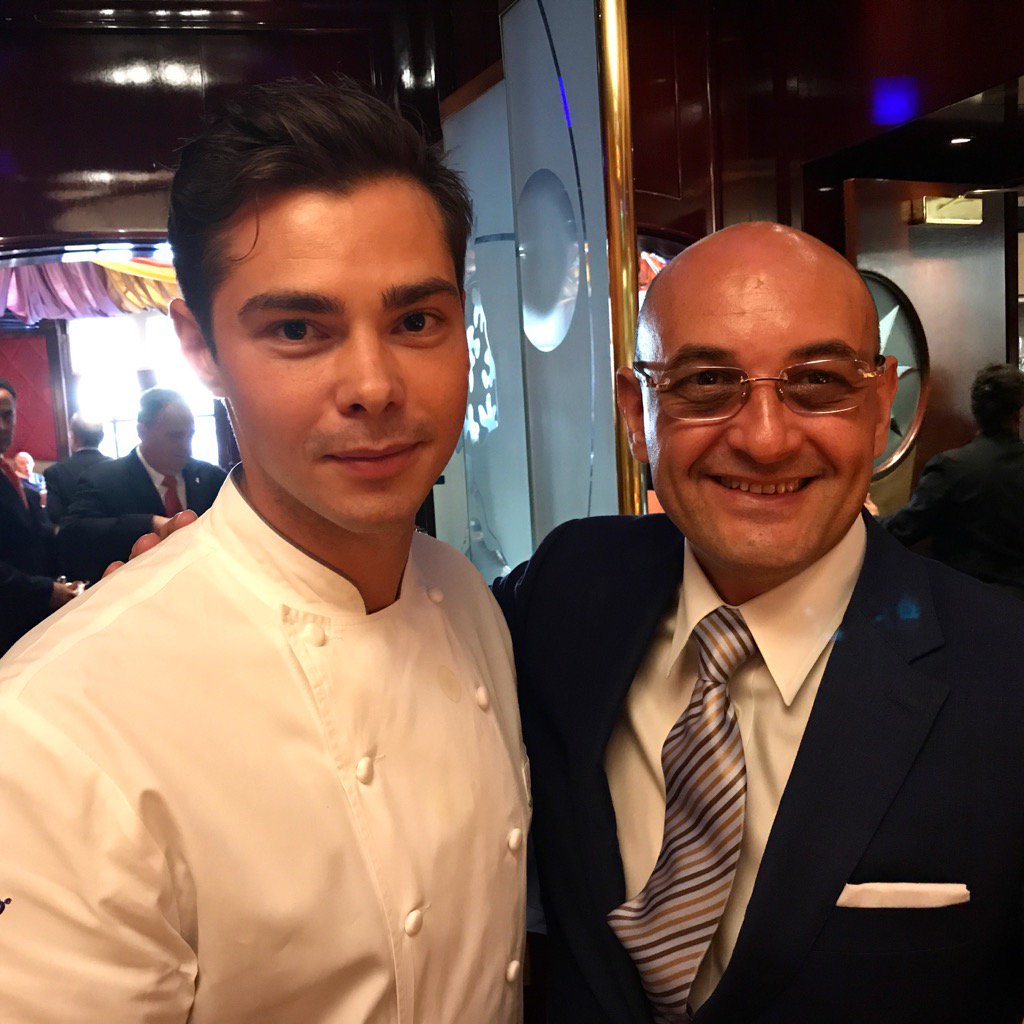
Credit for that crackerjack service goes to a team that has barely changed in nineteen years. To put that in perspective: if you came here back when Bill Clinton was President, and returned today, you would see all the same faces serving you. Frederic Montandon still pours vintages (French, please! California, if you insist) with a twinkle in his eye, while Ivo Angelov manages with the touch of an orchestra conductor. A lot of restaurants start feeling stale after two decades. Here, phoning it in isn’t in their vocabulary.

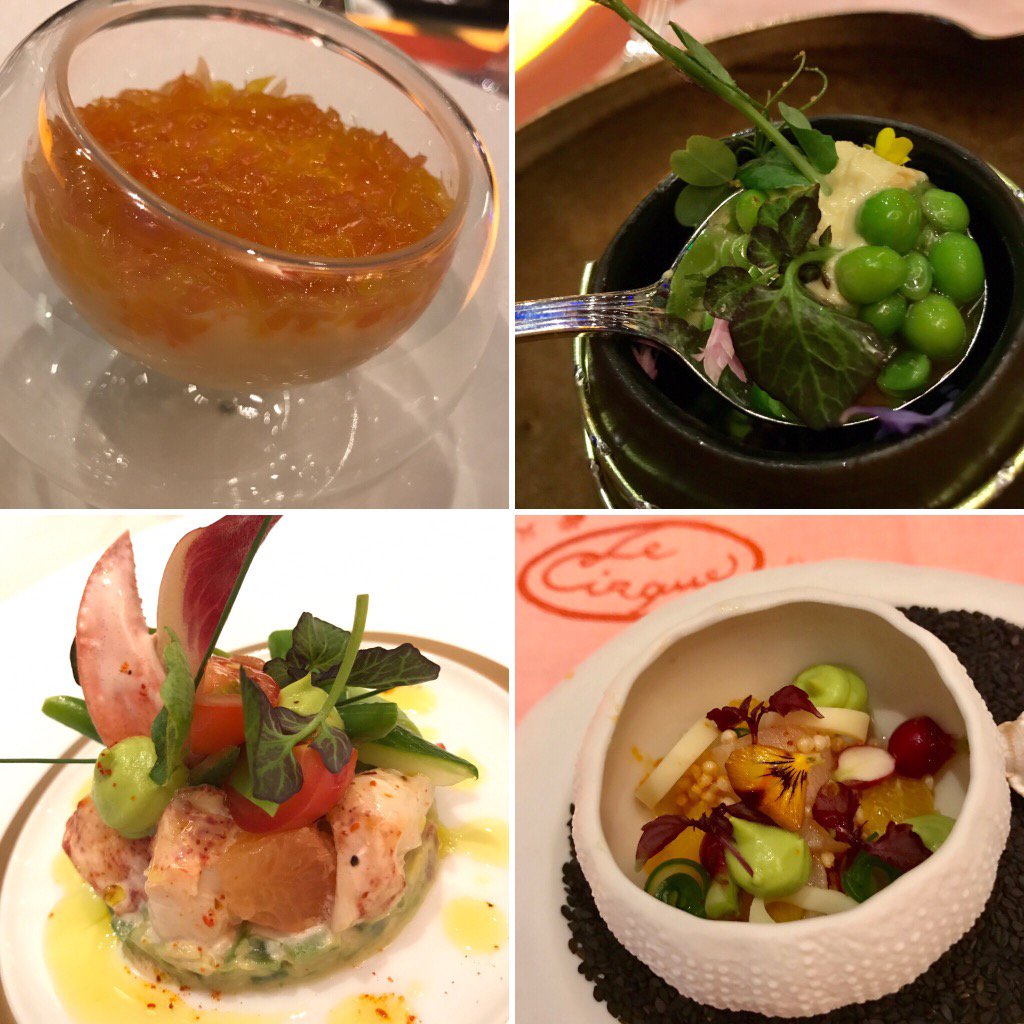
The food has changed over time, but never wavered. Some of the chefs (Poidevin, David Werly) were superstars in their own right, while others were just putting in their time. But whoever was at the helm, the kitchen has always been solid — rendering classics like rack of lamb with glazed sweetbreads and rabbit with mustard cream sauce with the same aplomb it devotes to gold-crusted quail stuffed with foie gras, or blue crab under a robe of caviar. You can still get a lobster salad here that is almost note-for-note what Daniel Boulud invented in 1988, or have your taste buds startled by current wunderkind Wil Bergerhausen’s “hidden” spring garden of English peas, tendrils and garbanzos misted with strawberries.

What used to be dueling menus of Le Cirque classics versus more modern (read: lighter) fare has expanded under Bergerhausen into four offerings at all price ranges. You can do everything from a $108, pre-theater affair to a $350 extravaganza that steps into the ring with whatever punches Savoy, Gagnaire, or Robuchon are throwing and doesn’t flinch. There’s even a delicious-sounding five course vegetarian menu offered ($115) that looks like a good idea, in the same way that yoga classes, wheat grass and prostate exams do.

Now that we’ve rebounded from the Great Recession, every night seems like New Year’s Eve here. High rollers, celebrities and hedonic jet-setters treat this place like a private club, making a reservation a tough-to-impossible on weekends. Personally, I like to go early in mid-week, grab and seat at the bar, and watch the choreography unfold before me. After almost two decades, the balletic grace of Le Cirque is still something to behold.

LE CIRQUE

Bellagio Hotel and Casino

702.693.8100

https://www.bellagio.com/en/restaurants/le-cirque.html


Spoiled, Rotten, Delicious

https://thepaleomomcom-xt0mxgicgroc.stackpathdns.com/wp-content/uploads/2015/08/shutterstock_204354391.jpg

Let us not forget the value of rot. All great cuisines use decay and stench as part of the palate. Red wines from Burgundy and Loire can have a goût de terre — and earth taste, like good garden soil being turned over in the spring — or they can have a goût de merde — a shit taste, which has the fragrance of fine cow manure, old slightly dry , and hay like on the outside with  just enough interior wetness to propel the fragrance outward, and all this nestled in a field of fresh green grass. These tastes, the goût de terre and goût de merde are prized by connoisseurs and old bodies like me.

It is a portion of rotten apples that gives good cider its and and subtlety. I knew a man in Maine who claimed his parents’ longevity came from eating a lot of bread with blue penicillin mold on it. Botrytis cinerea, that mold that grows on the grapes that make Sauternes, aid the evaporation of water from the grape, making a more concentrated flavor in the wine.

Decay. Pickles are decaying cucumbers. Cheese, yogurt and buttermilk are decaying milk.

https://c1.staticflickr.com/7/6184/6117812544_6f9cb7a3b5_b.jpg

Beer is decayed malt and hops. Whiskey is decayed grain (barley, corn, rye0. Vodka is decayed potatoes. Sauerkraut is decayed cabbage. Wine is decaying grapes, continuing its decay in the bottle, making fine old wine. Some English people like their beef aged to the point where maggots are crawling through it. A good beef stew or red spaghetti sauce, should sit on the stove, melding its flavors, for a least a day. I once left a red sauce out for three days and it began to ferment like wine, and had spritzy little bubbles in it. I was leery at first, but I heated it up to kill any strange growths and  delicious it was. – George Vincent Wright, “Cuisine Sauvage”

https://qzprod.files.wordpress.com/2016/12/how-to-choose-champagne.jpg?quality=80&strip=all&w=3006